
Indexed In
- Open J Gate
- The Global Impact Factor (GIF)
- Open Archive Initiative
- VieSearch
- International Society of Universal Research in Sciences
- China National Knowledge Infrastructure (CNKI)
- CiteFactor
- Scimago
- Ulrich's Periodicals Directory
- Electronic Journals Library
- RefSeek
- Directory of Research Journal Indexing (DRJI)
- Hamdard University
- EBSCO A-Z
- Publons
- Google Scholar
Useful Links
Share This Page
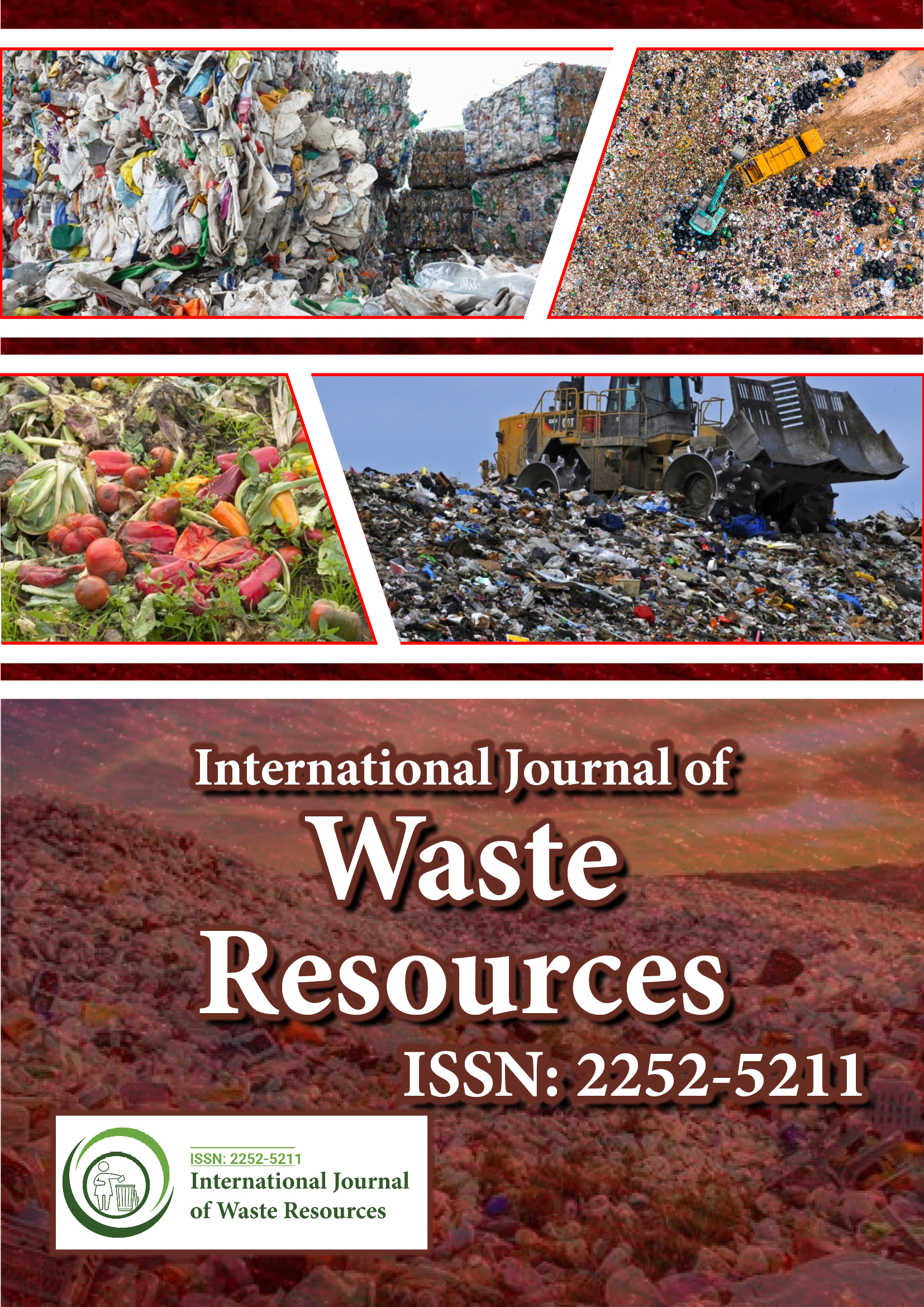
Journal Flyer
Open Access Journals
- Agri and Aquaculture
- Biochemistry
- Bioinformatics & Systems Biology
- Business & Management
- Chemistry
- Clinical Sciences
- Engineering
- Food & Nutrition
- General Science
- Genetics & Molecular Biology
- Immunology & Microbiology
- Medical Sciences
- Neuroscience & Psychology
- Nursing & Health Care
- Pharmaceutical Sciences
Municipal Solid Waste Incineration Bottom Ash as a Secondary Raw Material: Characterization and Potential Directions of Valorization
5th World Congress on Sustainable Waste Management
May 28-29, 2026 | Madrid, Spain
Katarzyna Godyn
Strata Mechanics Research Institute of the Polish Academy of Sciences, Poland
Scientific Tracks Abstracts: Int J Waste Resour
Abstract:
Thermal treatment of municipal solid waste is an important component of modern waste management, especially for fractions that cannot be effectively recycled or biologically processed. Although incineration significantly reduces the volume of waste sent to landfills, it also generates solid post process residues. The largest fraction of these residues is municipal solid waste incineration bottom ash, commonly referred to as BA. Despite its classification as waste, BA exhibits several features typical of mineral raw materials. It is mainly composed of calcium-, silica-, aluminosilicate- and iron bearing components, which makes it a potentially valuable secondary raw material. The practical use of BA requires a detailed assessment of its physical, chemical, mineralogical, geotechnical and environmental properties. Particular attention should be paid to particle size distribution, pH, chemical and phase composition, microstructure, pozzolanic activity, compaction behaviour, filtration properties and the possible leaching of undesirable components. Therefore, BA should not be treated as a uniform waste material, but rather as a complex mineral residue whose suitability depends on its composition, processing method and intended application. This study focuses on the characterization of MSWI bottom ash and the assessment of its potential valorization pathways. One of the considered directions is its use in the construction sector, for example as aggregate, filler, road base material, embankment material or a component of cementitious composites. At the same time, the material is evaluated in relation to other possible applications resulting from its mineral composition, porous structure and reactivity. The aim of the research is to identify rational and safe ways of processing and using BA in order to reduce the landfilling of post-process residues, limit the consumption of natural raw materials and support circular economy strategies. In this context, BA may be regarded not only as a waste product, but also as a secondary raw material with potential industrial significance.
Biography :
Katarzyna GodyĆ?, PhD Eng. is a Doctor of Earth Sciences and a researcher at the Strata Mechanics Research Institute of the Polish Academy of Sciences in Kraków. Her scientific expertise focuses on the petrography of sedimentary rocks, with particular emphasis on coal, porous materials, and anthropogenic mineral resources. In her research, she applies optical microscopy, stereological image analysis, and textural, sorption, and filtration methods, combining a classical geological approach with modern material characterization. Her current work is focused on the valorization of municipal solid waste incineration bottom ash, including the assessment of its microstructure, porosity, COâ?? sorption potential, and possible use as a secondary raw material. She is the author and co-author of scientific publications, a participant in research projects, and an invited speaker at numerous national and international conferences. She also supervises doctoral students. Her research contributes to circular economy strategies, environmental protection, and the development of practical applications for waste-derived materials.