
Indexed In
- Open J Gate
- The Global Impact Factor (GIF)
- Open Archive Initiative
- VieSearch
- International Society of Universal Research in Sciences
- China National Knowledge Infrastructure (CNKI)
- CiteFactor
- Scimago
- Ulrich's Periodicals Directory
- Electronic Journals Library
- RefSeek
- Directory of Research Journal Indexing (DRJI)
- Hamdard University
- EBSCO A-Z
- Publons
- Google Scholar
Useful Links
Share This Page
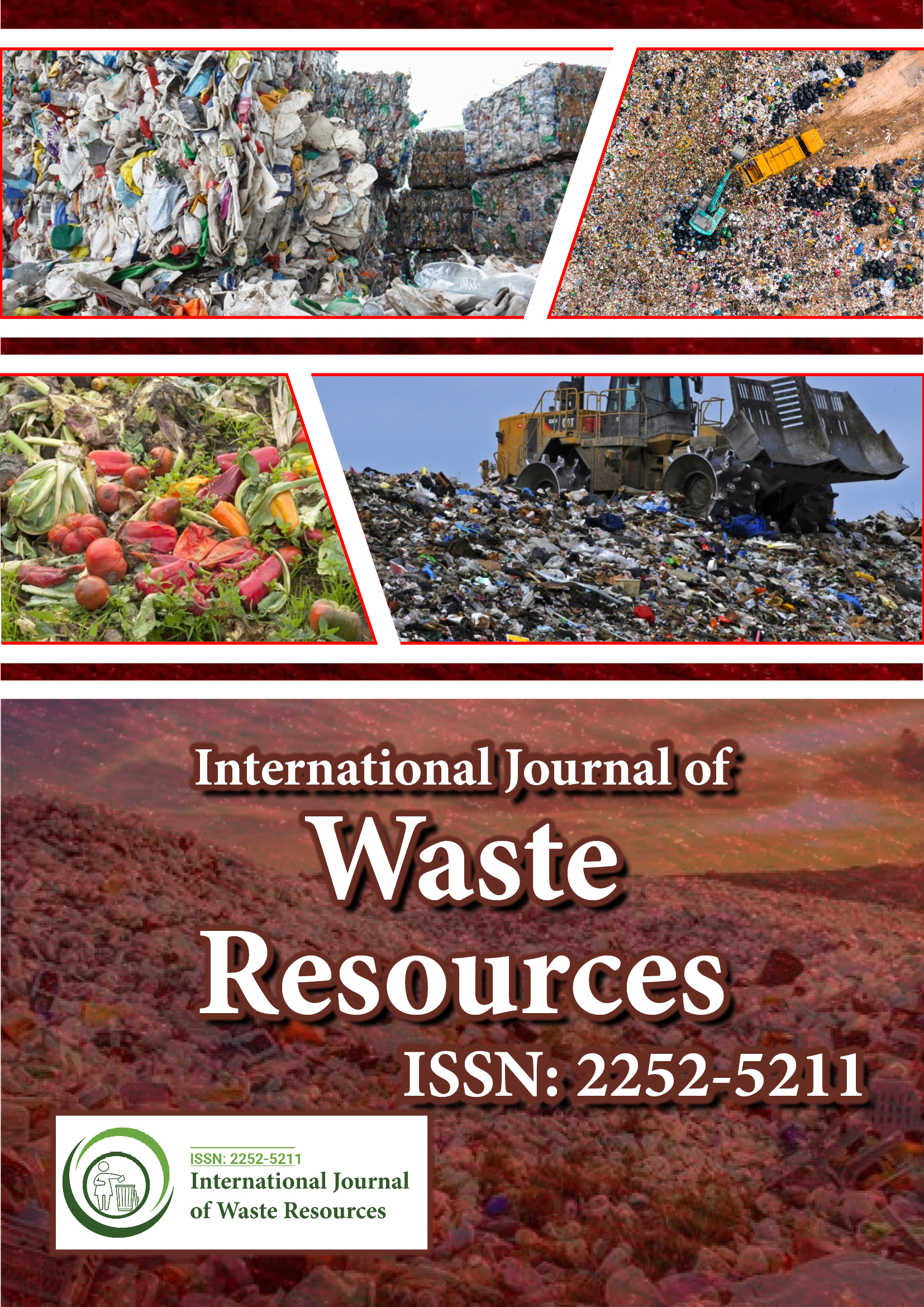
Journal Flyer
Open Access Journals
- Agri and Aquaculture
- Biochemistry
- Bioinformatics & Systems Biology
- Business & Management
- Chemistry
- Clinical Sciences
- Engineering
- Food & Nutrition
- General Science
- Genetics & Molecular Biology
- Immunology & Microbiology
- Medical Sciences
- Neuroscience & Psychology
- Nursing & Health Care
- Pharmaceutical Sciences
Low-Cost Polyurethane oams for Sustainable Residual Oil Recovery from Palm Oil Mill Effluent
5th World Congress on Sustainable Waste Management
May 28-29, 2026 | Madrid, Spain
Jidon Janaun
Universiti Malaysia Sabah, Malaysia
Scientific Tracks Abstracts: Int J Waste Resour
Abstract:
The recovery of residual oil from Palm Oil Mill Effluent (POME) represents a strategic opportunity to mitigate environmental pollution while enhancing resource efficiency within the palm oil industry. Conventional recovery approaches are frequently constrained by high material costs, reliance on hazardous solvents, and limited scalability. This study evaluates a simple, low-cost, and scalable alternative using commercially available polyurethane (PU) foams of varying densities (PU25, PU35, and PU50) and melamine foam as oil sorbents. Pre-oiling treatment significantly enhanced sorption performance, increasing oil uptake from 8.64 g/g to 31.25 g/g. Batch adsorption tests using refined palm oil demonstrated that melamine foam exhibited the highest sorption capacity (109.28 g/g), followed by PU25 (31.91 g/g), PU35 (25.26 g/g), and PU50 (13.82 g/g). In oil-in-water emulsions (0.6 2.0% v/v), PU25 and PU35 maintained stable performance over five adsorption–desorption cycles, achieving removal efficiencies of 79.14% and 81.59%, respectively, indicating superior reusability compared to melamine foam. Adsorption isotherm analysis revealed that melamine foam followed the Langmuir model (R² = 0.954), suggesting monolayer adsorption, whereas PU foams conformed to the Freundlich model (R² = 0.802–0.939), reflecting heterogeneous surface interactions. Experiments using real POME further confirmed melamine foam’s high initial oil uptake (104.04 g/g) and oil recovery efficiency of approximately 77%; however, its reusability was compromised by fouling effects. Scanning Electron Microscopy (SEM) analysis corroborated surface morphology changes after oil adsorption, supporting the observed performance trends. Overall, PU25 and PU35 foams demonstrated the most favourable balance between oil recovery efficiency, reusability, material cost, and operational simplicity. These findings highlight the strong potential of low-density PU foams as sustainable and scalable sorbents for residual oil recovery from POME, contributing to waste valorisation and circular economy practices in palm oil mill operations.
Biography :
Prof. Dr. Jidon Janaun is a Professor of Chemical Engineering at Universiti Malaysia Sabah (UMS), Malaysia, and currently serves as Director of the Innovation and Commercialisation Management Centre (PPIP). He obtained his PhD in Chemical Engineering from the University of British Columbia, Canada, in 2012. His research focuses on sustainable process engineering, waste valorisation, renewable energy systems, and applied industrial innovation. Prof. Jidon holds eight patents and one copyright, with six patents successfully commercialised through licensing to local industries. His notable inventions include the Residual Oil Extractor, Integrated Solar Dryer, UMS Eco-Solar Dryer, and UMS River Cleaning Machine, generating over RM160,000 in royalties for UMS. His work has received numerous national and international innovation awards, including the Sabah Technologist Award 2023 and the MINDS Meritorious Award 2025. He also serves as a Member of the Board of Governors of North Borneo University College and actively advances the RDICE agenda, promoting sustainable and industry-driven innovation.