
Indexed In
- CiteFactor
- RefSeek
- Directory of Research Journal Indexing (DRJI)
- Hamdard University
- EBSCO A-Z
- Scholarsteer
- Publons
- Euro Pub
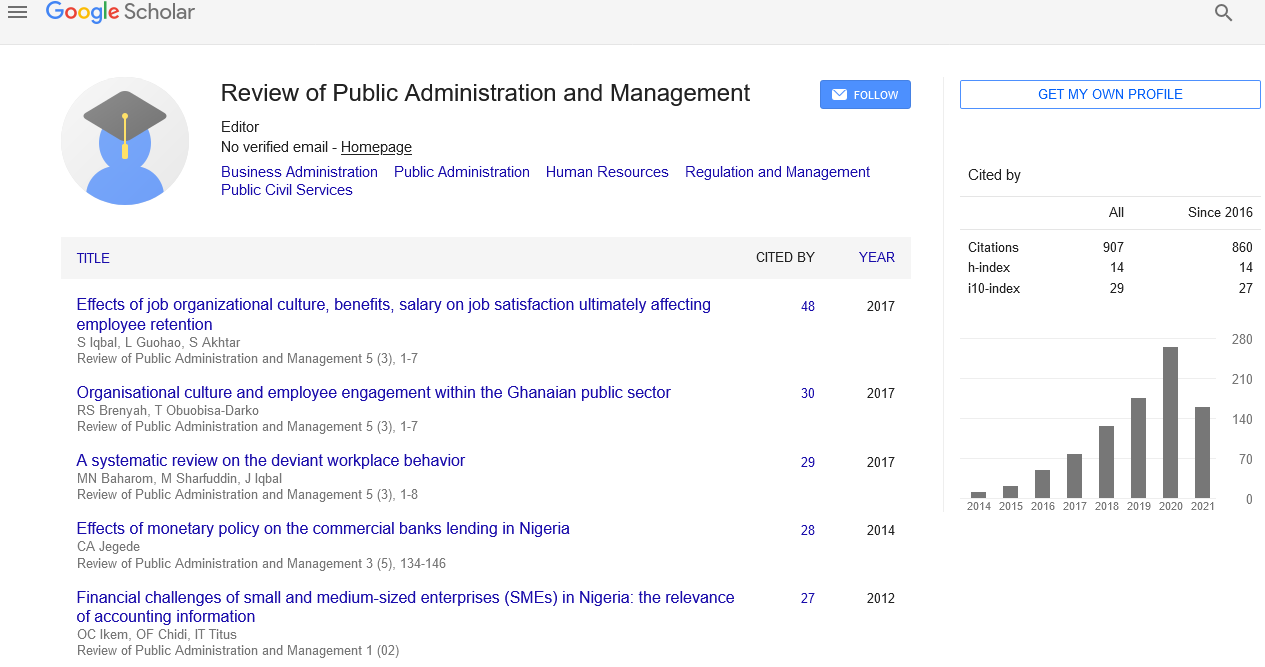
- Google Scholar
Useful Links
Share This Page
Journal Flyer

Open Access Journals
- Agri and Aquaculture
- Biochemistry
- Bioinformatics & Systems Biology
- Business & Management
- Chemistry
- Clinical Sciences
- Engineering
- Food & Nutrition
- General Science
- Genetics & Molecular Biology
- Immunology & Microbiology
- Medical Sciences
- Neuroscience & Psychology
- Nursing & Health Care
- Pharmaceutical Sciences
Commentary - (2026) Volume 13, Issue 3
Transformative Learning: Redesigning Business Internships with Blended Strategies
Houston Preko *Received: 26-Dec-2024 , Manuscript No. RPAM-24-27967; Editor assigned: 30-Dec-2024 , Pre QC No. RPAM-24-27967 (PQ); Reviewed: 13-Jan-2025 , QC No. RPAM-24-27967; Revised: 11-Sep-2025 , Manuscript No. RPAM-24-27967 (R); Published: 18-Sep-2025 , DOI: 10.35248/2315-7844.25.13.499
Description
Business internships have long been recognized as valuable experiences that allow students to gain practical exposure to the working world. However, the traditional internship model often focuses primarily on work-based learning, offering limited opportunities for broader educational development. As industries evolve, so too must internship programs. The concept of transformative learning offers a compelling approach to redesigning business internships, particularly by integrating blended strategies that combine both in-person and digital learning experiences. This approach not only enhances the overall learning experience but also better prepares students for the complexities of the modern business environment. The internships, transformative learning refers to a process where students move beyond surface-level knowledge acquisition and gain deeper insights into the complexities of their roles, industries and professional skills. By redesigning internships to include elements that encourage critical thinking, self-reflection and active problem-solving, students are empowered to make more meaningful connections between their academic studies and the real-world business challenges they face. This can lead to a profound change in how they perceive their future careers and the impact they wish to have in the workplace.
Blended learning strategies play an integral role in this transformation. By combining in-person activities with digital resources and virtual experiences, students are able to learn in a more flexible and engaging manner. This blend of online and offline learning supports a more comprehensive understanding of business concepts and practices. For example, students might attend virtual workshops or webinars on topics such as leadership, communication, or project management, while simultaneously engaging in real-world tasks through their internships that allow them to apply these concepts in practical situations. The ability to learn and apply knowledge in diverse formats enables interns to build a wider array of skills, while also accommodating various learning styles and preferences.
This approach also helps bridge the gap between academic learning and the demands of the business world. Traditional internship programs often provide students with a hands-on learning experience, but they may not offer the kind of structured, academic framework that ensures long-term retention and application of knowledge. By incorporating digital platforms that provide continuous learning, such as online modules, discussion boards, or virtual mentorship, students have the chance to reflect on their experiences in real-time. These tools also allow for more personalized feedback, ensuring that interns are not only gaining practical skills but also evolving intellectually. Such integration encourages a holistic approach to professional development, supporting both cognitive growth and emotional intelligence.
Moreover, the blending of traditional internship models with digital learning tools can offer a more inclusive approach. Remote internships, which have become increasingly popular, allow students from various geographic locations to gain internship experiences without the need for relocation. By offering online learning components that support virtual internships, businesses can make internship opportunities more accessible to a broader range of students. This is particularly important in creating opportunities for individuals from underrepresented backgrounds who may face barriers to accessing traditional internship programs. The flexibility provided by a blended model enables businesses to tap into a wider pool of talent, contributing to greater diversity and inclusion in the workplace.
In addition to benefiting interns, businesses also stand to gain from this approach. Redesigning internships with blended learning strategies can lead to higher levels of productivity and innovation within organizations. By providing interns with continuous access to digital resources, businesses can ensure that their interns are well-prepared, more independent and able to contribute more effectively to projects. Interns who are exposed to a range of learning formats, from face-to-face meetings to online collaboration, are more likely to bring fresh ideas and diverse perspectives to their roles. This enhanced level of engagement can lead to better outcomes for the organization and create stronger relationships between interns and their supervisors.
The integration of transformative learning and blended strategies in business internships represents a forward-thinking approach to professional development. By combining in-person experiences with online learning tools, businesses can create a more engaging, flexible and inclusive internship experience.
This transformation not only benefits interns, helping them build a more well-rounded skill set, but also contributes to a more adaptable, skilled and diverse workforce. As industries continue to evolve, internship programs that embrace this blend of strategies will be better equipped to meet the changing needs of both students and businesses, ensuring that internships remain a vital part of the career development process.
Citation: Preko H (2025) Transformative Learning: Redesigning Business Internships with Blended Strategies. Review Pub Administration Manag. 13:499.
Copyright: © 2025 Preko H. This is an open-access article distributed under the terms of the Creative Commons Attribution License, which permits unrestricted use, distribution, and reproduction in any medium, provided the original author and source are credited.