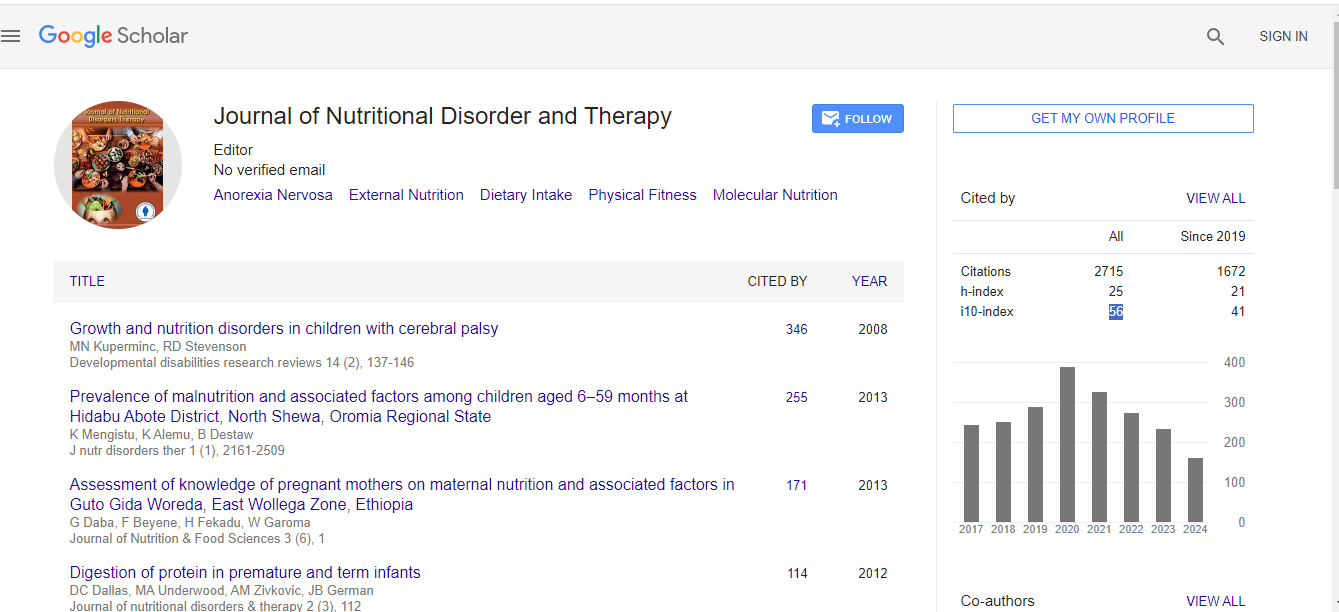

Indexed In
- Open J Gate
- Genamics JournalSeek
- Academic Keys
- JournalTOCs
- Ulrich's Periodicals Directory
- RefSeek
- Hamdard University
- EBSCO A-Z
- OCLC- WorldCat
- Publons
- Geneva Foundation for Medical Education and Research
- Euro Pub
Useful Links
Share This Page
Journal Flyer
Open Access Journals
- Agri and Aquaculture
- Biochemistry
- Bioinformatics & Systems Biology
- Business & Management
- Chemistry
- Clinical Sciences
- Engineering
- Food & Nutrition
- General Science
- Genetics & Molecular Biology
- Immunology & Microbiology
- Medical Sciences
- Neuroscience & Psychology
- Nursing & Health Care
- Pharmaceutical Sciences
Perspective - (2025) Volume 15, Issue 3
The Expanding Role of Nutritional Supplementation in Modern Health Care
Laura Mitchell*Received: 29-Aug-2025, Manuscript No. JNDT-26-31217 ; Editor assigned: 01-Sep-2025, Pre QC No. JNDT-26-31217 (PQ); Reviewed: 15-Sep-2025, QC No. JNDT-26-31217 ; Revised: 22-Sep-2025, Manuscript No. JNDT-26-31217 (R); Published: 29-Sep-2025, DOI: 10.35248/2161-0509.25.15:339
Abstract
Description
Nutritional Supplementation has gained increasing attention in developed regions such as Sydney, where lifestyle changes, dietary patterns and health awareness influence how individuals maintain nutritional balance. While a well-rounded diet remains the primary source of essential nutrients, supplementation serves as an additional measure to address gaps that may arise due to various factors. Modern dietary habits often include processed foods that may lack sufficient vitamins and minerals. Even when food availability is not limited, the quality of nutrients consumed can vary. Busy routines, reliance on convenience meals and reduced intake of fresh produce contribute to nutritional gaps. Supplementation provides a practical method to help meet daily requirements when dietary intake alone is insufficient. Vitamins and minerals play essential roles in maintaining normal body functions. For instance, vitamin D supports bone health and immune function, while iron is necessary for oxygen transport in the blood. Calcium contributes to bone strength and B vitamins are involved in energy metabolism. When these nutrients are lacking, individuals may experience fatigue, weakened immunity or other health concerns. Supplementation can help restore adequate levels and support overall well-being.
Certain population groups have higher nutritional needs and may benefit more from supplementation. Pregnant women require increased intake of nutrients such as folic acid and iron to support fetal development. Older adults may experience reduced absorption of certain vitamins, making supplementation beneficial. Individuals with restricted diets, including vegetarians and vegans, may also require supplements to meet specific nutrient requirements. Absorption and bioavailability are important considerations in nutritional supplementation. Not all supplements are absorbed equally and factors such as age, digestive health and interactions with other nutrients can influence effectiveness. For example, vitamin D absorption may depend on fat intake, while iron absorption can be affected by the presence of other dietary components. Understanding these factors helps in selecting appropriate supplementation strategies. Healthcare professionals play an essential role in guiding the use of supplements. Assessment of dietary habits, medical history and laboratory results allows for informed recommendations. This ensures that supplementation is appropriate and avoids unnecessary or excessive intake. Overuse of certain supplements can lead to adverse effects, highlighting the importance of professional guidance.
In developed cities like Sydney, access to a wide range of supplements is readily available through pharmacies, health stores and online platforms. While this accessibility offers convenience, it also increases the need for informed decisionmaking. Consumers must evaluate product quality, dosage and safety to ensure effective use. Regulatory frameworks help maintain standards, but individual awareness remains important. Nutritional supplementation is often used in the management of specific health conditions. For example, individuals with osteoporosis may benefit from calcium and vitamin D supplements to support bone health. Those with anemia may require iron supplementation to improve red blood cell production. In such cases, supplementation is part of a broader treatment plan that includes dietary and lifestyle modifications. Athletes and physically active individuals may also use supplements to support performance and recovery. Protein supplements, for instance, can aid in muscle repair after exercise. Whole foods remain the preferred source of nutrients due to their additional benefits, including fiber and other bioactive compounds.
Conclusion
In conclusion, nutritional supplementation plays an important role in supporting health in developed urban populations. While it cannot replace a balanced diet, it serves as a valuable tool for addressing nutrient gaps and managing specific health conditions. Through informed use, professional guidance and integration with healthy lifestyle practices, supplementation can contribute to improved health outcomes. Ensuring that individuals understand when and how to use supplements is essential for maximizing their benefits and maintaining overall well-being
Citation: Mitchell L (2025). The Expanding Role of Nutritional Supplementation in Modern Health Care. J Nutr Disord Ther. 15:339.
Copyright: © 2025 Mitchell L. This is an open access article distributed under the terms of the Creative Commons Attribution License, which permits unrestricted use, distribution and reproduction in any medium, provided the original author and source are credited.