
Indexed In
- Open J Gate
- The Global Impact Factor (GIF)
- Open Archive Initiative
- VieSearch
- International Society of Universal Research in Sciences
- China National Knowledge Infrastructure (CNKI)
- CiteFactor
- Scimago
- Ulrich's Periodicals Directory
- Electronic Journals Library
- RefSeek
- Directory of Research Journal Indexing (DRJI)
- Hamdard University
- EBSCO A-Z
- Publons
- Google Scholar
Useful Links
Share This Page
Journal Flyer
Open Access Journals
- Agri and Aquaculture
- Biochemistry
- Bioinformatics & Systems Biology
- Business & Management
- Chemistry
- Clinical Sciences
- Engineering
- Food & Nutrition
- General Science
- Genetics & Molecular Biology
- Immunology & Microbiology
- Medical Sciences
- Neuroscience & Psychology
- Nursing & Health Care
- Pharmaceutical Sciences
Research Article - (2026) Volume 16, Issue 1
Solid Waste Management Beliefs and Practices in Rural Households of Barangay Poblacion, Saguiaran, Lanao Del Sur
Adrian Cole*Received: 08-Dec-2024, Manuscript No. IJWR-24-27716; Editor assigned: 10-Dec-2024, Pre QC No. IJWR-24-27716 (PQ); Reviewed: 24-Dec-2024, QC No. IJWR-24-27716; Revised: 12-Mar-2026, Manuscript No. IJWR-24-27716 (R); Published: 19-Mar-2026, DOI: 10.35248/2252-5211.26.16.601
Abstract
A total of one hundred forty-six questionnaires were distributed at random from among the residents of the Poblacion, Saguiaran Lanao del Sur to: 1) Determine the types of solid wastes generated in the place. 2) Determine the attitudes and perceptions of respondents toward solid waste management practices. The solid wastes identified in their chronological order were plastics (31.50%), food and residues (22.37%), combination of all (17.80%), bottles (16.89%), papers (9.58%) and metals (2.28%). Respondents prefer to dispose their solid wastes every other day and in the morning at their backyards, opendumpsite, by garbage collector, incineration, etc. No proper segregation and no proper garbage disposal were the most common problems identified. Lack of community participation on solid waste management seemed to aggravate the problem.
Keywords
Nimodipine dose-response; Variability; Clearance; Optimal dosing
Introduction
Philippines is an archipelagic country located in the Southeast Asia. It has a dynamic and rapid economy due to increasing urbanization, growing middle class and it has a large and young population. Given this condition, solid waste production in the Philippines also increases. Republic Act No. 9003 defined solid waste as all discarded household, commercial waste, nonhazardous institutional and industrial waste, street sweepings, construction debris, agriculture waste, and other non-hazardous/ non-toxic solid waste. It is also evident that in other places, solid waste production is increasing. According to World Bank, there will be an increase on waste generation annually all over the globe by 70% from 2.01 billion tons in 2016 to 3.40 billion tons by 2050. The increase of solid waste generation causes its management more challenging.
Thus, solid waste management is a must. Solid waste management pertains to the control of generation, storage, collection, transfer and transport, processing, and disposal of solid wastes in a manner that is in accord with the best principles of public health, economics, engineering, conservation, aesthetics, and other environmental considerations, and that is also responsive to public attitudes.
However, solid waste management tend to be ignored. Improper waste disposal, inefficient waste collection and lack of disposal facilities are some concerns on solid waste management in the Philippines. Due to this, Philippines was considered as world’s leading plastic polluters.
In addition, poor management of solid waste may cause health hazards to inhabitants, environmental problems such as water and soil contamination, air pollution and flooding and other socio-economic problem.
Republic Act No. 9003 or the “Ecological Waste Management Act,” provides the legal framework for the country’s systematic, comprehensive and ecological solid waste management program that shall ensure protection of public health and environment. It underscores, among other things, the need to create the necessary institutional mechanisms and incentives, as well as imposes penalties for acts in violation of any of its provisions.
It is a common knowledge that improper solid waste disposal is a problem in Barangay Poblacion, Saguiaran Lanao del Sur. This must be properly addressed by the local officials for a healthy environment. The researcher realized that an input is highly wanting in our official’s lawful undertakings on solid waste management.
Statement of the problem
Barangay Poblacion, Saguiaran Lanao del Sur is a residential public institution. Solid wastes are found everywhere in the campus which could have an impact on the health of its residents in particular and the condition of its environment and aesthetics in general. The survey on solid waste management is, therefore, inevitable.
Objectives of the study
• To determine the types of solid waste generated in Barangay Poblacion, Saguiaran Lanao del Sur.
• To determine the attitudes and perceptions of respondents toward solid waste management practices.
Scope and limitation
This study is focused on the survey of some solid waste management practices, attitudes and perceptions of residents in Barangay Poblacion, Saguiaran Lanao del Sur. The total quantity (in kg) of solid wastes generated per day and the identification of solid wastes generated per sector of the barangay are beyond the scope of this study. Significance of the Study.
Significance of the study
The researcher believes that the result of the study will benefit the following personalities:
Barangay Poblacion, Saguiaran local officials: The findings of the study will give them necessary information which can in turn help provide strategic input to the social waste management group on necessary plan of actions towards the effective social waste management program implementation in the Barangay Poblacion, Saguiaran to likely strengthen practices in the entire local government unit or sector.
Community members: The findings of this study will strengthen the premise that all methods of waste prevention and waste management require public participation. Therefore, education is an important component of solid waste management for people to become active participants in addressing the garbage issue. Education is when you make people aware or provide them with correct information which is in turn the primary role and function of the community of Barangay Poblacion, Saguiaran [1].
Future researchers: The findings of this study will benefit future researchers as these will provide concrete basis on SWM practices towards a better understanding of the topic both in depth and breadth dimensions. In addition, it will become an additional reference from existing pool of knowledge and information. Also, the findings will serve as basis in the conduct of related studies to continually fill-in the gap of existing research articles and literatures.
Materials and Methods
Solid Waste Management (SWM) has become a significant concern in environmental issues. This is particularly evident in urban areas, where the population is expanding rapidly and the quantity of waste generated is rising at an unprecedented rate. According to the Population Division of the Department of Economic and Social Affairs of the United Nations Secretariat, approximately half of the world's 6,8 billion inhabitants reside in urban areas. Waste generation rises proportionally with population and income, necessitating efficient waste management. Urbanization and industrialization result in new lifestyles and behaviors, which alter the composition of waste from primarily organic to synthetic, longer-lasting materials such as plastics and other packaging materials. As of 2006, between 20 and 50 metric tons of e-waste are produced annually.
The waste management has become convoluted, and the facilities cannot keep up with the rising demand. Therefore, the optimal approach must be implemented immediately, taking environmental, social, and economic factors into account. Agamuthu, et al. clarified the determinants of sustainable waste management, which include human, economic, institutional, and environmental factors. The study suggests that each driving group should be considered in a local context, as the management of solid waste in a given society may differ from the management of solid waste in other societies.
For instance, waste managers in Africa must address a lack of data, insufficient financial resources, vast differences in the amount and types of waste between urban and rural areas, an absence of technical and human resources, a low level of awareness, and a cultural aversion to waste. In contrast, the problems encountered by Asian nations fall into two distinct categories: Developed and developing. While some nations have a national policy on solid refuse management, others struggle with issues such as a growing urban population, land scarcity, inadequate resources and technology, etc.
The management of solid waste varies not only between countries but also between regions within the same country. Even though Istanbul's solid waste management has vastly improved due to the establishment of transfer stations, sanitary landfills, and a methane recovery system, the problem on Turkey's Black Sea coast remains. This is due to the region's complicated topography, feeble administrative structures, and low income [2].
Then, in 1995, the Integrated Sustainable Waste Management (ISWM) system was implemented to enhance earlier systems that ignored the unique characteristics of a given society, economy, and environment. In their SWM system, European countries, for instance, had implemented a variety of system assessment tools and engineering models to create sustainable communities, efficiently manage resources, tap the innovation potential of the economy, and ensure prosperity, environmental protection, and social cohesion. In addition to constructing national legal 12 frameworks, managing institutional, technological, operational, and financial aspects, and promoting public awareness and participation, Asian nations had also paid attention to these matters.
According to van de Klundert, the waste management system should be dynamic and continuously updated based on new knowledge and experience. For instance, Boyle found that New Zealand's current policy and regulatory framework lacked policy coordination, hazardous waste management, consistency, incentives and markets for recycled material, and cleaner production efforts [3]. Thus, policy enhancement is necessary and will also benefit the nation. Using EU25 as an example, it was discovered that waste generation is increasing and is anticipated to continue for many years. Since the implementation of the new EU policy on waste recovery and incineration, the quantity of waste dumped in landfills has been gradually decreasing.
However, according to data from developed nations, the actual quantity of waste landfilled is decreasing as more waste is incinerated, composted, or recycled. From a positive perspective, Lomborg believed that the area required to accommodate the total quantity of waste generated by the world is sufficient, but the problem is the location, as nobody wants to live near landfills. Additionally, he reported that air from incinerators and groundwater near landfills are now safer and clearer. Therefore, solid refuse generation is a more political or social concern than others.
Current practices, challenges, and prospective waste management solutions for India, Portugal, Canada and Malaysia have been extensively covered in the literature. These comparative studies enable the adoption of the finest practices wherever applicable.
Solid waste generation: Waste generation is the most important aspect to look at in order to have effective solid waste management system. The generation of waste varies considerably between countries based on the culture, public awareness and management.
Generally, developed countries generate more waste than developing countries. Countries in Asian and African region produce waste in the range of 0.21-0.37 tons/capita/ year, while European countries generate higher amount of waste with 0.38-0.64 tons/capita/year (Intergovernmental Panel on Climate Change (IPCC)).
The generation of waste is also reported to be associated with the economic status of a country. In Asia, countries with higher GDP, namely Hong Kong and Japan were reported to generate more waste compared to developing countries such as India, Vietnam and Nepal. Waste composition from these countries also differs where rural areas often produce more organic waste and fewer recyclable items.
Solid waste disposal: Information on waste generation is important to determine the most suitable waste disposal options. Improper waste disposal may cause pollution. The main purpose in implementing best practice for solid waste management is to prevent pollution. Pollution is a threat to human and other living organism. It may also damage the ecosystem and disrupt the natural cycle and climate on earth. There are many disposal options available to suit the nature of waste and a country’s preference and interest [4,5].
Economics and environmental aspects of waste disposal option are always the main issue in choosing the right technology. Developed Asian countries such as Japan, South Korea and Singapore are on their way to eliminate landfilling while some other Asian countries still have problems with open dumping.
Despite the development of many waste disposal option, landfills remain the most prominent system applied worldwide. Although a lot of improvement had been possible in the landfilling system and the regulation on the type of waste that can be treated at landfill is stringent, most of landfills operated remain primitive.
Ayomoh, et al. had listed few problems related to improper landfill operation including, health deterioration, accidents, flood occurrences, pollution of surface and underground waters, unpleasant odor, pest infestation and gas explosion. Although the impacts from landfills are known, impacts from other alternative remain unanswered thus subject to critics.
Developed nations have opted for incineration because they have sufficient financial resources and are interested in energy recovery from waste. Due to land scarcity, a small country like Singapore chooses incineration as its waste disposal method. Even so, there are additional hazards associated with incineration. This includes the production of cancer-causing and toxic substances [6]. It will also produce highly toxic end products that require additional treatment, collectively known as dioxin. Some have claimed that the environmental effects of incineration are exaggerated, and that technological advancements have greatly mitigated these effects.
However, many of the countries prefer waste minimization compared to waste treatment such as landfill or incineration. Technology is advancing every day and chemical recycling of plastic wastes has also been made possible in these developed countries.
Regardless of the technology chosen, each has its pros and cons. The information on each disposal option needs to be clarified to determine the suitable option for each particular country. Few tools had been used in the environmental evaluation including in determining 17 best waste disposal option. For example, life cycle assessment determined that the most economically feasible option for traditional market waste management in Indonesia is composting at a centralized plant, while biogas production option has the lowest environmental impact.
The ecological solid waste management act
Republic Act. No. 9003 or the “Ecological Solid Waste Management Act” provides the legal framework for the country’s systematic, comprehensive and ecological solid waste management program that shall ensure protection of public health and the environment. It underscores, among other things, the need to create the necessary institutional mechanism and, as well as imposes penalties for acts in violation of any of its provisions.
As stipulated in Republic Act 9003, section 2, the policy of the state ensures the protection of the public health and environment; set guidelines and targets for solid waste avoidance and volume reduction through source reduction and waste minimization measures, including composting, recycling, re-use, recovery and green charcoal process among others. There must be appropriate and environmentally sound solid waste management facilities in accordance with the ecologically sustainable development principles. It ensures proper segregation, collection, transport, storage, treatment and disposal of solid wastes through the formulation and adoption of the best environmental.
Solid waste management methods
From prehistory through the present day, the favored means of solid waste disposal is simply to dump solid waste outside the city or village limits. Frequently, these dumps are in wetlands, river or lakes. To minimize the volume of the wastes, the dump is often burned. These methods are being used in remote or sparsely populated areas in the world.
According to the Aeckerman, waste management is an integrated part of the sustainable development. As population continues to grow and economy expands, there is a need to ensure the waste generated is properly manage on order to preserve the existing environment for future generations. Waste management has also been widely recognized especially in the 1980’s when there was a fear of landfill crisis. Since then, major development happened in municipal waste management.
Landfill: Typically, a landfill is a depression in an impermeable clay stratum lined with an impermeable membrane. Each day's new garbage is buried beneath a layer of soil. Modern landfill site selection must be based on a comprehension of the geology of groundwater, the type of soil, and the sensitivity of local citizens' concerns. After the site has been chosen, extensive construction is required to prepare it for use. Methane produced by decomposing refuse is sometimes collected and used to generate electricity [7]. In 2001, approximately 57 percent of municipal solid wastes in the United States and approximately 80 percent of municipal solid wastes in Canada were disposed of in landfills, but this method is inadequate for managing the large volume of wastes.
Incineration: Incineration of refuse was quote common in North America and Western Europe prior to 1940. However, many incinerators were claimed because of aesthetic concerns, such as foul odors, noxious gases, and gritty smoke, rather than for reasons of public health. Most incineration facilities burn unprocessed municipal solid waste, which is not as efficient as some other technologies. About one-fourth of the incinerators use refuse-derived fuel-collected refuse that has been processed into the pellets prior to combustion.
Incineration could be a process of burning wastes to generate electricity. This process is considered harmful to the environment as it adds a lot of emission to the atmosphere making already fast speed scale of global warming to escalate even further.
Source reduction: According to Cunningham and Saigo, the most fundamental way to reduce wastes is to prevent it from becoming waste in the first place. Source reduction means using less materials when making a product or converting from heavy packaging materials to lightweight ones. Some packaging materials are converted to lightweight aluminum and plastic and reducing the thickness of packaging, thus reducing the amount of packaging wastes. In 2003, plastic milk jugs weigh about half of what they weighted when they were first introduced. On an individual level, one can reduce amount of wastes generated. Every small personal commitment accumulates result of a significant reduction of municipal solid wastes.
Recycling: Solid wastes may be recycled into useful products. Nowadays, as reported by recyclable materials recovered from municipal refuse. Many municipalities require that those who generate solid wastes must separate and keep bottles, cans, newspaper, cardboards and other recyclables items. Special trucks pick up these wastes and transfer to the recycling facilities.
The United States recycle about 23% of its municipal solid wastes while Canada recycles about 10% of its waste. The goal for Ontario, Canada is to reduce amount of garbage to the landfill sites by 50% in 2000. Recycling along with source reduction, is a major part of the Ontario plan. Recycling along with source reduction, is a major part of the Ontario plan. Recycling initiative has grown rapidly in North America during the past several years.
In the Philippines, recycling is well established. It is slowly taking-off in the more parts of Asia. Two of which are in the remote village of Looc on Panglau Island in the Philippines. Locals now collect plastics for recycling to supplement their income. Also, schemes are under way to recycle plastic bottles and cans. The collected material is send to Cebu city by barge. There, the bottles can are processed. It is important to note that the motivators for this recycling initiate are mostly financial rather than environmental. These rural communities are still living in a severe poverty, with the proceeds of sale used to buy basic foods staples. There are two types of recycling: One is direct in the sense of materials are reused directly like bottles and refillable beverage containers. The indirect way is when the waste materials will undergo processing like aluminum cans. With recycling, new materials are formed out of sates.
Composting: Biodegradable wastes can be transformed into fertilizer or soil conditioner in the form of compost. Compost is a humus-like material that usually results from the aerobic biological stabilization of the organic materials in solid wastes. The operation includes preparing the refuse and de grading organic matter by aerobic microorganism. The refuse is presorted to remove materials that might have a salvage value cannot be composted, then it is ground to improve efficiency of the decomposition process. This can be a soil conditioner to and a fertilizer for flower heads, vegetables gardens, trees and shrubs.
Composting technology is basic and simple, requiring minimum skill and capital with the joint effort of the government and AWARE Inc., the process is further enhanced. Biodegradable wastes can be composted and turned into organic fertilizer in a process that essentially returns the wastes to the earth. Food wastes such as peelings, leftover, vegetable trims, fish/fowl, and entrails, soft shells, garden wastes such as manure and carcases are compostable and become organic fertilizer through a controlled process of biological decomposition in about 35 to 45 days. It is a messy and tedious process, but it is good for the earth and is profitable.
Burning wastes: In cities with insufficient land for landfills, the controlled burning of wastes at high temperatures to generate steam and ash is the preferred method of waste disposal. Combustion substantially reduces the amount of waste that must be disposed. Furthermore, solid residues can provide an alternative and continuously available source for energy generation via combustion. This energy can be put to beneficial use.
Open dumps: According to Cunningham and Cunningham, people typically dispose of trash by dumping it in random locations. Open, unregulated dumps remain the most common method of refuse disposal in the majority of developing nations. The massive megacities of the third world have an immense waste problem.
Research design
The study used descriptive quantitative research design to identify the statistics and an in-depth querying which helped the researchers be guided with analysis, interpretation and presentation of data gathered. Quantitative research encompasses broad methods that concerns systematic investigation of one social phenomenon. It involves measurement and assumes that the variables being studied can be measured, then to analyses the trends of data and its relation to vary the measurements made. Moreover, in quantitative research, measurements are made, analysis is applied and conclusions are drawn.
Research locale
The study was conducted at Brgy. Poblacion, Saguiaran, Lanao del Sur. Pindolonan is a barangay in the municipality of Saguiaran, in the province of Lanao del Sur. Its population as determined by the 2020 Census was 535. This represented 2.00% of the total population of Saguiaran (philatlas.com). The location was chosen because it will be useful for the research as it proposed vital material to determine how the continuous growth of households organizes and conducts their proper waste management and practices with the utilization of the local government unit (Figures 1 and 2).
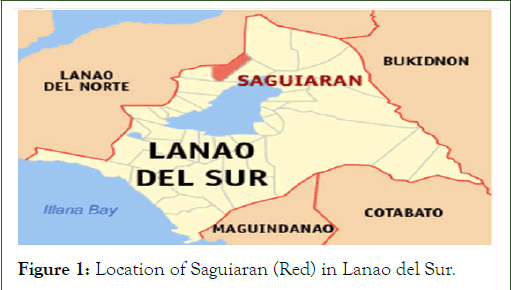
Figure 1: Location of Saguiaran (Red) in Lanao del Sur.
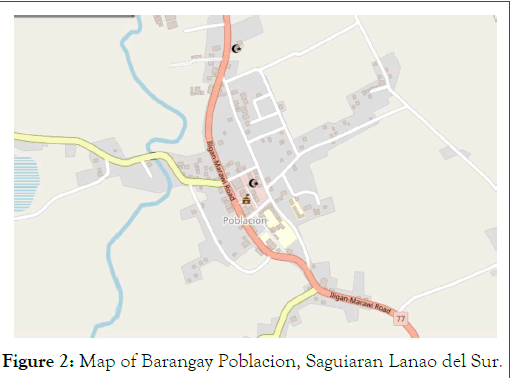
Figure 2: Map of Barangay Poblacion, Saguiaran Lanao del Sur.
Respondents of the study
A total of 146 residents of Barangay Poblacion in the municipality of Saguiaran participated in the study, of which 35 are males and 111 are female. Respondents were gathered through total enumeration.
Research instruments
The study utilized a four-part survey questionnaire were developed by Rhadsmia D. Alam for the household survey to identify the socio-demographic characteristics, background of establishment, level of environmental knowledge, awareness, and perceptions, and SWM practices of households. Part 1 focuses on the socio-demographic profile of the respondents. Part 2 has a total of statements focusing on the background of establishment of the respondents. More so, Part 3 has a total of 3 items that focuses on the practices of the respondents on the solid waste management in their areas. Lastly, Part 4 has a total of 10 items that deals with the solid waste management perceptions and level of environmental knowledge of the respondents.
Sampling procedure
The study used the simple random sampling because every member of the total population has an equal chance of being included in the sample. Simple random sampling is a type of probability sampling in which the researcher randomly selects a subset of participants from a population. Each member of the population has an equal chance of being selected. Data is then collected from as large a percentage as possible of this random subset (Scribbr.com).
Data gathering procedure
After the research title was approved by the Thesis Adviser headed by Prof. Maria Bella Sabaduquia, Ph.D, the validity and reliability of the instrument were established. Hence, copies of questionnaires were reproduced and distributed to the respondents and were personally distributed by the researcher which enabled her to explain the purpose of the study. The accomplished questionnaires were retrieved immediately after every administration and as soon as the respondents have answered all the required information. The respondents were further assured that their answers will be dealt with strict confidentiality.
Statistical treatment of data
The data gathered in this study used the frequency count and percentage to determine the profile of the respondents in terms sex, size of school, and school location. Frequency according to de Belen and Feliciano, refers to the number of times a certain score appears in the distribution. It is determined by counting the tally marks for each category of item. The frequency of a value is an important incremental step in the statistical step in the statistical processing of data set. The relative frequency of value is the proportion of all observations in the data set or category with that value. However, the number of responses or observations for each value of category is easier to understand when it is presented in percentage. The summary of data through frequency distribution table presents the number of observations or responses for each category in percentages. To get the percentage, divide the frequency by the total number of results and multiply by 100.
Results and Discussions
Table 1 shows that most of the respondents belonged to ages 36 and above. Some were classified with ages ranging from 30-35. The least number of respondents reveal the very few numbers of respondents with ages ranging from 26-30. Few respondents were 20-25.
| Age | Frequency | Percentage |
| 20-25 | 6 | 4.11 |
| 26-30 | 9 | 6.16 |
| 30-35 | 13 | 8.9 |
| 36 and above | 118 | 80.82 |
| Total | 146 | 100 |
Table 1: Distribution of respondents according to ages.
Table 2 shows that 24 percent of the respondents were identified as male while 76 percent were identified as females.
| Gender | Frequency | Percentage |
| Male | 35 | 23.97 |
| Female | 111 | 76.02 |
| Total | 146 | 100 |
Table 2: Distribution of respondents according to gender.
Table 3, it is shown that almost all of the total numbers of respondents are married which is comprise of 83 percent. Only 12 percent are single. The remaining numbers are separated and widowed.
| Civil status | Frequency | Percentage |
| Single | 18 | 12.33 |
| Married | 122 | 83.56 |
| Separated | 3 | 2 |
| Widow | 3 | 2 |
| Total | 146 | 100 |
Table 3: Distribution of respondents according to civil status.
Table 4 revealed that half of the respondents have a monthly income ranging from 9000 pesos and above. Around 17.81 percent of the respondents earn 1000-3000 php and 3000-6000 php respectively. While 1/9 percent of the respondents earn 6000-9000. The 3 percent of the respondents failed to indicate a response.
|
Monthly income |
Frequency |
Percentage |
|
Php 1000-3000 |
26 |
17.81 |
|
Php 3000-6000 |
26 |
17.81 |
|
Php 6000-9000 |
15 |
10.27 |
|
More than php 9000 |
74 |
50.68 |
|
No response |
(5) |
3.42 |
|
Total |
146 |
100 |
Table 4: Distribution of respondents according to monthly income.
Table 5 shows that majority of the respondents have gone through college which comprises of 78 percent. Around 18.5 percent finished or have gone through high school. Only 3 percent were classified under the elementary level.
| Educational attainment | Frequency | Percentage |
| Elementary level | 5 | 3.42 |
| High school level | 27 | 18.49 |
| College level | 114 | 78.08 |
| Total | 146 | 100 |
Table 5: Distribution of respondents according to educational attainment.
Background of establishment: The following tables present respondents place of residents or establishment of areas or areas and their duration of stay on particular areas.
Table 6 shows that majority of the respondents live in a dispersed settlement (48.63%). Around 39.04 live in a semi- compact settlement. The remaining 12.33% reside in a compact settlement.
|
Type of settlement |
Frequency |
Percentage |
|
Compact |
18 |
12.33 |
|
Semi-compact |
57 |
39.04 |
|
Dispersed |
71 |
48.63 |
|
Total |
146 |
100 |
Table 6: Respondents type of settlement.
Table 7 reveals the number of occupants per residence, half of shows that respondents were staying in a residence with less than 10 persons, 1/5 are 11-20 persons, one-eighth, 31 or more occupants, 8.90 percent, 21-30 occupants while the 2.74 failed to indicate a response.
| Number of residents | Frequency | Percentage |
| Less than 10 persons | 76 | 52.05 |
| Between 11-20 persons | 35 | 23.97 |
| Between 21-30 persons | 13 | 8.9 |
| 31 or more occupants | 18 | 12.33 |
| Total | 146 | 100 |
Table 7: Number of occupants per settlement.
As shown in table, most of the respondents resided in their area for more than 6 years. Many also resided in their area for more than 4-6 years already. Others had stayed for 2-4 years. Very few among the total numbers of respondents lived in their areas for less than a year.
Table shows that majority of the solid wastes generated in Poblacion, Saguiaran are Plastics (31.36%) followed by food and residues (22.27), combination of all (17.72%), bottles (16.81%), papers (9.54%) and metals (2.27). This is not common due to plastics being the main source of income of the residents in the area. Plastics are used for packaging of food and other goods, appliances, furniture, clothing, etc. Some of the plastics being thrown are disposable plastics cups, straws, spoons, bags, box, compartments, food containers and cellophanes. Philippines is considered the third-largest contributor to plastic waste worldwide, contributing to an estimated 0.75 million metric tons of ocean plastic every year (ateneo.edu/news). Food and residues is the second type of solid wastes in the area. Foods and residues are common use for both residential and commercial establishments e.g., Cooking and refreshment [8].
As shown in table, the respondents prefer to dispose their waste in the morning (47.95%). This may be because the local tradition requires it that they cleanup their residences in the morning. In order to avoid being noticed by other residents, the locals claim that they discard their trash in the evening.
Majority of the residents (33.56%) preferred to dispose “every other day” and “every day” (33.56%). According to them, their wastes usually pile up in the trashcan in two days. The place lacks a garbage truck collector. It is up to the residents when they can throw their garbage.
It may be observed in that majority of the respondents dispose their garbage on their backyards (21.55%) while others throw their solid wastes in the open-dump site (14.66%), compost pit (10.34%), front yard (9.48%), empty lot (4.31%), garbage container (12.07%) and landfill (1.72%). According to the some of the respondents, they dispose their solid wastes on Marawi city which has a garbage truck collector. Few of the residents incinerate their solid wastes. This implies that the residents rely on their own solutions to dispose their solid wastes since there are no garbage collector in the area.
Majority of the respondents (85.62%) do not pay for their garbage collections. Only 14.48 percent pay for their garbage collections.
As shown in table, most common problems of the respondents are no proper segregation. The residents lack the education to practice segregate their wastes, hence, need for an Information education campaign. A lack of proper garbage disposal could mean that the residents throw their garbage anywhere. This is a major problem and the local officials must solve this problem. Next in ranks are too many wastes are dumped in disposal site and garbage not protected from scavengers, this is not only a cause of irritation to the eyes, but it is also hazardous to health.
Most of the respondents, more than one-fourth were moderately satisfied and unsatisfied with the solid wastes management in their areas. Less than one-fourth claimed that they were very unsatisfied. Few were highly satisfied and moderately satisfied. As a whole, the respondents were almost a tie in their satisfaction and unsatisfaction of the solid waste management in their areas. They are satisfied maybe because they have some wide areas to incinerate and landfill their garbage they are unsatisfied due to the uncollected wastes is an eye sore, cause bad odor and may pose health risks to passerby near its vicinity.
The factors perceived by the respondents to be most contributory to the problems on solid waste management are lack of community participation and lack of environmental consciousness combined (63.71). Inefficient organization, financial constraint, complexity and system multi dimensionality are the main challenges faced by the local authority internally in managing the solid waste. Local authorities are the main agencies in dealing with solid waste management in effective and efficient ways to the residents and they have to emphasize more on waste minimization on household waste management.
Table shows that majority of the respondents, about 72% were highly aware that solid wastes can cause some diseases. Less than one-fourth of the total number of respondents were also aware. Very few were, numbering to less than 10% were moderately aware. Only two and three responded to not aware and slightly aware respectively. A significant proportion of the respondents' views may have been influenced by the ecological understanding they had acquired from normal daily activities, such as media headlines. Improper disposal of municipal solid waste can create unsanitary conditions, and these conditions in turn can lead to pollution of the environment and to outbreaks of vector-borne disease—that is, diseases spread by rodents and insects. The tasks of solid-waste management present complex technical challenges. They also pose a wide variety of administrative, economic, and social problems that must be managed and solved.
Table shows that majority of the respondents, about 63.69% were highly aware that solid wastes can cause floods. Less than one-fourth of the total number of respondents were also aware. Very few were, numbering to 12% were moderately aware. Only seven and five responded to not aware and slightly aware respectively. garbage that is not properly disposed enters into drainage systems and clogs drains. This obstructs the free flow of the water that enters into these drains causing water to back up during rainfall flooding the surrounding area. A buildup of garbage can also obstruct the natural flow of water in rivers and streams.
In table respondents were also highly aware that solid wasted can cause air pollution, water pollution, bad odor and visual blight. Methane and carbon dioxide are released from the ground and rise into the atmosphere as a result of rotting food and other decaying organic waste. Methane is a powerful greenhouse gas that also poses a risk to mankind due to its volatility and tendency for explosions. The most frequently produced greenhouse gas is carbon dioxide [9]. It causes global warming by trapping heat in the atmosphere. Leachate from landfills has an impact on water quality because it reaches water sources. Inorganic and organic wastes that are soluble in water will combine with decomposing solid waste to form a polluted liquid called leachate or waste juice that contaminates the ground water. Organic solid wastes emit obnoxious odor on their decomposition and disposed solid wastes affect the aesthetic of the environment, hence, visual blight or eye sore.
As shown on table 23, 85.61% of the respondents are not aware of the solid wastes management activities of their respective local authorities. According to the municipal hall, they have not yet conducted any solid waste management activities in their area.
Majority of the residents were unsatisfied with the solid waste management in Poblacion, Saguiaran Lanao del Sur. The local officials should prioritize the solid waste management. They should plan strategies on how to improve solid waste management and impose its strict implications.
Conclusion
This study aimed to identify Barangay Poblacion residents applied ways and means of managing solid wastes. It is focused on proper solid waste management. The survey was conducted at the Barangay Poblacion, Saguiaran and data were obtained through the use of simple random sampling with 146 respondents. With this the frequency and distribution were sorted and results were analyzed and discussed.
The researcher found out plastics rank first among the types of solid wastes commonly seen in the place. Majority of the respondents dispose their solid wastes materials every other day. Majority of the respondents never pay for garbage collections. 21.55 percent of the respondents dispose their garbage in their backyards and rely on their own solutions to dispose their garbage such as incineration, open-dumpsite, garbage container, etc.
In addition, most of the respondents were unsatisfied with the solid waste management in Barangay Poblacion. Majority of the respondents were also highly aware of one of the major effect of garbage- the source of some diseases and flooding. Also, the respondents were environmentally aware about solid wastes and the problems associated with it.
Recommendations
In the light of the findings and conclusions of the study, the following recommendations are advanced:
• The researcher recommends that growing awareness on solid waste management practices by that of the residents and local officials, should further be increased for the welfare of the general public which in turn shall help strengthen solid waste management extent of implementation ensuring active public participation for the program to accomplish desired results.
• The researcher recommends solid waste management programs and advocacies must be implemented, awareness on waste management issues as well as sustainable solutions to these problems should be sought for the integration of the community’s active participation.
• The researcher recommends that education as an important component of solid waste management should be further intensified to establish a good program in the community. In the same manner, the attitude should be positively developed as deemed needed on solid waste management execution and implementation.
• The researcher recommends that like growing awareness, proper implementation should be given equal focus and attention. Therefore, awareness accompanied by participation served as a key for people to be involved in the waste management programs of the community for its effective and sustainable implementation.
References
- Abu Qdais H. Techno-economic assessment of municipal solid waste management in Jordan. Waste Manag. 2007;27(11):1666–1672.
[Crossref] [Google Scholar] [PubMed]
- Ackerman F. Why do we recycle? Markets, values, and public policy. 1997.
- Agamuthu P, Fauziah SH, Khidzir K. Evolution of solid waste management in Malaysia: impacts and implications of the solid waste bill. J Mater Cycles Waste Manag. 2009;11.
- Al-Khatib IA, Monou M, Abu Zahra AS, Shaheen HQ, Kassinos D. Solid waste characterization, quantification and management practices in developing countries: a case study of Nablus district, Palestine. J Environ Manage. 2010;91(5):1131–1138.
- Al-Salem SM, Lettieri P, Baeyens J. Recycling and recovery routes of plastic solid waste (PSW): a review. Waste Manag. 2009;29:2625–2643.
[Crossref] [Google Scholar] [PubMed]
- Alam RD. A preliminary survey on solid waste management in MSU campus, Marawi city. Undergraduate thesis. 2009.
- Aye L, Widjaya ER. Environmental and economic analyses of waste disposal options for traditional markets in Indonesia. Waste Manage. 2006;26:1180–1191.
[Crossref] [Google Scholar] [PubMed]
- Allen GS, Ahn HS, Preziosi TJ. Cerebral arterial spasm: a controlled trial of nimodipine in patients with subarachnoid hemorrhage. N Engl J Med. 1983;308(11):619–624.
[Crossref] [Google Scholar] [PubMed]
- Bai R, Sutanto M. The practice and challenges of solid waste management in Singapore: a review. Waste Manag. 2002;22(5):557–567.
[Crossref] [Google Scholar] [PubMed]
Citation: Manda FN (2026) Solid Waste Management Beliefs and Practices in Rural Households of Barangay Poblacion, Saguiaran, Lanao Del Sur. Int J Waste Resour. 16:601.
Copyright: © 2026 Manda FN. This is an open-access article distributed under the terms of the Creative Commons Attribution License, which permits unrestricted use, distribution, and reproduction in any medium, provided the original author and source are credited.