


Indexed In
- Genamics JournalSeek
- Academic Keys
- JournalTOCs
- China National Knowledge Infrastructure (CNKI)
- Access to Global Online Research in Agriculture (AGORA)
- Centre for Agriculture and Biosciences International (CABI)
- RefSeek
- Directory of Research Journal Indexing (DRJI)
- Hamdard University
- EBSCO A-Z
- OCLC- WorldCat
- Scholarsteer
- SWB online catalog
- Publons
- Euro Pub
- Google Scholar
Useful Links
Share This Page
Journal Flyer

Open Access Journals
- Agri and Aquaculture
- Biochemistry
- Bioinformatics & Systems Biology
- Business & Management
- Chemistry
- Clinical Sciences
- Engineering
- Food & Nutrition
- General Science
- Genetics & Molecular Biology
- Immunology & Microbiology
- Medical Sciences
- Neuroscience & Psychology
- Nursing & Health Care
- Pharmaceutical Sciences
Review Article - (2025) Volume 16, Issue 4
Physico-Chemical Characterization, Isolation and Identification of Bacteria of Technological Interest from Lebol a Local Diary Product of the Northern Region of Cameroon
Dazeck Doumba Fanny Rosette1*, Edima Helene Carole2 and Nso Emmanuel Jong32Department of Sciences, University of Ebolowa, Ebolowa, Cameroon
3Department of Science and Veterinary Medicine, National School of AgroIndustrial Sciences, University of Ngaoundere, Adamawa, Cameroon
Received: 10-Oct-2024, Manuscript No. JFPT-24-27140; Editor assigned: 14-Oct-2024, Pre QC No. JFPT-24-27140 (PQ); Reviewed: 28-Oct-2024, QC No. JFPT-24-27140; Revised: 10-Nov-2025, Manuscript No. JFPT-24-27140 (R); Published: 17-Nov-2025, DOI: 10.35248/2157-7110.25.16.1168
Abstract
The description of the technical system for producing lebol in the Northern Cameroon region made it possible to have a manufacturing process with variations in the type of ferment used and the fermentation time. Whole milk is fermented using pendidam (acidic skimmed curdled milk) or kindirmou (whole curdled milk) which are artisanal lactic ferment resulting from uncontrolled fermentations. The physicochemical characterization of lebol and the isolation of microorganisms of technological interest from it were undertaken. The physicochemical characterization of lebol was done by determining the contents of water, total ash, lipids, proteins and total sugars. Acid, saponification, iodine and peroxide values were also determined. The search for microorganisms of technological interest was carried out by isolation on specific agar plates and identification of strains obtained using classic microbiology methods and API 50 CHL galleries. The water content varies from 13.68 to 24.5 ± 0.71%; proteins, sugars and minerals which are part of the non-fatty compounds remain within the limit set by the regulations; the lipid content, the main constituent of lebol, is greater than 80% as required by the codex alimentarius. The acid index varies from 13.19 ± 0.37 to 60.67 ± 2.84 mg of KOH/g and tells us about the presence of free fatty acids in the lebol, reflecting an alteration of the triglycerides present in the bowl. The species found in lebol belong to the genus Lactobacillus (Lactobacillus plantarum; Lactobacillus casei; Lactobacillus fermentum; Lactobacillus acidophilus; Lactobacillus lactis, Lactobacillus acidophilus and the genus Streptococcus (Streptococcus diacetylactis 2).
Keywords
Dairy product; Lebol; Bacteria of technological interest; Lactobacillus fermentum
Introduction
Lebol, dehydrated milk fat, is obtained after fermentation of whole milk and churning of cream. Like all local dairy products, it has advantages which are the extension of the shelf life of milk by dehydration and fermentation; the organoleptic and sensory qualities appreciated by consumers; it constitutes a socio-cultural identity of several peoples like the Funali people of North Cameroon and has a strong economic potential.
Description of the technical production system of lebol in the North Cameroon region has made it possible to have a manufacturing process with variations in the type of ferment used and the fermentation time. During the making of lebol, whole milk is fermented using the pendidam or kindirmou which are artisanal ferments resulting from uncontrolled fermentations.
Indeed, the use of these ferments poses a problem of microbiological and physicochemical qualities of the final product because of the conditions of production and conservation. Moreover, this quality is further degraded by the lack of control of the ferments used. Indeed, the microorganisms present in these natural ferments are not known or controlled and can be of variable nature. However, the knowledge and control of the microorganisms which constitute a lactic ferment in dairy technology makes it possible to have a quality milk-derived product on the physico-chemical and microbiological levels. It is in this sense that a physicochemical characterization and the isolation of microorganisms of technological interest have been undertaken.
Materials and Methods
Sampling
Four groups of three samples were collected in areas of high lebol production in the Northern Cameroon region according to the map in the figure which represents the Veterinary Zootechnical Centers visited. The samples were taken at the end of lebol processing. To do this, using a sterile ladle and a balance, 250 g of lebol were taken and introduced into sterile jars and stored at 4°C in a cooler then transported to the food microbiology and biotechnology laboratory from the National Higher School of Agro-Industrial Sciences for analyses (Table 1) [1,2].
| Groups | Localities | Sample numbers |
| Group 1 (G1) | Gashiga | × 03 |
| Figuil | ||
| Djaro-gotel | ||
| Group 2 (G2) | Ouro-tchiedo | |
| Gouna | ||
| Diam-Baba | ||
| Group 3 (G3) | Nakong | |
| Ngong | ||
| Badjouma | ||
| Group 4 (G4) | Guider | |
| Baila | ||
| Rey-mango | ||
| Total : 36 samples |
Table 1: Groups, localities and sample numbers.
Physico-chemical characterization of lebol
In order to determine the physico-chemical characteristics of lebol, the water, total ash, lipid, protein and sugar content totals were determined. The acid, saponification and iodine indexes and the peroxide index were determined on the different samples of lebol produces in an artisanal way.
Identification of microorganisms of technological interest
The search for microorganisms of technological interest was done by isolating and identifying the bacterial strains contained in lebol.
The isolation made it possible to highlight the strains of interest for the production of lebol. To do this, a stock solution was prepared with 25 g of sample and 225 ml of physiological saline.
The decimal dilutions were carried out. The 10-3, 10-4 and10-5 dilutions were retained for further work. The isolation of the bacterial strains was done on MRS and M17 agars. The purification consisted in carrying out successive subcultures on agar, with incubation at the corresponding temperatures and times, until obtaining colonies of the same size, same shape and same color providing information on the purity of the strains.
Identification of isolated strains
The identification of the isolated microorganisms made it possible to give them a name. Gram positive, catalase negative and oxidase negative bacteria are assumed to be lactic acid bacteria. The identification of the strains was carried out by the application of the classic techniques of microbiology, based on the research of a certain number of morphological, physiological and biochemical characters.
The morphological characterization carried out on the isolated strains constitutes the first step in their identification. It made it possible to know the morphology of the strains through macroscopic and microscopic observations after Gram staining which made it possible to differentiate Gram-positive bacteria from Gram-negative ones, the rods, the shells and the mode of grouping [3]. The appearance of the colonies gave the morphological characters such as shape, size, color, surface.
The physiological characterization made it possible to highlight the ability to move and the optimal growth conditions of the isolated strains to be identified. The tests performed are the mobility test on mannitol-mobility medium, growth at different temperatures (15 and 45°C), growth at different pH (4.4 and 9.6), growth at different NaCl concentrations (4 and 6.5) and fermentation type.
Biochemical characterization made it possible to highlight the production of enzymes such as catalase, oxidase and citratase in the strains to be identified, as well as their fermentation profile.
The technological characterization of the strains to be identified consists in highlighting the lipolytic and proteolytic capacities as well as the fermentation profile of these strains. The lipolytic activity has been demonstrated in order to know if the isolated strains can participate or not in the rancidity of lebol by lipid degradation. It was determined according to the method of Guiraud and Galzy. It highlights the ability of isolates to degrade lipids according to their enzymatic equipment. A 24 h colony of different strains of lactic acid bacteria was spot deposited using a Pasteur Pipet on the surface of sterile MRS/M17 agar adjusted to pH 7.0 and supplemented with 1% tween 80 as an artificial lipid source. The medium was opacified with calcium carbonate CaCO3 at a rate of 0.5% in order to clearly visualize the possible presence of this activity. After incubation at 37°C for 24 to 48 h, the lipolytic activity of these strains was manifested by the appearance of a clear zone around the colonies.
To determine the proteolytic activity of lactic acid bacteria, MRS and M17 agar supplemented with 10% milk is poured, solidified and dried. Then, each strain to be identified is inoculated by central pricking of a young culture. After incubation at 37°C for 24 hours, proteolysis is revealed by clear zones around the bite.
The determination of the fermentation profile of the isolated strains was made on the API 50 CHL gallery in order to allow the identification of Lactobacillus and related genres. She is incorporated of 50 micro-tubes allowing the study of their fermentation of belonging substrate. To their family of the hydrates of carbon and drifts (glycosides, polyalcohols, acidsuronic). The testing of fermentation is inoculated with APIs 50 CHL medium which allows rehydrate the substrates. During their period incubation, there fermentation to translated by a change of color [4]. In the tube, due to production acid in anaerobiosis is revealed by the indicator of pH of environment selected. Seeding of the gallery was carried out according to the manufacturer's instructions. A first reading is made after 24 hours and the second after 48 hours.
Statistical analyzes
Means and standard deviations were calculated by the software Microsoft Excel, 2016. The analysis of variances was carried out, using the statistical software Statgraphics 5.1, in order to compare the means obtained during the determination of the physicochemical composition of the different lebol samples and the Duncan test made it possible to classify them at a threshold of 5%.
Results and Discussion
Chemical composition of samples of the bowl
In order to characterize lebol, produced in northern Cameroon, the water, protein, lipid, total sugar and ash contents were evaluated (Table 2) in the different samples collected.
| Lebol | Water (%) | Protein (g/100 gMS) | Lipids (g/100 gMS) | Sugars totals (g/100 gDM) | Ashes (g/100 gMS) |
| EG1 | 13.68 ± 1.34a | 1.00 ± 0.03b | 94.05 ± 1.25c | 3.48 ± 0.30c | 0.42 ± 0.03a |
| EG2 | 16.12 ± 3.88b | 4.42 ± 0.11d | 91.15 ± 0.67a | 3.00 ± 0.05b | 0.37 ± 0.01a |
| EG3 | 16.95 ± 0.51b | 3.01 ± 0.10c | 92.37 ± 0.07b | 2.35 ± 0.10a | 1.25 ± 0.17b |
| EG4 | 24.5 ± 0.71c | 0.18 ± 0.03a | 96.98 ± 0.37c | 2.80 ± 0.06b | 1.45 ± 0.00b |
| Note: The values with the same letters in the columns are not significantly different at the 5% level. E=samples; G=group of producers; EG1=group 1 samples; EG2=group 2 samples; EG3=group 3 samples; EG4=group 4 samples; DM=dry matter | |||||
Table 2: Chemical composition of the bowl obtained in the traditional way (n=3 samples per group)
The water content is an important physico-chemical characteristic for food because it intervenes in particular in the texture, the taste and the conservation was evaluated in the lebol. It varies from sample to sample. It is 13.68 ± 1.34% for EG1; 16.12 ± 3.88% for EG2; 16.95 ± 0.51% for EG3 and 24.5 ± 0.71% for EG4. However, this variation is not significant between all samples. This is the case for samples EG2 and EG3. The water in milk fat comes either from buttermilk or from water added during washing. The high-water content in samples EG2, EG3 and EG4 is thought to be due to partial removal of buttermilk and water during the churning, washing and kneading steps. A low water content is important for the preservation of the final product by limiting the proliferation of spoilage microorganisms which may have lipolytic activity. Indeed, there is a maximum water content limit for dehydrated milk fat which is 16% (CXS-279-1971). In accordance with this limit, only EG4 shows high water content, its weathering is also faster compared to other samples.
Proteins, sugars and minerals are part of the 2% of non-fat compounds present in the dehydrated fats of milk and give them their nutritional quality (CXS-279-1971). Their presence in these different lebol samples may result in the buttermilk not being completely removed during the washing and mixing operations of the manufacturing process. Also, the presence of sugars could be explained by an incomplete fermentation of the lactose contained in the milk. The protein content of lebols analyzed also varies from sample to sample. It is 1.00 ± 0.03 g/100 g DM for EG1; 4.42 ± 0.11 g/100 g DM for EG2; 3.01 ± 0.10 g/100 g DM for EG3 and 0.18 ± 0.03 g/100 g DM for EG4. This variation is significant between EG1, EG2, EG3 and EG4. The sugar content is 3.48 ± 0.30 g/100 g DM for EG1; 3.00 ± 0.05 g/100 g DM for EG2; 2.35 ± 0.10 g/100 g MS for EG3 and 2.80 ± 0.06 g/100 g MS for EG4. The ash content remains very low in the lebols analyzed. It is 0.42 ± 0.03, 0.37 ± 0.01, 1.25 ± 0.17, 1.45 ± 0.00 and 0.13 ± 0.02 g/100 g MS respectively for the samples EG1, EG2, EG3, EG4. These low protein, sugar and ash contents can be justified by the fact that the non-fat compounds constitute 2% of the dehydrated milk fat (CXS-279-1971). The lipid content was evaluated because lipids remain the main constituent of dehydrated milk fat. It is 94.05 ± 1.25 g/100g MS for EG1; 91.15 ± 0.67g /100g MS for EG2; 92.37 ± 0.07 g/100 g MS for EG3 and 96.98 ± 0.37 g/100 g MS for EG4. The EG1 and EG4 lebols do not show any significant variation [5]. The minimum limit of fat content being 80% for dehydrated milk fat (CXS-279-1971).
Different indexes of lebo
Determination of acid, iodine, saponification, peroxide and ester indices of lebol makes it possible to assess the quality of this fat. These indices are considered as quality criteria for lebol as milk fat. Table 3 presents the values obtained for these various indices sought.
| Lebol | Acid value (mg KOH/g) | Saponification index (mg KOH/g) | Ester index (mg KOH/g) | Peroxide index (meq O2/kg) n | Iodine index (g/100 g) |
| EG1 | 29.92 ± 0.52c | 140.34 ± 2.35c | 110.42 ± 2.67b | 14.43 ± 0.48a | 33.79 ± 2.10c |
| EG2 | 60.67 ± 2.84d | 114.64 ± 1.98a | 53.61 ± 3.18a | 23.79 ± 1.98b | 18.87 ± 0.24b |
| EG3 | 13.19 ± 0.37a | 124.18 ± 0.89b | 110.82 ± 1.21b | 25.28 ± 0.65b | 13.71 ± 1.82a |
| EG4 | 16.80 ± 0.00b | 138.10 ± 0.00c | 21.30 ± 0.00c | 16.02 ± 0.95c | 15.06 ± 0.91a |
| Note: The values with the same letters in the columns are not significantly different at the 5% level. E=samples; G=group of producers; EG1=group 1 samples; EG2=group 2 samples; EG3=group 3 samples; EG4=group 4 samples; DM=dry matter | |||||
Table 3: The indices of the lebol samples analyzed (n=3 samples per group).
The acid number is used to judge the state of deterioration of the fat. This analysis made it possible to learn about the presence of free fatty acids in the different lebol samples, and therefore about their degree of degradation. For the different samples analyzed, the acid number is 29.92 ± 0.52 mg KOH/g for EG1; 60.67 ± 2.84 mg KOH/g for EG2; 13.19 ± 0.37 mg KOH/g for EG3 and 16.80 ± 0.00 mg KOH/g for EG4. This index reflects the presence of free fatty acids in these different samples. However, the value obtained varies from one sample to another and this variation remains significant. The acid number indicates on the one hand a possible deterioration of the fat and contributes to the increase of the acidity, the reduction of the aromatic substances and the change of the color of the product. Indeed, when fatty substances become rancid, triglycerides are converted into free fatty acids and glycerols, which increases the acid number. The fatty acid content increases with time, which makes it possible to judge the state of deterioration. The iodine index was evaluated in order to know the degree of unsaturation of the fatty acids present in the lebol. This index represents the most useful constant. It is directly related to the degree of oxidation of the dehydrated fat. For the analyzed samples, the iodine number is 33.79 ± 2.10 for EG1; 18.87 ± 0.24 for EG2; 13.71 ± 1.82 for EG3 and 15.06 ± 0.91 for EG4. The more unsaturated the dehydrated fat, the higher its iodine value. To this end, the different lebol samples studied are saturated, which prevents their alteration and rancidity. The conservation of this lebol could be done without too many risks of auto-oxidation. This lebol would be weakly concentrated in unsaturated fatty acids.
The saponification index of the various lebols analyzed reflects the quantity of saponifiable fatty acids in the lebol. This index is 140.34 ± 2.35; 114.64 ± 1.98; 124.18 ± 0.89; 38.10 ± 0.00 mg of KOH/g respectively for EG1, EG2, EG3, EG4. Knowledge of the saponification index of a fatty substance provides information on the length of the carbon chain of the acids constituting this fatty substance. The saponification index of a fatty substance is all the higher as the carbon chain of the fatty acids is short.
The peroxide index provides information on the degree of oxidation of the dehydrated milk fat. For the different lebol samples analyzed, the peroxide index is 14.43 ± 0.48 for EG1; 23.79 ± 1.98 for EG2; 25.28 ± 0.65 for EG3 and 16.02 ± 0.95 for EG4. These indices provide information on the degree of degradation of the different lebol samples analysed.
Microorganisms of technological interest isolated from lebol
With the aim of formulating a lactic ferment for the manufacture of lebol, strains of technological interest have been identified. The isolation of bacteria on culture medium made it possible to have a first collection of 110 bacteria isolated from samples of lebol. Preliminary tests were carried out to retain the isolates likely to be the bacteria of technological interest to be characterised. These tests are: Microscopic, macroscopic, Gram staining and catalase testing. On the basis of the results obtained (gram-positive, bacillus, or cocci, catalase negative, oxidase negative) 36 isolates were selected as bacteria of technological interest which were the subject of phenotypic identification.
Morphological characters: The morphological characterization took into account the macroscopic analysis of the colonies on a Petri dish and the microscopic analysis of the isolated strains. Observation of the Petri dishes after the incubation time shows different types of colonies on the agar used, namely whitish, yellowish, orange and translucent colonies with regular and irregular contours with diameters varying between 0.5 mm and 3 mm. considered to be colonies of lactic acid bacteria [6]. These isolated colonies were purified by successive subculturing until identical colonies were obtained in the Petri dish.
Microscopic examination made it possible to describe the shapes of the isolated strains and the structure of their wall. Observation after Gram staining made it possible to retain only Gram+ isolates for further identification. Observation of the shape under the microscope of the isolated strains made it possible to determine the bacilli (42%) and the cocci (58%).
Physiological characters: In order to know the physiological properties of the isolates, the physiological characterization took into account mobility, growth at different temperatures (15, 37 and 45°C); at different pH (4.4 and 9.6) at different NaCl concentrations (4 and 6.5%) and the fermentative type of the strains to be identified. This characterization made it possible to highlight the growth of strains isolated in hostile environments.
In order to determine the ability of isolated strains to move in a given matrix, mobility was demonstrated on the semi-solid culture medium mannitol-mobility. Following this test, the isolates selected are 100% immobile cases. Indeed, lactic acid bacteria are by definition immobile microorganisms.
The fermentation type made it possible to assess the type of metabolism by which the carbonaceous substrate is transformed. It consisted in highlighting the formation of CO2 which is trapped in the Durham bell in a nutrient broth. This test made it possible to differentiate homo-fermentative strains from hetero-fermentative strains. Following the test, 78% of the homo-fermentative strains were determined against 22% of the hetero-fermentative strains. The hetero-fermenters are generally Leuconostocs or certain Lactobacillus. Homo-fermentation groups include genera such as Lactococci, Peddiococci and certain Lactobacilli. Bacteria belonging to the genus Streptococcus and to certain species of the genus Lactobacillus such as Lactobacillus bulgaricus, Lactobacillus casei, Lactobacillus caucasicus, Lactobacillus lactis and Lactobacillus plantarum and Lactobacillus thermobacterium as Thermo bacterium yoghurt are also homo-fermenters [7].
During this fermentation pathway, these bacteria degrade glucose, fructose, mannose, galactose, sucrose or lactose. Table 4 gives the results obtained for the growths at different temperatures (15, 37 and 45°C.); at different pH (4.4 and 9.6) at different concentrations of NaCl (4 and 6.5%).
Growth at different temperatures enabled the isolates to be classified as either psychrophiles, mesophiles and thermophiles. It emerges from Table 4 that the isolated strains do not grow at 15° C but grow at 45°C. They are therefore mesophilic strains and can be thermophilic. because the fermentation of milk intended for the production of lebol takes place at room temperature. which is favorable to the development of mesophilic bacteria.
|
Values |
Proportion (%) |
|
|
Growth at different |
15°C |
0 |
|
Temperatures |
45°C |
100 |
|
Growth at different pH |
4.4 |
72.22 |
|
9.6 |
97.22 |
|
|
Growth at different |
4% |
88.89 |
|
NaCl concentrations |
6.50% |
38.89 |
Table 4: Physiological characteristics of strains isolated from lebol in North Cameroon.
The growth test at different pH made it possible to determine the capacity of the isolated strains to grow at hostile pH. This capacity is considered as an identification criterion. The majority of lactic acid bacteria multiply preferentially at pH values close to the neutrality (6.5 to 7.5), but they are able to grow in a wide range of pH. There bacterial growth is inhibited when the pH of the medium becomes acidic. 72.22% of the strains isolated grow at pH 4.4 and 97.22% grow at pH 9.6, which reflects the fact that these strains for the most part have the capacity to grow in a wide range of pH.
The growth test at different concentrations of NaCl was carried out on MRS and M17 nutrient broths at 4% and 6.5% NaCl and incubated at 37°C for 24 to 48 hours in order to demonstrate their ability to grow in an environment with a high NaCl concentration, an environment considered hostile. In this study, at 6.5% NaCl, 38.89% positive growth is expressed. At 4%, a percentage of 88.89% positive growth.
Biochemical characteristics of isolated strains: The biochemical characterization of the isolated strains to be identified made it possible to highlight the presence of enzymes such as catalase and oxidase. The strains selected for identification are catalase and oxidase negative. The presence of catalase allows the degradation of hydrogen peroxide into water and oxygen when the colonies come into contact with a few drops of hydrogen peroxide. A gas release reflects the decomposition of hydrogen peroxide under the action of the enzyme to be tested. The selected strains were tested catalase negative, do not have catalase characteristic of the genera of lactic acid bacteria. All the strains selected for identification lack catalases which catalyze the decomposition of H2O2 into oxygen and water. The H2O2 thus produced will not have degraded and accumulated in the medium and participates in the inhibition of microorganisms present in the medium by their oxidizing action on the lipids of the membrane of these microorganisms [8].
The oxidase test made it possible to determine whether the strains isolated and to be identified use an oxidative metabolism or a fermentation metabolism to utilize a carbohydrate. The absence of oxidase in bacteria is characteristic of lactic acid bacteria; they resort to a fermentation metabolism. The retained isolates tested negative for oxidase.
The strains characterized as bacilli, gram positive, immobile, catalase negative, oxidase negative, homo-fermentative or heterofermentative, which grow in hostile conditions (pH 4.4 and 9.6; 4 and 6.5% NaCl), which are mesophilic and sometimes thermophilic, may belong to the genus Lactobacillus depending on the species. It was also listed hulls, immobile, catalase negative, oxidase negative, homo-fermentative, mesophilic and thermophilic and which develop or not in hostile conditions (pH 4.4 and 9.6; 4 and 6.5% NaCl) and which may belong to the gender Leuconostoc or Lactococcus or Streptococcus.
Technological characterization of isolated strains
Lipolyticability: lipolytic activity was demonstrated in order to determine the capacity of the isolated strains to metabolize the fatty acids present in the lebol, also whether these strains participate in the rancidity of milk fat by degradation of lipids. Lipolysis was demonstrated on triglyceride agar. It emerges that only the NgLA198 strain exhibited lipolytic activity with a halo diameter of 5 mm ± 1 among the 36 strains tested. In fact, bacterialactic acid is considered weakly lipolytic or not at all in comparison with other bacterial genera such as Pseudomonas, Acinetobacteror, Flavobacterium. However, their presence in cheeses at high concentrations and for periods more or less important, can cause them to release quantities significant amount of free fatty acids. Which could be the case of the lebol.
Proteolytic ability: Proteolytic activity is also a technological feature important in lactic acid bacteria since it gives them the ability to grow effectively in milk. The results obtained are shown in Figure 1.
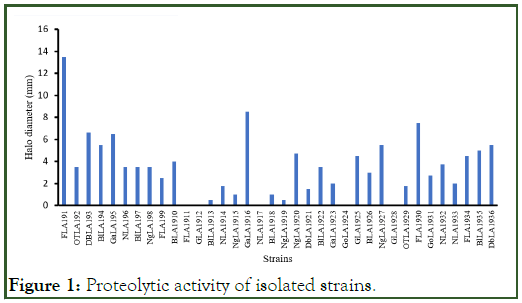
Figure 1: Proteolytic activity of isolated strains.
These results make it possible to confirm the proteolytic character of the majority of the strains isolated, as reported by the work of François et al. With the exception of strains FLA1911, GLA1912, NLA1917, GoLA1924, GLA1928 which have no proteolytic activity. For the rest of the work, these strains not showing any proteolytic activity will not be used because their ability to grow in milk is in doubt.
Ability to degrade citrate: In a medium containing citrate, the ability to use the latter by the strains to be identified was demonstrated. Citrate is found in low concentrations in milk but is nevertheless consists of a key substance in the development of dairy products fermented like lebol. Of the 36 strains to be identified, none showed the ability to degrade citrate. These strains will use the catabolism of amino acids which is a major pathway in the formation of molecules such as alcohols, aldehydes, organic acids. It can also be a source of energy for certain lactic acid bacteria in the event of nutrient limitation. However, they are able to metabolize citrate. It is not used as an energy source; its metabolism is carried out only in the presence of a fermentable sugar like lactose. The main metabolites resulting from citrate metabolism are: Acetic acid, CO2 , and products having four carbon atoms, including diacetyl, responsible for the flavor in several dairy products.
Fermentation profile of isolated strains: The search for sugars degraded by the isolated strains was carried out on an API 50 CHL gallery (Biomereux, France). It is a means of identifying microbial strains thanks to their ability to degrade these sugars.
Thus, each strain underwent 49 tests with 49 different sugars. The degradation of sugars by the isolated strains made it possible to give a name to these different isolates [9]. This identification has been made down to the species. Table 5 gives the species that have been identified. Out of a total of 36, 20 strains were identified using API 50 CHL strip.
| Codes | Genres | Species | Percent identification (%) | Proportion (%) | Localities |
| FLA1911; FLA1912; GaLA1916; NLA1917; DbLA1921 | Lactobacillus | Casei | 100 | 27 | Figuil, Nakong, Diam baba, Gashiga |
| 99.2 | |||||
| 97.3 | |||||
| 97.3 | |||||
| 97.3 | |||||
| BLA1913; BLA1918; NgLA1919; GoLA1931 | ÃÃÂ?? Fermentation | 88.3 | 21 | Baila, Ngong, Gouna | |
| 90.3 | |||||
| 88.4 | |||||
| 99.5 | |||||
| NgLA1915 | Acidophilus | 75.8 | 5 | Ngong | |
| GLA1928 | Lactis | 70.6 | 5 | Guider | |
| NLA1932 | Acidophilus2 | 63.8 | 5 | Nakong | |
| FLA191; otLA192; DbLA193; GaLA5; NLA196; BlLA197 | Plantarium | 96.3 | 32 | Figuil, ouro-tchiedo, Diam -baba, Gashiga, Nakong | |
| 96.1 | |||||
| 99.9 | |||||
| 98.4 | |||||
| 99.7 | |||||
| 95.9 | |||||
| FLA1934 | Streptococcus | Diacetylactis | 67.5 | 5 | Figuil |
Table 5: Strains identified using their fermentation profile.
The lactic flora present in lebol consists mainly of Lactobacilli. This is in agreement with several works which show that the lactic flora of fermented milk products is dominated by the genus Lactobacillus. This dominance is due to their acidifying property. The process of making lebol first involves acidifying the milk. The abundance of the Lactobacillus genus would be due to the manufacturing process which consists in letting the milk ferment 18 to 72 hours before skimming. The production of lactic acid during this process makes it possible to select the acidifying lactic flora. The species identified, contained in the lebol are species used as lactic ferments in several food transformations. They are used in plant and dairy fermentations, particularly in the manufacture of lebol. Their metabolism during these transformations gives lactic acid and other compounds such as aromatic compounds during the fermentation of carbohydrates. These will contribute to the organoleptic and textural qualities of the lebol. Lactobacillus plantarum is the most common species of the genus Lactobacillus, commonly found in meat and processed foods, in many fermented food products as well as anaerobic plant matter. Lactobacillus plantarum has one of the largest known genomes among lactic acid bacteria and is a very flexible and versatile species. Lactobacillus plantarumis commonly found in many fermented food products including sauerkraut, pickles, pickled olives, kimchi, some cheeses, and fermented sausages. Lactobacillus casei is a species found in dairy products as a nonstarter lactic acid bacteria, which has a wide pH and temperature range. Lactobacillus casei is present in aged cheddar cheese and in Sicilian green olives.
The biovariant diacetylactis of the lactis subspecies is used for its ability to form diacetyl from citrate. These taxa were formerly classified under the names Streptococcus lactis, Streptococcus cremoris and Streptococcus diacetylactis. Lactococci possess a large number of plasmids which code for several functional characteristics important for the quality of aromatic sourdoughs: fermentation of lactose, production of proteases, utilization of citrate and bacteriophage resistance. Lactobacillus acidophilus and Lactobicillus fermentum are involved in the production of several fermented milks. Lactobicillus acidophilus, Lactobicillus platarum, Lactobicillus lactic, Lactobicillus casei, Lactobicillus fermentum are established as probiotics. Their probiotic effect is felt by regulating the intestinal macrobiota, stimulating and developing the immune system, synthesizing and increasing the bioavailability of nutrients, reducing the symptoms of lactose intolerance and reducing the risk of certain diseases. This could explain why the lebol is used in the treatment of digestive disorders in new borns and certain diseases. Streptococcus diacetylactis nowadays called Lactoccocus diacetylactis intervenes in the production of diacetyl during dairy fermentation, an aroma which would be present in lebol. Lactobacillus fermentum, a hetero-fermentation bacterium, is responsible for the production of acetaldehyde from the ethanol produced during its metabolism. These species, identified by their technological abilities, will improve the organoleptic quality of lebol. The probiotic property of its strains would give lebol the ability to be used in traditional therapy.
Conclusion
The objective of this part was to identify bacteria of technological interest from lebol. After isolation, 36 strains were retained for this identification. Morphological, physiological, biochemical and metabolic characterizations were made in order to identify the isolated strains. This identification made it possible to give a name to 20 isolates out of the 36 retained. The species found in lebol belong to the Lactobacillus genus (Lactobacillus plantarum; Lactobacillus casei; Lactobacillus fermentum; Lactobacillus acidophilus; Lactobacillus lactis, Lactobacillus acidophilus and the genus Streptococcus (Streptococcus diacetylactis 2). These species, identified by their technological abilities, will improve the organoleptic quality of lebol. The probiotic property of its strains would give lebol the ability to be used in traditional therapy. In order to control the strains involved in the production of lebol, it is important to test the effectiveness of the strains identified in co-culture in a ferment.
References
- AFNOR (Association Française de Normalisation). Recueil des normes françaises des produits dérivés des fruits et légumes. 1982.
- AFNOR. Collection of French standards. Fats, oilseeds, derived products, AFNOR, Paris (France), 2nd edition. 1981.
- Badis A, Laouabdia-Sellami N, Guetarni D, Kihal M, Ouzrout R. Caractérisation phénotypique des bactéries lactiques isolées à partir de lait cru de chèvre de deux populations caprines locales "Arabia et Kabyle". 2005:30-37.
- Beukes EM, Bester BH, Mostert JF. The microbiology of South African traditional fermented milks. Int J Food Microbiol. 2001;63:189-197.
- Bourely J. Observation sur le dosage de l’huile des graines de cotonnier. Cot Fib Trop. 1982;27:183-196.
- Carr FJ, Chill D, Maida N. The Lactic Acid Bacteria: A Literature Survey. Crit Rev Microbiol. 2002;28(4):281-370.
- Brusetti L, Malkhazova I, Gtari M, Tamagnini I, Borin S, Merabishvili M, et al. Fluorescent-Box-PCR, an improved tool for resolving bacterial genetic diversity and biogeography studies. BMC Microbiol. 2008;8(1):220-232.
- Codex Alimentarius. Standard for Butter CXS 279-1971 previously CODEX STAN A-1-1971. 2018.
- Sharma B, Gujral HS. Modifying the dough mixing behavior, protein and starch digestibility and anti-nutritional profile of minor millets by sprouting. Int J Biol Macromol. 2020;153:962-970.
[Crossref] [Google Scholar] [PubMed]
Citation: Rosette DDF, Carole EH, Jong NE (2025) Physico-Chemical Characterization, Isolation and Identification of Bacteria of Technological Interest from Lebol a Local Diary Product of the Northern Region of Cameroon. J Food Process Technol. 16:1168.
Copyright: © 2025 Rosette DDF, et al. This is an open access article distributed under the terms of the Creative Commons Attribution License, which permits unrestricted use, distribution, and reproduction in any medium, provided the original author and source are credited.