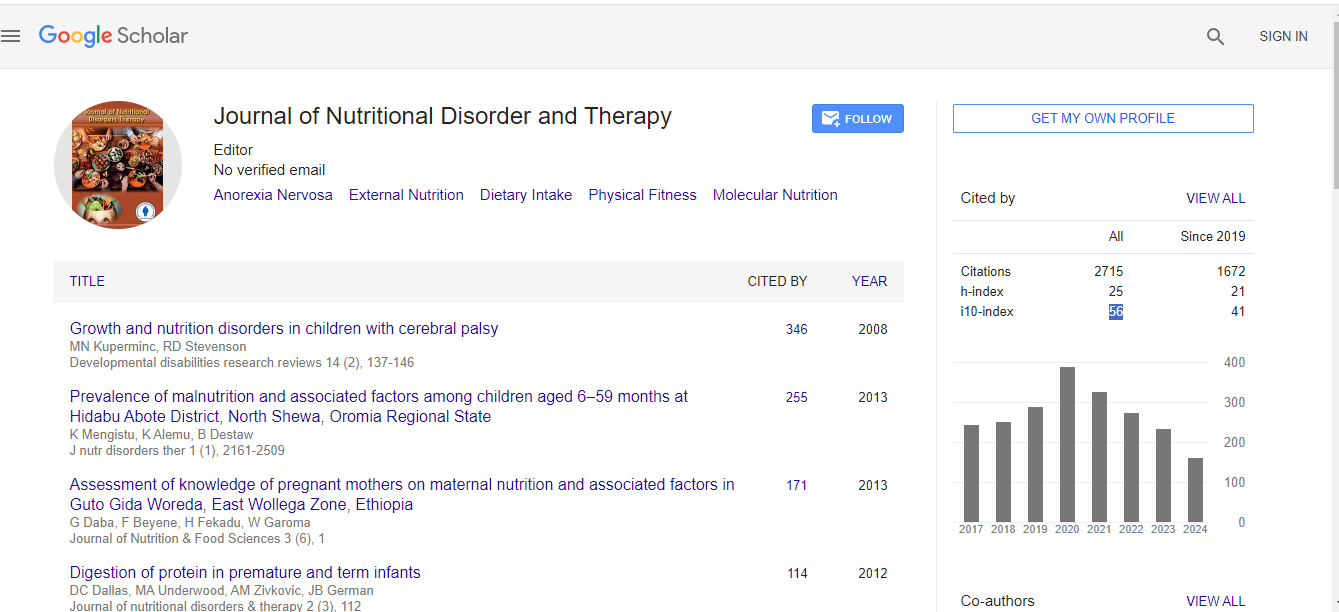

Indexed In
- Open J Gate
- Genamics JournalSeek
- Academic Keys
- JournalTOCs
- Ulrich's Periodicals Directory
- RefSeek
- Hamdard University
- EBSCO A-Z
- OCLC- WorldCat
- Publons
- Geneva Foundation for Medical Education and Research
- Euro Pub
Useful Links
Share This Page
Journal Flyer

Open Access Journals
- Agri and Aquaculture
- Biochemistry
- Bioinformatics & Systems Biology
- Business & Management
- Chemistry
- Clinical Sciences
- Engineering
- Food & Nutrition
- General Science
- Genetics & Molecular Biology
- Immunology & Microbiology
- Medical Sciences
- Neuroscience & Psychology
- Nursing & Health Care
- Pharmaceutical Sciences
Perspective - (2026) Volume 16, Issue 1
Metabolic Balance in Changing Communities: Practical Approaches for Metabolic Syndrome Management
Dragan VelimiroviÄ?*Received: 27-Feb-2026, Manuscript No. JNDT-26-31665; Editor assigned: 02-Mar-2026, Pre QC No. JNDT-26-31665; Reviewed: 16-Mar-2026, QC No. JNDT-26-31665; Revised: 23-Mar-2026, Manuscript No. JNDT-26-31665; Published: 30-Mar-2026, DOI: 10.35248/2161-0509.26.16.359
Description
Metabolic syndrome represents a group of metabolic changes that often appear together and increase the chance of later health complications. These changes commonly include increased blood pressure, elevated blood sugar, abnormal lipid values, and excess body fat around the abdominal area. The presence of several of these factors at the same time can affect body function in many ways and may contribute to cardiovascular conditions and altered glucose control. As populations undergo changes in food availability, daily activities, and living patterns, metabolic syndrome has become a growing concern across many parts of the world, including lower-income countries where nutritional patterns are shifting quickly.
Many years ago, undernutrition received greater attention in numerous developing regions because limited food access and infectious diseases were major concerns. During recent decades, many communities have experienced another form of nutritional challenge. Processed foods with high energy density are becoming more available while daily physical activity may decrease because of urbanization and changing occupations. As a result, some populations now face a double burden in which undernutrition and metabolic disorders coexist within the same communities or even within the same households.
Metabolic syndrome does not emerge from a single cause. It develops through interactions among lifestyle habits, biological factors, environmental influences, and social conditions. Sedentary behaviour can reduce energy expenditure and influence body composition over time. Dietary patterns rich in refined carbohydrates, saturated fats, and foods with limited nutritional value can contribute to weight gain and metabolic changes. Sleep patterns, stress levels, and family history may also influence individual risk.
Many people remain unaware of metabolic syndrome because symptoms may not appear during early stages. A person can continue daily activities without obvious signs while changes in blood sugar, blood pressure, and lipid concentrations progress gradually. This delayed recognition often limits early action and increases the chance that individuals will seek medical assistance only after complications develop. Routine health assessment therefore has value in identifying risk factors before more serious conditions arise.
Management approaches generally focus on modifying factors that contribute to metabolic disturbance. Food choices often receive considerable attention because nutrition strongly influences metabolic function. Dietary patterns based on vegetables, fruits, whole grains, legumes, fish, and moderate amounts of healthy fats may support improved metabolic outcomes. Rather than focusing on strict dietary restrictions, many healthcare professionals encourage sustainable eating habits that can fit within cultural preferences and local food availability.
Lower-income countries often present unique nutritional situations that require practical solutions rather than imported dietary plans that may not suit local circumstances. For example, nutrition advice that relies heavily on expensive food products may not be realistic for communities with financial limitations. Local grains, beans, seasonal fruits, and regionally available vegetables can support balanced dietary intake without creating additional economic strain. Nutrition guidance becomes more effective when recommendations align with foods that families already recognize and consume.
Physical activity also contributes to metabolic control. Regular movement can assist in improving insulin sensitivity, body composition, and cardiovascular function. Exercise does not always require expensive facilities or specialized equipment. Walking, cycling, agricultural work, active transportation, and community sports may provide beneficial activity levels. In many settings, daily movement patterns already exist and can be encouraged through public health efforts.
Conclusion
Metabolic syndrome reflects more than biological changes within the body. It also mirrors social transitions, food environments, economic conditions, and patterns of daily living. Addressing this condition requires attention to both individual behaviors and broader community influences. Through realistic dietary guidance, increased physical activity, health education, and accessible preventive services, many communities can work toward reducing the growing burden associated with metabolic disturbances.
Citation: Velimirovi? D (2026). Metabolic Balance in Changing Communities: Practical Approaches for Metabolic Syndrome Management. J Nutr Disord Ther. 16:359.
Copyright: © 2026 Velimirovi? D. This is an open access article distributed under the terms of the Creative Commons Attribution License, which permits unrestricted use, distribution and reproduction in any medium, provided the original author and source are credited.