
Indexed In
- Genamics JournalSeek
- Academic Keys
- JournalTOCs
- China National Knowledge Infrastructure (CNKI)
- Access to Global Online Research in Agriculture (AGORA)
- Centre for Agriculture and Biosciences International (CABI)
- RefSeek
- Directory of Research Journal Indexing (DRJI)
- Hamdard University
- EBSCO A-Z
- OCLC- WorldCat
- Scholarsteer
- SWB online catalog
- Publons
- Euro Pub
- Google Scholar
Useful Links
Share This Page
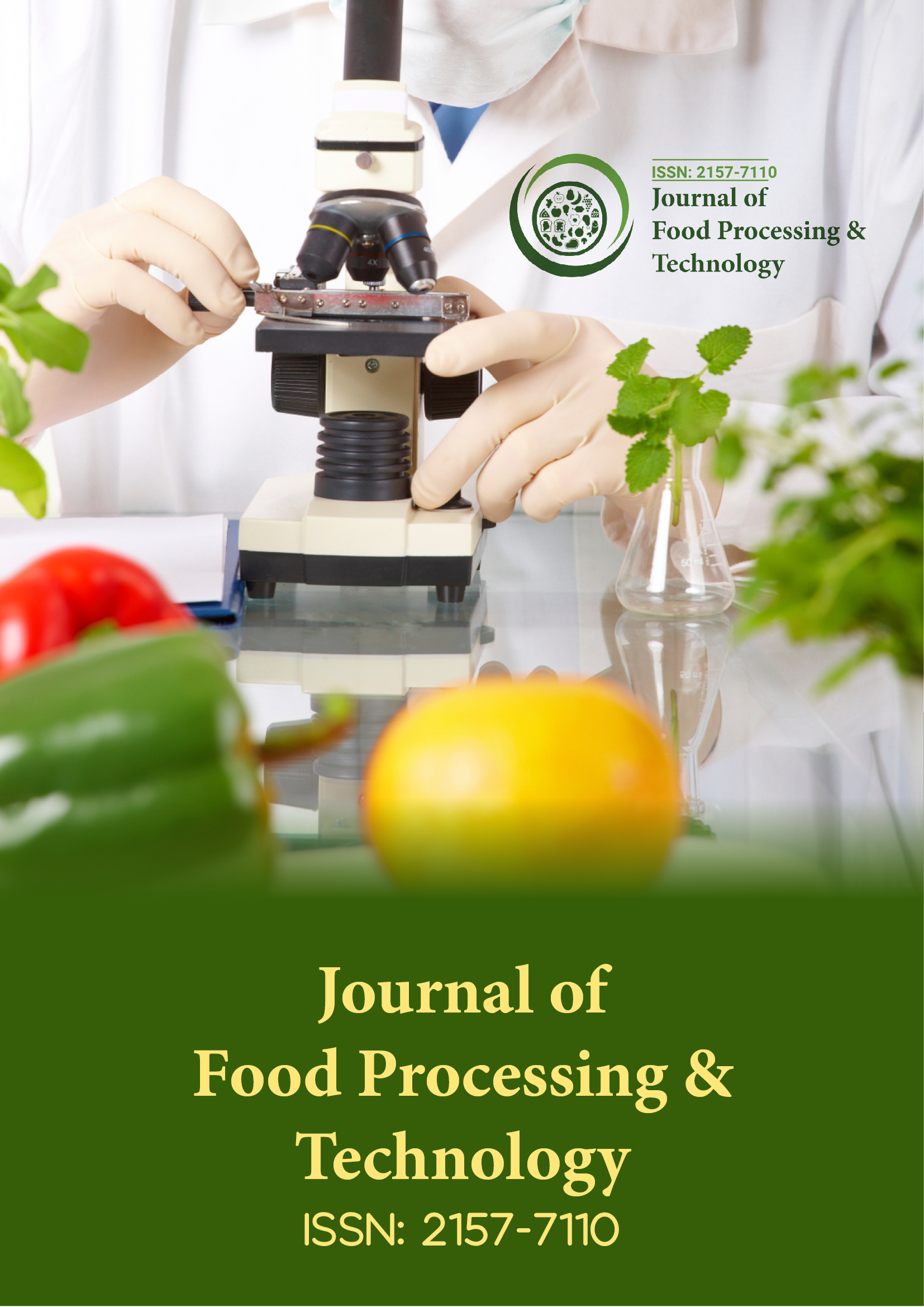
Journal Flyer
Open Access Journals
- Agri and Aquaculture
- Biochemistry
- Bioinformatics & Systems Biology
- Business & Management
- Chemistry
- Clinical Sciences
- Engineering
- Food & Nutrition
- General Science
- Genetics & Molecular Biology
- Immunology & Microbiology
- Medical Sciences
- Neuroscience & Psychology
- Nursing & Health Care
- Pharmaceutical Sciences
Commentary Article - (2026) Volume 17, Issue 1
Innovative Solutions to Tackle Food Insecurity
Leslie Sche*Received: 27-Dec-2024, Manuscript No. JFPT-24-28116; Editor assigned: 31-Dec-2024, Pre QC No. JFPT-24-28116 (PQ); Reviewed: 14-Jan-2026, QC No. JFPT-24-28116; Revised: 13-Apr-2026, Manuscript No. JFPT-24-28116 (R); Published: 20-Apr-2026
Description
Food security encompasses more than access to food it includes availability, accessibility, utilization and stability. These dimensions interact with social, economic, environmental and political factors, creating a complex challenge that requires a holistic approach. Addressing this multifaceted issue involves understanding the interconnected dynamics that shape food security globally. Availability refers to the physical presence of adequate food supplies, which is influenced by agricultural production, trade systems and storage infrastructure. While strong agricultural practices enhance availability, factors like climate change, soil degradation and natural disasters disrupt production and distribution. To ensure consistent availability, strategies must focus on sustainable agricultural practices and technological innovations, including improved farming techniques and climate-resilient crops.
Accessibility emphasizes whether individuals can obtain sufficient food. This aspect is determined by economic means, such as purchasing power and physical factors, including infrastructure. Economic access depends on income levels, employment opportunities and market stability, while physical access is shaped by the presence of transportation networks and distribution systems. In regions with significant income disparities or inadequate infrastructure, accessibility poses significant challenges. Addressing this requires investments in transportation, equitable economic policies and efforts to reduce regional inequalities. Stability ensures that availability, accessibility and utilization remain consistent over time. This dimension is influenced by economic and political conditions, as well as environmental factors. Conflicts, economic volatility and climate change threaten stability, particularly in regions prone to disasters. Long-term strategies that build resilience, such as crop diversification, improved infrastructure and international cooperation, are vital for ensuring sustained food security.
Environmental sustainability plays a pivotal role in achieving food security. Unsustainable agricultural practices and resource exploitation degrade ecosystems, reducing productivity and exacerbating climate-related risks. Practices such as precision agriculture, crop rotation and water conservation are necessary to balance food production and environmental preservation. Climate change mitigation and adaptation strategies must also be prioritized to protect food systems. Economic factors, such as globalization, influence food security significantly. Global markets enable resource sharing and can stabilize food supplies through trade. However, economic interdependence also creates vulnerabilities. Price fluctuations and market disruptions disproportionately affect low-income populations, often making food unaffordable for many. Governments and international organizations should implement policies to stabilize food prices, protect vulnerable communities and promote fair trade practices.
Social and cultural aspects affect food security by shaping dietary habits and resource distribution. Cultural preferences influence consumption patterns, while gender inequality can hinder food production and distribution. Women, who play crucial roles in agriculture and food preparation, often lack access to resources like land, education and financial tools. Empowering women through targeted programs can significantly improve food security outcomes for families and communities. Political stability and effective institutional frameworks are equally important. Transparent policies, inclusive governance and strong institutions support the management of food systems and reduce inequalities. Collaborative efforts among governments, international organizations and Non-Governmental Organizations (NGOs) are essential in regions experiencing acute crises. External assistance often provides immediate relief through food distribution and long-term support through capacity building and policy development.
Innovations such as vertical farming, genetically modified crops and digital platforms for farmers improve productivity and efficiency. Mobile technology provides farmers with access to critical information, including weather forecasts and market trends, enhancing their ability to make informed decisions. Investment in research and development can further accelerate the adoption of these solutions, ensuring their scalability and accessibility. The role of international collaboration in achieving food security cannot be overstated. Global partnerships and agreements foster resource sharing, knowledge exchange and coordinated responses to crises. Organizations such as the United Nations and NGOs play crucial roles in addressing immediate needs and supporting long-term development in affected regions. Collaborative approaches ensure that resources are utilized effectively and that no population is left behind.
Conclusion
Local actions also contribute significantly to food security. Community-led initiatives, such as urban gardening, food banks and cooperative farming, create localized solutions to food shortages and enhance resilience. Empowering local communities through education and resources fosters sustainable practices and strengthens the overall food system. Efforts to address food security must integrate social, economic, environmental and political dimensions. This requires comprehensive planning and coordinated implementation of policies and programs. Governments, private sectors and civil society must work together to develop sustainable food systems that address immediate needs while preparing for future challenges. Ultimately, achieving food security involves addressing the interconnected factors that affect availability, accessibility, utilization and stability. By prioritizing sustainability, promoting equity and leveraging technological advancements, the goal of food security becomes attainable. Collaborative efforts at local, national and global levels are essential to ensure that all individuals have access to sufficient, nutritious and sustainable food resources. This integrated approach provides the foundation for a more equitable and secure global food system.
Citation: Sche L (2026) Innovative Solutions to Tackle Food Insecurity. J Food Process Technol. 16:1168.
Copyright: © 2026 Sche L. This is an open access article distributed under the terms of the Creative Commons Attribution License, which permits unrestricted use, distribution, and reproduction in any medium, provided the original author and source are credited.