
Indexed In
- CiteFactor
- RefSeek
- Directory of Research Journal Indexing (DRJI)
- Hamdard University
- EBSCO A-Z
- Scholarsteer
- Publons
- Euro Pub
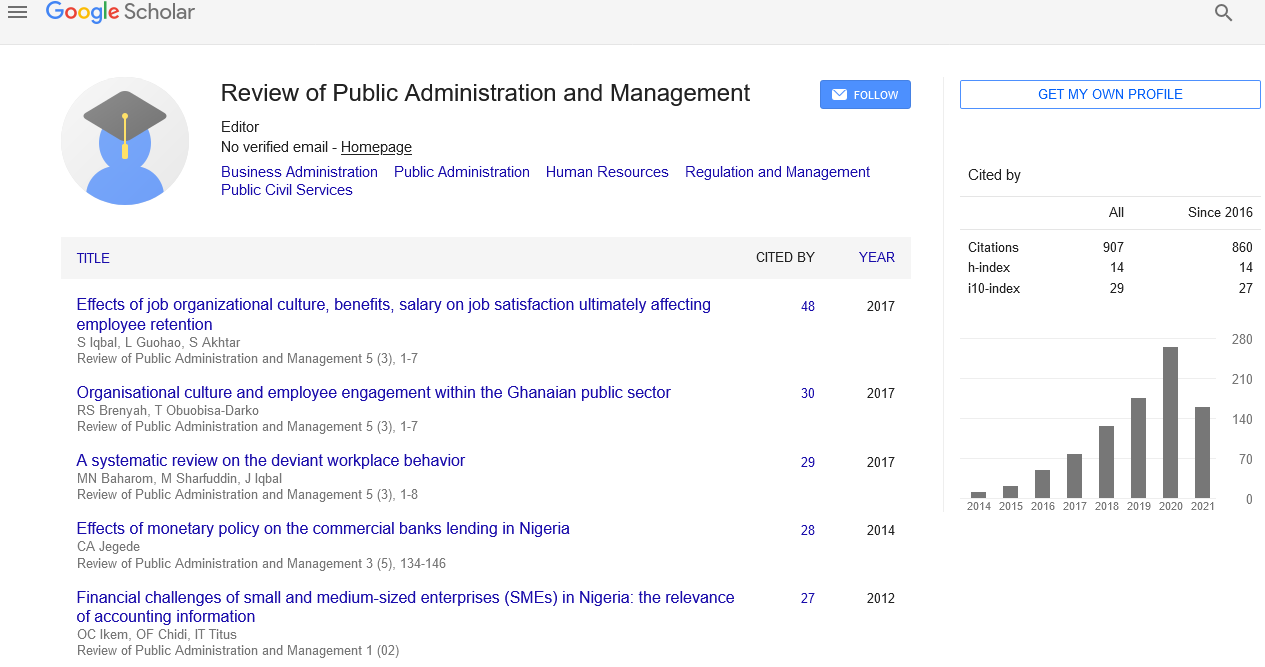
- Google Scholar
Useful Links
Share This Page
Journal Flyer
Open Access Journals
- Agri and Aquaculture
- Biochemistry
- Bioinformatics & Systems Biology
- Business & Management
- Chemistry
- Clinical Sciences
- Engineering
- Food & Nutrition
- General Science
- Genetics & Molecular Biology
- Immunology & Microbiology
- Medical Sciences
- Neuroscience & Psychology
- Nursing & Health Care
- Pharmaceutical Sciences
Commentary - (2026) Volume 13, Issue 3
Impact of Social Media on Employee Engagement in the Digital Age
Christine Rayae *Received: 26-Dec-2024 , Manuscript No. RPAM-24-27971; Editor assigned: 30-Dec-2024 , Pre QC No. RPAM-24-27971 (PQ); Reviewed: 13-Jan-2025 , QC No. RPAM-24-27971; Revised: 11-Sep-2026 , Manuscript No. RPAM-24-27971 (R); Published: 18-Sep-2026 , DOI: 10.35248/2315-7844.25.13.503
Description
Employee engagement has changed significantly in the digital age, especially with the rise of social media platforms. In the past, work and personal life were separate, but now social media has blurred these lines. While these platforms offer many benefits, including increased communication and networking, they also bring challenges, particularly regarding work-life balance and the risk of employee. Traditionally, employees engaged with their organizations primarily during work hours, focused on specific tasks. Today, the use of digital tools such as social media allows for continued interaction beyond the standard workday. Many employees remain engaged with their colleagues, teams, or employers after office hours. This increased connectivity offers both positive and negative consequences for engagement, productivity and overall well-being. On the positive side, social media enables employees to stay connected with their teams even after the workday ends. Platforms like LinkedIn, Slack and others allow for quick communication and idea sharing, facilitating continuous collaboration. This is particularly beneficial in fast-paced industries where timely decisions are necessary. Additionally, employees can engage with their organizations by participating in discussions, staying informed about company news and accessing professional development opportunities, even outside the workplace. This can create a stronger connection to the organization and improve employee satisfaction. Moreover, social media provides employees with the opportunity to connect with others in their field join groups and share ideas. These online communities offer support, professional growth and networking opportunities, extending employee engagement beyond the company’s walls. Employees who participate in these groups often feel more connected to their industry, leading to a deeper sense of job satisfaction and loyalty to their organization.
However, social media also brings challenges. The extended use of digital platforms can create pressure to always be available, which may lead to employee burnout. When workers engage with their teams or company updates after hours, the lines between work and personal time become blurred. This can cause employees to feel obligated to respond to messages or participate in discussions outside of their regular work schedule. Constant connectivity can be stressful, leaving little room for personal relaxation and recovery. The pressure to remain engaged even after work hours can negatively affect work-life balance. Employees may feel that they are expected to be “always on,” leading to mental exhaustion and reduced motivation. Over time, this can lead to disengagement from the workplace and resentment towards the organization. Companies need to be aware of this issue and establish clear boundaries to prevent the negative effects of constant digital engagement.
Employers can play a central role in ensuring that social media use does not negatively affect employee engagement. Establishing guidelines for digital communication outside of work hours is essential. Companies should encourage employees to disconnect after their regular hours, making it clear that after-hours communication should only happen when necessary. Clear expectations can help employees manage their time effectively, preventing burnout and maintaining a healthy work-life balance. In addition to managing communication expectations, companies should encourage employees to use social media for personal and professional growth, rather than for work-related tasks alone. By engaging in online professional networks, employees can access valuable industry insights, participate in discussions with thought leaders, or take part in training opportunities. This kind of engagement benefits employees, helping them develop their skills and also benefits the company, as it encourages continuous learning and innovation. Social media can also help promote diversity and inclusivity within the workplace. It allows employees from different backgrounds and locations to interact and share their experiences, which can create a greater sense of belonging. This is particularly important for organizations with remote or globally dispersed teams, as social media can help bridge the distance gap and facilitate collaboration among employees from diverse cultures and time zones.
Despite these benefits, the widespread use of social media also presents risks related to data privacy and security. As employees increasingly communicate and share information on digital platforms, there is an increased risk of sensitive information being exposed or misused. Employers must implement security protocols to protect data and ensure that employees understand the risks involved in sharing work-related content online. By educating employees about the potential dangers, companies can safeguard their information. Additionally, social media can sometimes contribute to negative dynamics within the workplace. Misinformation can spread quickly, or employees may express frustration about their work online. This can damage morale and erode trust within the organization. Companies must address any issues related to the misuse of social media in a timely and constructive manner, maintaining a positive online environment that reflects the values of the company.
Conclusion
In conclusion, efficient resource management is fundamental to the effective operation of government administration. By carefully managing finances, human capital, infrastructure and natural resources, governments can provide better services to citizens, promote economic growth and ensure sustainability. The use of data, collaboration with the private sector and transparent decision-making are essential components of successful resource management. Ultimately, governments that balance resource consumption with responsible administration can achieve greater prosperity and stability for their citizens.
Citation: Rayae C (2025) Impact of Social Media on Employee Engagement in the Digital Age. Review Pub Administration Manag. 13:503.
Copyright: © 2025 Rayae C. This is an open-access article distributed under the terms of the Creative Commons Attribution License, which permits unrestricted use, distribution, and reproduction in any medium, provided the original author and source are credited.