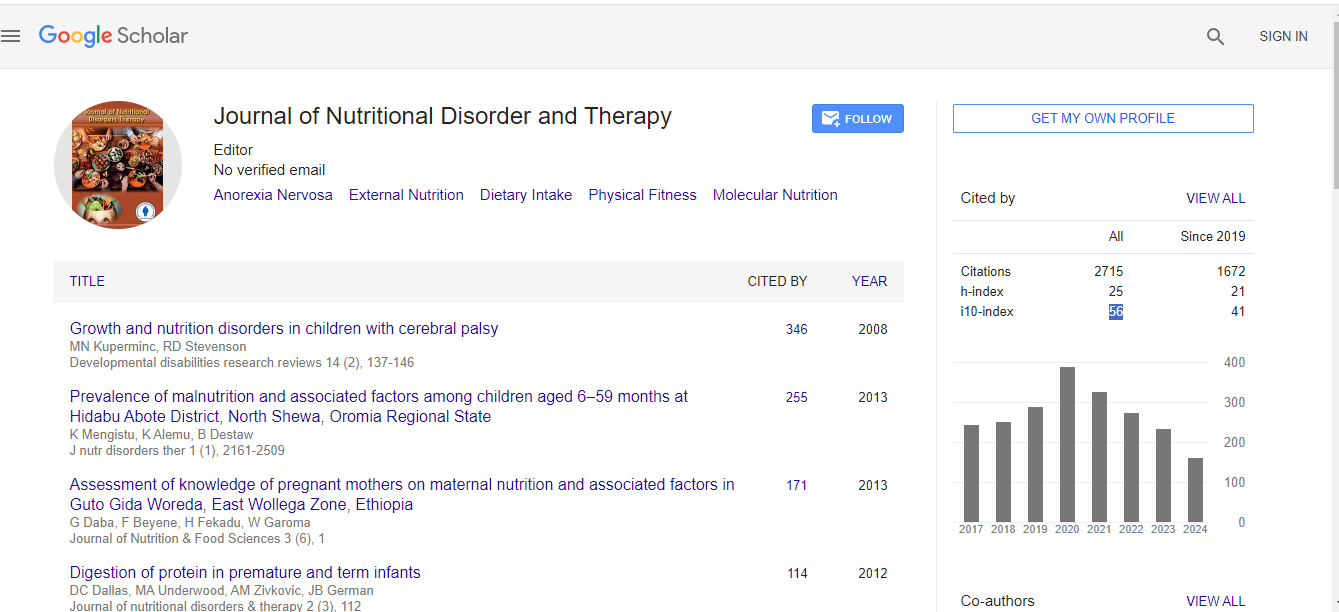

Indexed In
- Open J Gate
- Genamics JournalSeek
- Academic Keys
- JournalTOCs
- Ulrich's Periodicals Directory
- RefSeek
- Hamdard University
- EBSCO A-Z
- OCLC- WorldCat
- Publons
- Geneva Foundation for Medical Education and Research
- Euro Pub
Useful Links
Share This Page
Journal Flyer
Open Access Journals
- Agri and Aquaculture
- Biochemistry
- Bioinformatics & Systems Biology
- Business & Management
- Chemistry
- Clinical Sciences
- Engineering
- Food & Nutrition
- General Science
- Genetics & Molecular Biology
- Immunology & Microbiology
- Medical Sciences
- Neuroscience & Psychology
- Nursing & Health Care
- Pharmaceutical Sciences
Opinion Article - (2026) Volume 16, Issue 1
Dietary Signals in Daily Food Patterns and Their Influence on Inflammatory Activity
Xavien Veyrac*Received: 27-Feb-2026, Manuscript No. JNDT-26-31669; Editor assigned: 02-Mar-2026, Pre QC No. JNDT-26-31669; Reviewed: 16-Mar-2026, QC No. JNDT-26-31669; Revised: 23-Mar-2026, Manuscript No. JNDT-26-31669; Published: 30-Mar-2026, DOI: 10.35248/2161-0509.26.16.363
Description
Food choices influence many biological activities within the human body. Beyond supplying energy and nutrients, dietary habits affect internal responses that may contribute to either balanced physiological activity or persistent inflammatory reactions. Diet-related inflammation has gained growing attention because of its association with various health conditions affecting millions of individuals worldwide. While inflammation itself is a natural process intended to protect the body against injury and infection, long-term low-grade inflammatory activity may gradually influence health status over time.
Inflammation acts as a defence mechanism. When the body encounters harmful organisms or tissue injury, immune cells become active and release substances that assist healing and protection. In short-term situations, this response serves a beneficial purpose. Problems may arise when inflammatory activity remains active for extended periods without an immediate threat. Such persistent activity may contribute to disturbances affecting metabolic function, cardiovascular health, digestive processes, and overall well-being.
Dietary patterns are among the environmental factors that can affect inflammatory responses. Meals consumed regularly over weeks, months, and years create repeated biological signals within the body. Some food components may support balanced inflammatory activity, while others may contribute to increased production of inflammatory compounds.
Highly processed foods have frequently been examined in relation to inflammatory markers. Such foods often contain refined carbohydrates, large quantities of added sugars, unhealthy fats, and elevated sodium levels. Repeated intake of these products may influence blood sugar regulation and lipid metabolism. Sudden increases in blood glucose after meals can stimulate reactions involving oxidative activity and inflammatory compounds. Over time, continuous exposure may alter normal physiological balance.
Sugar-sweetened beverages represent one example of dietary items receiving attention in nutrition studies. Liquid calories may be consumed rapidly and often contribute substantial amounts of added sugars without creating lasting satiety. Regular intake of such beverages may affect body weight and metabolic activity. Increased body fat accumulation, particularly around abdominal regions, has been associated with inflammatory responses due to biologically active substances released from adipose tissue.
Fat intake also influences inflammatory activity, although effects vary depending on the type of fat consumed. Diets containing large quantities of Tran’s fats and certain processed fats have been linked with increased inflammatory markers. These fats may alter cell membrane function and influence signaling pathways within immune cells. In contrast, foods containing unsaturated fats such as nuts, seeds, olive oil, and fish are often associated with healthier inflammatory profiles.
Marine foods containing omega-3 fatty acids have attracted interest because these compounds participate in biological processes connected with immune regulation. Omega-3 fatty acids contribute to substances involved in controlling inflammatory responses. Populations consuming diets rich in fish frequently display different inflammatory patterns compared with groups consuming large amounts of processed foods.
Plant foods also contribute significantly to dietary effects on inflammation. Fruits, vegetables, whole grains, legumes, and nuts contain vitamins, minerals, fiber, and naturally occurring compounds that participate in numerous physiological activities. Many plant substances possess antioxidant properties that help reduce cellular stress. Reduced oxidative activity may support healthier inflammatory balance.
Fiber intake deserves particular attention because of its relationship with intestinal health. Dietary fiber passes through the digestive tract and interacts with microorganisms residing in the gut. These microorganisms participate in digestion, nutrient metabolism, and immune activity. Beneficial bacterial populations ferment fiber and produce compounds that support intestinal integrity and immune regulation.
The intestinal environment functions as an important communication centre between diet and inflammatory activity. The digestive tract contains a large number of immune cells continuously interacting with food components and microorganisms. Disturbances within microbial populations may influence inflammatory responses. Diets rich in processed foods and low in fiber may contribute to less favourable microbial patterns.
Body weight and inflammation often show interconnected relationships. Excess adipose tissue does more than store energy. Fat cells release biologically active substances that influence immune signaling. Individuals with obesity frequently exhibit elevated inflammatory markers even in the absence of infection. Dietary patterns contributing to weight gain may therefore indirectly influence inflammatory activity.
Conclusion
Understanding relationships between food and inflammation contributes to discussions surrounding public health, nutrition education, and disease prevention strategies. As knowledge continues to develop, dietary practices remain an important consideration in promoting healthier populations and improving quality of life across diverse communities worldwide.
Citation: Veyrac X (2026). Dietary Signals in Daily Food Patterns and Their Influence on Inflammatory Activity. J Nutr Disord Ther. 16:363.
Copyright: © 2026 Veyrac X. This is an open access article distributed under the terms of the Creative Commons Attribution License, which permits unrestricted use, distribution and reproduction in any medium, provided the original author and source are credited.