
Indexed In
- Open J Gate
- Genamics JournalSeek
- JournalTOCs
- Ulrich's Periodicals Directory
- RefSeek
- Hamdard University
- EBSCO A-Z
- OCLC- WorldCat
- Publons
- Geneva Foundation for Medical Education and Research
- Euro Pub
- Google Scholar
Useful Links
Share This Page
Journal Flyer
Open Access Journals
- Agri and Aquaculture
- Biochemistry
- Bioinformatics & Systems Biology
- Business & Management
- Chemistry
- Clinical Sciences
- Engineering
- Food & Nutrition
- General Science
- Genetics & Molecular Biology
- Immunology & Microbiology
- Medical Sciences
- Neuroscience & Psychology
- Nursing & Health Care
- Pharmaceutical Sciences
Editor-in-Chief
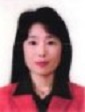
Kazumi Fujioka, MD. PhD.
Editor-in-Chief
Assistant Professor, Department of Radiology
Nihon University School of Medicine, Tokyo, Japan
Biography
I was graduated from Toho University School of Medicine, Tokyo, Japan in 1988 and became a medical doctor (MD). I received my PhD degree from Nihon University Graduate School of Medicine, Tokyo, Japan in 1996, and became MD, PhD.
During 1988-1990, I was a resident at the Department of Internal Medicine, Toho University School of Medicine. During 1998-2012, I was an Assistant Professor at the Department of Radiology, Nihon University School of Medicine.
During 2014-2018, I was an Associate Professor at the Department of Pathology and Microbiology, Division of Laboratory Medicine, Nihon University School of Medicine. From 2000, I have been the Director for Fujioka Dermatological Clinic, Tokyo, Japan. From 2019, I have been an Assistant Professor at the Department of Radiology, Nihon University School of Medicine.
I have experienced a reviewer for reputed International Journal of Dermatology (2019-2020). I was the Editor-in-Chief for Biomedical Journal of Scientific & Technical Research (October 2022-September 2024) and have served as an Editor-in-Chief for Open Access Journal of Cancer and Oncology since 2023. I have served as the Editor-in-Chief for Journal of Carcinogenesis & Mutagenesis (JCM) since June 2023. I was awarded the “Best Editor-in-Chief of the Year 2024“ and “Best Editor-in-Chief of the Year 2025” from JCM. Recently I won the third award “Best Editor-in-Chief of the Year 2026” from JCM. And I was awarded ”Best Editor-in-Chief of the Year 2026” from Journal of Bioequivalence & Bioavailability. I have almost 60 publications in prestigious peer-reviewed international journals.
Research Interest
I have been a specialist for the several fields such as Radiology, Internal Medicine, Ultrasound in Medicine, Gastroenterology, Gastroenterological Endoscopy, and Laboratory Medicine.
I am a councilor of the Japan Society for Medical English Education (JASMEE), and the Japan Association of Breast and Thyroid Sonology (JABTS).
My work and research are focused on the correlation between immunohistochemistry and ultrasound in breast cancer, pathogenesis and ultrasound in Takayasu’s Arteritis, Flow-Mediated Vasodilation (FMD) and Nitroglycerin-Mediated Vasodilation (NMD) in migraine, Dermatologic Ultrasound, genetics/cytogenetics and high-resolution ultrasound in nodular fasciitis, endothelial dysfunction in COVID-19, VSRAD, PET imaging for oncology, imaging for hepatic Focal Nodular Hyperplasia (FNH), chemotherapy-induced FNH-like lesions, and oxaliplatin-induced sinusoidal obstruction syndrome.
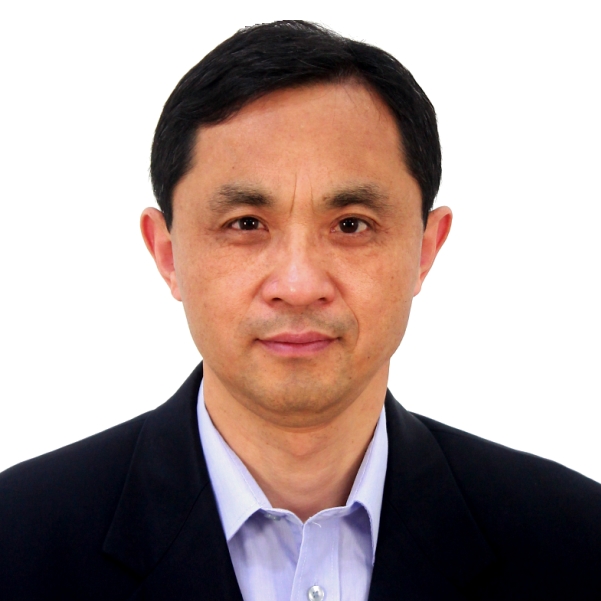
Song Ze Ding
Editor-in-Chief
Professor, Department of Gastroenterology and Hepatology
Zhengzhou University, China
Biography
Dr. Song-Ze Ding is a full Professor and Chief physician at the Department of Gastroenterology and Hepatology in People's Hospital of Zhengzhou University, or Henan Provincial People's Hospital, in Zhengzhou, Henan, China. He received his MD/PhD from Beijing Medical University in 1992.
In late 1998, he moved to USA to pursue postdoctoral works at University of Texas and University of Virginia in Helicobacter pylori infection related upper gastrointestinal disease research, this involves researches both in basic and clinical medicine. Dr. Ding later served as Associate Professor in the Institute for Genetic Medicine at Hokkaido University, in Sapporo, Japan. His work and research is focused on inflammation, stem cell, epigenetics and epithelial cancer. The primary model is Helicobacter pylori infection related human gastric diseases.
He is currently the Editor-in-Chief for Journal of Carcinogenesis and Mutagenesis, and also serves as editorial board member for eight influential international journals, and expert reviewer for more than 40 reputed international journals, and has more than 40 publications in prestige peer-reviewed international journals
Research Interest
Dr. Ding’s work is engaged in clinical practice, medical research and teaching. His focus covers two areas: (1) H. pylori infection, oncogenic transformation, stem cell and epithelial cancer; (2) Identification and screening of serum biomarkers for gastrointestinal cancers.