
Indexed In
- Open J Gate
- Genamics JournalSeek
- JournalTOCs
- China National Knowledge Infrastructure (CNKI)
- Electronic Journals Library
- RefSeek
- Hamdard University
- EBSCO A-Z
- OCLC- WorldCat
- SWB online catalog
- Virtual Library of Biology (vifabio)
- Publons
- MIAR
- Euro Pub
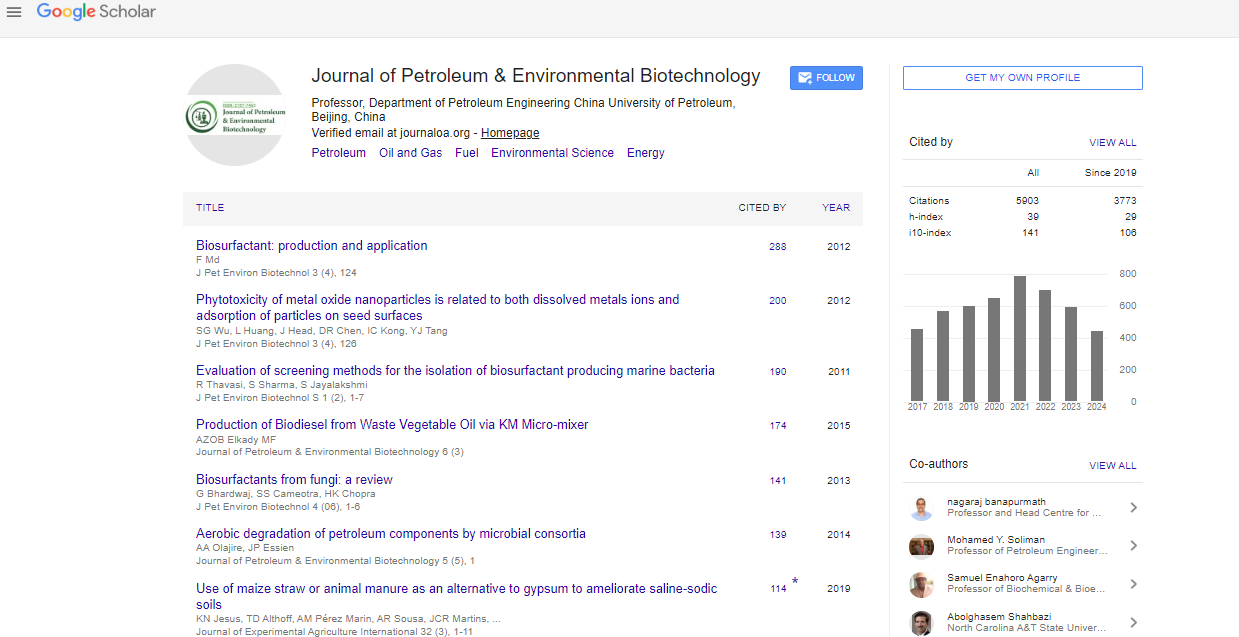
- Google Scholar
Useful Links
Share This Page
Journal Flyer

Open Access Journals
- Agri and Aquaculture
- Biochemistry
- Bioinformatics & Systems Biology
- Business & Management
- Chemistry
- Clinical Sciences
- Engineering
- Food & Nutrition
- General Science
- Genetics & Molecular Biology
- Immunology & Microbiology
- Medical Sciences
- Neuroscience & Psychology
- Nursing & Health Care
- Pharmaceutical Sciences
Solar Energy and Smart Grid Technologies: Building Sustainable Energy Systems for Future Generations
12th Global Summit on Renewable Energy and Climate Change
Jun 15-16, 2026 | Paris, France
Volker Quaschning
HTW Berlin â?? University of Applied Sciences, Germany
Scientific Tracks Abstracts: J Pet Environ Biotechnol
Abstract:
Renewable electricity generation has become the cornerstone of global decarbonization strategies. This presentation exam ines recent advances in photovoltaic technology, wind energy integration, battery storage, electric mobility, and smart grid infrastructure that are transforming modern energy systems. Improvements in solar cell efficiency, grid-scale battery tech nologies, and decentralized renewable generation are enabling greater penetration of clean energy while improving system reliability and reducing dependence on fossil fuels.
The session highlights the role of artificial intelligence, digital energy management systems, demand-response technologies, and predictive analytics in optimizing electricity distribution and balancing renewable power generation with consumer demand. Emerging developments in hydrogen production, vehicle-to-grid technologies, and distributed energy resources are further strengthening energy resilience and supporting carbon-neutral cities. The presentation also discusses renew able energy policy, climate adaptation, sustainable infrastructure development, and international cooperation required to accelerate the transition toward clean and affordable energy. Future research directions include intelligent energy networks, next-generation storage technologies, and integrated renewable energy systems that contribute to long-term environmental sustainability.
Biography :
Volker Quaschning is Professor of Renewable Energy Systems at HTW Berlin, Germany. His research focuses on solar energy, renewable power systems, energy storage, electric mobility, and climate protection. He is internationally recognized for pro moting sustainable energy technologies and renewable energy education.