
Indexed In
- Open J Gate
- Genamics JournalSeek
- Academic Keys
- JournalTOCs
- China National Knowledge Infrastructure (CNKI)
- Ulrich's Periodicals Directory
- RefSeek
- Hamdard University
- EBSCO A-Z
- Directory of Abstract Indexing for Journals
- OCLC- WorldCat
- Publons
- Geneva Foundation for Medical Education and Research
- Euro Pub
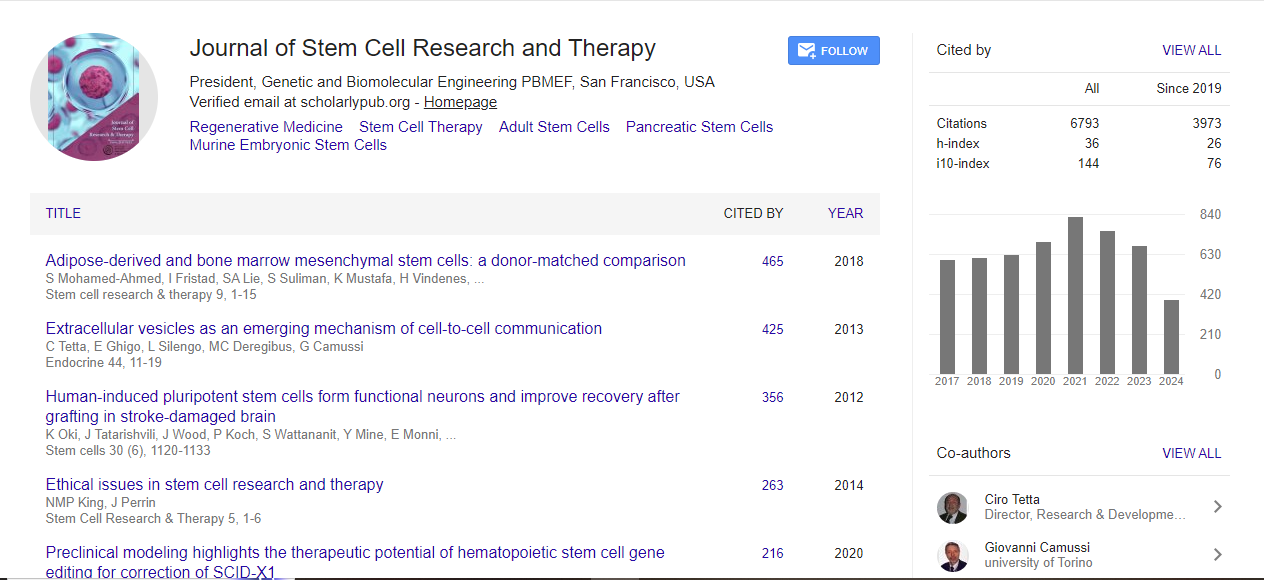
- Google Scholar
Useful Links
Share This Page
Journal Flyer
Open Access Journals
- Agri and Aquaculture
- Biochemistry
- Bioinformatics & Systems Biology
- Business & Management
- Chemistry
- Clinical Sciences
- Engineering
- Food & Nutrition
- General Science
- Genetics & Molecular Biology
- Immunology & Microbiology
- Medical Sciences
- Neuroscience & Psychology
- Nursing & Health Care
- Pharmaceutical Sciences
Placental and Umbilical Cord Stem Cells: Expanding Therapeutic Opportunities
9th Annual Conference on Stem Cell and Regenerative
April 14-15, 2026 | Budapest, Hungary
Maria Hernandez
University of Barcelona, Spain
Scientific Tracks Abstracts: J Geol Geophy
Abstract:
Perinatal tissues, including the placenta and umbilical cord, are increasingly recognized as rich and ethically acceptable sources of stem cells with significant regenerative potential. These stem cells possess high proliferative capacity, low immunogenicity, and potent immunomodulatory properties, making them attractive candidates for allogeneic transplantation. This presentation reviews the biological characteristics of umbilical cord-derived mesenchymal stem cells (UC-MSCs) and placental stem cells, emphasizing their applications in autoimmune diseases, neurological disorders, orthopedic injuries, cardiovascular diseases, and chronic inflammatory conditions. Recent clinical studies have demonstrated that UC-MSC therapy can reduce inflammation, promote angiogenesis, accelerate tissue repair, and improve functional recovery in various disease models. In addition, placental stem cells have shown promise in treating liver fibrosis, spinal cord injuries, and ischemic diseases due to their ability to secrete regenerative cytokines and extracellular vesicles. The presentation also addresses current challenges involving donor screening, large-scale manufacturing, quality control, cryopreservation, and regulatory compliance. Future directions include combining perinatal stem cells with biomaterial scaffolds, gene-editing technologies, and extracellular vesicle therapies to further improve clinical outcomes. The accessibility and therapeutic versatility of placental and umbilical cord stem cells position them as valuable resources for the future of regenerative medicine.
Biography :
Maria Hernandez is a professor of regenerative medicine at the University of Barcelona. Her research focuses on perinatal stem cells, immunotherapy, and translational clinical applications. She has published over 140 research articles and serves as a reviewer for several international stem cell journals.