
Indexed In
- Open J Gate
- Genamics JournalSeek
- Academic Keys
- JournalTOCs
- The Global Impact Factor (GIF)
- China National Knowledge Infrastructure (CNKI)
- Ulrich's Periodicals Directory
- RefSeek
- Hamdard University
- EBSCO A-Z
- OCLC- WorldCat
- Publons
- Geneva Foundation for Medical Education and Research
- Euro Pub
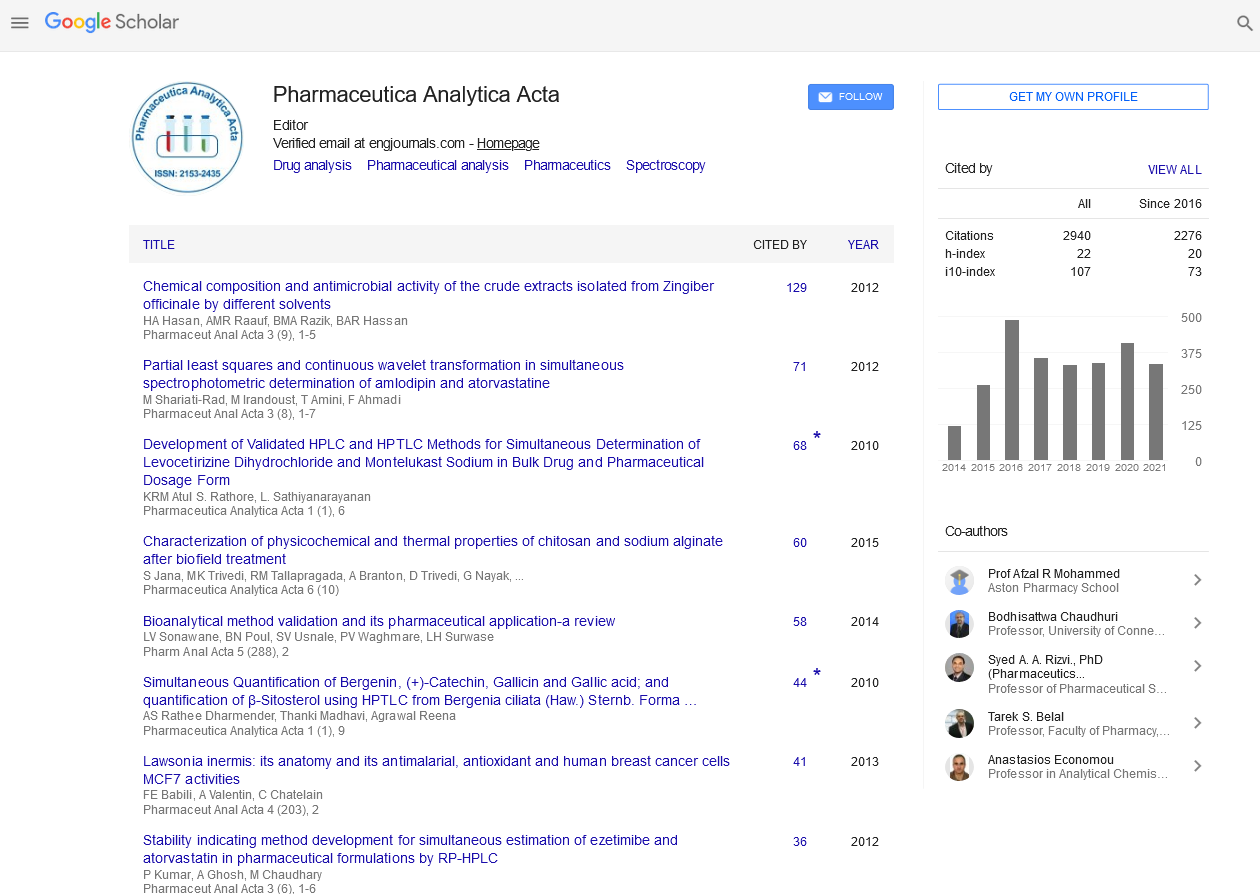
- Google Scholar
Useful Links
Share This Page
Journal Flyer
Open Access Journals
- Agri and Aquaculture
- Biochemistry
- Bioinformatics & Systems Biology
- Business & Management
- Chemistry
- Clinical Sciences
- Engineering
- Food & Nutrition
- General Science
- Genetics & Molecular Biology
- Immunology & Microbiology
- Medical Sciences
- Neuroscience & Psychology
- Nursing & Health Care
- Pharmaceutical Sciences
Perspective - (2026) Volume 16, Issue 4
The Rise of Digital Therapeutics: How Software is Transforming Patient Care in Pharma
Paul Majd *Received: 13-Dec-2024 , Manuscript No. PAA-24-27778; Editor assigned: 17-Dec-2024 , Pre QC No. PAA-24-27778 (PQ); Reviewed: 31-Dec-2024 , QC No. PAA-24-27778; Revised: 12-Dec-2026 , Manuscript No. PAA-24-27778 (R); Published: 19-Dec-2026 , DOI: 10.35248/2153-2435.26.17.837
Description
In contrast to conventional medications, digital therapies concentrate on using software to directly treat or manage medical issues. A more individualised therapeutic experience is produced by this method, which enables real-time monitoring and customised therapies based on unique patient data. For example, wearable glucose monitor data can be used by digital medicines for chronic illnesses like diabetes to automatically modify treatment regimens, guaranteeing more accurate blood sugar management. Similar to this, apps for mental health may offer mindfulness exercises or Cognitive Behavioural Therapy (CBT) tailored to the user's unique symptoms, assisting patients in managing conditions like PTSD, anxiety, or depression without the use of conventional medication.
The capacity of digital medicines to close the gap between the ongoing need for patient care and the sometimes irregular inperson healthcare appointments is one of its biggest benefits. Patients can get ongoing assistance in maintaining their health even when they are not in a professional setting by having access to therapeutic tools around-the-clock. Effective illness management depends on both patient engagement and adherence, both of which are enhanced by this continuous care strategy. To ensure that patients follow their treatment plan and prevent problems, digital therapeutics, for instance, can give teaching materials, track symptoms, and remind patients to use inhalers.
Furthermore, digital therapies are especially helpful in meeting the rising need for customised treatment. Digital treatments can be tailored to each patient's specific needs, in contrast to traditional medications, which are frequently made to serve a large population. These software-based therapies can adapt in real time to provide patients with the best possible care by evaluating data from biomarkers, patient behaviour, and other health measures. In the end, this degree of personalisation can lessen the strain on patients and healthcare systems by improving health outcomes, lowering side effects, and making better use of available resources.
Digital therapies' ascent is not without its difficulties, though. Navigating the clearance process for digital therapies can be challenging, and regulatory frameworks for software-based treatments are still developing. In order to satisfy the required requirements, developers must collaborate closely with regulatory organisations to ensure the safety, privacy, and effectiveness of these treatments. Furthermore, even while digital therapies can offer helpful assistance, they are not meant to completely replace conventional medical treatment or prescription drugs. When digital treatments are utilised as supplemental tools and incorporated into a holistic treatment plan that includes medication, lifestyle modifications, and inperson healthcare, the best results are frequently obtained.
Conclusion
In conclusion, the pharmaceutical industry's approach to patient care is about to change because to digital treatments. These software-based therapies are revolutionising the management of diseases by utilising technology to provide more individualised, affordable, and accessible treatments. Digital therapeutics will surely become more and more significant in raising the standard of care and improving patient outcomes as the healthcare industry develops. Digital treatments have the potential to completely transform the treatment of mental health and chronic illnesses, giving patients the chance to lead happier, easier lives, even though there are still obstacles to overcome.
Citation: Majd P (2026) The Rise of Digital Therapeutics: How Software is Transforming Patient Care in Pharma. Pharm Anal Acta. 17:837.
Copyright: © 2026 Majd P. This is an open-access article distributed under the terms of the Creative Commons Attribution License, which permits unrestricted use, distribution, and reproduction in any medium, provided the original author and source are credited.