
Indexed In
- Open J Gate
- The Global Impact Factor (GIF)
- Open Archive Initiative
- VieSearch
- International Society of Universal Research in Sciences
- China National Knowledge Infrastructure (CNKI)
- CiteFactor
- Scimago
- Ulrich's Periodicals Directory
- Electronic Journals Library
- RefSeek
- Directory of Research Journal Indexing (DRJI)
- Hamdard University
- EBSCO A-Z
- Publons
- Google Scholar
Useful Links
Share This Page
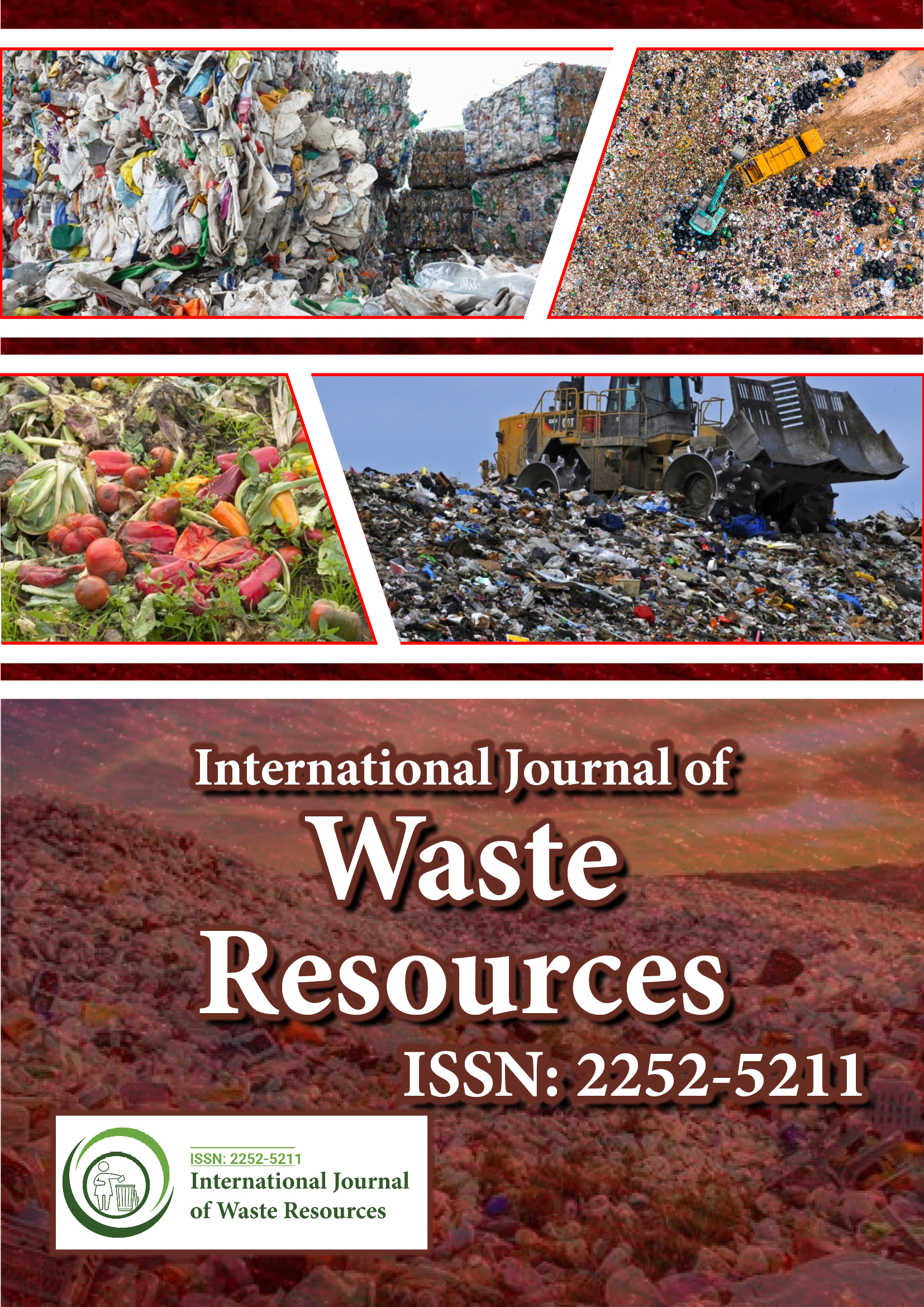
Journal Flyer
Open Access Journals
- Agri and Aquaculture
- Biochemistry
- Bioinformatics & Systems Biology
- Business & Management
- Chemistry
- Clinical Sciences
- Engineering
- Food & Nutrition
- General Science
- Genetics & Molecular Biology
- Immunology & Microbiology
- Medical Sciences
- Neuroscience & Psychology
- Nursing & Health Care
- Pharmaceutical Sciences
Commentary Article - (2025) Volume 15, Issue 4
Role of Modern Technology in Transforming Biological and Industrial Waste Treatment
Sofia Martinez*Received: 24-Nov-2025, Manuscript No. IJWR-25-31044; Editor assigned: 26-Nov-2025, Pre QC No. IJWR-25-31044 (PQ); Reviewed: 10-Dec-2025, QC No. IJWR-25-31044; Revised: 17-Dec-2025, Manuscript No. IJWR-25-31044 (R); Published: 24-Dec-2025, DOI: 10.35248/2252-5211.25.15.632
Description
The growing challenges of urbanization, industrialization and population growth have made waste management one of the most pressing environmental concerns in modern society. Proper treatment of waste is essential not only to reduce pollution and protect ecosystems but also to recover valuable resources and promote sustainable development. The integration of science and technology in waste treatment has transformed traditional practices, allowing for more efficient, environmentally friendly and economically viable solutions. Scientific principles guide the understanding of chemical, biological and physical processes in waste transformation, while technology provides tools and systems to implement these processes on a large scale. Modern waste treatment encompasses a wide range of methods designed to handle solid, liquid and gaseous waste generated by households, industries, agriculture and medical facilities. Biological treatments utilize microorganisms to decompose organic waste into simpler compounds, producing nutrient rich compost, biogas, or bioenergy. Aerobic composting is one of the most commonly employed biological methods, enabling the stabilization of organic matter and the recycling of essential nutrients back into agricultural systems. Anaerobic digestion is another important process that generates biogas from organic waste, which can be converted into electricity, heat, or biofuels. The combination of scientific understanding of microbial activity and technological innovations in reactor design has significantly improved the efficiency and reliability of these processes.
Chemical and physical treatments also play a critical role in managing industrial and hazardous waste. Chemical oxidation, precipitation and neutralization methods are used to detoxify pollutants and reduce their environmental impact. Physical processes such as filtration, sedimentation and thermal treatment help separate, stabilize, or destroy contaminants before they are released into the environment. Advanced technologies, including plasma treatment, pyrolysis and hydrothermal conversion, allow for the conversion of waste into usable energy or other valuable materials, thereby reducing the amount of material sent to landfills and minimizing ecological harm. The development of integrated waste management systems combines multiple treatment methods into a comprehensive approach that optimizes efficiency, minimizes environmental risks and enhances resource recovery. Smart waste management systems leverage real time monitoring, automation and data analytics to track waste generation, composition and treatment progress. These technological solutions enable the precise control of environmental parameters, early detection of potential problems and continuous optimization of treatment processes. In addition, innovations in waste to energy systems ensure that energy recovery from waste contributes to sustainable power generation while reducing greenhouse gas emissions.
Scientific research has also focused on understanding the environmental, social and economic impacts of waste treatment technologies. Life cycle assessment and environmental modeling help quantify the benefits and risks associated with different methods, guiding decision making and policy development. Innovations in material science, biotechnology and environmental engineering are increasingly applied to design materials, devices and systems that enhance treatment efficiency and reduce operational costs. For example, the use of advanced catalysts in chemical treatments, genetically optimized microorganisms in biological processes and high performance membranes in filtration systems has resulted in measurable improvements in waste reduction, energy recovery and pollutant removal. Public awareness, regulation and community involvement are essential components of successful waste treatment strategies. Scientific and technological solutions alone cannot ensure environmental sustainability without proper policy frameworks, enforcement and social acceptance. Governments, industries and local communities must collaborate to establish safety standards, monitor compliance and support educational initiatives that promote responsible waste management practices. By combining scientific knowledge, technological innovation and stakeholder engagement, societies can achieve more resilient and effective waste treatment systems that align with long term environmental goals.
Economic considerations further emphasize the importance of technology in waste management. Effective treatment systems reduce the costs associated with landfill disposal, environmental remediation and health related issues caused by improper waste handling. Recovery of energy and materials from waste generates additional economic benefits, supporting local industries, creating employment opportunities and enhancing resource efficiency. Investments in research, infrastructure and technology development provide long term returns by minimizing environmental risks and promoting sustainable industrial practices.
Conclusion
In conclusion, the application of science and technology in waste treatment has revolutionized the way societies manage solid, liquid and hazardous waste. Modern approaches integrate biological, chemical and physical processes with advanced technologies such as automation, smart monitoring and waste to energy systems to achieve efficient, safe and sustainable solutions. Scientific research informs the development of optimized treatment strategies while technological innovations enable their practical implementation. Public engagement, policy support and economic incentives further ensure the effectiveness and sustainability of waste management programs.
Citation: Martinez S (2025) Role of Modern Technology in Transforming Biological and Industrial Waste Treatment. Int J Waste Resour. 15:632.
Copyright: © 2025 Martinez S. This is an open-access article distributed under the terms of the Creative Commons Attribution License, which permits unrestricted use, distribution and reproduction in any medium, provided the original author and source are credited.