
Indexed In
- Open J Gate
- Genamics JournalSeek
- Academic Keys
- JournalTOCs
- ResearchBible
- Electronic Journals Library
- RefSeek
- Hamdard University
- EBSCO A-Z
- OCLC- WorldCat
- Proquest Summons
- SWB online catalog
- Virtual Library of Biology (vifabio)
- Publons
- MIAR
- Euro Pub
- Google Scholar
Useful Links
Share This Page
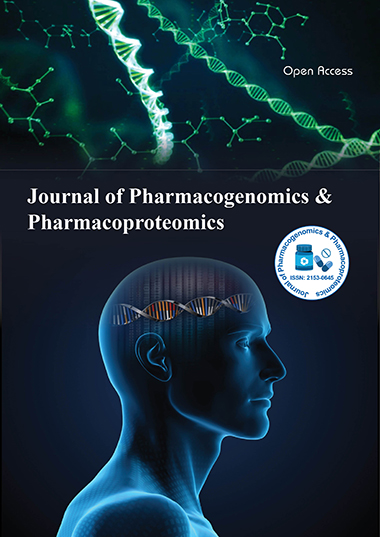
Journal Flyer
Open Access Journals
- Agri and Aquaculture
- Biochemistry
- Bioinformatics & Systems Biology
- Business & Management
- Chemistry
- Clinical Sciences
- Engineering
- Food & Nutrition
- General Science
- Genetics & Molecular Biology
- Immunology & Microbiology
- Medical Sciences
- Neuroscience & Psychology
- Nursing & Health Care
- Pharmaceutical Sciences
Opinion - (2025) Volume 16, Issue 4
Receptor Variants: Genetic Differences Influencing Signaling and Medication Response
Elena Martinez *Received: 01-Dec-2025 , Manuscript No. JPP-25-32647; Editor assigned: 03-Dec-2025 , Pre QC No. JPP-25-32647; Reviewed: 17-Dec-2025 , QC No. JPP-25-32647; Revised: 24-Dec-2025 , Manuscript No. JPP-25-32647; Published: 31-Dec-2025 , DOI: 10.35248/2153-0645.25.16.159
Description
Receptor variants are genetic differences within genes that encode cellular receptors and can influence how cells respond to hormones, neurotransmitters, growth factors and medicines. Receptors are proteins that recognize specific chemical signals and convert them into biological responses. Changes in receptor structure, quantity, cellular location, or signaling activity can therefore modify the effect produced by a pharmaceutical compound. These genetic differences contribute to variation in treatment outcomes between individuals. The human genome contains many genes responsible for receptor proteins. These receptors are located on the cell surface, within the cytoplasm, or inside the nucleus. Their functions include receiving extracellular signals, controlling ion movement, regulating gene expression and activating intracellular signaling pathways. A genetic variant affecting one of these proteins can alter the way a signal is detected or transmitted.
Single-nucleotide polymorphisms are among the most common forms of receptor variation. A single Deoxyribonucleic Acid (DNA) base can differ between individuals and may produce a change in the amino acid sequence of a receptor. If the affected amino acid is located near a ligand-binding region, the variant may influence how strongly a molecule interacts with the receptor. Variants in other regions may affect receptor folding, stability, transport to the cell membrane, or communication with intracellular proteins. Receptor variants can also occur in regulatory regions. These DNA segments influence the amount of receptor produced by a cell. A regulatory variant may increase or decrease receptor expression without changing the receptor's amino acid sequence. Differences in receptor abundance can affect the magnitude of cellular responses to a medicine. A drug may produce a stronger effect when more receptors are available, while reduced receptor expression can diminish signaling.
G protein-coupled receptors represent one large receptor family with major pharmacological importance. These receptors respond to hormones, neurotransmitters, lipids and many therapeutic compounds. After ligand binding, they activate G proteins and other signaling molecules inside the cell. Genetic variation in a G protein-coupled receptor can modify ligand recognition, receptor activation, or communication with downstream signaling proteins. Adrenergic receptors provide an important example. These receptors respond to adrenaline and related signaling molecules and participate in regulation of heart rate, blood pressure, airway function and metabolic activity. Genetic differences in adrenergic receptor genes may influence receptor activity and can contribute to variation in response to medicines that act on these proteins.
Beta-adrenergic receptors are particularly relevant to cardiovascular and respiratory pharmacology. Variants in genes such as Adrenoceptor Beta 1 gene and Adrenoceptor Beta 2 gene have been examined in relation to receptor signaling and medication response. A genetic change may modify receptor sensitivity or the rate at which the receptor responds to repeated stimulation. The clinical effect depends on the specific variant, medicine, dose, disease condition and other biological factors. Nuclear receptors form another important group. These proteins regulate gene transcription after binding hormones or other chemical ligands. Examples include glucocorticoid, estrogen androgen, thyroid hormone and peroxisome proliferatoractivated receptors. Genetic variation within these receptors can influence ligand binding, DNA interaction, or transcriptional activity. Such changes may affect physiological processes and responses to selected medicines.
Ion channel receptors also contribute to pharmacological variation. These proteins regulate the movement of charged particles across cell membranes and are involved in neuronal signaling, muscle contraction, cardiac activity and other cellular functions. Genetic variants can alter channel opening, closing, ion permeability, or sensitivity to pharmaceutical compounds. In certain situations, these changes may influence both therapeutic activity and susceptibility to adverse effects. Receptor variants can affect drug efficacy in several ways. A medicine may reach its target at an appropriate concentration but produce a weaker response because the receptor has altered sensitivity. Another individual may experience a stronger response because the receptor interacts more efficiently with the drug. Changes in receptor abundance can produce similar differences even when the receptor structure remains unchanged.
Genetic variation can also influence adverse drug reactions. A receptor variant that modifies signaling may increase cellular sensitivity to a medicine. If the receptor is expressed in several tissues, altered activity may affect both intended and unintended physiological processes. Understanding these differences can be useful when evaluating medication safety, particularly for drugs that act on receptors involved in cardiovascular, neurological, endocrine, or immune functions. Receptor signaling is not controlled by the receptor alone. After ligand binding, receptors interact with intracellular proteins, enzymes, ion channels and transcription factors. Genetic variation in any of these components may modify the final response. Consequently, the effect of a receptor variant can depend on other genes within the same signaling pathway.
Citation: Martinez E (2025). Receptor Variants: Genetic Differences Influencing Signaling and Medication Response. J Pharmacogenom Pharmacoproteomics. 16:159.
Copyright: © 2025 Martinez E. This is an open-access article distributed under the terms of the Creative Commons Attribution License, which permits unrestricted use, distribution and reproduction in any medium, provided the original author and source are credited.