
Indexed In
- Open J Gate
- The Global Impact Factor (GIF)
- Open Archive Initiative
- VieSearch
- International Society of Universal Research in Sciences
- China National Knowledge Infrastructure (CNKI)
- CiteFactor
- Scimago
- Ulrich's Periodicals Directory
- Electronic Journals Library
- RefSeek
- Directory of Research Journal Indexing (DRJI)
- Hamdard University
- EBSCO A-Z
- Publons
- Google Scholar
Useful Links
Share This Page
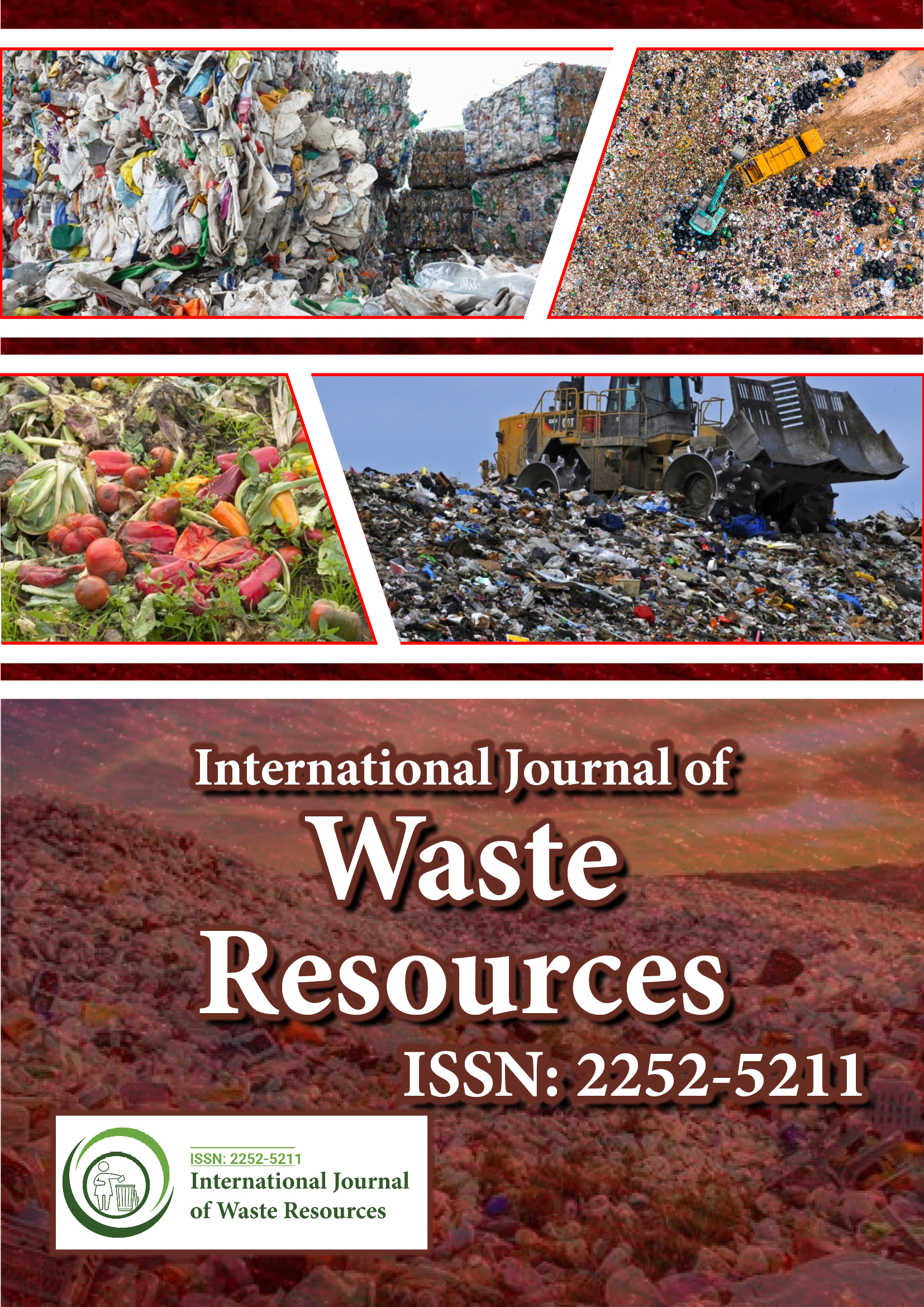
Journal Flyer
Open Access Journals
- Agri and Aquaculture
- Biochemistry
- Bioinformatics & Systems Biology
- Business & Management
- Chemistry
- Clinical Sciences
- Engineering
- Food & Nutrition
- General Science
- Genetics & Molecular Biology
- Immunology & Microbiology
- Medical Sciences
- Neuroscience & Psychology
- Nursing & Health Care
- Pharmaceutical Sciences
Perspective - (2026) Volume 16, Issue 2
Heavy Metal Recovery: Advancing Resource Management Through Metal Reclamation
Elena Marquez*Received: 29-May-2026, Manuscript No. IJWR-26-32122; Editor assigned: 01-Jun-2026, Pre QC No. IJWR-26-32122; Reviewed: 15-Jun-2026, QC No. IJWR-26-32122; Revised: 23-Jun-2026, Manuscript No. IJWR-26-32122; Published: 29-Jun-2026, DOI: 10.35248/2252-5211.26.16.658
Abstract
Description
Heavy metal recovery is a process focused on extracting valuable metals from waste materials, industrial residues, wastewater and discarded products. Metals such as copper, nickel, zinc, chromium, lead, cobalt and other elements have important applications in manufacturing, electronics, construction, energy systems and various industrial activities. Recovering these metals from existing materials helps reduce the need for additional extraction from natural sources and supports more efficient use of available resources.
Industrial development has increased the demand for metals across many sectors. Mining activities provide essential materials for modern technologies, but they may require significant energy, land resources and environmental management. Heavy metal recovery provides an alternative approach by allowing industries to obtain useful metals from materials that might otherwise be treated as waste. This process supports resource conservation and encourages better management of industrial by-products. Many industries generate waste streams containing valuable metals. Mining operations, metal processing facilities, electronic manufacturing units, battery industries and chemical plants may produce residues containing recoverable elements. If these materials are discarded without proper treatment, they may create environmental concerns. Recovery methods allow industries to separate useful metals and reduce the amount of harmful substances released into the environment.
Electronic waste is one of the important sources of recoverable metals. Discarded computers, mobile devices, circuit boards and electrical equipment contain metals that can be collected and processed. Copper, gold, silver, nickel and other valuable elements are present in electronic components. Recovering these materials from used products reduces waste accumulation and decreases the need for extracting additional resources.
Wastewater treatment facilities also provide opportunities for heavy metal recovery. Industrial wastewater may contain dissolved metals released during manufacturing processes. Technologies used for metal separation can capture these elements and convert them into reusable materials. This approach improves water quality while allowing industries to recover resources from liquid waste streams.
Adsorption is another commonly used method for metal recovery. In this process, certain materials attract and hold metal ions from liquids. Activated carbon, mineral-based materials, agricultural residues and specially prepared substances can be used for this purpose. After adsorption, the collected metals can be separated and processed for further use. Electrochemical methods provide another option for recovering metals from solutions. These techniques use electrical processes to collect metal ions and convert them into solid forms. They are useful in situations where metals are present in wastewater or chemical solutions. Proper control of operating conditions helps improve recovery efficiency and product quality.
Heavy metal recovery provides several environmental advantages. By recovering metals from waste materials, the amount of industrial waste requiring disposal can be reduced. Resource recovery also lowers the demand for new mining activities, which can help decrease pressure on natural ecosystems. In addition, recycling metals often requires less energy compared with obtaining metals from raw mineral sources. Economic benefits are also associated with heavy metal recovery. Recovered metals can serve as valuable secondary resources for industries. Companies may reduce material costs by using recovered metals in manufacturing processes. Recycling activities can also create employment opportunities in collection, processing and resource management sectors.
Despite these benefits, heavy metal recovery involves several challenges. Waste materials often contain mixtures of different metals and other substances, making separation processes more complex. The efficiency of recovery depends on material composition, available technology and operational conditions. Some recovery systems may require significant investment in equipment and skilled personnel. Environmental safety must be considered during metal recovery activities. Improper handling of chemical processes or waste residues may create additional environmental problems. Responsible management practices are necessary to ensure that recovery operations protect workers, communities and surrounding ecosystems.
Technological improvements continue to influence the development of heavy metal recovery methods. Better separation techniques, improved processing materials and more efficient systems are helping industries recover metals from increasingly diverse sources. These developments support the transition toward more efficient material use and improved waste management practices. The role of heavy metal recovery is becoming more important as global demand for metals continues to increase. Industries such as renewable energy, electronics, transportation and construction require large quantities of metallic materials. Recovering metals from existing resources can support supply stability while reducing environmental impacts linked with resource extraction.
Citation: Marquez E (2026). Heavy Metal Recovery: Advancing Resource Management Through Metal Reclamation. Int J Waste Resour. 16:658
Copyright: © 2026 Marquez E. This is an open-access article distributed under the terms of the Creative Commons Attribution License, which permits unrestricted use, distribution and reproduction in any medium, provided the original author and source are credited