
Indexed In
- Open J Gate
- The Global Impact Factor (GIF)
- Open Archive Initiative
- VieSearch
- International Society of Universal Research in Sciences
- China National Knowledge Infrastructure (CNKI)
- CiteFactor
- Scimago
- Ulrich's Periodicals Directory
- Electronic Journals Library
- RefSeek
- Directory of Research Journal Indexing (DRJI)
- Hamdard University
- EBSCO A-Z
- Publons
- Google Scholar
Useful Links
Share This Page
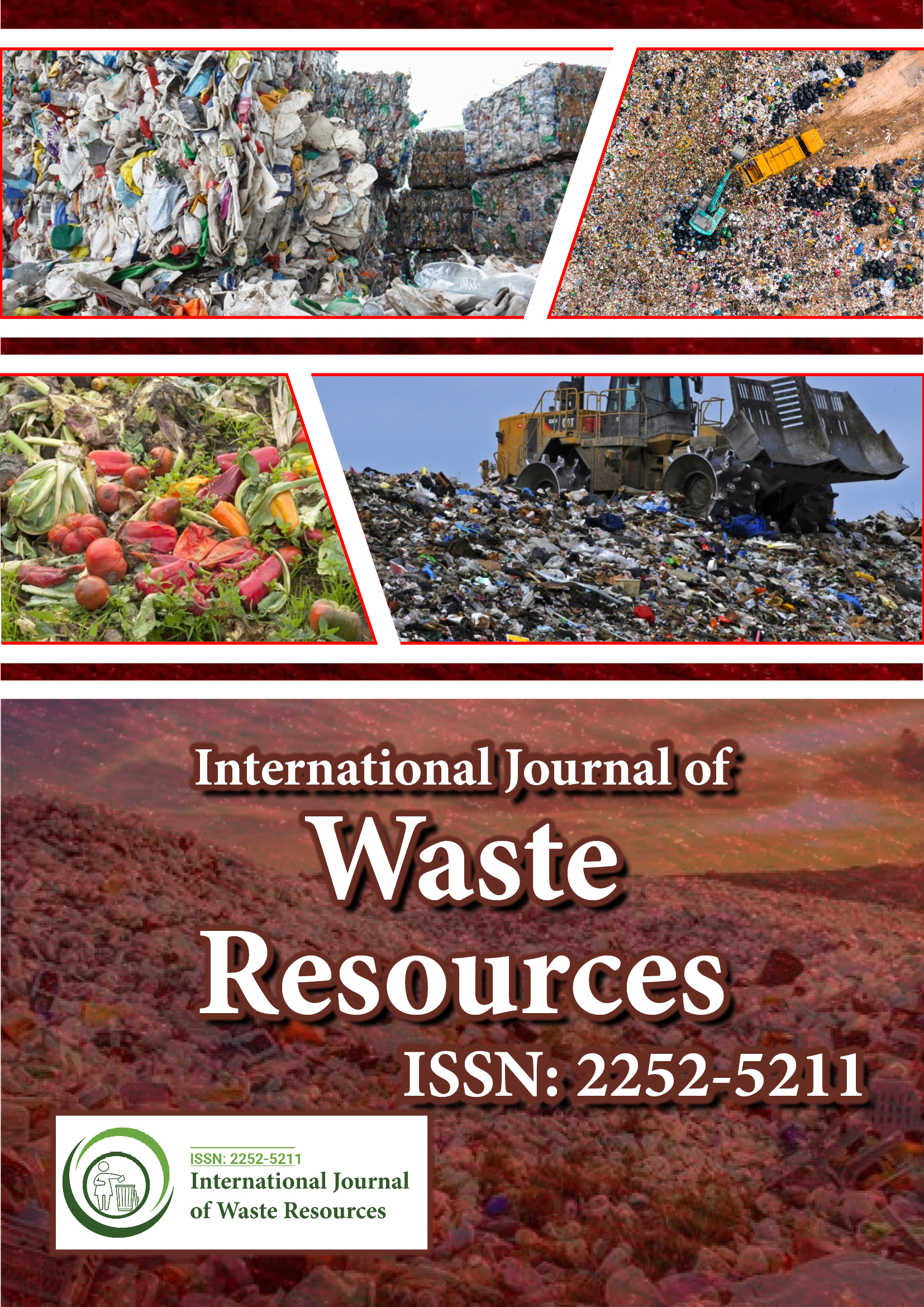
Journal Flyer
Open Access Journals
- Agri and Aquaculture
- Biochemistry
- Bioinformatics & Systems Biology
- Business & Management
- Chemistry
- Clinical Sciences
- Engineering
- Food & Nutrition
- General Science
- Genetics & Molecular Biology
- Immunology & Microbiology
- Medical Sciences
- Neuroscience & Psychology
- Nursing & Health Care
- Pharmaceutical Sciences
Commentary - (2025) Volume 15, Issue 3
Global Strategies and Innovations for Sustainable Chemical Waste Management in Modern Industries
Lucas Hernández*Received: 31-Jul-2025, Manuscript No. IJWR-25-30262; Editor assigned: 04-Aug-2025, Pre QC No. IJWR-25-30262; Reviewed: 18-Aug-2025, QC No. IJWR-25-30262; Revised: 25-Aug-2025, Manuscript No. IJWR-25-30262; Published: 01-Sep-2025, DOI: 10.35248/2252-5211.25.15.622
Description
Chemical waste management is a critical global concern that has gained growing importance in recent years due to rapid industrialization, scientific advancement population expansion. The generation of chemical waste from laboratories, factories, hospitals agricultural activities has increased dramatically, resulting in complex challenges for environmental sustainability and human health. Effective management of such waste requires a comprehensive approach encompassing prevention, minimization, recycling, treatment safe disposal. The modern world faces the dual challenge of promoting economic growth while minimizing environmental harm, making chemical waste management an essential component of sustainable development.
Chemical waste consists of discarded materials containing hazardous substances such as acids, bases, solvents, heavy metals, pesticides various organic compounds. Improper disposal of these substances can lead to severe contamination of soil, air water resources. Moreover, exposure to toxic chemicals can cause health hazards including respiratory problems, neurological disorders, skin irritation even cancer. The long-term persistence of many chemical pollutants amplifies the risk to both ecosystems and human populations. Therefore, effective regulation, advanced treatment technologies public awareness is vital for managing chemical waste responsibly.
The first step in managing chemical waste involves reducing its generation at the source. Industries and research laboratories are encouraged to adopt green chemistry principles that promote the use of safer raw materials, alternative solvents energy-efficient reactions. By modifying production processes and encouraging substitution of hazardous substances with environmentally benign alternatives, industries can minimize the creation of waste. This approach not only reduces environmental impact but also lowers production costs and enhances corporate reputation.
Segregation and classification play an essential role in ensuring that chemical wastes are handled safely. Wastes should be categorized based on their physical and chemical propertiessuch as flammability, toxicity, corrosivity reactivity-to facilitate proper treatment or recycling. For example, halogenated and non-halogenated solvents must be stored separately to prevent hazardous reactions. In addition, proper labeling and storage conditions, including temperature control and containment systems, are crucial for avoiding accidents.
Treatment technologies for chemical waste have evolved significantly over the past few decades. Among the most commonly used methods are neutralization, precipitation, incineration, oxidation-reduction biological degradation. For instance, acid and base wastes can be neutralized to produce harmless salts, while heavy metals can be precipitated using suitable reagents. Advanced oxidation processes, including ozonation and photocatalysis, are increasingly used to degrade persistent organic pollutants. However, incineration remains a controversial method due to the potential release of toxic gases such as dioxins and furans. Therefore, strict emission controls and continuous monitoring are necessary to ensure that the process is environmentally safe.
Recycling and recovery of chemical waste have also emerged as viable alternatives to disposal. Solvent recycling systems allow industries to purify and reuse organic solvents multiple times, reducing the demand for fresh chemicals. Metal recovery from electronic and industrial waste helps conserve valuable resources and prevents environmental contamination. Similarly, waste-toenergy technologies can convert chemical residues into usable forms of energy, thereby contributing to circular economy models. Governments and environmental agencies worldwide are promoting these initiatives through incentives and strict enforcement of waste management regulations.
Developed nations such as Sweden, Japan Germany have established efficient systems for monitoring and controlling chemical waste through integrated policy frameworks and technological advancements. In contrast, many developing countries face significant challenges due to inadequate infrastructure, limited technical expertise weak enforcement mechanisms. International cooperation, technology transfer capacity-building programs are essential to bridge this gap and ensure that all nations can effectively manage chemical waste. Collaborative research and knowledge sharing can lead to innovative, cost-effective solutions suitable for diverse environmental and economic contexts.
Public participation and awareness are key components of any successful waste management strategy. Communities must be educated about the dangers of improper disposal of chemicals, including household cleaners, paints pharmaceuticals. Educational programs, workshops media campaigns can encourage individuals and institutions to adopt environmentally friendly practices. Moreover, policymakers must ensure that strict legal frameworks are in place to penalize non-compliance and reward sustainable initiatives.
Conclusion
In conclusion, chemical waste management represents a critical intersection of science, policy social responsibility. As industrial and technological growth continues worldwide, the volume and complexity of chemical wastes will inevitably increase. Therefore, integrated management strategies that combine prevention, reduction, treatment, recycling safe disposal are essential to protect the environment and human health. The future of sustainable chemical waste management depends on global cooperation, innovation commitment toward a cleaner, safer planet for future generations.
Citation: Hernández L (2025) Global Strategies and Innovations for Sustainable Chemical Waste Management in Modern Industries. Int J Waste Resour: 15:622.
Copyright: © 2025 Hernández L. This is an open-access article distributed under the terms of the Creative Commons Attribution License, which permits unrestricted use, distribution reproduction in any medium, provided the original author and source are credited.