
Indexed In
- Open J Gate
- Genamics JournalSeek
- Academic Keys
- JournalTOCs
- ResearchBible
- China National Knowledge Infrastructure (CNKI)
- Scimago
- Ulrich's Periodicals Directory
- Electronic Journals Library
- RefSeek
- Hamdard University
- EBSCO A-Z
- OCLC- WorldCat
- SWB online catalog
- Virtual Library of Biology (vifabio)
- Publons
- MIAR
- Scientific Indexing Services (SIS)
- Euro Pub
- Google Scholar
Useful Links
Share This Page
Journal Flyer
Open Access Journals
- Agri and Aquaculture
- Biochemistry
- Bioinformatics & Systems Biology
- Business & Management
- Chemistry
- Clinical Sciences
- Engineering
- Food & Nutrition
- General Science
- Genetics & Molecular Biology
- Immunology & Microbiology
- Medical Sciences
- Neuroscience & Psychology
- Nursing & Health Care
- Pharmaceutical Sciences
Research Article - (2026) Volume 17, Issue 1
Evaluation of In vitro Anticancer Activity of Poly Herbal Extract (Vitis vinifera, Nigella sativa and Curcurbita pepo Seeds)
Jeevanesh E and Suprraja S*Received: 04-Dec-2024, Manuscript No. JNMNT-24-27683; Editor assigned: 06-Dec-2024, Pre QC No. JNMNT-24-27683 (PQ); Reviewed: 20-Dec-2024, QC No. JNMNT-24-27683; Revised: 09-Feb-2026, Manuscript No. JNMNT-24-27683 (R); Published: 16-Feb-2026, DOI: 10.35248/2157-7439.26.17.789
Abstract
Cancer is a group of diseases involving abnormal cell growth in the body. There are several types of cancer such as breast cancer, lung cancer, kidney cancer. It can grow anywhere in the body which is made up of trillions of cells. To evaluate the in vitro anticancer activity of poly herbal extracts of seeds (Vitis vinifera, Nigella sativa and Curcurbita pepo). To study the anticancer activity of poly herbal extract of Curcurbita pepo (pumpkin seeds) Vitis vinifera (grape seeds) and Nigella sativa (black cumin) seeds by using methanolic extract. Grape seeds, Curcurbita pepo, Nigella sativa was collected from the herbal medical shop. The seed was extracted to find the cytotoxic active constituents using methanol by maceration technique. The seeds was filtered and distillation made by using the seed extract and the cancer cell line studies were carried out. The poly-herbal formulation to evaluate cytotoxic activity showed good results in breast cell lines. It was found that the seeds have the anti-cancer activity.
Keywords
Anti-cancer; Poly herbal extract; Cell line; MTT assay; Black cuminIntroduction
Cancer is a group of diseases involving abnormal cell growth with the potential to invade or spread to other parts of the body. These contrast with benign tumours, which do not spread. In terms of National Cancer Institute (NIT), cancer is the name given to a collection of related diseases. In all types of cancer, some of the body’s cells begin to divide without stopping and spread into surrounding tissues. Cancer can start anywhere in the human body, which is made up of trillions of cells. Normally, human cells grow and divide to form new cells as the body needs them. When cells grow old or become damaged, they die, and new cells take their place. When cancer develops, however, this orderly process breaks down. As cells become more and more abnormal old or damaged cells survive when they should die, and new cells form when they are not needed. These extra cells can divide without stopping and may form growths called tumours [1-3].
Pathophysiology of breast cancer diagram
Breast cancer is a malignant tumour that starts in the cells of the breast. Like other cancers, there are several factors that can raise the risk of getting breast cancer. Damage to the DNA and genetic mutations can lead to breast cancer have being experimentally linked to oestrogen exposure. Some individual inherit defects in the DNA and genes like the BRCA1, BRCA2 and P53 among others. Those with a family history of ovarian or breast cancer thus are at an increased risk of breast cancer. The immune system normally seeks out cancer cells and cells with damage DNA and destroys them. Breast cancer may be a result of failure of such an effective immune defence and surveillance. These are several signalling systems of growth factors and other mediators that interact between stromal cells and epithelial cells. Disrupting these may lead breast cancer as well [4].
Treatments
Chemotherapy: These drugs are a main treatment for breast cancer. Side effects are likely with chemotherapy or chemobecause of the way it works. Chemo kills or slows the growth of rapidly multiplying cells. This includes both cancer cells and some normal cells in your body.
Hormone therapy: This class of drugs works on breast cancers with hormone receptors. Female hormones-estrogen and progesterone stimulate growth of hormone receptor-positive breast cancer cells [5]. Hormone therapy works to lower hormone levels or block the hormone receptor on the cancer cells.
Aromatase inhibitors: These are a type of hormone therapy for breast cancer. They lower hormone levels blocking an enzyme (aromatase) necessary for making estrogen. Hormone therapy side effects include hot flashes, fatigue, vaginal dryness and night sweats (Figures 1-3).
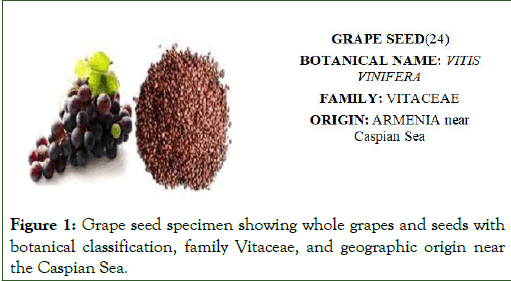
Figure 1: Grape seed specimen showing whole grapes and seeds with botanical classification, family Vitaceae, and geographic origin near the Caspian Sea.
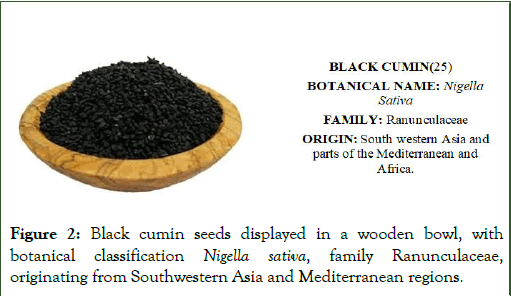
Figure 2: Black cumin seeds displayed in a wooden bowl, with botanical classification Nigella sativa, family Ranunculaceae, originating from Southwestern Asia and Mediterranean regions.
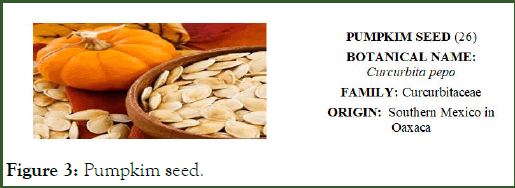
Figure 3: Pumpkim seed.
Materials and Methods
Petridish, beaker, methanol, small dish, soxhlet extractor, filter paper. The methods were conducted in the following steps (Figures 4-8).
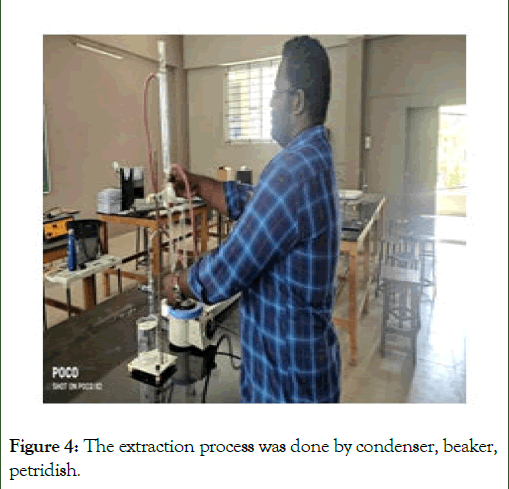
Figure 4: The extraction process was done by condenser, beaker, petridish.
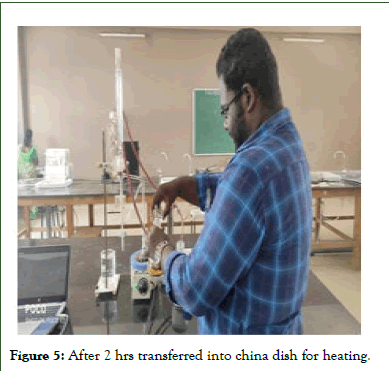
Figure 5: After 2 hrs transferred into china dish for heating.
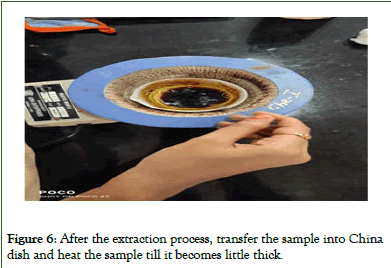
Figure 6: After the extraction process, transfer the sample into China dish and heat the sample till it becomes little thick.
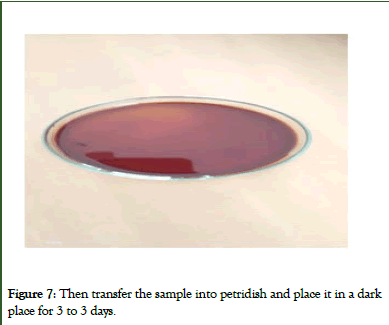
Figure 7: Then transfer the sample into petridish and place it in a dark place for 3 to 3 days.
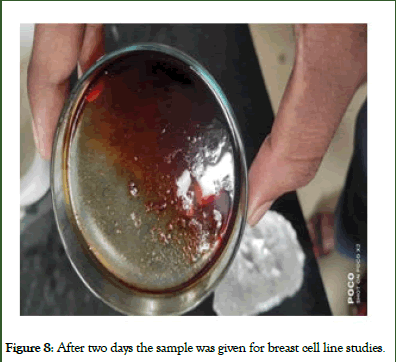
Figure 8: After two days the sample was given for breast cell line studies.
Results and Discussion
Collection of seeds
We collected the seeds of Vitis vinifera, Nigella sativa, and Curcurbita pepo in the value of 8 grams. Dried the seeds for 2 days. Then weighed 8 grams of seeds and soaked them in 300 ml of methanolic extract. Stored them for 14 days to get the active constituents.
Extraction of seeds maturation techniques
After completion of 14 days, the soaked seeds was preceded to extraction process. So that we will get the active constituents separately. Boiling point of methanol is 64.7. The extraction process was done under 48°C for 10 minutes and slightly increased the value for every 10 minutes for 55°C, 60°C, 65°C and upto 70°C was done. After that, transferred the sample into china dish and boiled using heating mantle for 15 minutes. Then it will become little thick [6]. Then transfer it into petridish. Keep aside for 2 days. So that you will get the active constituents. After getting the active constituents, the sample was proceeded to breast cell line studies.
Cell line anti-cancer activity MTT assay
The cell line was performed in Drug Testing Laboratory Eachanari, Coimbatore. The cell line was received from NCC, Pune. A549 is established and well characterized cell line that has demonstrated reproducible results (Figure 9). The culture medium used in the cell is MEM-medium supplemented with fetal Bovine serum. The assay method MTT was performed (Table 1). The reagents MTT solution (1 mg/ml), DMSO (100%), PBS (pH 7.2) was used. The plates were incubated at 37°C with 5% CO2 for 3-4 hrs at 570 nm. The imaging was done by phase contrast microscope [7-9].
Report
Anticancer activity – MTT cell line: A549
Sample particulars: Seeds extract
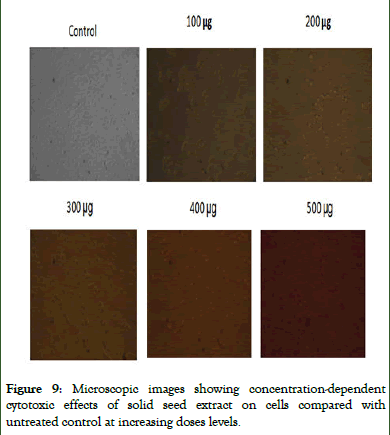
Figure 9: Microscopic images showing concentration-dependent cytotoxic effects of solid seed extract on cells compared with untreated control at increasing doses levels.
| Concentration µg | B2100039-1 Solid seed extract | ||
| Cytotoxicity | Cell viability | Reactivity | |
| 100 | 33.4 | 66.6 | Mild |
| 200 | 54.8 | 45.2 | Moderate |
| 300 | 57.1 | 42.9 | Moderate |
| 400 | 57.2 | 42.8 | Moderate |
| 500 | 58.1 | 41.9 | Moderate |
Table 1: Cytotoxicity of solid seed extract B2100039-1 across concentrations (100–500 μg), showing decreased cell viability and mild to moderate reactivity.
Conclusion
Breast cancer is one of important cancers among women which is known as the second most common cancer worldwide. Diagnosis of breast cancer is main aspects of breast cancer therapy. There are many side effects in allopathic medicines. So we tried for the poly-herbal formulation to evaluate cytotoxic activity. In this we have got good result in breast cancer cell line. Hence we conclude that our seeds have anticancer activity. Extending current knowledge into actual prevention awaits further studies from a range of aspects including methodology, individual and collaborative research environment, and ethics.
References
- Faizan U, Muppidi V. Uterine cancer. 2021.
- Puckett Y, Garifield K. Pancreatic cancer. 2020.
- Finigan JH, Kern JA. Lung cancer: new therapeutic targets, new definitions. Am J Respir Crit Care Med. 2012;186(1):7–8.
[Crossref] [Google Scholar] [PubMed]
- Devarshi P, Kanase A, Kanase R, Mane S, Patil S, Varute AT. Effect of Mandir Bhasma on lipolytic activities of liver, kidney and adipose tissue of albino rat during CCl4 induced hepatic injury. J Biosci. 1986;10:227–234.
- Cabanillas ME, McFadden DG, Durante C. Thyroid cancer. Lancet. 2016;388(10061):2783–2795.
- Armitage JO, Gascoyne RD, Lunning MA, Cavalli F. Non-Hodgkin lymphoma. Lancet. 2017;390(10091):298–310.
- Chavare A, Chowdari P, Ghosh S, Pawar P, Patkar M, Dakave S, et al. Safety and bioactivity studies of Jasad Bhasma and its in-process intermediate in Swiss mice. J Ethnopharmacol. 2017;197:73-86.
[Crossref] [Google Scholar] [PubMed]
- Montero PH, Patel SG. Cancer of the oral cavity. Surg Oncol Clin N Am. 2015;24:491–508.
- Linehan WM, Schmidt LS, Crooks DR, Wei D, Srinivasan R, Lang M, et al. The metabolic basis of kidney cancer. Cancer Discov. 2019;9(8): 1006-1021.
[Crossref] [Google Scholar] [PubMed]
Citation: Jeevanesh E, Suprraja S (2026) Evaluation of In vitro Anticancer Activity of Poly Herbal Extract (Vitis vinifera, Nigella sativa and Curcurbita pepo Seeds). J Nanomed Nanotech. 17:789.
Copyright: © 2026 Jeevanesh E, et al. This is an open access article distributed under the terms of the Creative Commons Attribution License, which permits unrestricted use, distribution, and reproduction in any medium, provided the original author and source are credited.