
Indexed In
- Open J Gate
- Genamics JournalSeek
- Academic Keys
- JournalTOCs
- The Global Impact Factor (GIF)
- China National Knowledge Infrastructure (CNKI)
- Ulrich's Periodicals Directory
- RefSeek
- Hamdard University
- EBSCO A-Z
- OCLC- WorldCat
- Publons
- Geneva Foundation for Medical Education and Research
- Euro Pub
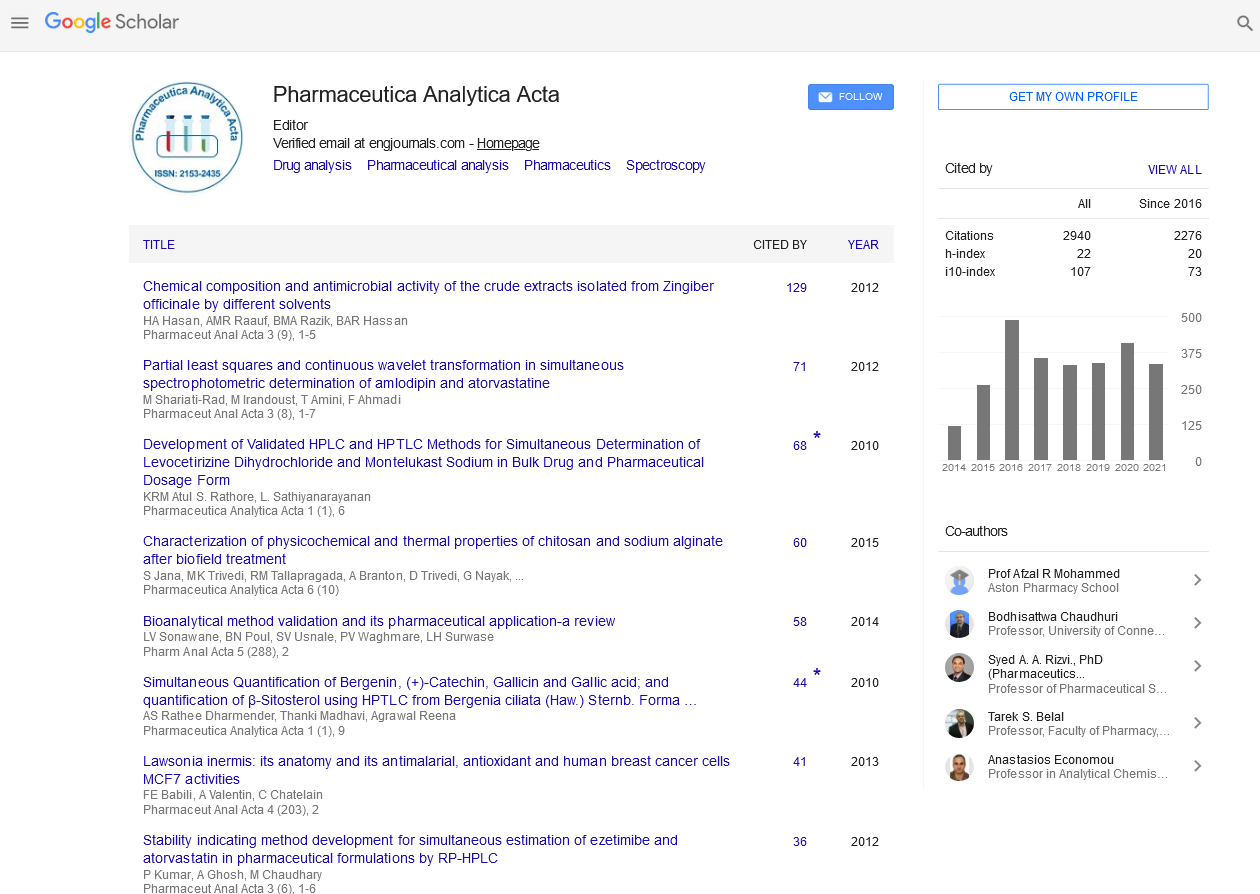
- Google Scholar
Useful Links
Share This Page
Journal Flyer
Open Access Journals
- Agri and Aquaculture
- Biochemistry
- Bioinformatics & Systems Biology
- Business & Management
- Chemistry
- Clinical Sciences
- Engineering
- Food & Nutrition
- General Science
- Genetics & Molecular Biology
- Immunology & Microbiology
- Medical Sciences
- Neuroscience & Psychology
- Nursing & Health Care
- Pharmaceutical Sciences
Commentary - (2025) Volume 16, Issue 4
Blockchain in Pharma: Enhancing Transparency and Security
Mary Elizabeth*Received: 02-Nov-2024, Manuscript No. PAA-24-27390; Editor assigned: 05-Nov-2024, Pre QC No. PAA-24-27390 (PQ); Reviewed: 19-Nov-2024, QC No. PAA-24-27390; Revised: 04-Dec-2025, Manuscript No. PAA-24-27390 (R); Published: 11-Dec-2025
Description
The paper "Blockchain in Pharma: Enhancing Transparency and Security" examines how blockchain technology can revolutionise the pharmaceutical sector. It looks at how blockchain can solve important issues including data breaches and counterfeiting while enhancing medicine traceability, protecting patient data, and expediting clinical trials. Along with discussing the barriers to broad adoption, the paper highlights the necessity of industry stakeholders working together. It ends with a call to action, emphasising how crucial it is to adopt blockchain in order to improve patient safety and operational integrity in the pharmaceutical industry. In addition to maintaining regulatory compliance and safeguarding patient data, the pharmaceutical sector faces many other issues. Blockchain technology has become a potent tool for improving security and transparency as the industry negotiates these issues. Blockchain can transform several facets of pharmaceutical operations by offering a decentralised, unchangeable ledger, which will increase stakeholder trust and boost overall productivity.
Understanding blockchain technology
Fundamentally, blockchain is a s (DLT) that keeps track of transactions across several computers and makes sure that the information cannot be changed after the fact. Each block, or transaction, is connected to the one before it, creating a chain that is protected by cryptographic methods. In addition to making data manipulation practically impossible, this structure enables real-time supply chain visibility.
Enhancing drug traceability
Drug traceability is one of the most important uses of blockchain in the pharmaceutical industry. The public's health and patient safety are seriously threatened by counterfeit medications. Businesses can establish a transparent and safe record of a medication's path from producer to consumer by putting blockchain technology into practice. All parties involved can obtain real-time information regarding the origin and handling of a medicine by recording every transaction on the blockchain, including those involving production, packaging, shipping, and dispensing.
Securing patient data
In a time when data breaches are becoming more frequent, safeguarding patient data is crucial. Blockchain provides a strong defence for private medical information. Blockchain lowers the possibility of unwanted access by encrypting medical records and keeping them on a decentralised network. The information is only accessible by authorised users who possess the necessary cryptographic keys, improving privacy and adhering to laws like HIPAA.
Streamlining clinical trials
Additionally, blockchain technology can improve efficiency and transparency by streamlining the clinical trial process. Pharmaceutical businesses can monitor patient enrolment, consent, and data gathering in real time by using blockchain technology for trial management. Because they can observe how their data is being utilised and know that regulations are being followed, participants' trust is increased by this transparency.
Challenges and considerations
Blockchain adoption in the pharmaceutical sector is not without difficulties, despite its possible advantages. Widespread adoption may be hampered by technical difficulties and the requirement for interoperability across various blockchain platforms. Furthermore, blockchain regulations in the healthcare industry are constantly developing, so businesses need to carefully manage these unknowns. Furthermore, especially for smaller businesses, the initial outlay needed to build and deploy blockchain systems might be substantial.
Conclusion
To sum up, blockchain technology offers the pharmaceutical sector a revolutionary chance to improve security and transparency in a number of procedures. Blockchain has several useful applications, ranging from preserving patient data and guaranteeing drug traceability to expediting clinical studies. Blockchain presents a workable solution that promotes confidence and accountability while the sector struggles with persistent issues including data breaches, counterfeiting, and regulatory compliance. Stakeholders in the pharmaceutical industry must cooperate to overcome the upcoming financial, legal, and technological obstacles if blockchain is to reach its full potential. The pharmaceutical industry may increase patient safety, strengthen operational integrity, and provide more efficient healthcare solutions by using this cutting-edge technology.
Citation: Elizabeth M (2025) Blockchain in Pharma: Enhancing Transparency and Security. Pharm Anal Acta. 16.829.
Copyright: © 2025 Elizabeth M. This is an open-access article distributed under the terms of the Creative Commons Attribution License, which permits unrestricted use, distribution, and reproduction in any medium, provided the original author and source are credited.