
Indexed In
- Open J Gate
- Genamics JournalSeek
- JournalTOCs
- Ulrich's Periodicals Directory
- RefSeek
- Hamdard University
- EBSCO A-Z
- OCLC- WorldCat
- Publons
- Geneva Foundation for Medical Education and Research
- Euro Pub
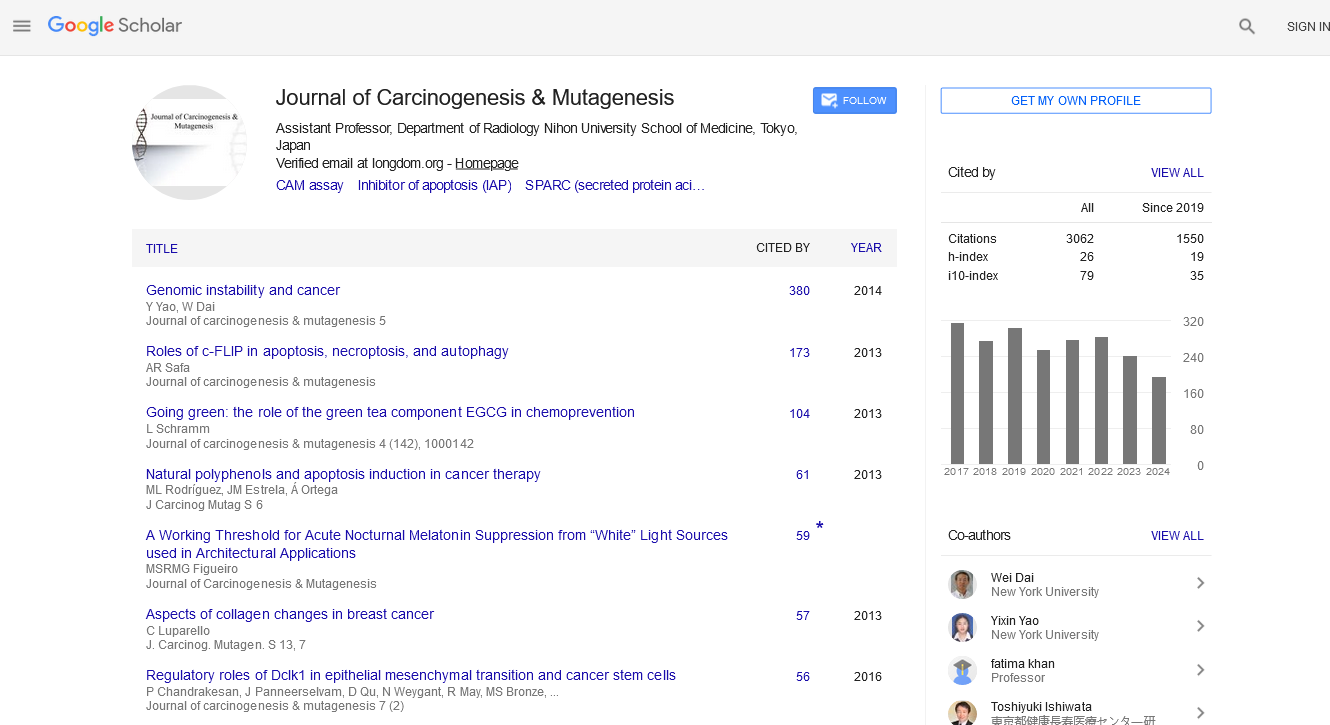
- Google Scholar
Useful Links
Share This Page
Journal Flyer
Open Access Journals
- Agri and Aquaculture
- Biochemistry
- Bioinformatics & Systems Biology
- Business & Management
- Chemistry
- Clinical Sciences
- Engineering
- Food & Nutrition
- General Science
- Genetics & Molecular Biology
- Immunology & Microbiology
- Medical Sciences
- Neuroscience & Psychology
- Nursing & Health Care
- Pharmaceutical Sciences
Opinion Article - (2025) Volume 0, Issue 0
Biological Pathways Driving Tumor Formation and Progression
Lucas Moreau*Received: 29-Oct-2025, Manuscript No. JCM-25-30874; Editor assigned: 31-Oct-2025, Pre QC No. JCM-25-30874 (PQ); Reviewed: 14-Nov-2025, QC No. JCM-25-30874; Revised: 21-Nov-2025, Manuscript No. JCM-25-30874 (R); Published: 28-Nov-2025, DOI: 10.35248/2157-2518.25.16.004
Description
Tumorigenesis is the biological process through which normal cells undergo progressive changes that result in the formation of tumors. This transformation is driven by the accumulation of molecular alterations that disrupt normal cellular regulation and enable cells to proliferate uncontrollably. Tumorigenesis is not a single event but a multistage process involving initiation, promotion and progression, each characterized by distinct cellular and molecular changes. Understanding how tumorigenesis unfolds is essential for advancing cancer prevention, diagnosis and treatment, as it provides insight into the origins of malignancy and the factors that sustain tumor growth.
The earliest stage of tumorigenesis begins when a cell acquires genetic damage that alters its normal behaviour. These genetic alterations may arise from exposure to carcinogens, replication errors, chronic inflammation, or inherited mutations. Changes the sequence can activate oncogenes that stimulate cell division or inactivate tumor suppressor genes responsible for maintaining genomic stability and controlling cell cycle progression. When regulatory checkpoints fail, cells are allowed to survive and divide, increasing the likelihood of additional mutations. Over time, these accumulated alterations create a cellular environment conducive to malignant transformation.
As tumorigenesis progresses, epigenetic changes further shape the behaviour of transformed cells. Epigenetic mechanisms such as methylation and histone modification regulate gene expression without altering the sequence. In tumor cells, abnormal epigenetic patterns can silence tumor suppressor genes or enhance oncogenic signalling. These changes contribute to cellular plasticity, allowing cancer cells to adapt to environmental stress and therapeutic pressure. Unlike genetic mutations, epigenetic alterations are potentially reversible, making them attractive targets for therapeutic intervention aimed at restoring normal gene regulation.
A defining feature of tumorigenesis is the disruption of signalling pathways that control cellular communication. Normal cells rely on tightly regulated signalling networks to respond to growth factors, nutrients and stress signals. In tumor cells, these pathways become dysregulated, leading to persistent activation of growth and survival signals. This signalling imbalance allows tumor cells to gain a selective advantage over normal cells, promoting clonal expansion and tumor development.
The tumor microenvironment plays a critical role in shaping tumorigenesis. Cancer cells interact extensively with surrounding stromal cells, immune cells, blood vessels and extracellular matrix components. These interactions influence tumor growth, invasion and immune evasion. Cancer-associated fibroblasts secrete growth factors and matrix-modifying enzymes that support tumor expansion, while immune cells can be reprogrammed to create an immunosuppressive environment. Angiogenesis is another key aspect of tumorigenesis, as tumors stimulate the formation of new blood vessels to meet their metabolic demands. The dynamic relationship between tumor cells and their microenvironment highlights the complexity of cancer development and underscores the importance of targeting both intrinsic and extrinsic factors in therapy.
Metabolic reprogramming is a hallmark of tumorigenesis that enables cancer cells to sustain rapid growth. Tumor cells often alter their energy metabolism to favor glycolysis even in the presence of oxygen, a phenomenon known as aerobic glycolysis. This shift supports the production of metabolic intermediates needed for biosynthesis and redox balance. Additionally, changes in lipid and amino acid metabolism provide further resources for tumor growth and survival. Metabolic flexibility allows tumor cells to adapt to nutrient-limited conditions and contributes to resistance against therapy.
This instability increases genetic diversity within the tumor, facilitating adaptation and evolution. While genomic instability accelerates tumor progression, it also creates vulnerabilities that can be exploited therapeutically. Treatments that target defective repair pathways or induce lethal levels of genomic stress have shown promise in certain cancers.
Clinically, tumorigenesis underlies the initiation and progression of all malignant diseases. Early detection relies on identifying molecular changes associated with transformation, such as altered gene expression patterns or circulating tumor-derived molecules. Advances in molecular diagnostics have improved the ability to detect cancer at earlier stages, when intervention is more effective. Therapeutic strategies aimed at interrupting tumorigenesis include targeted therapies, immunotherapies and preventive approaches that reduce exposure to risk factors. Personalized medicine has emerged as a powerful tool for tailoring treatment based on the specific molecular features of a patient’s tumor.
In conclusion, tumorigenesis is a complex and dynamic process driven by genetic mutations, epigenetic alterations, dysregulated signalling pathways, metabolic reprogramming and interactions with the tumor microenvironment. These interconnected mechanisms enable normal cells to acquire malignant properties and sustain uncontrolled growth. Understanding the biological pathways that drive tumorigenesis is essential for improving cancer prevention, early detection and treatment. Continued research into the molecular basis of tumor formation offers opportunities to identify novel therapeutic targets and develop strategies that halt cancer development at its earliest stages.
Citation: Moreau L (2025). Biological Pathways Driving Tumor Formation and Progression. J Carcinog Mutagen. 16:004.
Copyright: © 2025 Moreau L. This is an open-access article distributed under the terms of the Creative Commons Attribution License, which permits unrestricted use, distribution, and reproduction in any medium, provided the original author and source are credited