
Indexed In
- Open J Gate
- Genamics JournalSeek
- Academic Keys
- JournalTOCs
- The Global Impact Factor (GIF)
- China National Knowledge Infrastructure (CNKI)
- Ulrich's Periodicals Directory
- RefSeek
- Hamdard University
- EBSCO A-Z
- OCLC- WorldCat
- Publons
- Geneva Foundation for Medical Education and Research
- Euro Pub
- Google Scholar
Useful Links
Share This Page
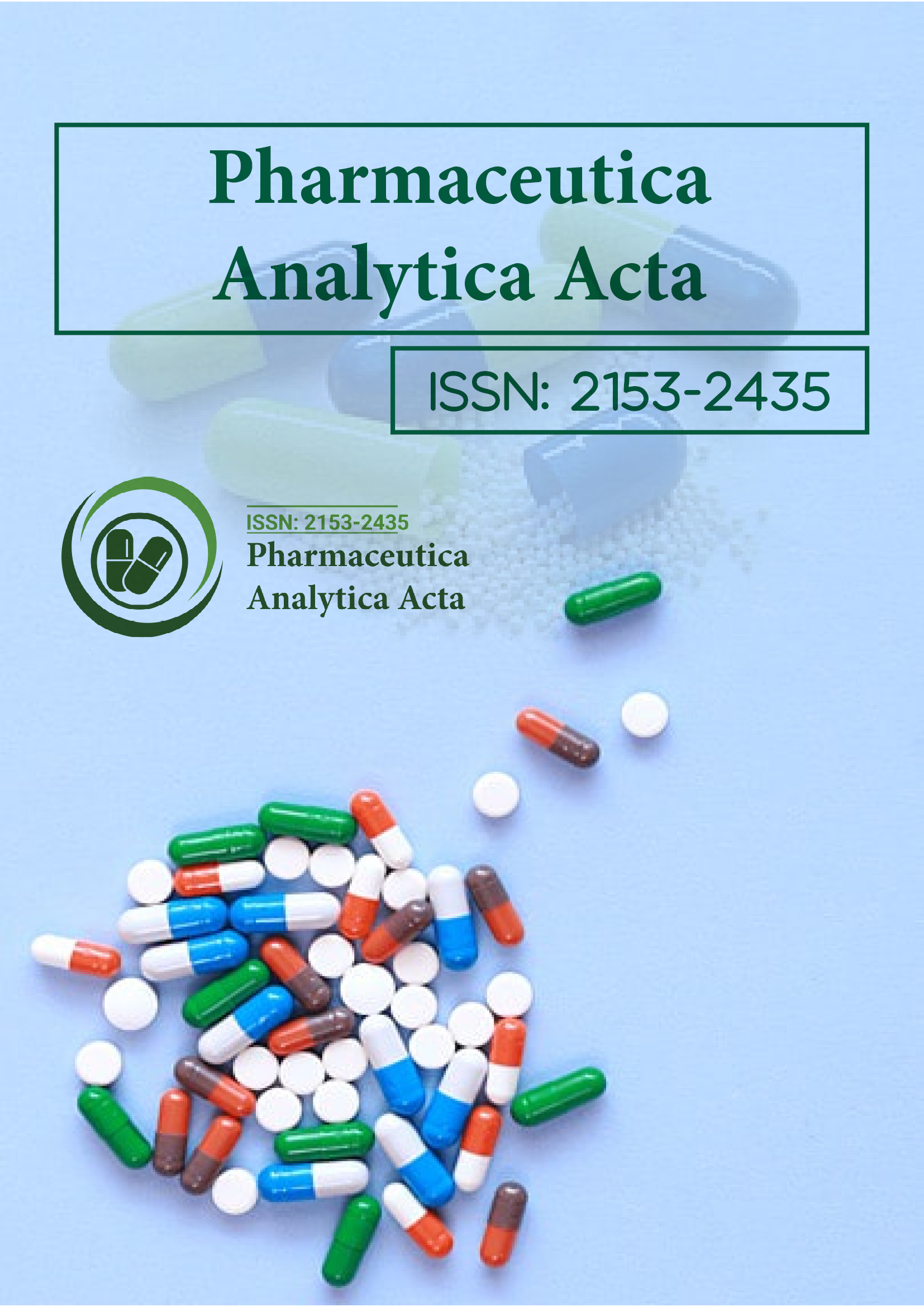
Journal Flyer
Open Access Journals
- Agri and Aquaculture
- Biochemistry
- Bioinformatics & Systems Biology
- Business & Management
- Chemistry
- Clinical Sciences
- Engineering
- Food & Nutrition
- General Science
- Genetics & Molecular Biology
- Immunology & Microbiology
- Medical Sciences
- Neuroscience & Psychology
- Nursing & Health Care
- Pharmaceutical Sciences
Opinion Article - (2026) Volume 17, Issue 1
Advanced Perspectives on Molecular Drug Analysis in Pharmaceutical Science
Hannah Liu *Received: 25-Feb-2026 , Manuscript No. PAA-26-31789; Editor assigned: 27-Feb-2026 , Pre QC No. PAA-26-31789; Reviewed: 13-Mar-2026 , QC No. PAA-26-31789; Revised: 20-Mar-2026 , Manuscript No. PAA-26-31789; Published: 27-Mar-2026 , DOI: 10.35248/2153-2435.26.17.847
Abstract
Description
Molecular drug analysis refers to the detailed examination of pharmaceutical compounds at the molecular level to understand their structure, behavior, interactions and performance within biological and chemical systems. This area of analytical science plays a significant role in drug development, quality evaluation and therapeutic assessment. By focusing on molecular characteristics, scientists can gain precise information about how drug substances are formed, how they interact with their environment and how they perform under different conditions.
The molecular structure of a drug determines many of its properties, including solubility, stability, absorption and biological activity. Even minor variations in molecular arrangement can lead to noticeable differences in therapeutic performance. Molecular drug analysis allows researchers to detect these variations and assess their impact on overall drug behavior. This level of understanding is especially important when evaluating complex pharmaceutical compounds or new therapeutic candidates. Spectroscopic methods are widely used in molecular drug analysis. Techniques such as ultraviolet-visible spectroscopy provide information about electronic transitions within molecules, which helps in determining concentration and purity. Infrared spectroscopy allows identification of functional groups by analyzing vibrational patterns within molecular bonds. Nuclear magnetic resonance spectroscopy offers detailed insights into atomic arrangement and connectivity within molecules, making it possible to confirm structural identity with high accuracy.
Mass spectrometry is another essential tool in molecular-level evaluation. It provides molecular weight information and fragmentation patterns that assist in identifying unknown compounds and confirming molecular structures. When combined with chromatographic separation techniques, mass spectrometry becomes highly effective for analyzing complex mixtures, including pharmaceutical formulations and biological samples. This combination allows detection of trace-level compounds that may influence drug quality or performance.
Chromatographic techniques such as high-performance liquid chromatography and gas chromatography are frequently applied in molecular drug analysis. These methods separate compounds based on their chemical properties, enabling individual components to be examined separately. This separation is particularly useful when analyzing mixtures containing active ingredients, impurities and degradation products. The ability to isolate individual molecules improves the accuracy of subsequent identification and quantification steps.
Molecular drug analysis also plays an important role in understanding drug-receptor interactions. The effectiveness of a pharmaceutical compound depends on how well it binds to specific biological targets such as enzymes, receptors or proteins. Studying these interactions at the molecular level helps scientists evaluate binding strength, specificity and stability of drug-target complexes. This information contributes to understanding how a drug produces its therapeutic effect within the body.
Computational techniques have become increasingly important in molecular analysis. Molecular modeling and simulation tools allow researchers to predict how drug molecules will behave under different conditions. These methods provide insights into molecular conformation, binding affinity and interaction pathways. Computational approaches complement experimental techniques by offering predictive information that can guide further analysis and decision-making.
Another important aspect of molecular drug analysis is the study of degradation pathways. Pharmaceutical compounds may undergo chemical changes when exposed to environmental factors such as light, temperature, oxygen or moisture. Molecular analysis helps identify the products formed during these processes and determines how they may affect drug safety and effectiveness. Understanding degradation behavior supports the development of stable pharmaceutical formulations. Molecular analysis is also applied in impurity profiling. Pharmaceutical substances often contain trace impurities that arise during synthesis or storage. These impurities may have different molecular structures and can influence the safety or performance of the final product. Identifying and characterizing these impurities requires highly sensitive analytical methods capable of distinguishing closely related molecular species.
In biological systems, molecular drug analysis is used to study absorption, distribution, metabolism and elimination processes. After administration, drugs interact with enzymes and other biological molecules, leading to chemical transformations. Analyzing these interactions at the molecular level provides valuable information about how a drug behaves within the body. This knowledge supports dosage optimization and helps in understanding variability in therapeutic response. Biomolecular techniques are also used to examine interactions between drugs and biological macromolecules. These interactions may influence therapeutic effects or lead to unintended outcomes. Molecular analysis allows detailed examination of binding sites, interaction strength and structural changes resulting from drug exposure. Such studies contribute to safer and more effective drug design strategies. Advanced imaging and structural analysis techniques also contribute to molecular drug evaluation. Methods such as X-ray crystallography provide detailed threedimensional structures of drug molecules and their complexes. These structural insights help researchers understand spatial arrangement and interaction patterns at the atomic level. Cryogenic electron microscopy has further expanded the ability to study large biomolecular complexes with high resolution.
Citation: Liu H (2026). Advanced Perspectives on Molecular Drug Analysis in Pharmaceutical Science. Pharm Anal Acta. 17:847.
Copyright: © 2026 Liu H. This is an open-access article distributed under the terms of the Creative Commons Attribution License, which permits unrestricted use, distribution and reproduction in any medium, provided the original author and source are credited.