
Indexed In
- Open J Gate
- Genamics JournalSeek
- Academic Keys
- JournalTOCs
- RefSeek
- Hamdard University
- EBSCO A-Z
- SWB online catalog
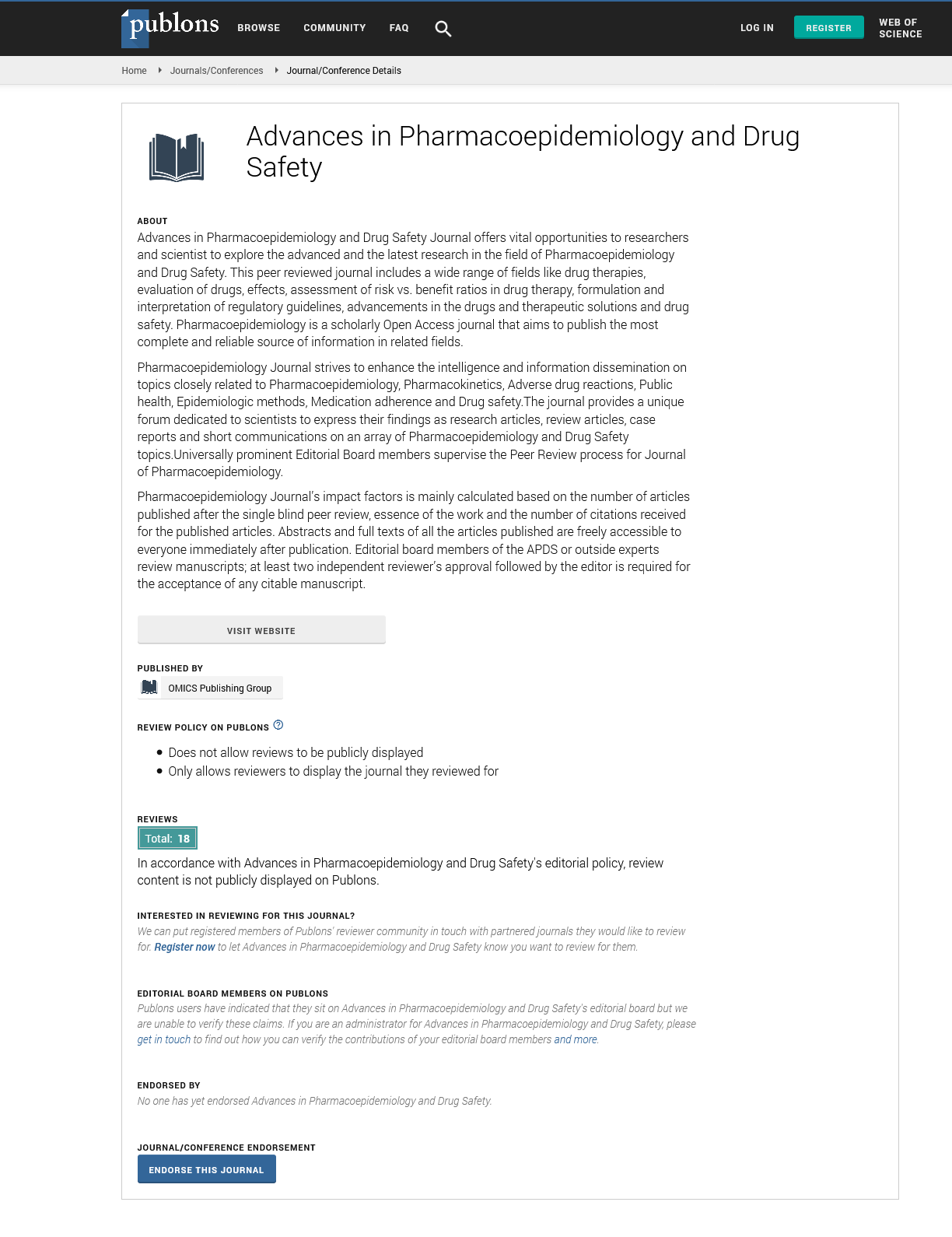
- Publons
- Geneva Foundation for Medical Education and Research
- Euro Pub
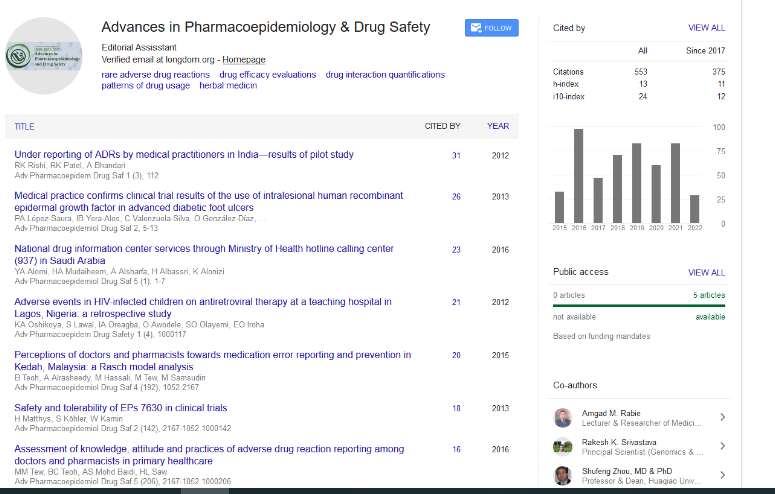
- Google Scholar
Useful Links
Share This Page
Journal Flyer

Open Access Journals
- Agri and Aquaculture
- Biochemistry
- Bioinformatics & Systems Biology
- Business & Management
- Chemistry
- Clinical Sciences
- Engineering
- Food & Nutrition
- General Science
- Genetics & Molecular Biology
- Immunology & Microbiology
- Medical Sciences
- Neuroscience & Psychology
- Nursing & Health Care
- Pharmaceutical Sciences
Opinion Article - (2025) Volume 14, Issue 4
Wearable Health Technologies: Enhancing Patient Monitoring and Supporting Modern Healthcare Delivery
Isaac Fletcher *Received: 19-Nov-2025 , Manuscript No. PDS -26-32314 ; Editor assigned: 21-Nov-2025 , Pre QC No. PDS -26-32314 ; Reviewed: 05-Dec-2025 , QC No. PDS -26-32314 ; Revised: 12-Dec-2025 , Manuscript No. PDS -26-32314 ; Published: 18-Dec-2025 , DOI: 10.35841/2167-1052.25.14.412
Abstract
Description
Wearable health technologies have become an important part of modern healthcare by providing continuous monitoring of physiological parameters outside traditional clinical environments. These devices allow individuals and healthcare professionals to collect valuable health information during everyday activities, supporting early identification of health changes and more informed clinical decision-making. Advances in sensor technology, wireless communication, mobile applications, and cloud-based data management have expanded the capabilities of wearable devices, making them valuable tools for preventive healthcare, chronic disease management, rehabilitation, and clinical research.
Wearable health technologies include smartwatches, fitness bands, biosensor patches, smart clothing, portable electrocardiogram monitors, continuous glucose monitoring systems, wearable blood pressure monitors, sleep tracking devices, and other body-worn sensors. These devices continuously or periodically measure physiological indicators such as heart rate, physical activity, blood oxygen saturation, body temperature, respiratory rate, glucose concentration, sleep quality, and cardiac rhythm. The information collected provides healthcare professionals with a broader understanding of an individual's health status beyond occasional clinic visits.
Continuous monitoring represents one of the greatest advantages of wearable technologies. Conventional healthcare assessments often rely on measurements obtained during scheduled appointments, providing only a limited view of a patient's condition. Wearable devices generate health information throughout daily life, allowing clinicians to observe changes over time, recognize recurring patterns, and identify abnormalities that may not be apparent during brief clinical examinations. Longitudinal monitoring improves understanding of disease progression and treatment response.
Cardiovascular care has benefited considerably from wearable monitoring systems. Many wearable devices measure heart rate, detect irregular cardiac rhythms, estimate physical activity levels, and record electrocardiographic information. Patients with arrhythmias, hypertension, heart failure, or cardiovascular risk factors may benefit from regular monitoring that supports early recognition of clinically significant changes. Continuous observation also assists physicians in evaluating treatment effectiveness and determining whether additional diagnostic investigations are necessary.
Physical activity monitoring has become one of the most widely recognized applications of wearable health technologies. Activity trackers measure daily step count, walking distance, exercise duration, energy expenditure, and movement intensity. Individuals use this information to monitor personal fitness goals, while healthcare professionals may incorporate activity data into rehabilitation programs, weight management strategies, and chronic disease prevention initiatives. Objective measurement of physical activity provides valuable information regarding lifestyle behaviors that influence overall health.
Wearable technologies also support postoperative recovery and rehabilitation. Patients recovering from surgery or musculoskeletal injuries can use wearable devices to monitor mobility, walking distance, joint movement, exercise adherence, and physical activity levels. Rehabilitation specialists review these data to evaluate patient progress, modify exercise programs, and encourage gradual improvement in physical function. Objective monitoring supports individualized rehabilitation while reducing unnecessary clinic visits.
Remote patient monitoring has become increasingly important as healthcare systems expand telemedicine services. Wearable devices transmit health information securely to healthcare providers through wireless communication networks, allowing clinicians to evaluate patient status without requiring frequent in-person consultations. This approach improves healthcare accessibility for individuals living in rural areas, patients with limited mobility, and those requiring long-term monitoring for chronic medical conditions.
Conclusion
Wearable health technologies have become valuable tools for improving patient monitoring, supporting disease management, encouraging healthy lifestyles, and expanding access to healthcare services. Continuous physiological assessment, remote monitoring, integration with digital health systems, multidisciplinary clinical use, and ongoing technological advancement contribute to better healthcare delivery across diverse patient populations. Continued research, careful validation, secure data management, and responsible clinical implementation will strengthen the role of wearable technologies in improving health outcomes and supporting modern medical practice.
Citation: Fletcher I (2025). Wearable Health Technologies: Enhancing Patient Monitoring and Supporting Modern Healthcare Delivery. J Adv Pharmacoepidemiol Drug Saf. 14:412.
Copyright: © 2025 Fletcher I. This is an open-access article distributed under the terms of the Creative Commons Attribution License, which permits unrestricted use, distribution and reproduction in any medium, provided the original author and source are credited.