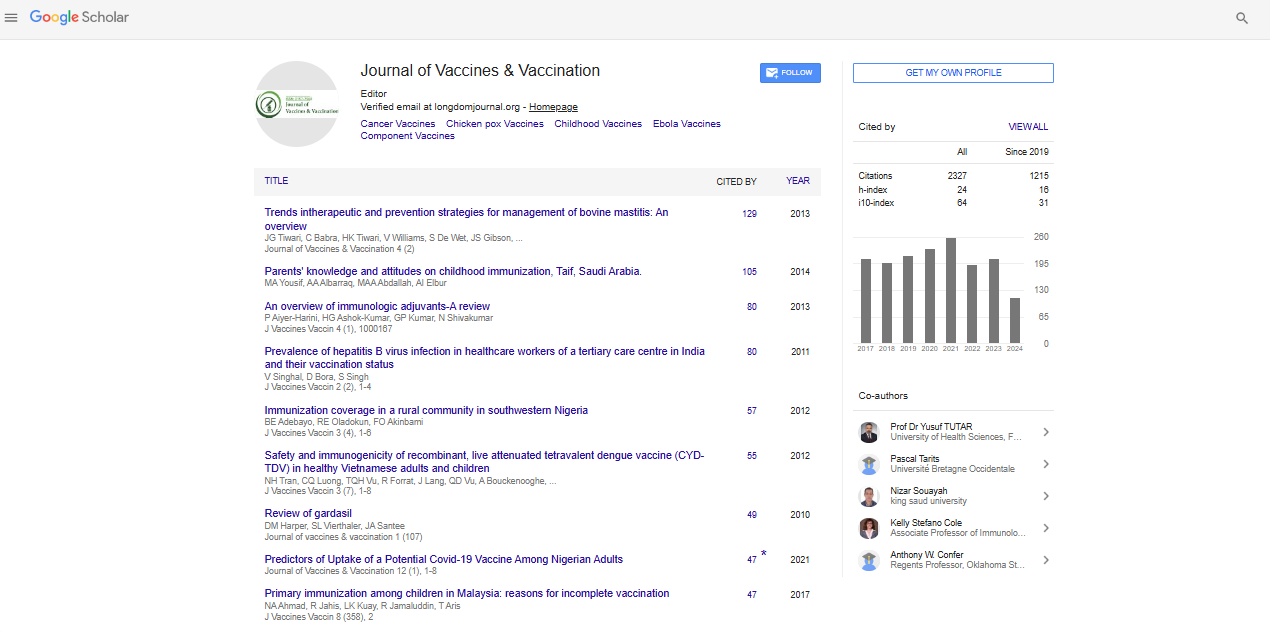
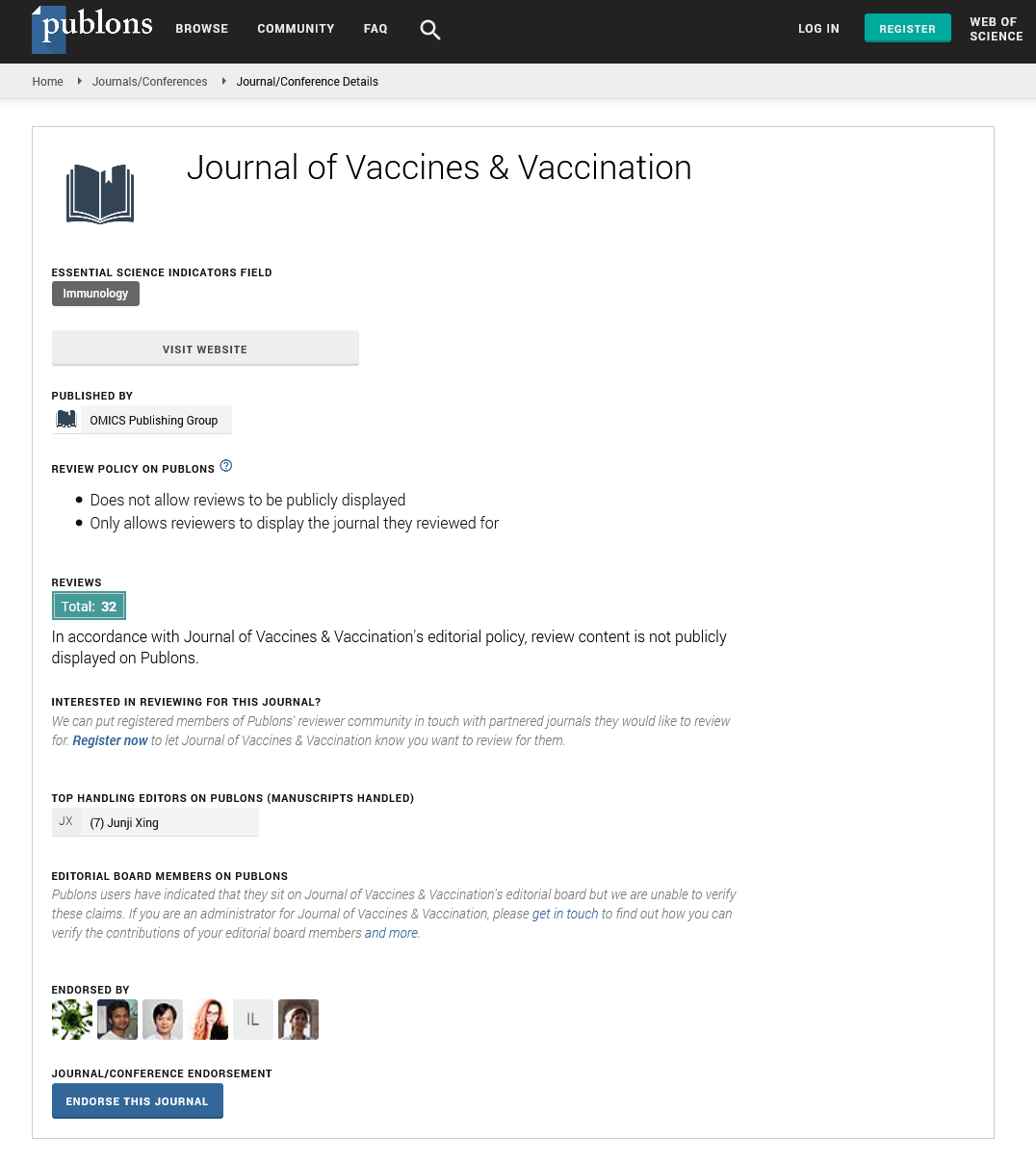

Indexed In
- Academic Journals Database
- Open J Gate
- Genamics JournalSeek
- JournalTOCs
- China National Knowledge Infrastructure (CNKI)
- Scimago
- Ulrich's Periodicals Directory
- RefSeek
- Hamdard University
- EBSCO A-Z
- OCLC- WorldCat
- Publons
- MIAR
- University Grants Commission
- Geneva Foundation for Medical Education and Research
- Euro Pub
- Google Scholar
Useful Links
Share This Page
Open Access Journals
- Agri and Aquaculture
- Biochemistry
- Bioinformatics & Systems Biology
- Business & Management
- Chemistry
- Clinical Sciences
- Engineering
- Food & Nutrition
- General Science
- Genetics & Molecular Biology
- Immunology & Microbiology
- Medical Sciences
- Neuroscience & Psychology
- Nursing & Health Care
- Pharmaceutical Sciences
Perspective Article - (2025) Volume 16, Issue 6
Understanding Immune System Dynamics Through Contemporary Vaccination Research
Helena Kovacs*Received: 01-Jun-2025, Manuscript No. JVV-25-31071; Editor assigned: 03-Jun-2025, Pre QC No. JVV-25-31071 (PQ); Reviewed: 17-Jun-2025, QC No. JVV-25-31071; Revised: 24-Jun-2025, Manuscript No. JVV-25-31071 (R); Published: 30-Jun-2025, DOI: 10.35248/2157-7560.25.16.608
Description
Vaccines represent one of the most powerful applications of immunology in medical science. Their success depends on a deep understanding of how the immune system detects, responds to and remembers invading pathogens. Immunology, the study of the body’s defense mechanisms, provides the conceptual and experimental framework that guides vaccine design, evaluation and implementation. By examining the interactions between antigens and immune cells, researchers have been able to develop vaccines that prevent severe disease and reduce transmission across populations.
The immune system consists of two interconnected arms known as innate immunity and adaptive immunity. Innate immunity serves as the first line of defense, responding rapidly to invading organisms through physical barriers, specialized cells and chemical mediators. Although this response is immediate, it lacks specificity and long term memory. Adaptive immunity, in contrast, develops more slowly but provides highly targeted and durable protection. Vaccines primarily aim to stimulate this adaptive branch, which includes B lymphocytes and T lymphocytes.
When a vaccine is administered, it introduces an antigen derived from a pathogen in a safe form. Antigens are molecules that the immune system recognizes as foreign. These may be weakened organisms, inactivated pathogens, purified proteins or genetic material that instructs cells to produce a harmless component of the pathogen. Once inside the body, antigen presenting cells process the antigen and display fragments on their surface. This presentation activates helper T cells, which coordinate the immune response by releasing signaling molecules.
B lymphocytes play a central role in vaccine induced immunity by producing antibodies. Antibodies are proteins that bind specifically to antigens, neutralizing pathogens or marking them for destruction. Some B cells differentiate into plasma cells that secrete large quantities of antibodies, while others become memory B cells. These memory cells persist for years or even decades, enabling a rapid and robust response if the individual encounters the actual pathogen in the future.
Adjuvants are frequently included in vaccine formulations to enhance immune activation. These substances stimulate innate immune pathways, creating an environment that promotes stronger adaptive responses. By mimicking danger signals associated with infection, adjuvants increase the magnitude and duration of immunity. Immunologists carefully select and test adjuvants to ensure safety while maximizing effectiveness.
Immune memory is a defining feature of successful vaccination. After the initial response subsides, memory cells remain in the body, poised for rapid reactivation. Upon re exposure to the pathogen, these cells proliferate quickly and produce high levels of antibodies and effector molecules. This accelerated response often prevents symptoms or significantly reduces disease severity. Booster doses of vaccines may be administered to reinforce memory and sustain protective antibody levels over time.
Individual variation in immune responses presents both challenges and opportunities for vaccine immunology. Age, genetic background, nutritional status and underlying health conditions can influence the strength and durability of vaccine induced immunity. Infants and older adults, for example, may exhibit weaker responses due to immature or declining immune function. Ongoing research seeks to tailor vaccine strategies to different population groups, optimizing dosage and scheduling to achieve equitable protection.
Advances in molecular immunology have transformed vaccine research. High resolution imaging, single cell sequencing and computational modeling enable scientists to analyze immune responses with unprecedented detail. These tools allow identification of immune correlates of protection, which are measurable indicators that predict vaccine effectiveness. Understanding these correlates accelerates development and guides improvements in formulation and delivery.
Emerging infectious diseases continue to test the adaptability of vaccine immunology. Rapid pathogen evolution and global travel increase the risk of outbreaks. In response, researchers are exploring platforms that can be quickly modified to target new antigens. Genetic based technologies, for instance, allow rapid design and production once the genetic sequence of a pathogen is known. Such flexibility demonstrates the dynamic nature of immunological science.
Ethical and social considerations accompany scientific progress. Public confidence in vaccines depends on transparent communication about benefits and risks. Immunologists collaborate with clinicians, epidemiologists and policymakers to translate laboratory findings into practical immunization programs. Education plays a vital role in countering misinformation and fostering informed decision making.
In conclusion, vaccines immunology represents the scientific foundation upon which effective immunization strategies are built. By elucidating the mechanisms of antigen recognition, antibody production, cellular defense and immune memory, immunology enables the design of safe and durable vaccines. Although variability in responses and emerging pathogens present ongoing challenges, continuous research and innovation strengthen our capacity to protect global populations. Through the integration of molecular insight, clinical evidence and public health practice, vaccine immunology will remain central to advancing preventive medicine and safeguarding human health.
Citation: Kovacs H (2025). Understanding Immune System Dynamics Through Contemporary Vaccination Research. J Vaccines Vaccin. 16:608.
Copyright: © 2025 Kovacs H. This is an open access article distributed under the terms of the Creative Commons Attribution License, which permits unrestricted use, distribution and reproduction in any medium, provided the original author and source are credited.