
Indexed In
- Open J Gate
- Academic Keys
- ResearchBible
- China National Knowledge Infrastructure (CNKI)
- Centre for Agriculture and Biosciences International (CABI)
- RefSeek
- Hamdard University
- EBSCO A-Z
- OCLC- WorldCat
- CABI full text
- Publons
- Geneva Foundation for Medical Education and Research
- Google Scholar
Useful Links
Share This Page
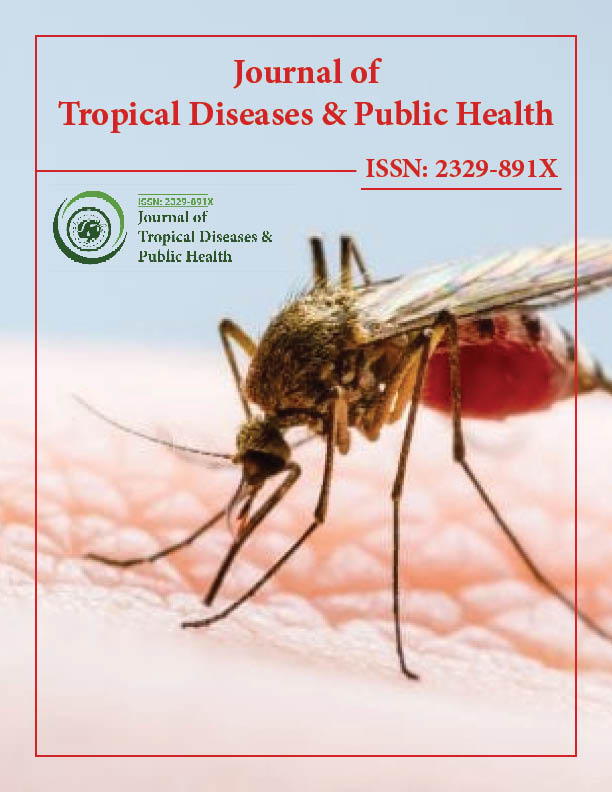
Journal Flyer
Open Access Journals
- Agri and Aquaculture
- Biochemistry
- Bioinformatics & Systems Biology
- Business & Management
- Chemistry
- Clinical Sciences
- Engineering
- Food & Nutrition
- General Science
- Genetics & Molecular Biology
- Immunology & Microbiology
- Medical Sciences
- Neuroscience & Psychology
- Nursing & Health Care
- Pharmaceutical Sciences
Short Communication - (2025) Volume 14, Issue 3
Tropical Medicine: Understanding Diseases in Warm-Climate Regions
Jonathan Mercer*Received: 19-Aug-2025, Manuscript No. JTD-25-30731; Editor assigned: 21-Aug-2025, Pre QC No. JTD-25-30731; Reviewed: 04-Sep-2025, QC No. JTD-25-30731; Revised: 11-Sep-2025, Manuscript No. JTD-25-30731; Published: 18-Sep-2025, DOI: 10.35241/2329-891X.25.13.490
Description
Tropical medicine is the study and management of diseases that are prevalent in regions with warm climates, particularly near the equator. These areas often experience high humidity and rainfall, which create favorable conditions for the transmission of infectious agents, including bacteria, viruses, parasites and fungi. Tropical medicine addresses the prevention, diagnosis and treatment of these illnesses while also considering environmental, social and economic factors that influence disease patterns. It is closely linked to public health, epidemiology and global health strategies aimed at reducing morbidity and mortality in vulnerable populations. Vector-borne diseases constitute a significant portion of tropical illnesses. Mosquitoes, flies, ticks and other arthropods act as carriers for pathogens that cause malaria, dengue fever, chikungunya, yellow fever and leishmaniasis. The prevalence and severity of these diseases are influenced by climate, human behavior, population density and vector control measures.
Parasitic infections are also a major concern in tropical regions. Diseases such as schistosomiasis, filariasis and intestinal worm infections affect millions of people, particularly in areas with inadequate sanitation and limited access to clean water. Parasitic infections can result in chronic illness, impaired growth and long-term complications, especially in children. Addressing these conditions requires a combination of treatment with antiparasitic medications, improvement of water and sanitation infrastructure and community-based health education initiatives. Tropical medicine encompasses bacterial and viral diseases that are exacerbated by environmental and socioeconomic conditions. Cholera, typhoid fever and leptospirosis are examples of bacterial infections that spread rapidly in areas with poor sanitation or contaminated water supplies. Viral infections such as Ebola, Zika and Lassa fever emerge periodically, often leading to localized epidemics with high mortality rates. Rapid diagnosis, contact tracing, vaccination where available and public health measures are essential for controlling outbreaks.
Socioeconomic factors significantly influence the distribution and impact of tropical diseases. Poverty, inadequate healthcare infrastructure, malnutrition and limited access to education exacerbate vulnerability to infection. Rural and underserved communities are often most affected, highlighting the intersection of disease burden with social inequality. Tropical medicine professionals work closely with public health agencies and local governments to design interventions that are culturally appropriate, sustainable and accessible to at-risk populations. Climate and environmental changes also play a role in tropical disease patterns. Rising temperatures, altered rainfall and deforestation can expand the habitats of disease vectors and increase the risk of transmission. Urbanization, migration and human encroachment into previously uninhabited areas contribute to the emergence and spread of infectious diseases. Tropical medicine involves studying these ecological dynamics to predict potential outbreaks and implement preventive strategies.
Research and innovation are central to tropical medicine. Developing effective vaccines, diagnostic tools and treatments for tropical diseases remains a global priority. Laboratory studies, clinical trials and field research inform evidence-based interventions. Collaboration between local and international institutions facilitates knowledge sharing, resource mobilization and the implementation of large-scale health programs. Strengthening healthcare systems in tropical regions is critical for the success of these initiatives. Education and training in tropical medicine prepare healthcare professionals to identify, treat and prevent diseases unique to warm-climate regions. Programs cover epidemiology, microbiology, pharmacology and public health principles, equipping practitioners with the skills needed to address complex health challenges. Field experience and community engagement enhance understanding of local disease patterns, cultural practices and environmental conditions that influence health outcomes.
Conclusion
In conclusion, tropical medicine is an essential discipline focused on understanding and combating diseases prevalent in warm-climate regions. It integrates clinical practice, epidemiology, environmental science and public health to reduce illness and improve quality of life. Addressing tropical diseases requires a multifaceted approach that includes research, healthcare infrastructure, education and community-based interventions. By studying the interaction between humans, pathogens, vectors and the environment, tropical medicine contributes to global efforts to control infectious diseases and promote health equity.
References
- Bilinski A, Thompson K, Emanuel E. COVID-19 and Excess All-Cause Mortality in the US and 20 Comparison Countries, June 2021-March 2022. JAMA. 2023;329(1):92-94.
[Crossref] [Google Scholar] [PubMed]
- Prozan L, Shusterman E, Ablin J, Mitelpunkt A, Weiss-Meilik A, Adler A, et al. Prognostic value of neutrophil-to-lymphocyte ratio in COVID-19 compared with Influenza and respiratory syncytial virus infection. Sci Rep. 2021;11(1):21519.
[Crossref] [Google Scholar] [PubMed]
- Bendstrup KE, Newhouse MT, Pedersen OF, Jensen JI. Characterization of heparin aerosols generated in jet and ultrasonic nebulizers. J Aerosol Sci.1999;12(1):17-25.
[Crossref] [Google Scholar] [PubMed]
- Ardestani SK, Salehi MR, Attaran B, Hashemi SM, Sadeghi S, Ghaffarpour S, et al. Neutrophil to Lymphocyte Ratio (NLR) and Derived NLR Combination: A Cost-effective Predictor of Moderate to Severe COVID-19 Progression. Iran J Allergy Asthma Immunol.2022;21(3):241.
[Crossref] [Google Scholar] [PubMed]
- Asghar MS, Akram M, Yasmin F, Najeeb H, Naeem U, Gaddam M, et al. Comparative analysis of neutrophil to lymphocyte ratio and derived neutrophil to lymphocyte ratio with respect to outcomes of in-hospital coronavirus disease 2019 patients: A retrospective study. Front Med (Lausanne).2022;9.
[Crossref] [Google Scholar] [PubMed]
- Docherty AB, Harrison EM, Green CA, Hardwick HE, Pius R, Norman L, et al. Features of 20 133 UK patients in hospital with covid-19 using the ISARIC WHO Clinical Characterisation Protocol: prospective observational cohort study. BMJ: British Medical Journal (Online). 2020;369.
[Crossref] [Google Scholar] [PubMed]
- Bonten TN, Plaizier CE, Snoep JJ, Stijnen T, Dekkers OM, van der Bom JG. Effect of βâ?�blockers on platelet aggregation: a systematic review and metaâ?�analysis. Br J clin. pharmacol. 2014;78(5):940-949.
[Crossref] [Google Scholar] [PubMed]
- Yang AP, Liu JP, Tao WQ, Li HM. El papel diagnostico y predictivo de NLR, d-NLR y PLR en pacientes con COVID-19. Int Inmunofarmaceutico. 2020;84:106504.
[Crossref] [Google Scholar] [PubMed]
- Citu C, Gorun F, Motoc A, Sas I, Gorun OM, Burlea B, et al. The predictive role of NLR, d-NLR, MLR and SIRI in COVID-19 mortality. Diagnostics. 2022;12(1):122.
[Crossref] [Google Scholar] [PubMed]
- Yang AP, Liu JP, Tao WQ, Li HM. The diagnostic and predictive role of NLR, d-NLR and PLR in COVID-19 patients. International immunopharmacology. 2020;84:106504.
[Crossref] [Google Scholar] [PubMed]
Citation: Mercer J (2025). Tropical Medicine: Understanding Diseases in Warm-Climate Regions. J Trop Dis. 13:490.
Copyright: © 2025 Mercer J. This is an open-access article distributed under the terms of the Creative Commons Attribution License, which permits unrestricted use, distribution and reproduction in any medium, provided the original author and source are credited