
Indexed In
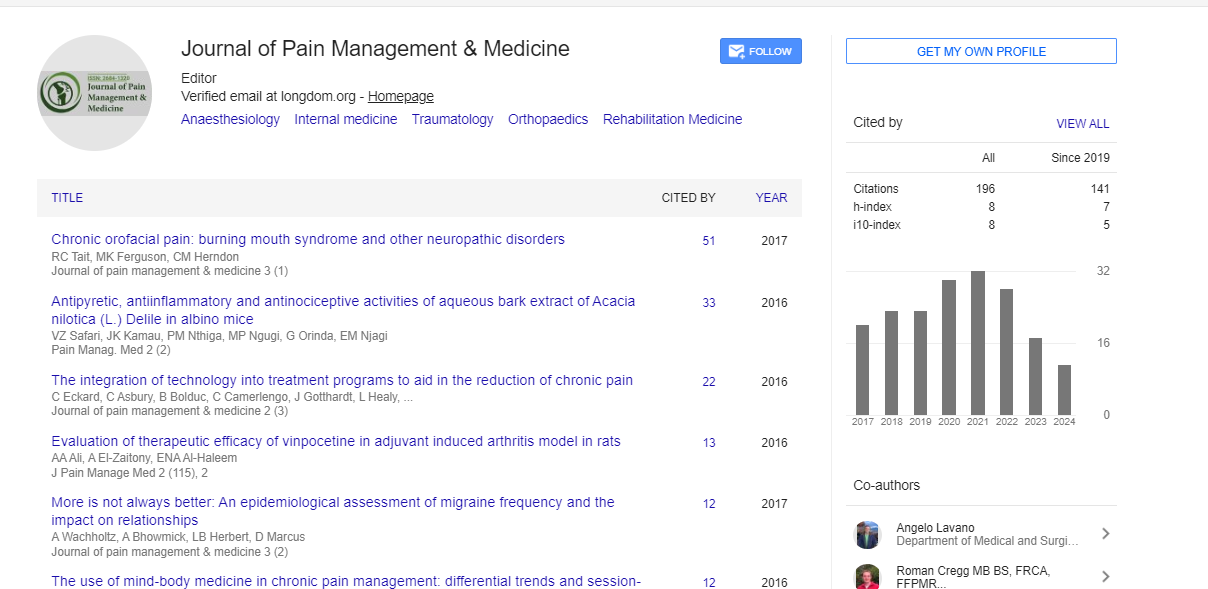
- RefSeek
- Hamdard University
- EBSCO A-Z
- Publons
- Euro Pub
- Google Scholar
- Quality Open Access Market
Useful Links
Share This Page
Journal Flyer
Open Access Journals
- Agri and Aquaculture
- Biochemistry
- Bioinformatics & Systems Biology
- Business & Management
- Chemistry
- Clinical Sciences
- Engineering
- Food & Nutrition
- General Science
- Genetics & Molecular Biology
- Immunology & Microbiology
- Medical Sciences
- Neuroscience & Psychology
- Nursing & Health Care
- Pharmaceutical Sciences
Perspective - (2025) Volume 11, Issue 6
The Role of Rehabilitation Medicine in Restoring Functional Ability and Human Potential
Sofia Martinez*Received: 29-Oct-2025, Manuscript No. JPMME-25-30902; Editor assigned: 31-Oct-2025, Pre QC No. JPMME-25-30902 (PQ); Reviewed: 14-Nov-2025, QC No. JPMME-25-30902; Revised: 21-Nov-2025, Manuscript No. JPMME-25-30902 (R); Published: 28-Nov-2025, DOI: 10.35248/2684-1320.25.11.360
Description
Rehabilitation medicine is a medical specialty dedicated to optimizing human function and enhancing quality of life for individuals affected by injury, illness, or disability. Unlike specialties that focus primarily on diagnosis or acute treatment, rehabilitation medicine emphasizes recovery, adaptation and long term functional improvement. It addresses physical, cognitive, emotional and social dimensions of health, recognizing that meaningful recovery extends beyond survival or symptom control. As global populations age and survival rates from serious illness and trauma improve, rehabilitation medicine has become increasingly central to modern healthcare systems.
The primary goal of rehabilitation medicine is to help individuals achieve the highest possible level of independence and participation in daily life. Patients may present with a wide range of conditions including stroke, spinal cord injury, traumatic brain injury, musculoskeletal disorders, chronic pain, cardiopulmonary disease, cancer related impairments and congenital or developmental disabilities. Rehabilitation physicians evaluate functional limitations rather than focusing solely on disease pathology. This functional perspective allows care to be tailored to individual needs, personal goals and environmental factors.
Rehabilitation medicine operates across the continuum of care, beginning in the acute phase of illness or injury and extending into long term community reintegration. Early rehabilitation interventions during hospitalization can prevent complications such as muscle wasting, joint stiffness, pressure injuries and deconditioning. Timely mobilization and functional training have been shown to improve outcomes and reduce length of hospital stay. Rehabilitation physicians collaborate closely with acute care teams to ensure that recovery planning begins as early as possible.
A defining characteristic of rehabilitation medicine is its multidisciplinary approach. Effective rehabilitation requires coordinated input from physiotherapists, occupational therapists, speech and language therapists, psychologists, nurses, social workers and rehabilitation engineers. The rehabilitation physician serves as a coordinator who integrates medical management with therapeutic interventions. This team based model ensures that physical recovery, cognitive function, communication ability, emotional well-being and social participation are addressed simultaneously.
Individualized goal setting is central to rehabilitation practice. Goals are developed collaboratively with patients and their families, taking into account personal priorities, cultural context and available resources. Whether the aim is returning to work, regaining self-care skills, or improving mobility, rehabilitation plans are adjusted as progress occurs. This patient centered approach fosters motivation, adherence and realistic expectations, all of which are essential for successful outcomes.
Advances in technology have significantly expanded the scope of rehabilitation medicine. Assistive devices, prosthetics, orthotics and adaptive equipment enable individuals to compensate for lost function and enhance independence. Robotic assisted therapy, virtual reality based training and neuromodulator techniques are increasingly incorporated into rehabilitation programs. These innovations support repetitive, task specific training that promotes neuroplasticity and functional recovery, particularly in patients with neurological conditions.
Rehabilitation medicine also addresses the psychosocial impact of disability. Functional loss often affects identity, relationships, employment and mental health. Depression, anxiety and social isolation are common challenges faced by patients undergoing rehabilitation. Rehabilitation physicians recognize the importance of psychological support and community reintegration, facilitating access to counselling, vocational rehabilitation and social services. By addressing these factors, rehabilitation medicine supports holistic recovery rather than isolated physical improvement.
Chronic disease management is another important aspect of rehabilitation medicine. Conditions such as arthritis, chronic low back pain, multiple sclerosis and chronic obstructive pulmonary disease require long term strategies to maintain function and manage symptoms. Rehabilitation interventions focus on energy conservation, pain management, physical conditioning and self-management education. These strategies empower patients to take an active role in their health and reduce dependence on healthcare services.
The role of rehabilitation medicine extends beyond individual patient care to public health and policy. Rehabilitation physicians contribute to disability prevention, accessibility initiatives and inclusive health system design. Research in rehabilitation medicine informs evidence based practices that improve functional outcomes and cost effectiveness. Education and advocacy efforts promote awareness of disability rights and the importance of rehabilitation services within universal health coverage.
In conclusion, rehabilitation medicine is an essential and evolving specialty that focuses on restoring function, promoting independence and improving quality of life for individuals with diverse health challenges. Its holistic and patient centered philosophy bridges the gap between medical treatment and meaningful participation in society. Through multidisciplinary collaboration, technological innovation and personalized care, rehabilitation medicine enables individuals not only to recover but also to adapt and thrive. As healthcare continues to shift toward long term outcomes and quality of life, rehabilitation medicine will remain fundamental in supporting human potential across all stages of health and illness.
Citation: Martinez S (2025). The Role of Rehabilitation Medicine in Restoring Functional Ability and Human Potential. J Pain Manage Med. 11:360.
Copyright: © 2025 Martinez S. This is an open-access article distributed under the terms of the Creative Commons Attribution License, which permits unrestricted use, distribution, and reproduction in any medium, provided the original author and source are credited.