
Indexed In
- Open J Gate
- Genamics JournalSeek
- JournalTOCs
- China National Knowledge Infrastructure (CNKI)
- Electronic Journals Library
- RefSeek
- Hamdard University
- EBSCO A-Z
- OCLC- WorldCat
- SWB online catalog
- Virtual Library of Biology (vifabio)
- Publons
- MIAR
- Euro Pub
- Google Scholar
Useful Links
Share This Page
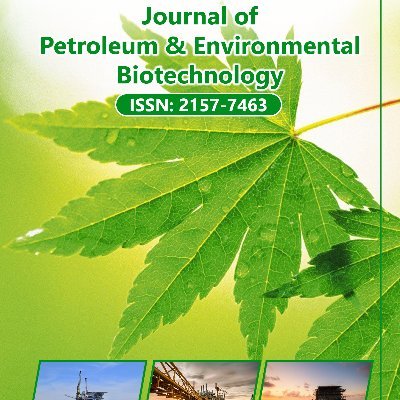
Journal Flyer
Open Access Journals
- Agri and Aquaculture
- Biochemistry
- Bioinformatics & Systems Biology
- Business & Management
- Chemistry
- Clinical Sciences
- Engineering
- Food & Nutrition
- General Science
- Genetics & Molecular Biology
- Immunology & Microbiology
- Medical Sciences
- Neuroscience & Psychology
- Nursing & Health Care
- Pharmaceutical Sciences
Short Communication - (2025) Volume 16, Issue 2
The Microbial Frontier in Petroleum Science and Biotechnology
Wael Ratul*Received: 30-Jun-2025, Manuscript No. JPEB-25-30408; Editor assigned: 02-Jul-2025, Pre QC No. JPEB-25-30408 (PQ); Reviewed: 16-Jul-2025, QC No. JPEB-25-30408; Revised: 23-Jul-2025, Manuscript No. JPEB-25-30408 (R); Published: 30-Jul-2025, DOI: 10.35248/2157-7463.25.16.603
Description
Petroleum microbiology explores the diverse roles that microorganisms play in the formation, alteration, degradation, and environmental management of petroleum resources. This interdisciplinary field bridges microbiology, geology, chemistry, and environmental engineering, offering insights important for both the petroleum industry and global sustainability efforts. As energy demands rise and environmental regulations tighten, understanding microbial interactions with hydrocarbons has become increasingly important for optimizing oil recovery, mitigating contamination, and developing cleaner biotechnological solutions [1-5].
Microorganisms have long been involved in the natural processes that lead to petroleum formation. In subsurface environments, anaerobic bacteria and archaea participate in the biodegradation of organic matter, contributing to the generation of methane and other hydrocarbons. These microbial communities thrive under extreme conditions high pressure, high salinity, and limited oxygen demonstrating remarkable metabolic versatility. Their ability to convert complex organic compounds into simpler hydrocarbons underpins modern theories of biogenic gas formation. Furthermore, microbial activity in oil reservoirs can influence oil composition over geological time, reducing its quality through sulfur generation or hydrocarbon breakdown. Understanding these natural microbial transformations helps petroleum geologists better interpret reservoir characteristics and predict hydrocarbon quality.
In industrial contexts, petroleum microbiology has enabled advances in Enhanced Oil Recovery (EOR). Microbial Enhanced Oil Recovery (MEOR) employs microorganisms or their metabolic products to improve the extraction of residual oil. These microbes can produce biosurfactants, gases, acids, or biopolymers that mobilize trapped oil, reduce viscosity, or increase reservoir permeability. Compared to traditional chemical or thermal recovery methods, MEOR offers advantages such as lower cost, reduced environmental impact, and effectiveness in mature or low-permeability reservoirs. Research surviving harsh reservoir environments while producing useful metabolites in situ. As the petroleum sector faces increasing pressure to maximize output from existing fields, MEOR stands out as a promising, eco-friendly technology [6-10].
Another key area of petroleum microbiology is bioremediation, which uses microorganisms to degrade or detoxify petroleum contaminants in soils, sediments, and marine environments. Hydrocarbon-degrading bacteria, including species of Pseudomonas, Alcanivorax, and Rhodococcus, play essential roles in breaking down crude oil and refined hydrocarbons. Their metabolic pathways allow them to utilize petroleum compounds as carbon and energy sources, converting pollutants into harmless end products such as carbon dioxide and water. Bioremediation strategies include natural attenuation, bioaugmentation, and biostimulation, each tailored to sitespecific conditions. These approaches have proven effective in addressing major oil spills and chronic contamination near refineries, pipelines, and offshore platforms. With growing emphasis on environmental stewardship, bioremediation offers a sustainable alternative to conventional remediation methods that may be costly, disruptive, or less effective.
Microbial corrosion, or Microbiologically Influenced Corrosion (MIC), represents a significant challenge for the petroleum industry. Sulfate-Reducing Bacteria (SRB) and other corrosive microorganisms colonize pipelines, storage tanks, and drilling equipment, accelerating metal degradation. Their metabolic activities produce corrosive byproducts such as hydrogen sulfide, leading to infrastructure damage, production losses, and safety hazards. Understanding the ecology and behavior of corrosionassociated microbes is essential for developing targeted mitigation strategies, including biocides, coatings, and microbial monitoring systems. Advances in molecular techniques have greatly improved the detection and characterization of corrosionrelated microbial communities, allowing for more accurate risk assessment and control.
Conclusion
In Petroleum microbiology plays a pivotal role in both advancing the petroleum industry and promoting environmental sustainability. By uncovering the complex interactions between microorganisms and hydrocarbons, this field enables more efficient oil recovery, effective bioremediation of polluted environments, and improved management of industrial risks such as microbial corrosion. With the continued integration of genomic and biotechnological tools, petroleum microbiology is positioned to drive future innovations that balance global energy demands with the imperative of environmental protection.
References
- Gaur VK, Sharma P, Sirohi R, Varjani S, Taherzadeh MJ, Chang JS, et al. Production of biosurfactants from agro-industrial waste and waste cooking oil in a circular bioeconomy: An overview. Bioresour. Technol. 2022;343:126059.
[Google Scholar] [PubMed] [CrossRef]
- Kotarska K, Dziemianowicz W, Ć?wierczyĆ?ska A. Study on the sequential combination of bioethanol and biogas production from corn straw. Molecules. 2019;24(24):4558.
[Google Scholar] [PubMed] [CrossRef]
- Xu Q, Li S, Fu Y, Tai C, Huang H. Two-stage utilization of corn straw by Rhizopus oryzae for fumaric acid production. Bioresour. Technol. 2010;101(15):6262-6264.
[Google Scholar] [PubMed] [CrossRef]
- Garde A, Jonsson G, Schmidt AS, Ahring BK. Lactic acid production from wheat straw hemicellulose hydrolysate by Lactobacillus pentosus and Lactobacillus brevis. Bioresour. Technol. 2002;81(3):217-223.
[Google Scholar] [PubMed] [CrossRef]
- Zheng S, Yang M, Yang Z. Biomass production of yeast isolate from salad oil manufacturing wastewater. Bioresour. Technol. 2005;96(10):1183-1187.
[Google Scholar] [PubMed] [CrossRef]
- Mohanty SS, Koul Y, Varjani S, Pandey A, Ngo HH, Chang JS, et al . A critical review on various feedstocks as sustainable substrates for biosurfactants production: a way towards cleaner production. Microb. Cell Factories. 2021;20(1):120.
[Google Scholar] [PubMed] [CrossRef]
- Santos DK, Rufino RD, Luna JM, Santos VA, Sarubbo LA. Biosurfactants: multifunctional biomolecules of the 21st century. Int. J. Mol. Sci. 2016;17(3):401.
[Google Scholar] [PubMed] [CrossRef]
- Fenibo EO, Ijoma GN, Selvarajan R, Chikere CB. Microbial surfactants: the next generation multifunctional biomolecules for applications in the petroleum industry and its associated environmental remediation. Microorganisms. 2019;7(11):581.
[Google Scholar] [PubMed] [CrossRef]
- Foley P, Beach ES, Zimmerman JB. Derivation and synthesis of renewable surfactants. Chem. Soc. Rev. 2012;41(4):1499-1518.
[Google Scholar] [PubMed] [CrossRef]
- Geys R, Soetaert W, Van Bogaert I. Biotechnological opportunities in biosurfactant production. Curr. Opin. Biotechnol. 2014;30:66-72.
[Google Scholar] [PubMed] [CrossRef]
Citation: Ratul W (2025) The Microbial Frontier in Petroleum Science and Biotechnology. J Pet Environ Biotechnol. 16:603.
Copyright: © 2025 Ratul W. This is an open access article distributed under the terms of the Creative Commons Attribution License, which permits unrestricted use, distribution, and reproduction in any medium, provided the original author and source are credited.