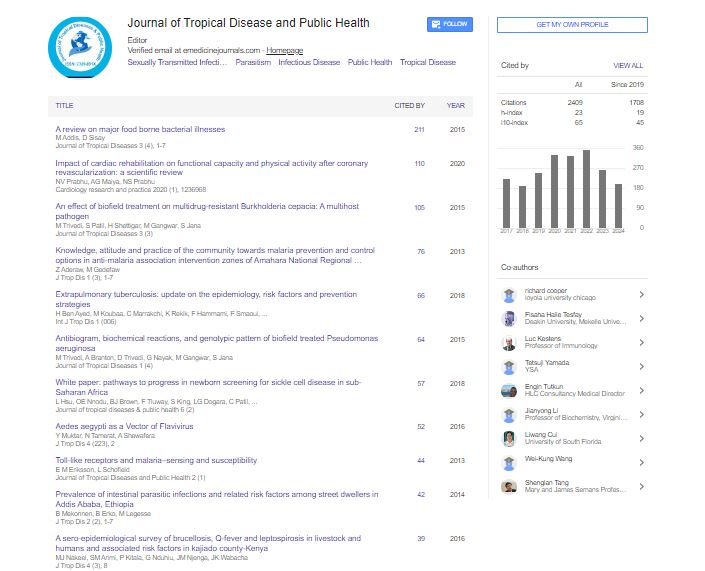

Indexed In
- Open J Gate
- Academic Keys
- ResearchBible
- China National Knowledge Infrastructure (CNKI)
- Centre for Agriculture and Biosciences International (CABI)
- RefSeek
- Hamdard University
- EBSCO A-Z
- OCLC- WorldCat
- CABI full text
- Publons
- Geneva Foundation for Medical Education and Research
- Google Scholar
Useful Links
Share This Page
Journal Flyer
Open Access Journals
- Agri and Aquaculture
- Biochemistry
- Bioinformatics & Systems Biology
- Business & Management
- Chemistry
- Clinical Sciences
- Engineering
- Food & Nutrition
- General Science
- Genetics & Molecular Biology
- Immunology & Microbiology
- Medical Sciences
- Neuroscience & Psychology
- Nursing & Health Care
- Pharmaceutical Sciences
Opinion Article - (2026) Volume 15, Issue 1
Strengthening Public Health Through Comprehensive Disease Prevention Strategies
Lucas Reinhardt*Received: 10-Feb-2026, Manuscript No. JTD-26-31374; Editor assigned: 12-Feb-2026, Pre QC No. JTD-26-31374; Reviewed: 26-Feb-2026, QC No. JTD-26-31374; Revised: 05-Mar-2026, Manuscript No. JTD-26-31374; Published: 10-Mar-2026, DOI: 10.35241/2329-891X.26.15.503
Description
Disease prevention is a central focus of modern healthcare systems, aiming to reduce the occurrence of illness and improve overall well-being across populations. Rather than relying solely on treatment after symptoms appear, prevention emphasizes proactive measures that limit exposure to risk factors and strengthen the body’s ability to resist infection and chronic conditions. This approach not only improves quality of life but also reduces the burden on healthcare infrastructure and associated costs.
One of the most widely recognized methods of disease prevention is vaccination. Immunization programs have significantly reduced the incidence of many infectious diseases, including measles, polio, and influenza. By introducing a harmless component of a pathogen into the body, vaccines stimulate the immune system to recognize and respond more effectively if exposure occurs in the future. Widespread vaccination not only protects individuals but also contributes to population-level protection by reducing transmission rates. Maintaining high immunization coverage is essential to prevent the re-emergence of previously controlled diseases.
In addition to vaccination, maintaining proper hygiene plays a major role in preventing the spread of infections. Simple practices such as regular handwashing with soap, safe food handling, and access to clean water can significantly reduce the risk of illness. In many parts of the world, improvements in sanitation have led to dramatic declines in diseases transmitted through contaminated water and poor hygiene. Public health campaigns continue to promote these habits as effective and accessible methods of protection.
Lifestyle choices also have a strong influence on disease prevention. A balanced diet rich in fruits, vegetables, whole grains, and lean proteins supports the immune system and reduces the risk of chronic diseases such as diabetes, cardiovascular conditions, and certain cancers. Regular physical activity contributes to maintaining a healthy weight, improving cardiovascular health, and enhancing mental well-being. Avoiding harmful habits such as tobacco use and excessive alcohol consumption further reduces the likelihood of developing serious health conditions.
Environmental factors are another important consideration in disease prevention. Air quality, housing conditions, and workplace safety all influence health outcomes. Exposure to pollutants can increase the risk of respiratory diseases, while unsafe working environments may lead to injuries or long-term health issues. Governments and organizations play a role in implementing regulations and standards that promote safer environments. Urban planning that includes green spaces and reduces overcrowding can also contribute to healthier communities.
Early detection through screening programs is an effective strategy for preventing the progression of diseases. Regular health check-ups and diagnostic tests can identify conditions such as hypertension, diabetes, and cancer at an early stage when they are more manageable. Screening programs are often designed based on age, gender, and risk factors, ensuring that individuals receive appropriate evaluations. Public awareness about the importance of routine medical visits encourages timely diagnosis and intervention.
Education is a vital component of disease prevention efforts. Providing accurate and accessible information enables individuals to make informed decisions about their health. Schools, community organizations, and healthcare providers all contribute to spreading knowledge about healthy behaviors and risk factors. Addressing misinformation is particularly important, as incorrect beliefs can lead to harmful practices or reluctance to adopt preventive measures. Globalization and increased mobility have introduced new challenges in disease prevention. Infectious diseases can spread rapidly across borders, making international cooperation essential.
Conclusion
Disease prevention is a multifaceted approach that involves a combination of medical interventions, lifestyle choices, environmental improvements, and education. By focusing on prevention rather than treatment alone, societies can reduce the incidence of illness and enhance overall quality of life. Surveillance systems help track outbreaks and identify patterns, allowing for timely responses. Collaboration between countries ensures that resources and expertise are shared, improving the effectiveness of prevention strategies on a global scale. Continued investment in public health initiatives, along with individual commitment to healthy practices, will play a significant role in creating healthier populations and more resilient healthcare systems.
Citation: Reinhardt L (2026). Strengthening Public Health Through Comprehensive Disease Prevention Strategies. J Trop Dis. 15:503.
Copyright: © 2026 Reinhardt L. This is an open-access article distributed under the terms of the Creative Commons Attribution License, which permits unrestricted use, distribution and reproduction in any medium, provided the original author and source are credited.