
Indexed In
- Academic Journals Database
- Open J Gate
- Genamics JournalSeek
- JournalTOCs
- China National Knowledge Infrastructure (CNKI)
- Scimago
- Ulrich's Periodicals Directory
- RefSeek
- Hamdard University
- EBSCO A-Z
- OCLC- WorldCat
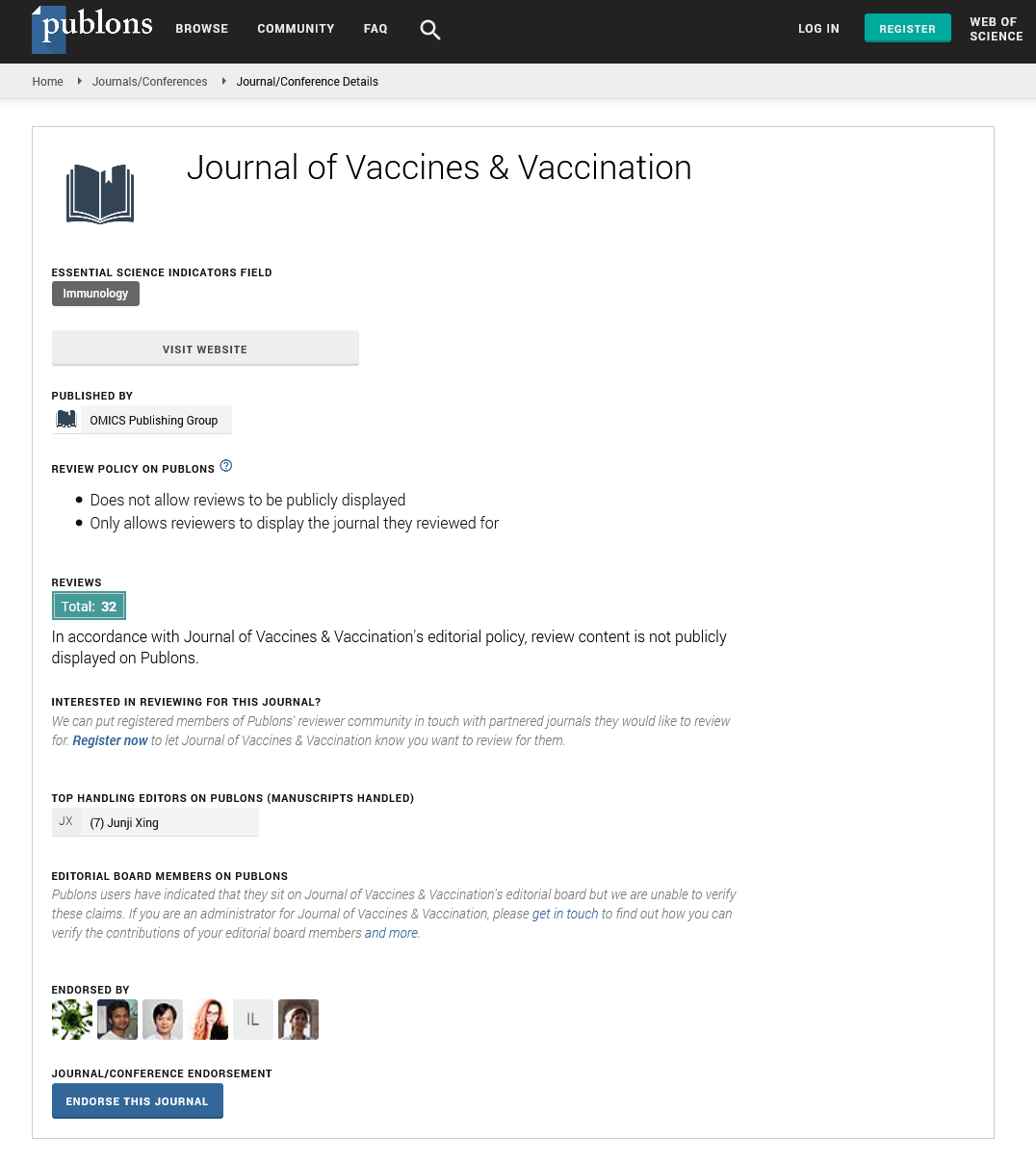
- Publons
- MIAR
- University Grants Commission
- Geneva Foundation for Medical Education and Research
- Euro Pub
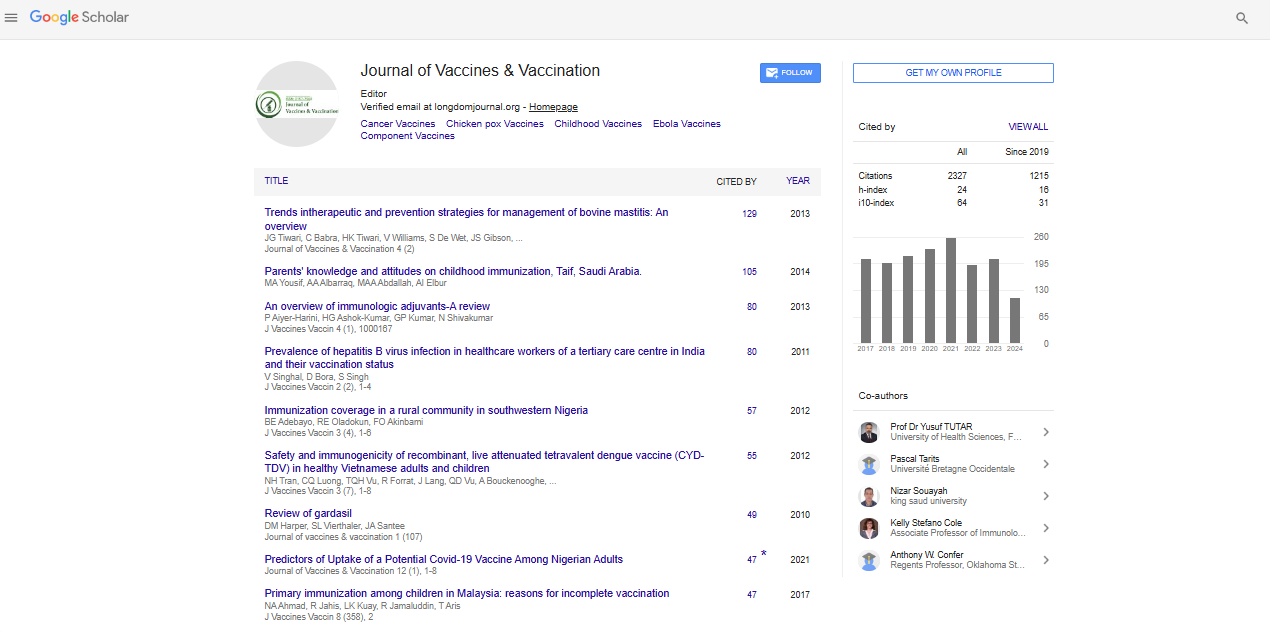
- Google Scholar
Useful Links
Share This Page
Open Access Journals
- Agri and Aquaculture
- Biochemistry
- Bioinformatics & Systems Biology
- Business & Management
- Chemistry
- Clinical Sciences
- Engineering
- Food & Nutrition
- General Science
- Genetics & Molecular Biology
- Immunology & Microbiology
- Medical Sciences
- Neuroscience & Psychology
- Nursing & Health Care
- Pharmaceutical Sciences
Commentary - (2025) Volume 16, Issue 7
Strengthening Early-Life Protection Through Pediatric Vaccination
Mireille Vossen*Received: 17-Jun-2025, Manuscript No. JVV-26-31576; Editor assigned: 19-Jun-2025, Pre QC No. JVV-26-31576; Reviewed: 03-Jul-2025, QC No. JVV-26-31576; Revised: 10-Jul-2025, Manuscript No. JVV-26-31576; Published: 17-Jul-2025, DOI: 10.35248/2157-7560.26.16.614
Abstract
Description
Pediatric vaccination plays a major role in protecting infants and children from infectious diseases that can lead to severe illness, long-term disability or death. Vaccines prepare the immune system to recognize harmful microorganisms before exposure occurs in daily life. Through timely immunization, children develop protection during the years when their immune systems are still developing. Public health programs around the world have used vaccination schedules to reduce the spread of diseases such as measles, mumps, rubella, pertussis, diphtheria and polio. These efforts have improved child survival rates and reduced pressure on healthcare systems in many countries.
The first years of life are especially important for immunization because young children are more vulnerable to infections. Newborns receive some temporary antibodies from their mothers, but this protection decreases over time. Vaccines help children build their own immune defenses against harmful viruses and bacteria. Pediatricians and healthcare workers usually follow national immunization schedules that recommend vaccines at specific ages to provide protection before possible exposure to disease. Timely administration is necessary because delays may increase the chance of infection during early childhood.
Routine vaccination programs often begin shortly after birth. Newborns in many countries receive vaccines against hepatitis B and tuberculosis during the first days of life. As children grow, additional vaccines are provided through scheduled clinic visits. Combination vaccines, which protect against several diseases with a single injection, have simplified immunization programs and reduced the number of clinic visits required for families. These vaccines also support higher vaccination coverage because parents may find it easier to complete fewer appointments.
Parental understanding strongly influences pediatric vaccination rates. Many parents rely on healthcare professionals for information regarding vaccine safety, side effects and effectiveness. Clear communication from doctors and nurses can help reduce fear and confusion. Some parents may hesitate because of incorrect information shared through social media or informal online discussions. Misleading claims regarding vaccines may create anxiety despite the large amount of scientific evidence supporting immunization safety. Healthcare workers who answer questions patiently and respectfully often improve trust between medical providers and families.
Community outreach activities have become increasingly valuable for improving vaccination coverage among children. Public awareness campaigns through schools, childcare centers, television and radio broadcasts can encourage parents to follow recommended immunization schedules. In rural areas, local leaders and community health volunteers frequently assist healthcare teams by informing families about vaccination days and explaining the importance of disease prevention. Such efforts are particularly useful in areas where transportation barriers or limited healthcare access affect routine immunization attendance.
Pediatric vaccination has contributed to major reductions in childhood diseases over the past several decades. Polio, which once caused paralysis in thousands of children every year, has nearly disappeared from many regions because of large vaccination campaigns. Measles outbreaks have also declined in countries with high vaccine coverage. However, when vaccination rates decrease, outbreaks can return quickly. This pattern demonstrates the importance of maintaining consistent immunization efforts even when diseases become less visible in daily life. Continued public participation remains necessary to prevent the reappearance of preventable illnesses. Safety monitoring is an essential part of pediatric immunization programs. Before approval, vaccines undergo clinical testing to evaluate their effectiveness and possible side effects. After public use begins, health agencies continue monitoring reports of adverse reactions
Conclusion
Pediatric vaccination provides benefits that extend beyond individual protection. When a large percentage of children receive vaccines, disease transmission decreases within communities. This indirect protection helps shield infants, elderly individuals and people with weakened immune systems who may not respond strongly to vaccines themselves. High immunization coverage therefore contributes to overall public health stability and reduces healthcare costs linked to preventable diseases. The continued success of pediatric vaccination depends on cooperation between healthcare systems, governments, schools, researchers and families. Reliable vaccine supply, public education, trained healthcare workers and equal healthcare access all contribute to effective immunization programs. Through sustained vaccination efforts, societies can continue protecting children from infectious diseases while improving long-term health outcomes for future generations.
Citation: Vossen M (2025). Community-Centred Approaches for Effective Immunization Programs. J Vaccines Vaccin. 16:614.
Copyright: © 2025 Vossen M. This is an open access article distributed under the terms of the Creative Commons Attribution License, which permits unrestricted use, distribution and reproduction in any medium, provided the original author and source are credited.