

Indexed In
- Open J Gate
- Academic Keys
- RefSeek
- Hamdard University
- EBSCO A-Z
- OCLC- WorldCat
- Publons
- Euro Pub
- Google Scholar
- SHERPA ROMEO
Useful Links
Share This Page
Journal Flyer

Open Access Journals
- Agri and Aquaculture
- Biochemistry
- Bioinformatics & Systems Biology
- Business & Management
- Chemistry
- Clinical Sciences
- Engineering
- Food & Nutrition
- General Science
- Genetics & Molecular Biology
- Immunology & Microbiology
- Medical Sciences
- Neuroscience & Psychology
- Nursing & Health Care
- Pharmaceutical Sciences
Original Research Article - (2026) Volume 14, Issue 3
Streamlining Non-Commercial CAR-T Cell Manufacturing: Reducing Production Time and Enabling Fresh Cell Infusions for a Phase I Hematologic Malignancy Clinical Trial
Jordan P. Pavlic1,2*, Brian Fury2, Sierra Jones2, Dane Coleal-Bergum2, Geralyn Moser Annett3, Jeannine Logan- White2, Naseem Esteghamat4, Mehrdad Abedi4 and Jan Nolta3,4,52GMP Facility, University of California, Davis, California, USA
3Department of Internal Medicine, University of California, Davis, California, USA
4School of Medicine, University of California, Davis, California, USA
5Department of Cell Biology and Anatomy, University of California, Davis. California, USA
Received: 18-Feb-2026, Manuscript No. JVMS-26-31009; Editor assigned: 20-Feb-2026, Pre QC No. JVMS-26-31009 (PQ); Reviewed: 06-Mar-2026, QC No. JVMS-26-31009; Revised: 13-Mar-3036, Manuscript No. JVMS-26-31009 (R); Published: 20-Mar-2026, DOI: 10.35248/2329-6925.26.14.626
Introduction
Chimeric Antigen Receptor T-Cell (CAR-T cell) therapy has emerged as a promising therapeutic for patients with various hematologic malignancies such as B-cell leukemia and lymphoma, multiple myeloma, and mantle cell lymphoma [1]. However, these therapeutics pose a significant cost when manufactured commercially. For instance, two of the CD19-specific CAR-T cell products currently approved by the US Food and Drug Administration (FDA), axi-cel and tisagenlecleucel (Kymriah, Novartis) are acknowledged for their high cost, which places them among the most expensive cancer therapies available to date, at $373,000 and $475,000, respectively [2]. As such, there is a critical need for the development of more cost-effective CAR-T cell manufacturing platforms.
There are a few programs in the United States that have successfully initiated their own CAR-T cell clinical trials aimed at undercutting the expense of this therapy, and while these programs have demonstrated success in the production of CAR-T cells at a significantly reduced cost, areas for CAR-T cell manufacturing optimization at the non-commercial level have also been identified [3]. Currently, it is standard practice for a complete T-Cell Transduction manufacturing process to utilize platforms such as Miltenyi’s CliniMACS Prodigy®, which can take up to 12 days to complete the manufacturing process [4]. Through the studies outlined below, our team has identified areas of CAR-T cell manufacturing optimization that allow for cells to be harvested as early as day 8. These studies also outlined the possibility of infusing a fresh manufactured cell product as opposed to a cryopreserved product. This finding is particularly significant considering the patient population's median survival rate of 6 months post-recurrence, emphasizing the critical need for a cost-effective and expedited manufacturing strategy moving forward. [5]. Additionally, there is a growing body of evidence suggesting that prolonged culture expansion of CAR-T cells results in aberrant DNA methylation that is associated with adverse clinical outcomes, and these methylations are observed as early as day 5 of the manufacturing process [6]. As such, it is important that shortened CAR-T manufacturing protocols continue to be explored. In pursuit of this objective, the UC Davis study aims to explore the possibility of manufacturing CAR-T cells within an 8-day timeframe while ensuring adherence to FDA guidelines for manufacturing process amendments, while still allowing for the possibility of a timely, fresh infusion (Figure 1).
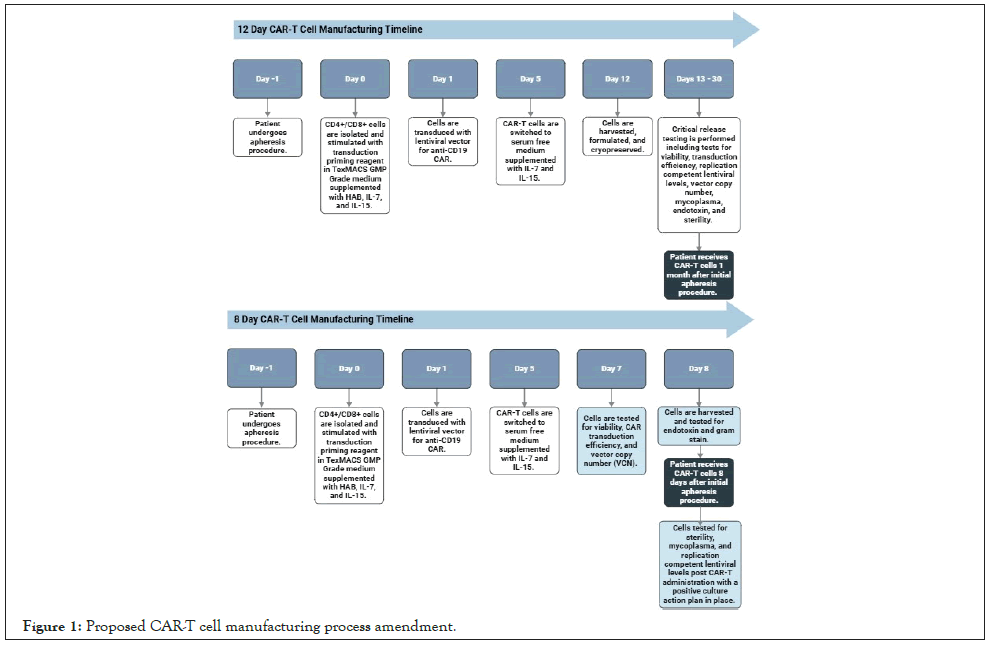
Figure 1: Proposed CAR-T cell manufacturing process amendment.
The top schematic illustrates the current protocol, where CAR-T cells are manufactured over 12 days, cryopreserved, and then undergo release testing. This includes assessments of cell viability, transduction efficiency, Replication-Competent Lentivirus (RCL) levels, endotoxin, sterility, mycoplasma, and Vector Copy Number (VCN). This FDA-required testing takes an additional 18 days after cell harvest, resulting in an approximately one-month wait for patient treatment from the initial apheresis procedure. The bottom schematic shows the revised protocol, where cells are cultured in TexMACS medium supplemented with IL-7 (100ug/mL) and IL-15 (100ug/mL) along with Human Albumin Serum (HAB) from day 0 to day 5, and in a serum-free medium from day 6 onward with the same above-mentioned cytokines (with the lentiviral vector used for transduction being washed out on day 3). In this revised protocol the following testing is performed on day 7 to ensure that the CAR-T cells meet infusion specifications: Transduction efficiency, viability, and VCN. With the fresh CAR-T cell harvest taking place on day 8, the following additional test must be completed prior to infusion: Endotoxin and gram staining. Fresh refers to cells stored in refrigeration for up to 48 hours prior to infusion. Post- infusion, essential safety testing for RCL, sterility, and mycoplasma is completed, with a positive culture action plan implemented if necessary to ensure patient safety.
Materials and Methods
Experimentation on human cells
The samples used for research were anonymized and all studies were done in compliance with the local Institutional Review Board at UC Davis (approval number associated with IND 26979).
Cell manufacturing
Cells were obtained from three B cell lymphoma patients whose CAR-T cells were being manufactured at UC Davis (n=3), which met the minimum sample size requirements set by the FDA for this process amendment. All appropriate consents, permissions, and releases were obtained, and all procedures were performed in compliance with relevant laws and institutional guidelines.
The cells were manufactured using Miltenyi's CliniMACS Prodigy Platform and CliniMACS reagents, enabling a full T cell transduction process. From days 0-5, cells were cultured in TexMACS GMP grade medium containing IL-7, IL-15, and human albumin serum. From days 6-12, cells were cultured in serum-free media plus the above mentioned cytokines. Post T cell isolation, 100 x 106 cells are initiated in culture on the CliniMACS Prodigy. For the antiCD19 CAR transduction, a lentiviral vector (obtained from Lentigen) is used at a transducing titer of 5.85 x 10⁸ TU/ mL. The vector is then washed out of the culture on day 3 of the manufacturing process.
For each manufacturing process the cells were harvested under two conditions, cryopreserved and fresh. For the cryopreserved condition, cells were harvested on day 12 and cryopreserved in a solution of 5% Human Serum Albumin (HSA) in Plasmalyte A with 10% Dimethyl Sulfoxide (DMSO). In the fresh condition, cells did not receive DMSO. All cell manufacturing processes were conducted in the UC Davis GMP Facility.
Cell phenotyping
Cell phenotyping was performed using flow cytometry with a BD Fortessa Flow Cytometer and an immunophenotyping panel that assesses transduction efficiency and cell viability. Cells were phenotyped on days 7, 8, 11, and 12 to establish comparability between the cryopreserved and fresh conditions.
Vector copy number and replication competent lentivirus analysis
Vector Copy Number (VCN) was measured using quantitative Polymerase Chain Reaction (qPCR) with primers from lentigen. VCN testing was conducted mid process on day 8, or post-harvest on day 12, depending on the condition. Acceptance for VCN was less than 5, in accordance with FDA guidelines. Replication- Competent Lentivirus (RCL) testing was performed prior to harvest on days 7 and 11. Testing used the same qPCR method as for VCN, with acceptance criteria for RCL being undetectable levels.
Mycoplasma testing
Mycoplasma testing was conducted mid process and post-harvest using the ATCC mycoplasma detection kit. A positive culture action plan was in place in the event of detection.
Sterility, gram stain, and endotoxin testing
Sterility, gram stain, and endotoxin testing were carried out by the UC Davis Quality Control Testing Laboratory (QCTL). Test results for the gram stain and endotoxin testing were completed prior to harvest and Sterility results were completed within 14 to 18 days post-harvest.
Dosing strategy
All patients are treated with 1 x 10⁶ CAR-T cells/kg. Dose was successfully reached for all patients treated under both manufacturing protocols outlined (data not shown). To date, the manufacturing team at UC Davis has successfully met dose on day 7 of all manufacturing runs since implementing their shortened manufacturing protocol.
Results
To demonstrate the feasibility of shortening the CAR-T cell manufacturing process from 12 days to 8 days, it was necessary to establish that this reduction in time would not compromise product quality. As such, we first evaluated the consistency of the Vector Copy Number (VCN) between days 8 and 12 of manufacturing. As shown in Figure 2A, there was no statistically significant difference in VCN between the two time points for the three patients tested (n=3), indicating that shortening the process does not affect this key quality parameter. Next, we examined anti-CD19 transduction efficiency on days 7, 8, 11, and 12 of manufacturing, as shown in Figure 2B.
The results demonstrate that transduction efficiency remained consistent across these time points, suggesting that assessments can be conducted flexibly at various stages of the manufacturing process without impacting overall product quality. Furthermore, we assessed Replication- Competent Lentivirus (RCL) levels at days 5, 7, and 12 of the manufacturing process (Figure 2C). Our findings indicate that RCL levels remained consistently undetectable throughout these stages, which is essential for ensuring patient safety. These results collectively suggest that both transduction efficiency and RCL levels can be reliably assessed earlier in the process, prior to product harvest, thereby minimizing the time spent on harvest day and contributing to the successful shortening of the manufacturing process. Furthermore, VCN remains within safe levels on day 8, consistent with the levels observed on day 12 (Figure 2).
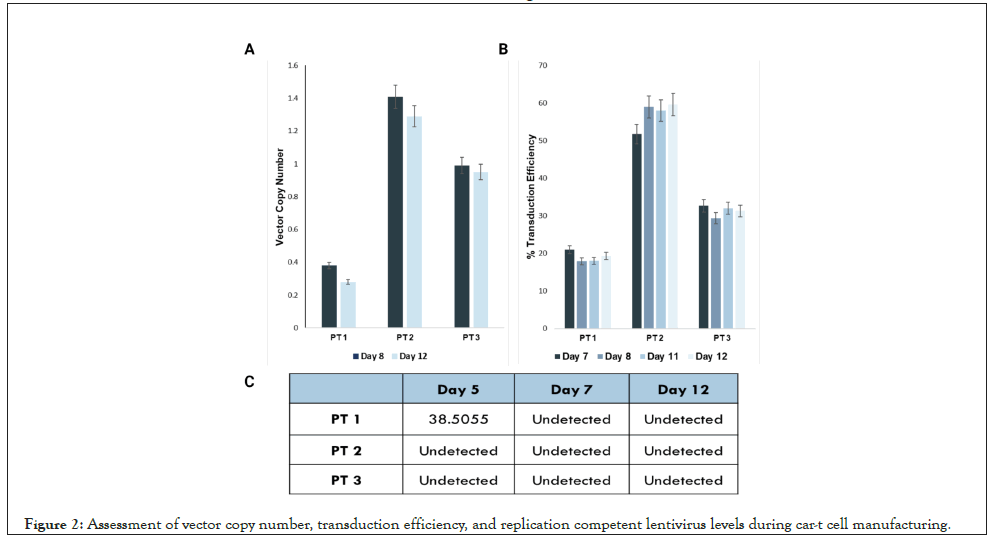
Figure 2: Assessment of vector copy number, transduction efficiency, and replication competent lentivirus levels during car-t cell manufacturing.
Evaluation of critical parameters in CAR-T cell manufacturing across different time points for three patients (n=3), with each sample run in triplicate and averaged to a standard deviation. 2A: Differences in Vector Copy Number (VCN) as measured between day 8 and day 12 of manufacturing. No statistically significant differences were observed between these time points for any patient. 2B: Differences in anti-CD19 transduction efficiency for three patients between Days 7, 8, 11, and 12 of manufacturing as measured by flow cytometry. No statistical significance was noted across the specified days. 2C: Levels of Replication Competent Lentivirus (RCL) on days 5, 7, and 12 of manufacturing as measured by qPCR. Results showed no detectable levels of RCL throughout the manufacturing process.
To establish the feasibility of a fresh infusion, we assessed the stability of the product when stored at 4°C. CAR-T cells were formulated in a solution of 5% HSA in Plasmalyte A and stored in the refrigerator for up to 48 hours. We evaluated transduction efficiency and cell viability at 15, 24, and 48 hrs post-harvest using flow cytometry. Our results demonstrated robust stability in both transduction efficiency and cell viability up to the 24-hour mark (Figure 3), indicating that the product remains viable and stable when stored at 4°C for a period sufficient for fresh CAR-T cell infusions. This finding supports our transition to a protocol that allows for immediate fresh infusions, potentially improving patient outcomes by reducing wait times for treatment.
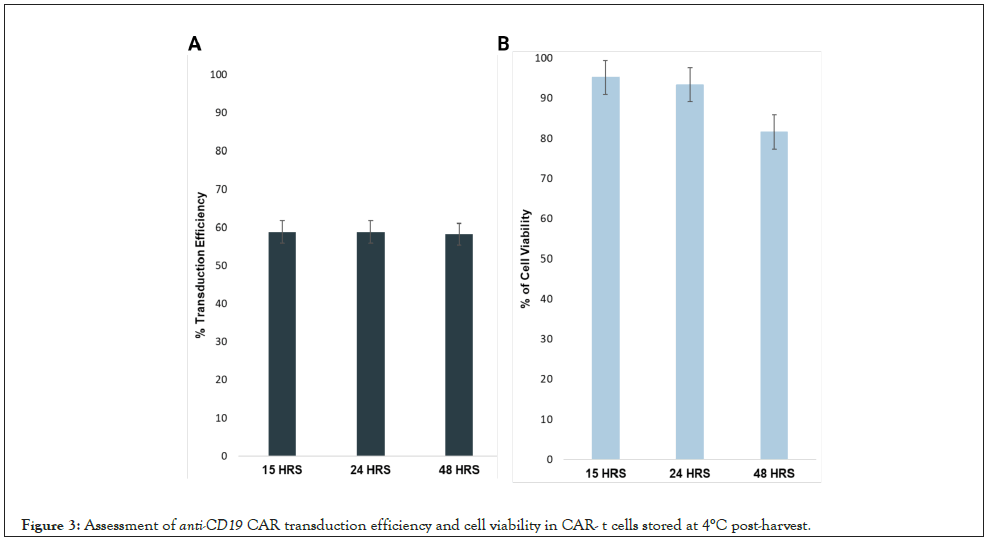
Figure 3: Assessment of anti-CD19 CAR transduction efficiency and cell viability in CAR- t cells stored at 4°C post-harvest.
Evaluation of the feasibility of storing manufactured CAR- T cells at 4°C for potential fresh infusion. 3A: Anti-CD19 CAR transduction efficiency at 15, 24, and 48 hrs post-harvest for one patient (n=1), with each sample run in triplicate. No statistical significance was observed between the different time points. 3B: Cell viability as measured by flow cytometry at 15, 24, and 48 hrs post-harvest for the same patient. At the 48 hr mark a trending decrease in cell viability was observed.
Interim results for IND 26979 are summarized in Table 1, comparing clinical outcomes, toxicity profiles, and immunophenotypic characterization for CAR-T cell-treated patients using the standard 12-day or expedited 8-day manufacturing protocols. Among the 15 patients evaluated, 6 received cells manufactured under the 8-day/ fresh protocol, while 9 were treated with the 12- day protocol/ frozen.
| Patient | Fresh/ Frozen | 8-Day vs 12- Day protocol | Survival status | Response | Adverse event | Total CD8(%) | Total CD4(%) | Total CD8+ CD4 (%) | Cytotoxic TCM (%) | Cytotoxic TEM (%) | Helper TCM (%) | Helper TEM (%) |
|---|---|---|---|---|---|---|---|---|---|---|---|---|
| 1 | Frozen | 12 | Alive | CR | N | 57 | 13 | 69.7 | 29.7 | 27.3 | 10.9 | 1.8 |
| 2 | Frozen | 12 | Alive | CR | N | 23 | 49 | 72.2 | 9.2 | 14 | 30.4 | 18.6 |
| 3 | Frozen | 12 | Alive | CR | N | 33 | 24 | 56.1 | 17.8 | 14.7 | 21.9 | 1.7 |
| 4 | Frozen | 12 | Expired | PD | Y, CRS, 1 | 21 | 35 | 55.3 | 7.7 | 13.1 | 27.4 | 7.1 |
| 5 | Frozen | 12 | Expired | PD | Y, CRS,2 | 71 | 5.4 | 75.9 | 17 | 53.5 | 4.4 | 1 |
| 6 | Frozen | 12 | Alive | CR | N | 15 | 46 | 60.9 | 6.2 | 8.6 | 43.2 | 2.9 |
| 7 | Frozen | 12 | Alive | CR | N | 56 | 15 | 71.2 | 14.6 | 41.4 | 12.1 | 3.1 |
| 8 | Frozen | 12 | Expired | PD | N | 81 | 0.3 | 81 | 23.5 | 57.2 | 0.2 | 0.1 |
| 9 | Fresh | 8 | Alive | CR | Y,CRS,1 | 13 | 20 | 33 | 4.3 | 9 | 14.8 | 4.9 |
| 10 | Fresh | 8 | Alive | PD | Y, ICANS, 2 | 16 | 47 | 62.7 | 12.7 | 3.3 | 44.3 | 2.4 |
| 11 | Fresh | 8 | Alive | PR | Y,CRS,1 | 49 | 22 | 70.6 | 18.4 | 30.4 | 17.9 | 3.9 |
| 12 | Fresh | 8 | Alive | CR | Y,CRS,1 | 17 | 25 | 42 | 5.3 | 11.5 | 2.4 | 22.8 |
| 13 | Fresh | 8 | Alive | CR | N | 24 | 11 | 35.2 | 17.9 | 6 | 1.5 | 9.8 |
| 14 | Fresh | 8 | Alive | CR | N | 30 | 31 | 60.9 | 14.5 | 15.9 | 18.9 | 11.6 |
| 15 | Frozen | 8 | Alive | CR | Y, CRS | 37 | 40 | 77.2 | 29.7 | 7.1 | 37.4 | 3 |
Table 1: Clinical outcomes, toxicity profiles, and immunophenotypic characterization of CAR-T treated patients.
Clinical response, categorized as Complete Response (CR), Partial Response (PR), or Progressive Disease (PD), demonstrated promising outcomes in both protocols. Patients treated with the 8-day/fresh manufacturing process achieved a CR rate of 83.3% (5/6) and a PD rate of 16.7% (1/6), while the 12-day/frozen group had a CR rate of 66.7% (6/9) and a PD rate of 33.3% (3/9). These findings indicate that reducing manufacturing time does not compromise therapeutic efficacy.
Toxicity profiles, including Cytokine Release Syndrome (CRS) and Immune Effector Cell-Associated Neurotoxicity Syndrome (ICANS), were similar across groups. CRS was observed in 50% (3/6) of patients in the 8-day group, with severity limited to Grade 1 events. In the 12-day group, CRS was observed in 33.3% (3/9) of patients, with two patients experiencing Grade 2 CRS. One patient in the 8-day cohort developed Grade 2 ICANS, whereas no cases of neurotoxicity were reported in the 12-day group. These results suggest that toxicities remain manageable and comparable between protocols.
Immunophenotypic analysis of CAR-T cell populations revealed minor differences between protocols but no statistically significant impact on clinical outcomes. The 8-day group exhibited a lower percentage of CD8+ and effector memory T cells, though helper and cytotoxic T cell populations remained within similar distributions. Additionally, the 8-day process consistently generated sufficient numbers of CAR+ cells with comparable starting cell input to the 12-day process (Table 1).
Clinical outcomes, toxicity profiles, CD4/CD8 T cell profiles, and T cell memory phenotypes for 15 CAR-T cell-treated patients. Therapeutic responses are categorized as Complete Response (CR), Partial Response (PR), or Progressive Disease (PD). Toxicity profiles include Cytokine Release Syndrome (CRS; Grades 1-5) and Immune Effector Cell Associated Neurotoxicity Syndrome (ICANS; Grades 1-5). Response to treatment and toxicity grading are denoted with "Y" (Yes) or "N" (No). CD4 and CD8 T cell profiles, as well as T cell memory phenotypes (assessed via flow cytometry), are also shown.
Discussion
In this study, we successfully reduced the CAR-T cell manufacturing process from 12 days to just 8 days, significantly expediting patient treatment. The ability to generate sufficient CAR+ cell numbers in the 8-day process enables the use of fresh infusions for all dose levels in the clinical trial, without compromising dosing integrity. By enacting a positive culture action plan, treatment can commence immediately upon cell harvest, with some testing performed post- infusion. Pre-infusion testing includes endotoxin, gram staining, and VCN analysis, while sterility, mycoplasma, and RCL are all post-infusion assays. A positive culture action plan is in place with the clinical team to ensure patient safety in case of any issues. We also established the viability of using fresh CAR-T cells immediately after harvesting up to 48-hours post-harvest, bypassing the need for cryopreservation. This approach shortens the time to treatment by up to one month and optimizes the process, reducing costs and resource requirements.
The ability to release a fresh drug product following this expedited process is a significant advantage, as it allows for faster treatment initiation. While our process is tailored to our academic clinical trial at UC Davis, which includes FDA-approved release criteria specific to our IND 26979, it highlights the potential for other institutions to adapt similar strategies. It is important to note that industry standards may vary, especially regarding the timing of sterility testing, endotoxin assays, and viral testing. Some industry practices may rely on cryopreservation to allow for extended testing timelines, which may differ from the immediate infusion approach we employ.
Our success with this revised protocol at UC Davis has been validated by FDA approval of our process amendment for our clinical trial, allowing us to offer faster and potentially more effective treatments to our patients. The reduction in manufacturing time and the fresh infusion protocol have been met with much success in our practice, with promising outcomes for patients (Table 1). By sharing our experience and findings, we hope to empower other academic institutions with CAR-T programs to streamline their own manufacturing processes, thereby making life-saving treatments more accessible and efficient for patients.
Moreover, as our team continues to innovate, we aim to explore further ways to shorten the manufacturing timeline and improve the efficiency of CAR-T cell therapy. This includes addressing factors such as vector MOI, cell expansion, and additional optimization strategies based on our findings.
This work underscores the importance of continuous optimization and innovation in cell therapy manufacturing, as it directly impacts patient outcomes and the overall cost-effectiveness of these treatments. As we move forward, we will continue to pursue advances that can further enhance the delivery of CAR-T cell therapy, not only at UC Davis but across the field [7].
Conclusion
In conclusion, these interim results demonstrate that the 8-day CAR-T cell manufacturing protocol maintains clinical efficacy, preserves toxicity profiles, and produces immunophenotypic characteristics comparable to the standard 12-day process. By shortening the manufacturing timeline and eliminating the cryopreservation hold, this approach facilitates faster patient treatment without compromising therapeutic potential.
Acknowledgements
This project was supported by the University of California Davis ,Flow Cytometry Shared Resource Laboratory with funding from the NCI P30 CA093373 (Comprehensive Cancer Center), and S10 RR 026825. This project was also supported by the University of California Davis Quality Control Testing Laboratory in conjunction with the University of California Davis School of Medicine. Finally, this work was supported by the University of California Davis Good Manufacturing Practice (GMP) facility. Special thanks to Lentigen for providing the vector used to manufacture the CAR-T cells associated with this clinical trial and publication.
Funding
Research reported in this publication was supported by the National Center For Advancing Translational Sciences of the National Institutes of Health under Award Number TL1TR001858. The content is solely the responsibility of the authors and does not necessarily represent the official views of the National Institutes of Health. The research was also made possible by two grants from the California Institute for Regenerative Medicine (Grant Numbers INFR5-14779 and INFR4-13596). The contents of this publication are solely the responsibility of the authors and do not necessarily represent the official views of CIRM or any other agency of the State of California. This work was also supported by Denny and Jeannene Dickenson.
References
- Ferrara R, Pilotto S, Peretti U, Caccese M, Kinspergher S, Carbognin L, et al. Tubulin inhibitors in non-small cell lung cancer: Looking back and forward. Expert Opin Pharmacother. 2016;17(8):1113-1129.
[CrossRef] [GoogleScholar] [PubMed]
- June CH, Sadelain M. Chimeric antigen receptor therapy. N Engl J Med. 2018;379:64-73.
- Hay AE, Cheung MC. CAR T-cells: costs, comparisons, and commentary. J Med Econ. 2019;22(7):613-615.
[CrossRef] [GoogleScholar] [PubMed]
- Tubulin inhibitors in non-small cell lung cancer: Looking back and forward
- Fernández L, Fernández A, Mirones I, Escudero A, Cardoso L, Vela M, et al. GMP-compliant manufacturing of NKG2D CAR memory T cells using CliniMACS Prodigy. Front Immunol. 2019;10:2361.
[CrossRef] [GoogleScholar] [PubMed]
- Salpeter SR, Malter DS, Luo EJ, Lin AY, Stuart B. Systematic review of cancer presentations with a median survival of six months or less. J Palliat Med. 2012;15(2):175-185.
[CrossRef] [GoogleScholar] [PubMed]
- Salz L, Seitz A, Schäfer D, Franzen J, Holzer T, Garcia-Prieto CA, et al. Culture expansion of CAR T cells results in aberrant DNA methylation that is associated with adverse clinical outcome. Leukemia. 2023;37(9):1868-1878.
[CrossRef] [GoogleScholar] [PubMed]
Citation: Pavlic JP, Fury B, Jones S, Coleal-Bergum D, Moser Annett G, Logan-White J, Esteghamat N, Abedi M, Nolta J (2026). Streamlining NonCommercial CAR-T Cell Manufacturing: Reducing Production Time and Enabling Fresh Cell Infusions for a Phase I Hematologic Malignancy Clinical Trial. J Vasc Surg. 14:626
Copyright: © 2026 Pavlic JP, et al. This is an open-access article distributed under the terms of the Creative Commons Attribution License, which permits unrestricted use, distribution, and reproduction in any medium, provided the original author and source are credited.