
Indexed In
- Open J Gate
- Genamics JournalSeek
- JournalTOCs
- China National Knowledge Infrastructure (CNKI)
- Electronic Journals Library
- RefSeek
- Hamdard University
- EBSCO A-Z
- OCLC- WorldCat
- SWB online catalog
- Virtual Library of Biology (vifabio)
- Publons
- MIAR
- Euro Pub
- Google Scholar
Useful Links
Share This Page
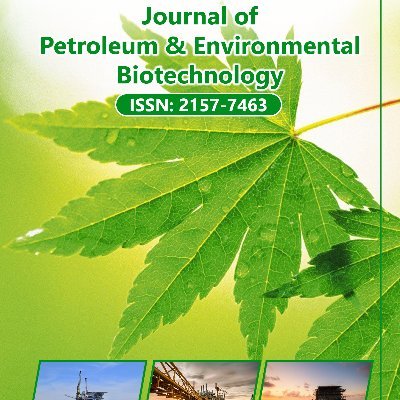
Journal Flyer
Open Access Journals
- Agri and Aquaculture
- Biochemistry
- Bioinformatics & Systems Biology
- Business & Management
- Chemistry
- Clinical Sciences
- Engineering
- Food & Nutrition
- General Science
- Genetics & Molecular Biology
- Immunology & Microbiology
- Medical Sciences
- Neuroscience & Psychology
- Nursing & Health Care
- Pharmaceutical Sciences
Opinion Article - (2025) Volume 16, Issue 3
Role of Structural Isomerism in Biodegradation of Environmental Pollutants
Meera Singh*Received: 29-Aug-2025, Manuscript No. JPEB-25-30618; Editor assigned: 01-Sep-2025, Pre QC No. JPEB-25-30618 (PQ); Reviewed: 15-Sep-2025, QC No. JPEB-25-30618; Revised: 22-Sep-2025, Manuscript No. JPEB-25-30618 (R); Published: 29-Sep-2025, DOI: 10.35248/2157-7463.25.16.621
Description
Isomerism, a phenomenon in which molecules share the same molecular formula but differ in structural arrangement, plays a significant role in environmental biotechnology. Structural isomers often exhibit distinct chemical and biological properties, affecting their environmental behavior, toxicity and biodegradation potential. Understanding isomer-specific interactions is critical for developing effective strategies for pollution control, bioremediation and sustainable environmental management. Environmental pollutants such as hydrocarbons, pesticides and industrial chemicals often exist as mixtures of structural and positional isomers, influencing their susceptibility to microbial degradation and chemical transformation.
The biodegradation of hydrocarbons provides a clear example of the importance of isomerism in environmental biotechnology. Linear alkanes are generally more readily degraded by microorganisms than branched alkanes or cycloalkanes due to easier enzyme access and lower steric hindrance. For instance, Pseudomonas and Rhodococcus species preferentially metabolize n-alkanes, whereas iso-alkanes require specific monooxygenases and dehydrogenases for effective degradation. Similarly, aromatic hydrocarbons such as xylene and toluene exist as ortho, meta and para isomers, each demonstrating variable microbial degradation rates and pathways. Recognizing these differences allows environmental biotechnologists to optimize bioremediation strategies by selecting or engineering microbes capable of targeting specific isomer forms.
Isomerism also affects the degradation of synthetic pesticides and herbicides. Organophosphates and chlorinated hydrocarbons, which often consist of multiple structural or stereoisomers, may exhibit different toxicities and persistence in the environment. For example, the two stereoisomers of certain organophosphate pesticides can differ in their enzymatic hydrolysis rates by phosphotriesterases. Understanding these isomer-specific interactions is essential for predicting environmental fate, toxicity and the efficiency of microbial or enzymatic remediation strategies. Moreover, selective degradation of toxic isomers over less harmful counterparts enhances environmental safety and sustainability.
Advances in environmental biotechnology leverage isomerism for monitoring, degradation and detoxification of pollutants. Analytical techniques such as gas chromatography, highperformance liquid chromatography and chiral separation methods allow the identification and quantification of specific isomers in contaminated soils and waters. Metagenomics and enzyme engineering facilitate the discovery and optimization of microbial strains and enzymes that preferentially degrade particular isomeric forms of pollutants. Additionally, synthetic biology approaches enable the design of metabolic pathways tailored to degrade resistant or toxic isomers efficiently, thereby enhancing bioremediation outcomes.
The exploration of isomer-specific environmental pathways extends to renewable resource utilization. Biomass-derived compounds, such as sugars and polyols, often exist as stereoisomers that affect microbial metabolism in biofuel production. Understanding how microbial strains selectively process these isomers improves conversion efficiency and reduces byproduct formation, contributing to sustainable bioprocessing. Similarly, chiral pharmaceuticals and personal care products entering aquatic environments may exhibit stereospecific biodegradation, influencing ecological toxicity and environmental persistence.
Hydrocarbons exemplify the importance of structural isomerism in bioremediation. Linear alkanes are typically more amenable to microbial degradation than branched alkanes due to their accessible carbon chains and minimal steric hindrance. Bacteria such as Pseudomonas putida, Rhodococcus erythropolis and Acinetobacter species preferentially metabolize n-alkanes via terminal oxidation pathways involving monooxygenases, alcohol dehydrogenases and aldehyde dehydrogenases. Conversely, branched alkanes require specialized enzymes capable of initiating oxidation at internal carbon atoms. Cycloalkanes and aromatic hydrocarbons also exhibit isomer-specific degradation; for example, ortho-, meta- and para-xylene isomers are metabolized at different rates depending on enzyme specificity and substrate accessibility. Recognizing these differences allows the selection or engineering of microbial strains for targeted remediation of specific isomer mixtures in contaminated soils, sediments and industrial effluents.
Conclusion
Understanding isomerism is essential for environmental biotechnology, as isomer-specific properties influence pollutant toxicity, persistence and biodegradation. Targeted microbial and enzymatic strategies can selectively degrade harmful isomers, improving environmental safety and sustainability. Integration of analytical, microbial and engineering approaches enables efficient management of isomeric pollutants in diverse ecosystems.
Citation: Singh M (2025). Role of Structural Isomerism in Biodegradation of Environmental Pollutants. J Pet Environ Biotechnology. 16:621.
Copyright: © 2025 Singh M. This is an open-access article distributed under the terms of the Creative Commons Attribution License, which permits unrestricted use, distribution and reproduction in any medium, provided the original author and source are credited