
Indexed In
- Open J Gate
- Genamics JournalSeek
- Academic Keys
- ResearchBible
- Cosmos IF
- Access to Global Online Research in Agriculture (AGORA)
- Electronic Journals Library
- RefSeek
- Directory of Research Journal Indexing (DRJI)
- Hamdard University
- EBSCO A-Z
- OCLC- WorldCat
- Scholarsteer
- SWB online catalog
- Virtual Library of Biology (vifabio)
- Publons
- Geneva Foundation for Medical Education and Research
- Euro Pub
- Google Scholar
Useful Links
Share This Page
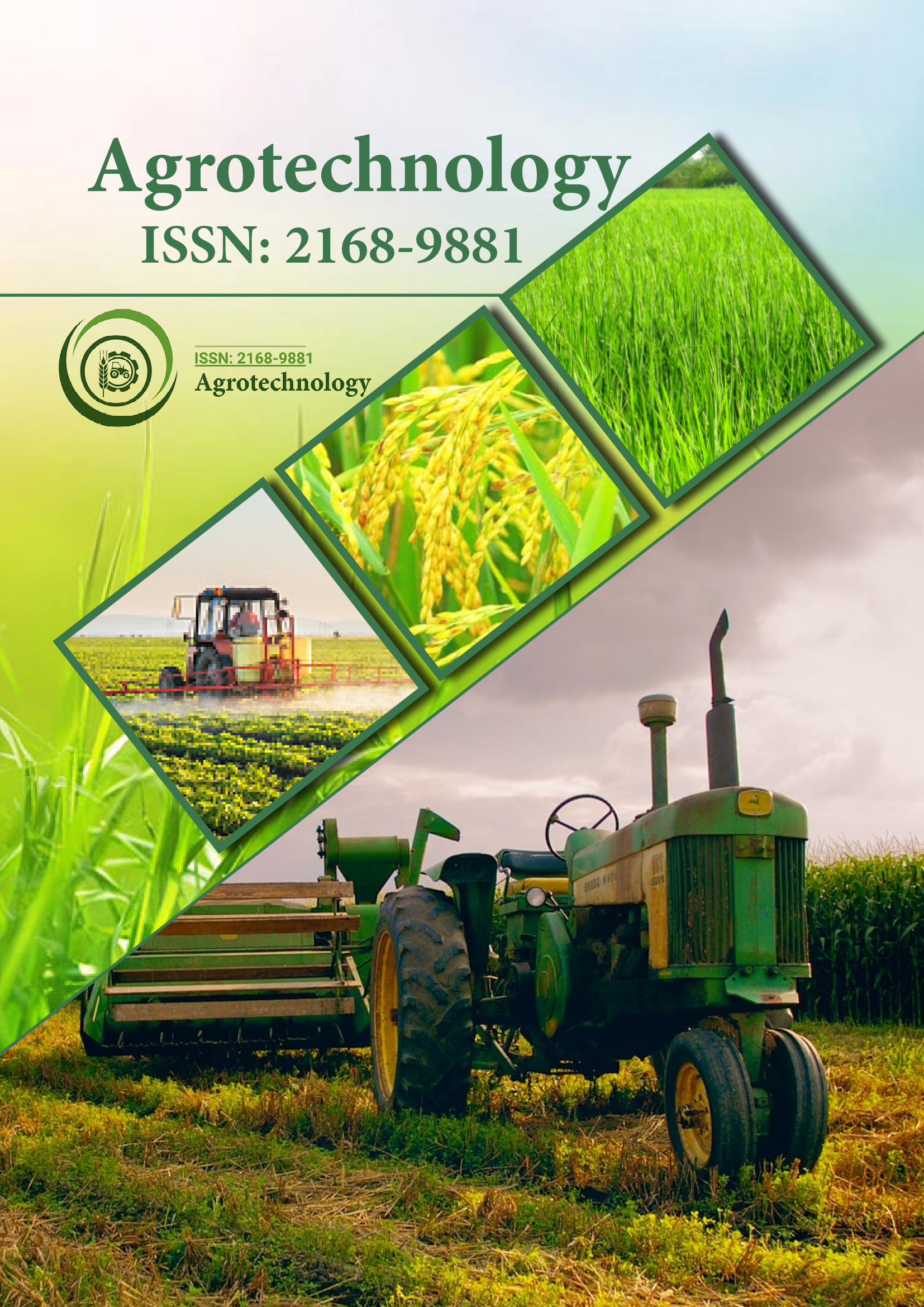
Journal Flyer
Open Access Journals
- Agri and Aquaculture
- Biochemistry
- Bioinformatics & Systems Biology
- Business & Management
- Chemistry
- Clinical Sciences
- Engineering
- Food & Nutrition
- General Science
- Genetics & Molecular Biology
- Immunology & Microbiology
- Medical Sciences
- Neuroscience & Psychology
- Nursing & Health Care
- Pharmaceutical Sciences
Short Communication - (2025) Volume 14, Issue 2
Precision Technologies for Sustainable and Productive Farming
Til Renton *Received: 30-May-2025 , Manuscript No. AGT-25-32417; Editor assigned: 02-Jun-2025 , Pre QC No. AGT-25-32417 (PQ); Reviewed: 16-Jun-2025 , QC No. AGT-25-32417; Revised: 23-Jun-2026 , Manuscript No. AGT-25-32417 (R); Published: 30-Jun-2025 , DOI: 10.35248/2168-9891.25.14.405
Description
Precision agriculture has changed the way crop production is planned and managed by introducing data-based decision making into everyday farming activities. Instead of treating an entire field as if every section has identical conditions, this method recognizes that soil characteristics, moisture levels, nutrient availability, and crop performance often differ across relatively small distances. By identifying these differences, farmers can apply water, fertilizers, pesticides, and other inputs only where they are needed [1-3].
Population growth, changing weather conditions, and increasing pressure on agricultural land have encouraged the adoption of technologies that improve field management. Farmers are expected to produce higher yields while using land, water, and agricultural inputs more efficiently. Precision agriculture addresses these expectations through the use of digital information collected from multiple sources. Satellite imagery, drones, field sensors, weather stations, and positioning systems provide continuous observations that help producers understand crop conditions throughout the growing season [4,5].
Remote sensing has become another valuable component of modern crop management. Images collected by satellites and unmanned aerial vehicles provide information about crop growth, plant health, and field variability. Different wavelengths reflected from crop canopies reveal changes that may not be visible during routine field inspections. Early detection of nutrient deficiencies, pest activity, disease development, or water stress allows corrective measures before large yield losses occur [6].
Water management remains one of the greatest challenges in agriculture, particularly in regions where rainfall is irregular or water supplies are limited. Precision irrigation systems use soil moisture sensors, weather information, and crop growth data to determine when irrigation is required and how much water should be applied. Delivering water according to actual crop demand reduces waste and improves water use efficiency. In addition, maintaining suitable soil moisture conditions supports healthy root development and stable crop growth throughout the season [7].
Artificial intelligence and machine learning have expanded the analytical capabilities of precision agriculture. Large volumes of agricultural data collected from sensors and field equipment can be processed to identify patterns that support management recommendations. Computer algorithms estimate crop growth, identify disease symptoms from digital images, predict irrigation requirements, and estimate harvest timing. These analytical tools provide valuable support for farmers, although final management decisions continue to depend on local knowledge and practical experience [8].
Economic considerations influence the adoption of precision agriculture. Initial investment in equipment, software, sensors, and training may be substantial, particularly for small farms with limited financial resources. Maintenance costs, software subscriptions, and periodic equipment upgrades add to operating expenses. Nevertheless, many producers report longterm financial benefits through reduced input use, lower fuel consumption, improved labor efficiency, and increased crop productivity. Government assistance programs, cooperative purchasing arrangements, and extension services have helped increase access to these technologies in several agricultural regions [9].
Environmental considerations have become increasingly important in agricultural production systems. Precision agriculture supports responsible management of fertilizers, pesticides, and irrigation water by reducing unnecessary applications and limiting movement of agricultural chemicals into nearby water bodies. More efficient machinery operation also decreases fuel consumption and associated emissions. Maintaining productive soils through informed nutrient management contributes to long-term agricultural sustainability while protecting natural resources for future generations [10].
Conclusion
Precision agriculture represents a practical combination of agricultural science and digital technology that supports informed crop management decisions. By integrating field observations with modern sensing systems, positioning technology, data analysis, and automated equipment, farmers can improve production efficiency while reducing unnecessary resource use. Continued technological development, increased accessibility, and expanded educational opportunities will support broader adoption across farms of different sizes. As agricultural production continues to respond to changing environmental and economic conditions, precision agriculture will remain an important method for improving productivity, resource efficiency, and long-term agricultural resilience
References
- Taheri N, Pishvaee MS, Jahani H, Zakeri D. Towards sustainable resource allocation in agriculture: A systematic review on cropping pattern optimization approaches. Appl. Soft Comput. 2024;167:112360.
- Maraveas C, Konar D, Michopoulos DK, Arvanitis KG, Peppas KP. Harnessing quantum computing for smart agriculture: Empowering sustainable crop management and yield optimization. Comput. Electron. Agric.2024;218:108680.
- Steinhauser DA, Free T, Crasto VS, Small IM, Arnold DP. Analysis of IoT Sensors and Autonomous Robots for Integrated Resource Monitoring and Precision Crop Production. IFAC-PapersOnLine. 2025;59(23):221-226.
- Upadhyay A, Mahecha MV, Mettler J, Howatt K, Aderholdt W, Ostlie M, Sun X. Weed-crop dataset in precision agriculture: Resource for AI-based robotic weed control systems. Data Brief. 2025;60:111486.
- Begum SS, Mande S, Jameer S, Veeraiah D, Amanatulla M, Eswaraiah P. An IoT and Sensor-Based Intelligent Framework for Data-Driven Precision Agriculture and Sustainable Resource Management. Franklin Open. 2026:100726.
- Gu X, Liu P, Wang K, Shi Q, Wu Y, Sun J, Cong WF, Ying H. Data-Driven Co-management: synergizing soil quality and crop productivity for sustainable agriculture. J. Clean. Prod. 2026;573:148973.
- Yang J. Integrating big data analytics with hybrid machine learning approaches for precision agriculture and resource optimization. Sustain. Comput: Inform. Syst. 2026:101339.
- Elhoseny M, Jahid K, Latif R, Saddik A, Atassi R. Recent advances in IoT-driven crop monitoring and precision irrigation: Technologies, models, and future challenges. Sci. Afr.2026:e03222.
- Jin C. Optimizing crop yield prediction in precision agriculture using random forest and particle swarm optimization: A data-driven approach to sustainable farming. Sustain. Comput: Inform. Syst. 2026:101336.
- Taneja D, Ahmed F, Naeem M, Tuteja N, Gill R, Gill SS. Nanofabricated fertilizers for precision nutrient delivery and abiotic stress management in crop plants. Plant Nano Biol. 2026:100304.
Citation: Renton T (2025) Precision Technologies for Sustainable and Productive Farming. Agrotechnology. 14:405.
Copyright: © 2025 Renton T. This is an open access article distributed under the terms of the Creative Commons Attribution License, which permits unrestricted use, distribution, and reproduction in any medium, provided the original author and source are credited.