
Indexed In
- Academic Journals Database
- Open J Gate
- Genamics JournalSeek
- JournalTOCs
- China National Knowledge Infrastructure (CNKI)
- Scimago
- Ulrich's Periodicals Directory
- RefSeek
- Hamdard University
- EBSCO A-Z
- OCLC- WorldCat
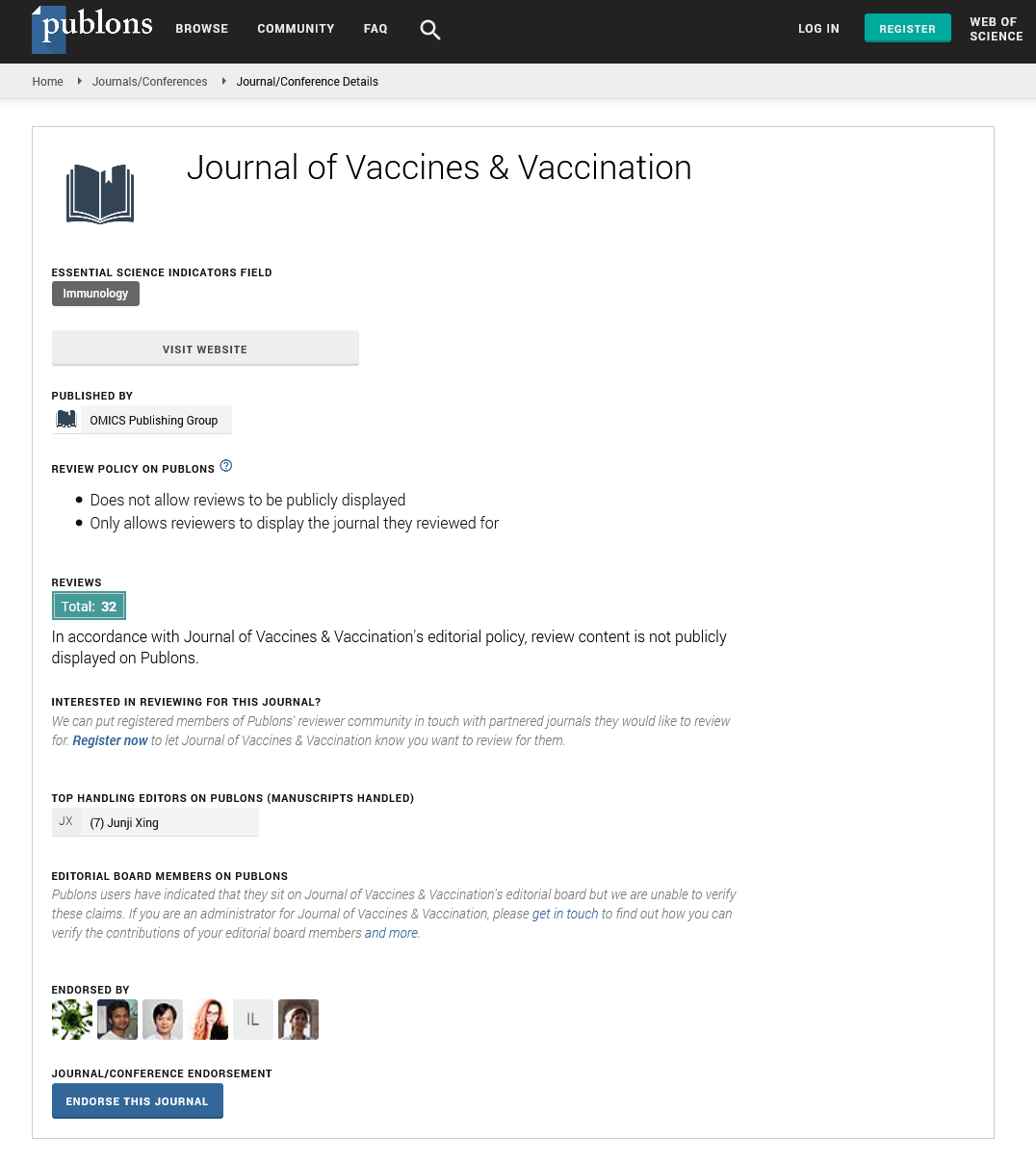
- Publons
- MIAR
- University Grants Commission
- Geneva Foundation for Medical Education and Research
- Euro Pub
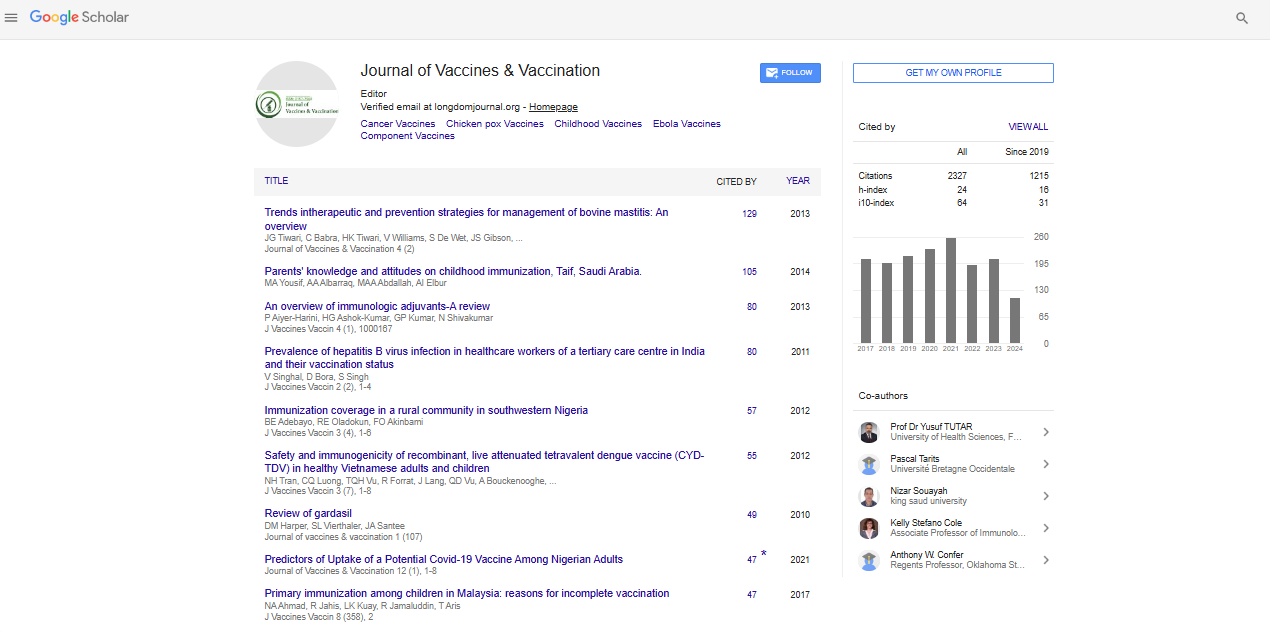
- Google Scholar
Useful Links
Share This Page
Open Access Journals
- Agri and Aquaculture
- Biochemistry
- Bioinformatics & Systems Biology
- Business & Management
- Chemistry
- Clinical Sciences
- Engineering
- Food & Nutrition
- General Science
- Genetics & Molecular Biology
- Immunology & Microbiology
- Medical Sciences
- Neuroscience & Psychology
- Nursing & Health Care
- Pharmaceutical Sciences
Opinion - (2025) Volume 16, Issue 10
Personalized Vaccination Strategies: Advancing Immunization Through Individualized
Lysine Margarian*Received: 29-Sep-2025, Manuscript No. JVV-25-31773; Editor assigned: 01-Oct-2025, Pre QC No. JVV-25-31773 (PQ); Reviewed: 15-Oct-2025, QC No. JVV-25-31773; Revised: 22-Oct-2025, Manuscript No. JVV-25-31773 (R); Published: 29-Oct-2025, DOI: 10.35248/2157-7560.25.16.631
Description
Vaccination has contributed significantly to the reduction of infectious diseases across the world. Traditional immunization programs have generally followed standardized schedules designed for broad populations. While these programs have achieved considerable success, increasing knowledge of human biology has revealed that immune responses can vary substantially among individuals. Differences in age, genetics, medical history, environmental exposure, nutritional status, and existing health conditions may influence how a person responds to a vaccine. As a result, healthcare professionals and researchers have shown growing interest in personalized vaccination strategies that consider individual characteristics when determining vaccine selection, timing, dosage, and administration approaches.
The concept of personalized vaccination is based on the understanding that a uniform method may not always produce equivalent outcomes for every individual. Some people develop strong and lasting immunity after a single vaccine series, while others may require additional doses to achieve comparable protection. Variations in immune system function can be observed across different age groups. Infants possess developing immune systems, whereas older adults often experience gradual reductions in immune responsiveness. These biological differences support the idea that vaccination plans may benefit from greater consideration of individual circumstances.
Genetic variation represents one factor that may influence vaccine effectiveness. Scientific studies have identified certain genetic markers associated with stronger or weaker immune responses to specific vaccines. Although genetic testing is not routinely used in vaccination programs, ongoing research continues to examine how inherited traits may affect antibody production and cellular immune activity. Future healthcare systems may incorporate selected genetic information to assist clinicians in determining the most suitable vaccination schedules for particular individuals.
Medical history also plays an important role in individualized immunization planning. People with chronic illnesses such as diabetes, kidney disease, respiratory disorders, or autoimmune conditions often face different health risks compared with healthy individuals. Certain medical treatments, including immunosuppressive therapies, may reduce vaccine responsiveness. In such situations, healthcare providers may adjust vaccine timing or recommend additional booster doses to increase the likelihood of achieving adequate protection. Careful evaluation of each patient's medical background allows vaccination strategies to be aligned more closely with clinical needs.
Another important consideration is prior exposure to infectious agents. Some individuals may have acquired natural immunity through previous infections, while others remain completely susceptible. Modern laboratory techniques can measure antibody levels and provide information regarding immune status. This information may assist healthcare professionals in determining whether additional vaccination is necessary or whether existing immunity remains sufficient. Such approaches can improve resource utilization while reducing unnecessary medical interventions.
Advances in digital health technologies have created new opportunities for individualized vaccination management. Electronic health records allow healthcare providers to maintain comprehensive immunization histories and monitor patient outcomes over time. Digital platforms can generate reminders for booster doses, identify missed vaccinations, and support clinical decision-making. Integration of laboratory results, medical records, and vaccination data may improve the accuracy of recommendations and enhance long-term protection against infectious diseases.
Age-specific vaccination planning has become increasingly important in modern healthcare. Children require protection against diseases that pose significant risks during early development, whereas adults may require booster immunizations to maintain immunity. Older individuals often face increased vulnerability to respiratory infections and other communicable diseases. Personalized strategies can account for these age-related factors and support vaccine recommendations that reflect changing health requirements throughout life.
Occupational exposure represents another area where individualized vaccination approaches can provide value. Healthcare workers, laboratory personnel, emergency responders, and international travellers may encounter infectious agents more frequently than the general population. Vaccination plans developed according to occupational risk can improve protection while supporting workplace safety. Similar considerations apply to individuals living in regions where certain infectious diseases occur more frequently than in other locations.
Nutritional status may also influence vaccine responses. Deficiencies in vitamins, minerals, or other essential nutrients can affect immune function. Assessment of nutritional health may provide additional information when evaluating vaccine effectiveness in certain populations. Public health initiatives increasingly recognize the relationship between overall health and immune performance, encouraging comprehensive approaches that consider multiple factors simultaneously.
The emergence of advanced vaccine technologies has further expanded opportunities for individualized immunization. Novel vaccine platforms allow researchers to design vaccines with increased precision and flexibility. These developments may support future efforts to optimize vaccine composition for specific population groups. Scientists continue to investigate methods that improve immune responses while maintaining strong safety profiles.
Conclusion
Personalized vaccination strategies represent an evolving approach that seeks to align immunization practices with the unique characteristics of each individual. By considering factors such as age, genetics, medical history, occupational exposure, nutritional status, and immune function, healthcare providers can make more informed decisions regarding vaccine administration. Continued scientific investigation, responsible implementation, and equitable access will remain important as individualized vaccination approaches become increasingly integrated into modern preventive medicine.
Citation: Margarian L (2025) Personalized Vaccination Strategies: Advancing Immunization Through Individualized. J Vaccines Vaccin. 16:631.
Copyright: © 2025 Margarian L. This is an open access article distributed under the terms of the Creative Commons Attribution License, which permits unrestricted use, distribution and reproduction in any medium, provided the original author and source are credited.