
Indexed In
- Open J Gate
- Academic Keys
- ResearchBible
- China National Knowledge Infrastructure (CNKI)
- Centre for Agriculture and Biosciences International (CABI)
- RefSeek
- Hamdard University
- EBSCO A-Z
- OCLC- WorldCat
- CABI full text
- Publons
- Geneva Foundation for Medical Education and Research
- Google Scholar
Useful Links
Share This Page
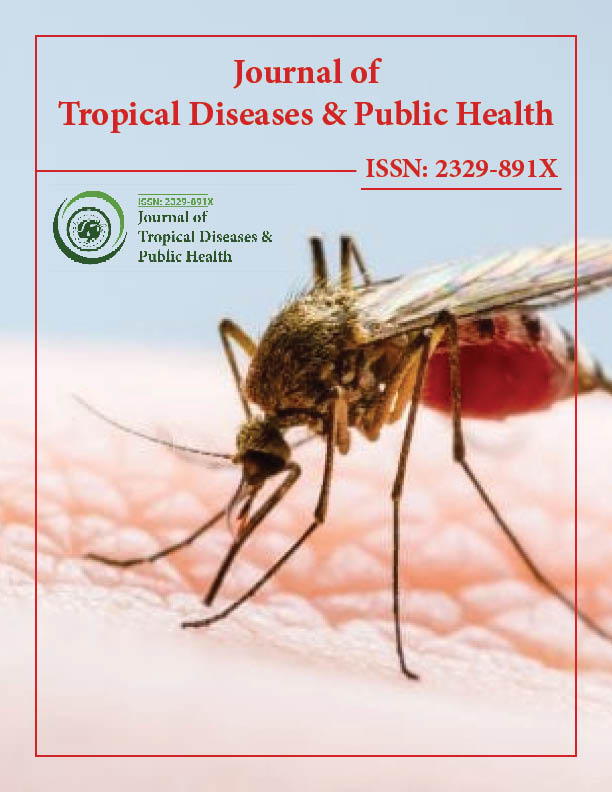
Journal Flyer
Open Access Journals
- Agri and Aquaculture
- Biochemistry
- Bioinformatics & Systems Biology
- Business & Management
- Chemistry
- Clinical Sciences
- Engineering
- Food & Nutrition
- General Science
- Genetics & Molecular Biology
- Immunology & Microbiology
- Medical Sciences
- Neuroscience & Psychology
- Nursing & Health Care
- Pharmaceutical Sciences
Opinion Article - (2025) Volume 14, Issue 3
Neglected Tropical Diseases: Challenges, Impact, and Strategies for Control
Mariana Costa*Received: 19-Aug-2025, Manuscript No. JTD-25-30726; Editor assigned: 21-Aug-2025, Pre QC No. JTD-25-30726; Reviewed: 04-Sep-2025, QC No. JTD-25-30726; Revised: 11-Sep-2025, Manuscript No. JTD-25-30726; Published: 18-Sep-2025, DOI: 10.35241/2329-891X.25.13.487
Description
A disease is considered neglected not because it is rare, but because it affects populations that have little political or economic power. Most people suffering from NTDs live in rural villages, conflict areas, or urban slums where healthcare services are limited. Because these communities cannot easily influence policy or markets, there is less funding for research, fewer new medicines, and weaker healthcare programs targeting these diseases. In addition, many NTDs cause long-term disability rather than immediate death. This slow progress keeps them out of media headlines, even though their total impact is very large. NTDs are not a single illness but a collection of different diseases caused by various organisms. Some are caused by worms living inside the body, others by bacteria or viruses, and some by parasites that rely on insects to spread. Examples include skin infections, eye diseases, fever-related illnesses, and conditions that damage internal organs. Because the causes are so different, control methods must also vary. Some diseases require regular medication, others need vaccination, while some depend mainly on improving hygiene and environmental conditions.
Living with an NTD often means living with pain, fatigue, or visible physical changes. Some diseases cause swelling, skin damage, or vision problems that make normal activities difficult. Children with infections may struggle to concentrate in school, while adults may not be able to perform physical labor. Beyond physical symptoms, social problems are common. People with visible signs of illness may face rejection, bullying, or job discrimination. This emotional suffering is rarely measured in statistics but deeply affects quality of life. NTDs are closely linked to living conditions. In areas without safe toilets or clean water, germs and parasites easily move from soil and waste into human bodies. Insects that carry disease breed in stagnant water and crowded neighborhoods.
Housing conditions also play a role. Cracked walls, poor drainage, and lack of waste disposal create environments where disease carriers can survive. When people lack money for medical treatment or transportation to clinics, infections remain untreated and continue spreading. This strong connection between poverty and disease creates a vicious cycle: poor health reduces work ability, which increases poverty, which then increases disease risk. Reducing NTDs is not only a health goal but also a development goal. Healthier people can work, learn, and support their families more effectively. When disease burden is reduced, communities can invest more in education, business, and local growth. Eliminating NTDs also promotes fairness by improving the lives of people who have been overlooked for generations.
Although medicines are important, they are not enough by themselves. Giving drugs without improving water supply, sanitation, and education only provides temporary relief. True prevention requires long-term improvements in living conditions. Health education helps people understand how diseases spread and how to protect themselves. Simple actions such as wearing shoes, washing hands, using clean water, and sleeping under insect nets can greatly reduce infection risk when supported by community programs. Schools also play a key role by teaching children healthy habits that protect families and future generations.
Conclusion
Neglected Tropical Diseases exist not because solutions are impossible, but because affected populations have been ignored for too long. These diseases reflect deep inequalities in healthcare access, education, and living conditions. Ending their spread requires more than medical treatment; it requires social commitment, community participation, and long-term investment in human well-being. By addressing NTDs, the world takes an important step toward both better health and greater social justice.
Citation: Costa M (2025). Neglected Tropical Diseases: Challenges, Impact and Strategies for Control. J Trop Dis. 13:487.
Copyright: © 2025 Costa M. This is an open-access article distributed under the terms of the Creative Commons Attribution License, which permits unrestricted use, distribution and reproduction in any medium, provided the original author and source are credited.