
Indexed In
- Open J Gate
- JournalTOCs
- The Global Impact Factor (GIF)
- RefSeek
- Hamdard University
- EBSCO A-Z
- OCLC- WorldCat
- Publons
- Euro Pub
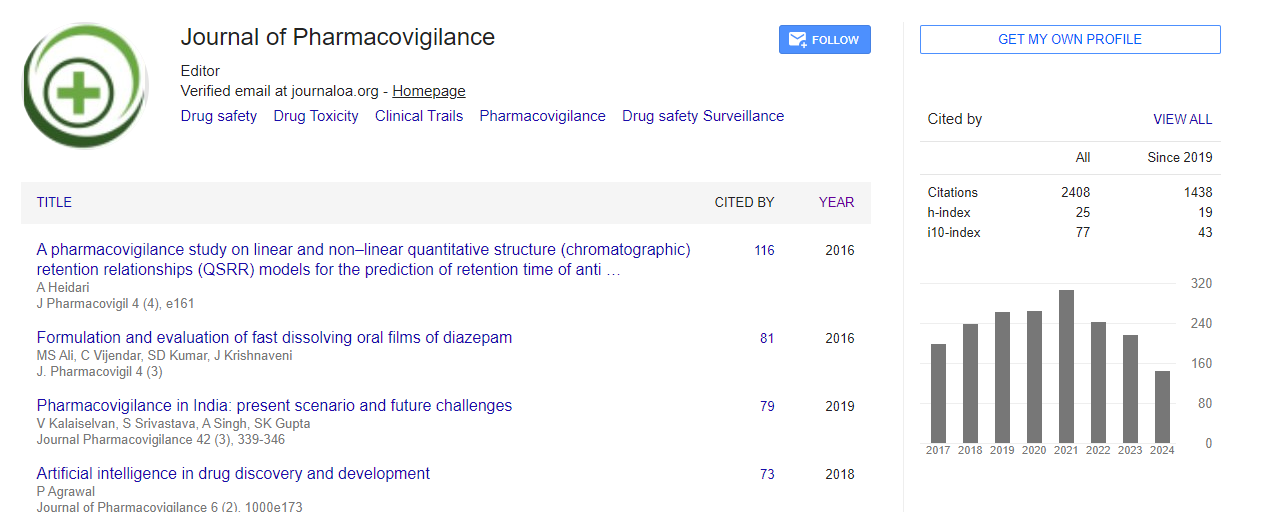
- Google Scholar
Useful Links
Share This Page
Journal Flyer
Open Access Journals
- Agri and Aquaculture
- Biochemistry
- Bioinformatics & Systems Biology
- Business & Management
- Chemistry
- Clinical Sciences
- Engineering
- Food & Nutrition
- General Science
- Genetics & Molecular Biology
- Immunology & Microbiology
- Medical Sciences
- Neuroscience & Psychology
- Nursing & Health Care
- Pharmaceutical Sciences
Commentary - (2026) Volume 14, Issue 1
Medical Literature as a Foundation for Clinical Knowledge and Drug Safety Understanding
Claire BeaumontReceived: 10-Feb-2026, Manuscript No. JP-26-31402; Editor assigned: 12-Feb-2026, Pre QC No. JP-26-31402; Reviewed: 26-Feb-2026, QC No. JP-26-31402; Revised: 05-Mar-2026, Manuscript No. JP-26-31402; Published: 12-Mar-2026, DOI: 10.35248/2329-6887.26.14.547
Description
Medical literature refers to the vast collection of published scientific work that documents research findings, clinical observations, reviews, and theoretical discussions in medicine and healthcare. It serves as a primary source of knowledge for clinicians, researchers, regulatory authorities, and healthcare educators. Through this body of work, new discoveries are communicated, existing knowledge is refined, and clinical practice is continuously updated based on evidence derived from systematic investigation.
One of the most important functions of medical literature is to provide a structured record of clinical research. Clinical trials, observational studies, and laboratory investigations are documented in peer-reviewed journals, allowing findings to be critically evaluated and reproduced. This process ensures that medical knowledge is not based on isolated observations but on systematically collected and analyzed data. Peer review acts as a quality control mechanism, where experts in the field assess the validity, methodology, and interpretation of research before publication.
Medical literature also plays a central role in the development and monitoring of drug safety. Reports published in journals often include information on adverse effects observed during clinical trials or post-marketing use. These reports contribute to pharmacovigilance activities by providing early indications of potential safety concerns. Case reports and case series are particularly valuable in identifying rare or unexpected reactions that may not have been detected during pre-approval studies due to limited sample sizes.
Review articles are another important category within medical literature. These publications summarize and analyze existing research on specific topics, offering a broader understanding of current knowledge. Systematic reviews and meta-analyses are especially significant because they combine data from multiple studies to provide more reliable conclusions. These types of publications are widely used in clinical decision-making and guideline development.
Medical literature also includes guidelines and consensus statements developed by expert panels. These documents are based on comprehensive evaluations of available evidence and are designed to assist healthcare professionals in making informed treatment decisions. They often address diagnostic criteria, therapeutic approaches, and safety considerations. By standardizing clinical practice, guidelines help reduce variability in patient care and improve overall outcomes.
In the context of drug safety, medical literature contributes to signal generation and risk assessment. Published studies may reveal associations between medications and adverse outcomes, prompting further investigation by regulatory authorities. Literature-based evidence is often integrated with data from spontaneous reporting systems and clinical databases to form a more complete understanding of a drug’s safety profile. This integration supports more accurate evaluation of potential risks.
Case reports published in medical journals are particularly important for identifying unusual clinical events. These detailed descriptions of individual patient experiences can highlight rare adverse reactions, drug interactions, or unexpected therapeutic outcomes. Although they do not provide statistical proof of causality, they often serve as early warnings that prompt larger studies or regulatory review.
The accessibility of medical literature has improved significantly with digital publishing and online databases. Platforms such as PubMed and other scientific repositories allow healthcare professionals to access research quickly and efficiently. This accessibility supports evidence-based practice by enabling clinicians to stay updated on the latest developments in their field. However, the large volume of available information also requires careful evaluation to distinguish high-quality evidence from less reliable sources.
Conclusion
Medical literature is a fundamental component of modern healthcare that supports research, clinical practice, and drug safety monitoring. Ethical considerations are also associated with medical publishing. Authors are expected to report findings honestly and transparently, without manipulation or selective reporting of data. Journals enforce ethical standards to prevent plagiarism, data fabrication, and conflicts of interest. These measures help preserve the integrity of scientific communication and ensure trust in published research. It provides a structured and reliable source of knowledge that informs decision-making across all areas of medicine. Through continuous publication, evaluation, and dissemination of scientific findings, medical literature contributes to the advancement of healthcare and the improvement of patient outcomes worldwide.
Citation: Beaumont C (2026). Medical Literature as a Foundation for Clinical Knowledge and Drug Safety Understanding. J Pharmacovigil. 14:547
Copyright: © 2026 Beaumont C. This is an open-access article distributed under the terms of the Creative Commons Attribution License, which permits unrestricted use, distribution and reproduction in any medium, provided the original author and source are credited.