
Indexed In
- Academic Journals Database
- Open J Gate
- Genamics JournalSeek
- JournalTOCs
- China National Knowledge Infrastructure (CNKI)
- Scimago
- Ulrich's Periodicals Directory
- RefSeek
- Hamdard University
- EBSCO A-Z
- OCLC- WorldCat
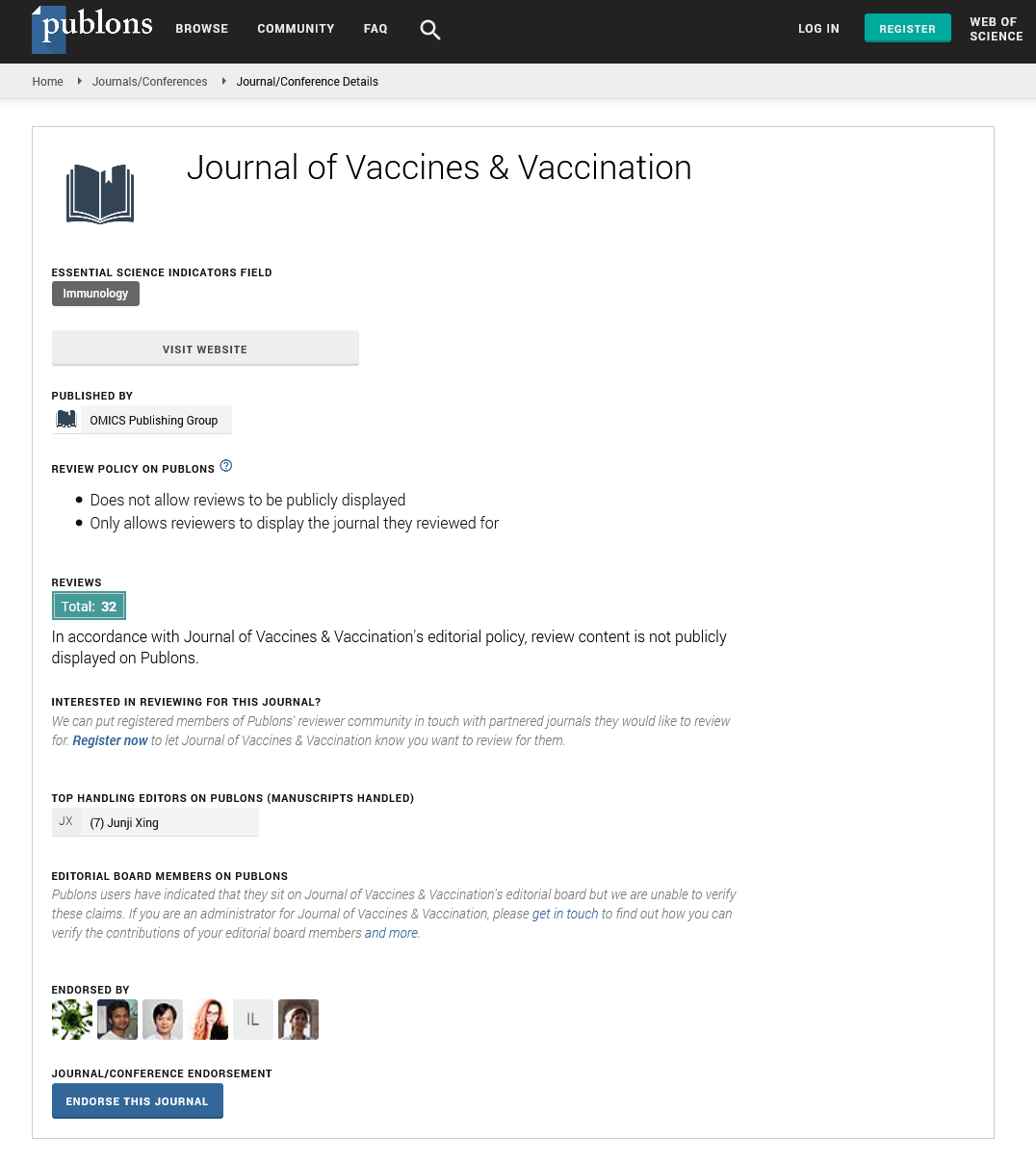
- Publons
- MIAR
- University Grants Commission
- Geneva Foundation for Medical Education and Research
- Euro Pub
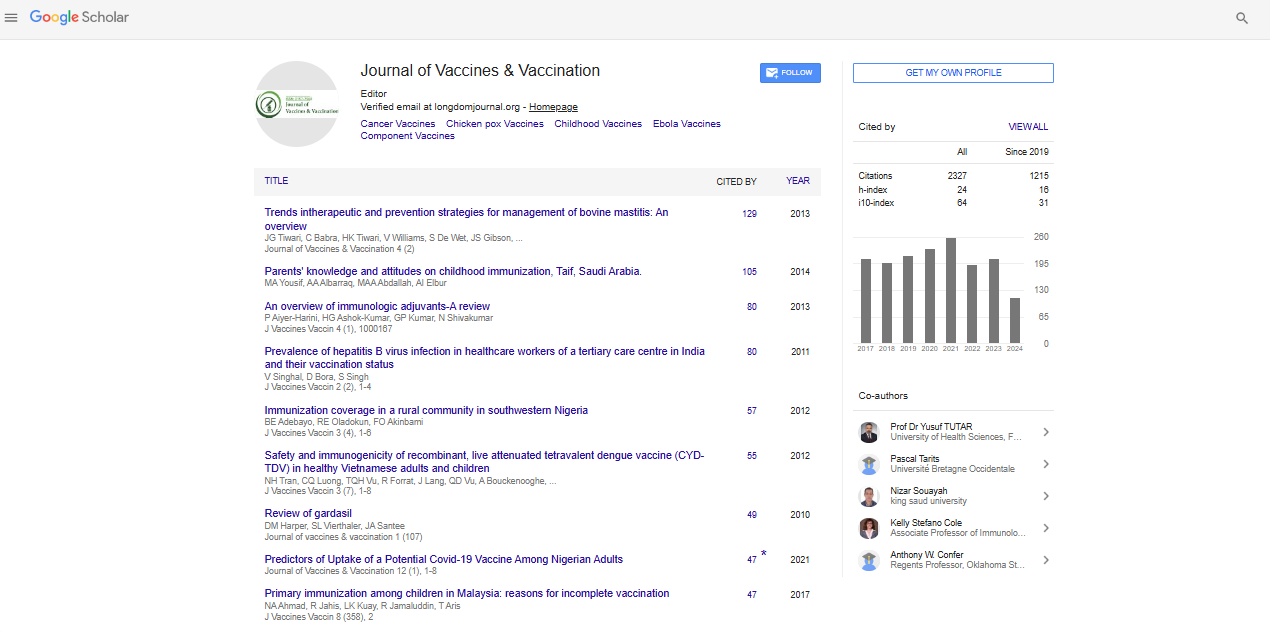
- Google Scholar
Useful Links
Share This Page
Open Access Journals
- Agri and Aquaculture
- Biochemistry
- Bioinformatics & Systems Biology
- Business & Management
- Chemistry
- Clinical Sciences
- Engineering
- Food & Nutrition
- General Science
- Genetics & Molecular Biology
- Immunology & Microbiology
- Medical Sciences
- Neuroscience & Psychology
- Nursing & Health Care
- Pharmaceutical Sciences
Commentary - (2025) Volume 16, Issue 10
Maternal Immunization: Strengthening Protection for Mothers and Infants through Preventive Vaccination Programs
David Walmsley*Received: 29-Sep-2025, Manuscript No. JVV-25-31770; Editor assigned: 01-Oct-2025, Pre QC No. JVV-25-31770 (PQ); Reviewed: 15-Oct-2025, QC No. JVV-25-31770; Revised: 22-Oct-2025, Manuscript No. JVV-25-31770 (R); Published: 29-Oct-2025, DOI: 10.35248/2157-7560.25.16.628
Description
Maternal immunization has become an important component of preventive healthcare, offering protection to pregnant women and their infants against several infectious diseases. Pregnancy brings physiological changes that can influence immune responses, making women more susceptible to certain infections and their complications. Vaccination during pregnancy serves a dual purpose by protecting the mother while also providing passive immunity to the developing fetus through the transfer of antibodies across the placenta. This approach contributes to improved maternal and neonatal health outcomes and has gained increasing attention among healthcare professionals and public health organizations.
The concept of maternal immunization is based on the natural transfer of protective antibodies from mother to child. During pregnancy, maternal antibodies move through the placenta and enter fetal circulation. After birth, these antibodies continue to provide protection during the first months of life when infants are particularly vulnerable to infectious diseases and may not yet be eligible for routine vaccinations. This temporary immunity can reduce the likelihood of severe illness, hospitalization, and related complications during early infancy.
Vaccines recommended during pregnancy are selected after extensive evaluation of their safety and effectiveness. Among the most commonly recommended vaccines are those designed to protect against influenza and pertussis. Influenza infection during pregnancy has been associated with increased rates of respiratory complications and hospitalization. Vaccination can reduce the risk of infection and lessen disease severity. Protection is also extended to new-borns during their first months of life, a period when influenza can cause serious health concerns.
Pertussis, commonly known as whooping cough, remains a significant cause of illness among young infants. Vaccination during pregnancy allows maternal antibodies to reach the fetus before birth. These antibodies help defend new-borns against infection until they can receive their own scheduled immunizations. Studies conducted in different regions have shown reductions in infant pertussis cases and associated hospital admissions following the implementation of maternal vaccination programs.
Recent years have also highlighted the value of maternal immunization during outbreaks of emerging infectious diseases. The global response to respiratory viral infections demonstrated the importance of protecting vulnerable populations, including pregnant women. Scientific investigations indicated that vaccination during pregnancy could reduce the risk of severe disease while also contributing to antibody transfer to newborns. Such findings reinforced the role of vaccination as an important preventive measure within prenatal care.
The success of maternal immunization programs depends on several factors, including vaccine accessibility, healthcare provider recommendations, public awareness, and confidence in vaccine safety. Healthcare professionals play a significant role in discussing vaccination with pregnant women. Clear communication regarding benefits, possible side effects, and scientific evidence can support informed decision-making. Pregnant women frequently consider the advice of obstetricians, midwives, nurses, and family physicians when evaluating healthcare choices.
Despite substantial evidence supporting maternal vaccination, vaccine hesitancy continues to influence uptake rates in some populations. Concerns may arise from misinformation, misconceptions regarding vaccine safety, or limited understanding of disease risks. Educational initiatives that provide accurate and understandable information can assist in addressing these concerns. Community engagement activities, prenatal counselling sessions, and evidence-based communication materials have all contributed to increased vaccination acceptance in many healthcare settings.
Safety remains a primary consideration in maternal immunization programs. Regulatory agencies and research institutions continuously monitor vaccine performance through surveillance systems and clinical studies. Available evidence has consistently demonstrated favourable safety profiles for recommended maternal vaccines. Adverse effects are generally mild and temporary, commonly including soreness at the injection site, fatigue, or low-grade fever. Serious vaccine-related complications are uncommon, and ongoing monitoring supports continued confidence in vaccination recommendations.
The timing of vaccination during pregnancy is another important factor. Recommendations are designed to maximize antibody production and transfer to the fetus while maintaining maternal protection. For example, pertussis vaccination is often administered during specific weeks of pregnancy to optimize neonatal antibody levels at birth. Healthcare providers carefully consider gestational age and individual medical circumstances when planning immunization schedules.
Maternal immunization also provides economic advantages for healthcare systems. Prevention of infectious diseases can reduce medical expenditures associated with hospitalization, intensive care services, diagnostic testing, and long-term treatment. Health economic evaluations have indicated that vaccination programs often produce substantial savings by preventing disease-related complications among both mothers and infants. These benefits support the inclusion of maternal vaccination within broader public health strategies.
Conclusion
Maternal immunization represents a practical and effective approach to protecting two generations simultaneously. By reducing the risk of infectious diseases in pregnant women and providing early immune protection for infants, vaccination contributes to healthier pregnancies and improved neonatal outcomes. Continued investment in research, education, and healthcare delivery systems will support the ongoing advancement of maternal vaccination programs and their contribution to public health worldwide.
Citation: Walmsley D (2025) Maternal Immunization: Strengthening Protection for Mothers and Infants through Preventive Vaccination Programs. J Vaccines Vaccin. 16:628.
Copyright: © 2025 Walmsley D. This is an open access article distributed under the terms of the Creative Commons Attribution License, which permits unrestricted use, distribution and reproduction in any medium, provided the original author and source are credited.