

Indexed In
- Academic Journals Database
- Open J Gate
- Genamics JournalSeek
- Academic Keys
- JournalTOCs
- China National Knowledge Infrastructure (CNKI)
- Ulrich's Periodicals Directory
- Electronic Journals Library
- RefSeek
- Hamdard University
- EBSCO A-Z
- OCLC- WorldCat
- SWB online catalog
- Virtual Library of Biology (vifabio)
- Publons
- Geneva Foundation for Medical Education and Research
- Euro Pub
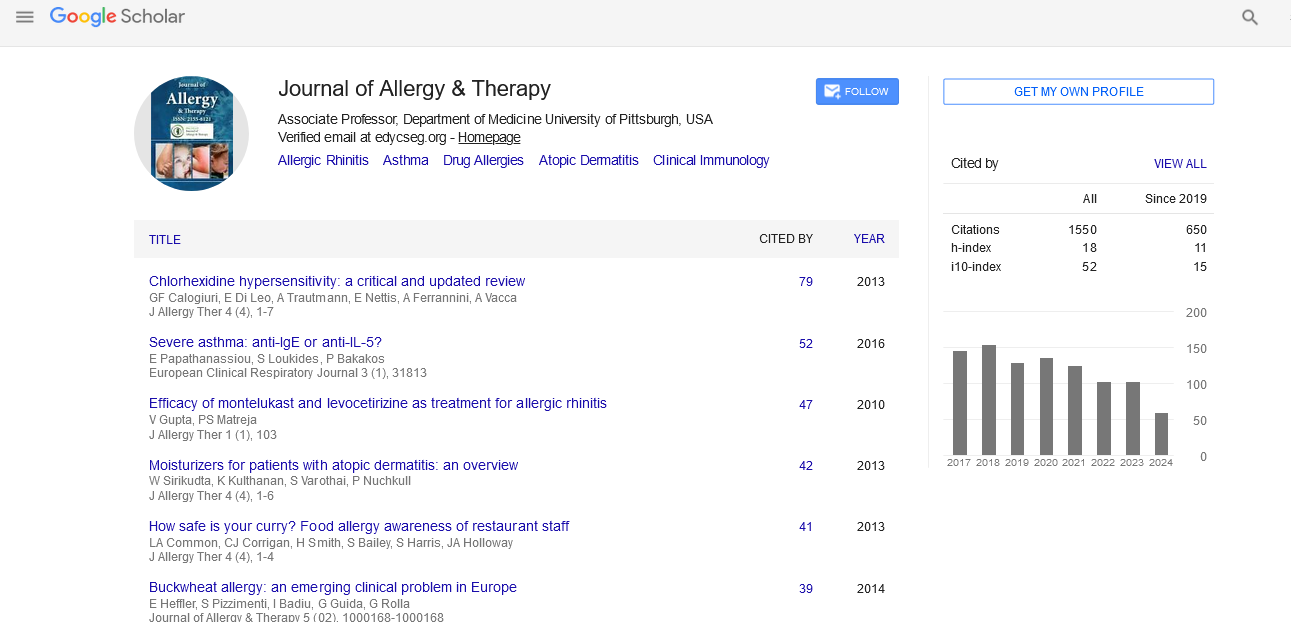
- Google Scholar
Useful Links
Share This Page
Journal Flyer

Open Access Journals
- Agri and Aquaculture
- Biochemistry
- Bioinformatics & Systems Biology
- Business & Management
- Chemistry
- Clinical Sciences
- Engineering
- Food & Nutrition
- General Science
- Genetics & Molecular Biology
- Immunology & Microbiology
- Medical Sciences
- Neuroscience & Psychology
- Nursing & Health Care
- Pharmaceutical Sciences
Commentary - (2026) Volume 17, Issue 2
Immunomodulatory Therapeutics: Advancing Immune System Control Through Targeted Medical Strategies
Sophia Almeida*Received: 29-May-2026, Manuscript No. JAT-26-32135; Editor assigned: 01-Jun-2026, Pre QC No. JAT-26-32135; Reviewed: 15-Jun-2026, QC No. JAT-26-32135; Revised: 23-Jun-2026, Manuscript No. JAT-26-32135; Published: 29-Jun-2026, DOI: 10.35248/2155-6121.26.17.459
Description
Immunomodulatory therapeutics are medical approaches designed to influence immune system activity by regulating the functions of immune cells, signaling molecules and biological pathways. The immune system requires a careful balance between activation and control to protect the body from infections while preventing excessive inflammatory responses. Immunomodulatory treatments aim to adjust immune activity according to specific disease conditions and provide improved management options for immune-related disorders.
The immune system consists of a complex network of cells, antibodies, proteins and chemical signals that work together to maintain health. In certain conditions, immune activity may become excessive, insufficient, or misdirected. Autoimmune diseases, allergies, inflammatory disorders and some cancers are associated with abnormal immune responses. Immunomodulatory therapeutics are developed to regulate these responses and restore a more balanced immune environment.
Biological agents represent an important category of immunomodulatory therapeutics. These treatments are produced from biological molecules and are designed to interact with specific immune targets. Monoclonal antibodies are widely used examples that can influence immune pathways by binding to selected proteins or receptors. Their ability to interact with specific components of the immune system allows clinicians to manage several complex medical conditions.
Cytokine-based therapies are another major area within immunomodulation. Cytokines are signaling molecules that coordinate communication between immune cells. They influence processes such as inflammation, cell growth and immune activation. Therapeutic agents that modify cytokine activity can help regulate immune responses in diseases where inflammatory pathways become excessive or uncontrolled.
Autoimmune disorders are among the primary applications of immunomodulatory therapeutics. Conditions such as rheumatoid arthritis, multiple sclerosis, inflammatory bowel disease and psoriasis involve immune activity directed against the body’s own tissues. Immunomodulatory treatments can reduce harmful immune reactions by affecting specific pathways involved in inflammation and immune cell activation.
Cancer treatment has also benefited from advances in immune regulation therapies. Tumors can interact with immune systems in ways that limit effective immune responses. Immunomodulatory agents can modify immune activity and support immune cells in recognizing and responding to abnormal cells. Several therapeutic approaches focus on improving immune recognition and activity within tumor environments.
Allergy management is another important application of immunomodulatory therapeutics. Allergic conditions occur when the immune system reacts strongly to normally harmless substances. Treatments that influence immune pathways related to allergic responses may help reduce symptoms and improve disease management. These approaches include biologic therapies and immune-regulating medications. Vaccination strategies also involve principles of immune modulation. Vaccines stimulate immune responses by introducing specific biological components that prepare the immune system for future encounters with infectious agents. Advances in immunology have supported the development of improved vaccine technologies and immune-based preventive approaches.
Cell-based therapies represent an expanding area within immunomodulatory medicine. These therapies involve using modified or selected immune cells to influence disease processes. Examples include approaches involving regulatory immune cells, engineered lymphocytes and other cellular components. These methods provide additional options for conditions where conventional treatments may have limitations.
Small molecule immunomodulators provide another therapeutic approach. These compounds can influence enzymes, receptors and signaling pathways involved in immune activity. Their chemical properties allow different methods of controlling immune responses and may provide useful treatment options for inflammatory and autoimmune conditions.
Personalized medicine approaches are increasingly connected with immunomodulatory therapies. Individuals may have different immune profiles, genetic characteristics and disease mechanisms. Evaluating biological markers can assist healthcare professionals in selecting suitable treatments and improving therapeutic outcomes for specific patient groups. Combination therapy is also used in immunomodulatory medicine. Different agents may affect separate immune pathways and combining treatments can provide broader regulation of immune activity. Clinical decisions regarding combination approaches require careful evaluation of effectiveness, safety and patient characteristics.
Advanced diagnostic methods support the development and application of immunomodulatory therapeutics. Analysis of immune markers, cellular responses and molecular signals provides important information about disease conditions. These assessments assist clinicians in understanding immune behavior and selecting appropriate treatment strategies. Despite significant progress, immunomodulatory therapeutics continue to face challenges. Immune responses are highly complex and treatment outcomes may vary between individuals. Some therapies may cause unwanted immune effects, requiring careful monitoring and clinical management. Improving safety and accessibility remains an important focus in this field.
The development of new immunomodulatory treatments depends on continued advances in molecular biology, biotechnology and clinical medicine. Improved understanding of immune regulation allows scientists and healthcare professionals to create therapies that interact more effectively with immune pathways.
Citation: Almeida S (2026). Immunomodulatory Therapeutics: Advancing Immune System Control Through Targeted Medical Strategies. J Allergy Ther. 17:459
Copyright: © 2026 Almeida S. This is an open-access article distributed under the terms of the Creative Commons Attribution License, which permits unrestricted use, distribution and reproduction in any medium, provided the original author and source are credited