
Indexed In
- Academic Journals Database
- Open J Gate
- Genamics JournalSeek
- JournalTOCs
- China National Knowledge Infrastructure (CNKI)
- Scimago
- Ulrich's Periodicals Directory
- RefSeek
- Hamdard University
- EBSCO A-Z
- OCLC- WorldCat
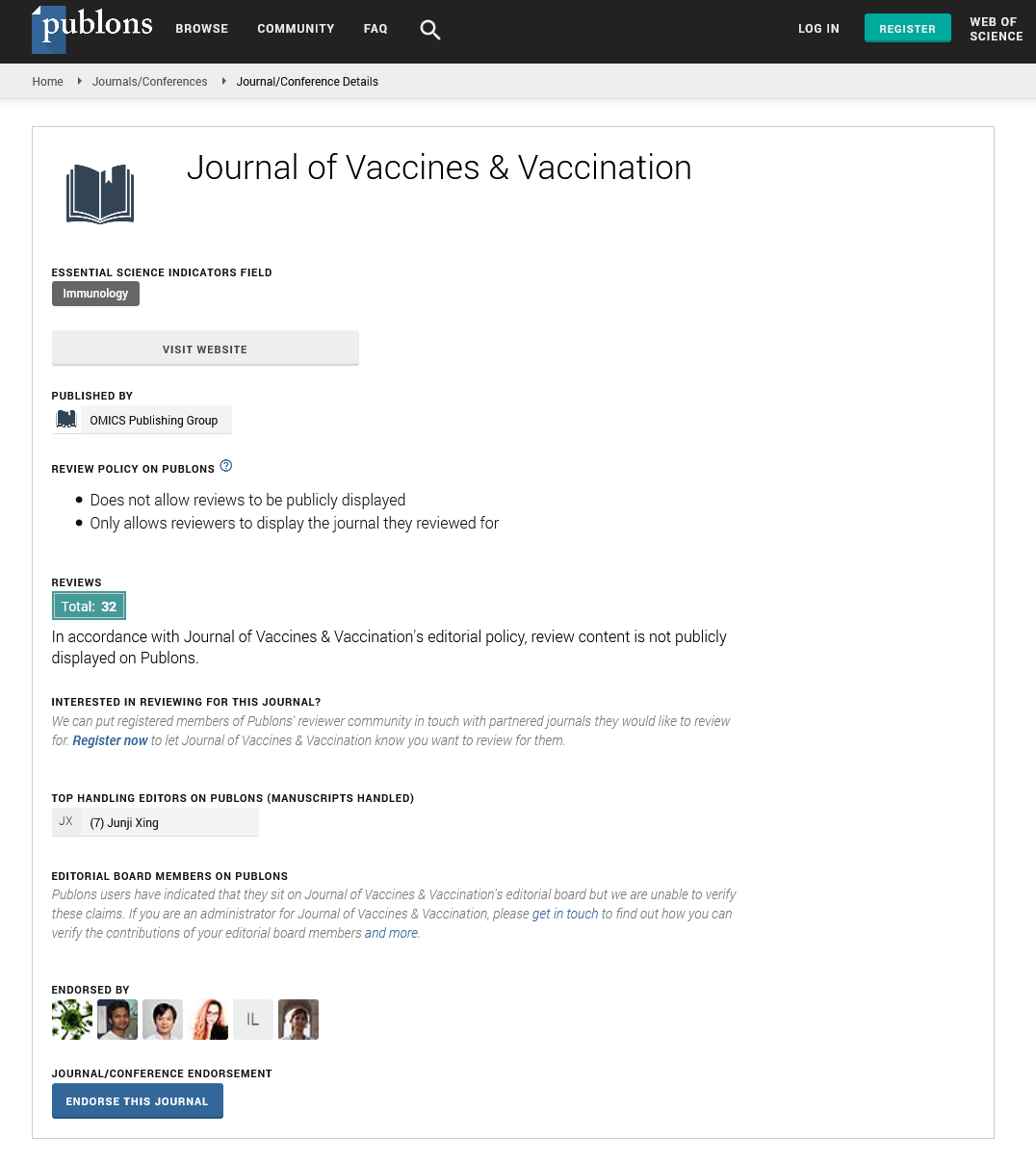
- Publons
- MIAR
- University Grants Commission
- Geneva Foundation for Medical Education and Research
- Euro Pub
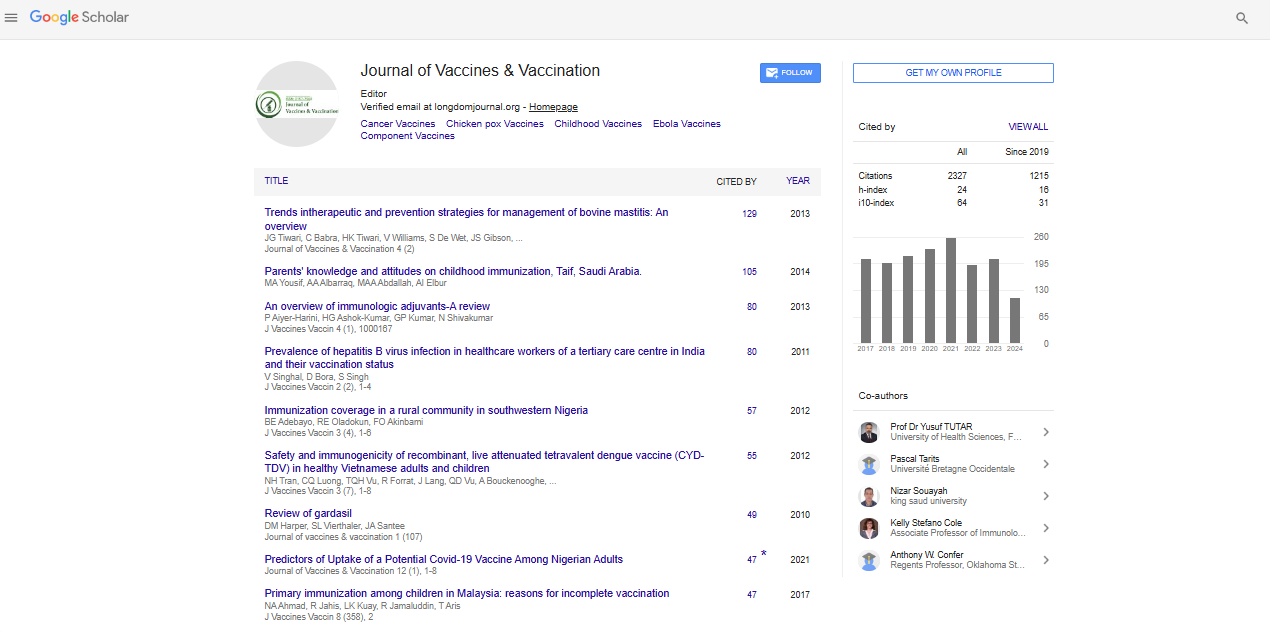
- Google Scholar
Useful Links
Share This Page
Open Access Journals
- Agri and Aquaculture
- Biochemistry
- Bioinformatics & Systems Biology
- Business & Management
- Chemistry
- Clinical Sciences
- Engineering
- Food & Nutrition
- General Science
- Genetics & Molecular Biology
- Immunology & Microbiology
- Medical Sciences
- Neuroscience & Psychology
- Nursing & Health Care
- Pharmaceutical Sciences
Commentry - (2026) Volume 17, Issue 1
Immunization as a Foundation for Long-Term Public Health Protection
Mason Hadid*Received: 27-Dec-2025, Manuscript No. JVV-26-31893; Editor assigned: 30-Dec-0205, Pre QC No. JVV-26-31893; Reviewed: 12-Jan-2026, QC No. JVV-26-31893; Revised: 19-Jan-2026, Manuscript No. JVV-26-31893; Published: 26-Jan-2026, DOI: 10.35248/2157-7560.26.17.646
Description
Immunization has played a significant role in reducing the burden of infectious diseases across populations for many decades. Through the administration of vaccines, individuals develop protection against specific pathogens before exposure occurs. This preventive approach has contributed to improved health outcomes, increased life expectancy, and reduced healthcare costs in many countries.
The concept of immunization is based on the body's natural ability to defend itself against harmful microorganisms. When a vaccine is introduced into the body, the immune system recognizes components of a disease-causing organism and develops a response. This response allows the body to identify and react more effectively if exposure to the actual disease occurs in the future. As a result, vaccinated individuals are less likely to experience severe illness, complications, or death associated with many infectious diseases.
Historically, infectious diseases caused widespread suffering and mortality. Conditions such as smallpox, polio, measles, and diphtheria affected millions of people worldwide. The development and distribution of vaccines transformed disease prevention strategies and significantly reduced the incidence of many serious illnesses. Smallpox was eventually eliminated through extensive vaccination efforts, demonstrating the potential impact of coordinated immunization programs.
Immunization programs are designed to provide protection at different stages of life. Infants typically receive vaccines shortly after birth and during early childhood because young children are particularly vulnerable to infectious diseases. Childhood vaccination schedules are developed to provide protection during periods when the risk of infection is relatively high. Vaccines administered during these years often include protection against diseases such as measles, mumps, rubella, polio, hepatitis B, pertussis, and tetanus.
As individuals age, additional vaccines may be recommended to maintain immunity or address changing health risks. Adolescents may receive booster doses to strengthen existing protection, while adults may require vaccines for influenza, hepatitis, pneumococcal disease, or other infections depending on personal circumstances. Older adults often benefit from vaccines that reduce the likelihood of serious complications associated with age-related changes in immune function.
One of the major advantages of immunization is its ability to reduce disease transmission within communities. When a large proportion of people receive recommended vaccines, opportunities for infectious agents to spread become more limited. This effect provides indirect protection to individuals who cannot receive certain vaccines because of medical conditions, age restrictions, or specific treatment requirements. Community-wide protection contributes to lower rates of disease outbreaks and supports overall population health.
The safety of vaccines is a central consideration in immunization programs. Before approval for public use, vaccines undergo extensive evaluation through laboratory research and clinical studies. Researchers assess their effectiveness, quality, and safety profile before regulatory authorities authorize their use. Following approval, continuous monitoring systems collect information regarding vaccine performance and adverse events. This ongoing observation allows health authorities to identify uncommon reactions and maintain public confidence in vaccination programs.
Public education plays an important role in the success of immunization initiatives. Access to accurate information enables individuals to make informed decisions regarding vaccination. Healthcare professionals, educational institutions, and public health agencies contribute by providing evidence-based guidance about vaccine benefits and potential risks. Clear communication can help address concerns, reduce misinformation, and encourage greater participation in immunization programs.
Global cooperation has also contributed to improvements in vaccine accessibility. International organizations, governments, research institutions, and healthcare providers work together to support vaccine development, distribution, and administration. Efforts to expand immunization coverage have helped reduce health disparities in many low-income and middle-income regions. Although challenges remain, continued investment in vaccination infrastructure and public health services can improve access for populations that may otherwise face barriers to healthcare.
The future of immunization continues to evolve as researchers develop vaccines for additional diseases and improve existing formulations. Advances in biotechnology, manufacturing processes, and delivery methods may enhance vaccine effectiveness and accessibility. Scientific progress supports ongoing efforts to reduce the impact of infectious diseases and improve health outcomes across diverse populations.
Conclusion
Immunization remains one of the most effective preventive measures available in modern healthcare. By preparing the immune system to respond to infectious agents, vaccines reduce illness, disability, and mortality associated with many diseases. Lifelong vaccination strategies, continuous safety monitoring, public education, and international cooperation all contribute to successful immunization programs. As public health needs continue to change, immunization will remain an important tool for protecting individuals and communities while supporting healthier societies worldwide
Citation: Hadid M (2026). Immunization as a Foundation for Long-Term Public Health Protection. J Vaccines Vaccin. 17:646
Copyright: © 2026 Hadid M. This is an open access article distributed under the terms of the Creative Commons Attribution License, which permits unrestricted use, distribution and reproduction in any medium, provided the original author and source are credited