
Indexed In
- Open J Gate
- Genamics JournalSeek
- SafetyLit
- RefSeek
- Hamdard University
- EBSCO A-Z
- OCLC- WorldCat
- Publons
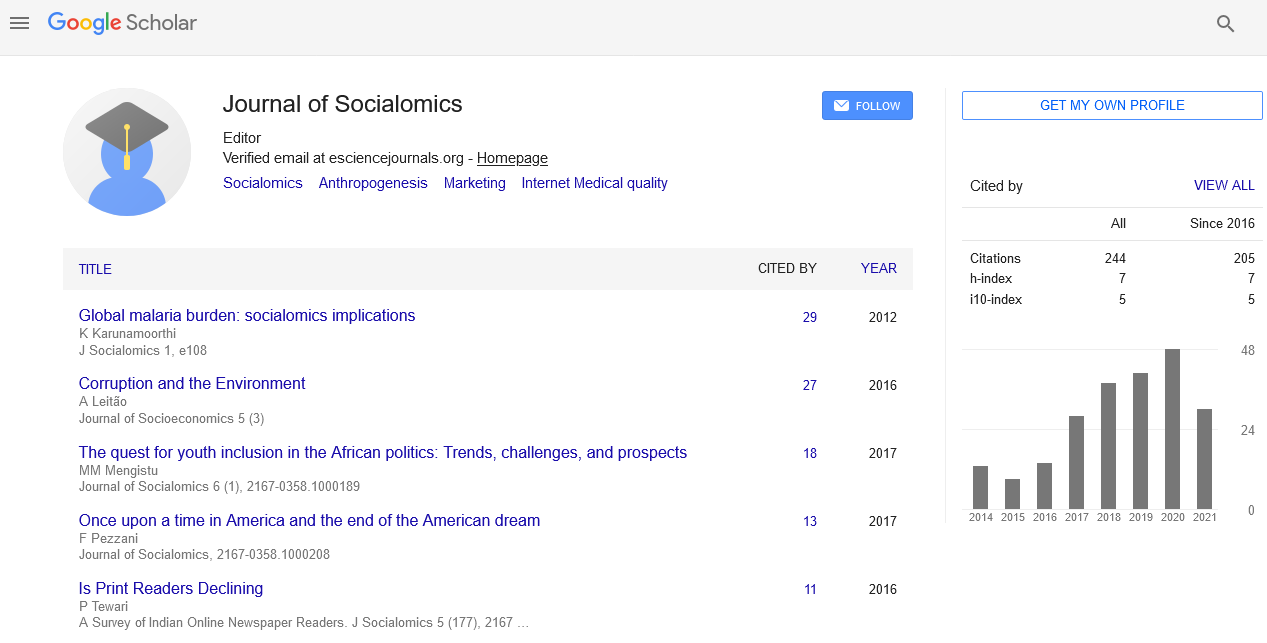
- Google Scholar
Useful Links
Share This Page
Journal Flyer
Open Access Journals
- Agri and Aquaculture
- Biochemistry
- Bioinformatics & Systems Biology
- Business & Management
- Chemistry
- Clinical Sciences
- Engineering
- Food & Nutrition
- General Science
- Genetics & Molecular Biology
- Immunology & Microbiology
- Medical Sciences
- Neuroscience & Psychology
- Nursing & Health Care
- Pharmaceutical Sciences
Commentary - (2025) Volume 14, Issue 3
Globalization: Connecting Economies, Cultures, and Ideas Across Borders
Marcus Leclerc*Received: 19-Aug-2025, Manuscript No. JSC-25-30733; Editor assigned: 21-Aug-2025, Pre QC No. JSC-25-30733; Reviewed: 04-Sep-2025, QC No. JSC-25-30733; Revised: 11-Sep-2025, Manuscript No. JSC-25-30733; Published: 18-Sep-2025, DOI: 10.35248/2167-0358.25.14.277
Description
Although globalization may seem like a modern idea, its roots go back hundreds of years. Ancient trade routes such as the Silk Road connected Asia, Europe, and Africa, allowing merchants to exchange goods, ideas, and cultures. However, globalization expanded rapidly during the 19th and 20th centuries due to industrialization, steam-powered transport, and later, digital communication. The invention of the internet and smartphones further accelerated this process, making global communication almost instant.
One of the most visible effects of globalization is in the economy. Countries now trade goods and services across borders on a large scale. Businesses can manufacture products in one country, assemble them in another, and sell them worldwide. This has helped reduce production costs and made products more affordable for consumers. Many developing nations have gained job opportunities through foreign investments and export industries.
However, globalization also creates challenges. Local industries may struggle to compete with large multinational companies. Workers in some countries may face job losses when companies move production to places where labor is cheaper. Economic inequality can increase when wealth is concentrated among powerful corporations and developed nations. Therefore, while globalization promotes growth, it also requires policies that protect workers and support local businesses.
Globalization encourages cultural interaction and understanding. People can easily access music, movies, fashion, and traditions from different parts of the world. Social media platforms allow individuals to share ideas and experiences, helping to build global awareness and friendships across borders. Festivals, food, and languages travel more freely, creating multicultural societies.
At the same time, some fear that globalization may weaken local traditions and identities. When global brands and popular culture dominate markets, smaller cultural practices may struggle to survive. Languages, crafts, and traditional lifestyles may slowly disappear. To address this, many communities work to preserve their heritage while still engaging with global influences.
Technology plays a major role in globalization. The internet, cloud computing, and digital platforms allow businesses to operate globally without physical offices in every country. Students can attend online classes taught by international universities, and doctors can provide remote medical advice across continents. Information now travels at incredible speed, helping people respond quickly to global issues like natural disasters and health emergencies.
However, not everyone benefits equally from technology. Many regions still lack access to reliable internet and digital devices, creating what is known as the “digital divide.” Closing this gap is essential to ensure that globalization is inclusive and does not leave behind poorer communities.
Globalization also affects the environment. Increased production and transportation lead to higher energy use and carbon emissions. Forests may be cleared to build factories, roads, or farms for export products. Pollution can spread beyond national borders, making environmental problems global rather than local.
On the positive side, globalization allows countries to cooperate on environmental protection. International agreements, shared research, and green technologies help address climate change and promote sustainable development. Consumers are also becoming more aware of eco-friendly products, encouraging companies to adopt responsible practices.
Globalization has increased the need for international cooperation. Organizations such as the United Nations, World Trade Organization, and World Health Organization help countries work together on trade, health, security, and human rights. Global challenges like pandemics, terrorism, and climate change cannot be solved by one nation alone.
However, globalization can also create political tensions. Some citizens feel that national governments lose control over economic and social policies due to global pressures. This has led to debates about national identity, immigration, and trade agreements. Balancing global cooperation with national interests remains a complex challenge.
Conclusón
Globalization is a powerful energy affecting the modern world. It connects people, markets, and cultures, offering opportunities for growth, learning, and cooperation. At the same time, it brings economic inequality, cultural concerns, environmental risks, and political debates. The key to successful globalization lies in managing its effects wisely. By promoting fair trade, protecting cultural diversity, investing in education and technology, and working together to protect the environment, nations can ensure that globalization benefits more people. Instead of dividing the world, globalization has the potential to unite humanity through shared progress and responsibility.
Citation: Leclerc M (2025). Globalization: Connecting Economies, Cultures and Ideas Across Borders. J Socialomics. 14:277.
Copyright: © 2025 Leclerc M. This is an open-access article distributed under the terms of the Creative Commons Attribution License, which permits unrestricted use, distribution and reproduction in any medium, provided the original author and source are credited.