
Indexed In
- Open J Gate
- Academic Keys
- ResearchBible
- China National Knowledge Infrastructure (CNKI)
- Centre for Agriculture and Biosciences International (CABI)
- RefSeek
- Hamdard University
- EBSCO A-Z
- OCLC- WorldCat
- CABI full text
- Publons
- Geneva Foundation for Medical Education and Research
- Google Scholar
Useful Links
Share This Page
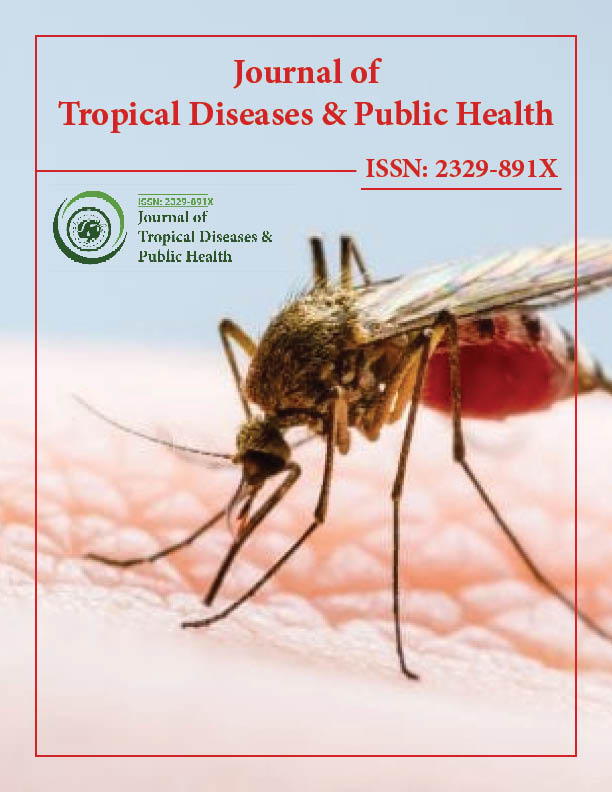
Journal Flyer
Open Access Journals
- Agri and Aquaculture
- Biochemistry
- Bioinformatics & Systems Biology
- Business & Management
- Chemistry
- Clinical Sciences
- Engineering
- Food & Nutrition
- General Science
- Genetics & Molecular Biology
- Immunology & Microbiology
- Medical Sciences
- Neuroscience & Psychology
- Nursing & Health Care
- Pharmaceutical Sciences
Perspective - (2026) Volume 15, Issue 2
Global Patterns and Preventive Measures for Managing Infectious Diseases in Modern Communities
Sofia Renal Castillo*Received: 19-May-2026, Manuscript No. JTD-26-32189; Editor assigned: 21-May-2026, Pre QC No. JTD-26-32189; Reviewed: 04-Jun-2026, QC No. JTD-26-32189; Revised: 11-Jun-2026, Manuscript No. JTD-26-32189; Published: 19-Jun-2026, DOI: 10.35241/2329-891X.26.15.512
Description
Infectious diseases remain a major concern for public health systems because they can spread among individuals, communities, and populations across different regions. These diseases are caused by microorganisms such as bacteria, viruses, fungi, and parasites that enter the human body and interfere with normal biological functions. Common examples include influenza, tuberculosis, malaria, dengue, hepatitis, human immunodeficiency virus infection, and many other illnesses that affect millions of people each year.
The spread of infectious diseases is influenced by multiple factors, including environmental conditions, population movement, sanitation practices, healthcare availability, and personal behaviors. Some infections are transmitted through direct contact between individuals, while others spread through contaminated food, water, air droplets, insects, or animal sources. Understanding these transmission methods helps healthcare professionals design suitable prevention and control activities.
Respiratory infections represent one of the largest groups of infectious diseases affecting communities. Diseases caused by viruses and bacteria can spread through coughing, sneezing, or close contact with infected individuals. Influenza and other respiratory infections may produce symptoms such as fever, cough, fatigue, and breathing difficulties. Public awareness about hygiene practices, vaccination, and early medical care can reduce the spread of these illnesses.
Viral infections such as hepatitis and human immunodeficiency virus infection require long-term public health attention. These infections may affect immune function, liver health, or other body systems. Prevention programs that include health education, testing services, and appropriate medical care help reduce transmission and improve health outcomes.
Antimicrobial resistance has become a significant challenge in infectious disease management. Some bacteria and other microorganisms can survive exposure to medicines that previously controlled them. This issue may result from inappropriate medicine use, incomplete treatment courses, or excessive exposure to antimicrobial agents. Researchers and healthcare providers continue studying methods to maintain effective treatments and reduce resistance development.
Vaccination has played an important role in reducing the impact of several infectious diseases. Vaccines prepare the immune system to recognize and respond to specific pathogens. Immunization programs have helped control diseases such as measles, polio, and several other infections. Expanding access to vaccines and providing accurate health information can increase community protection.
Disease surveillance systems help health organizations identify infection patterns and respond to outbreaks. Monitoring cases, studying transmission routes, and analyzing health information allow professionals to make informed decisions. Early detection of unusual disease activity supports faster public health responses and reduces the possibility of widespread transmission.
Research and innovation continue to improve infectious disease management. Scientists study pathogen behavior, diagnostic methods, treatment options, and prevention approaches to address changing health challenges. Cooperation among laboratories, healthcare centers, and public health organizations supports the development of improved disease control programs.
Community involvement remains essential in reducing infectious disease transmission. Individuals can contribute by practicing good hygiene, following vaccination recommendations, seeking medical advice when symptoms appear, and supporting health awareness activities. Healthcare workers also play an important role by providing education, diagnosis, and treatment services.
Conclusion
Infectious diseases continue to influence global health due to their ability to spread rapidly and affect vulnerable populations. The relationship between humans, animals, and the environment influences the emergence of new infections. Monitoring animal health, environmental changes, and human disease patterns provides valuable information for preventing future outbreaks. Integrated approaches involving different scientific fields help address complex infectious disease concerns.Prevention, early diagnosis, effective treatment, vaccination, and community awareness are important components of disease control. Strong healthcare systems and continuous research support better management of infectious illnesses. Cooperation among individuals, healthcare professionals, researchers, and organizations is necessary to reduce the impact of infections and protect communities worldwide.
Citation: Castillo SR (2026). Global Patterns and Preventive Measures for Managing Infectious Diseases in Modern Communities. J Trop Dis. 15:512.
Copyright: © 2026 Castillo SR. This is an open-access article distributed under the terms of the Creative Commons Attribution License, which permits unrestricted use, distribution and reproduction in any medium, provided the original author and source are credited.