
Indexed In
- Open J Gate
- Academic Keys
- ResearchBible
- China National Knowledge Infrastructure (CNKI)
- Centre for Agriculture and Biosciences International (CABI)
- RefSeek
- Hamdard University
- EBSCO A-Z
- OCLC- WorldCat
- CABI full text
- Publons
- Geneva Foundation for Medical Education and Research
- Google Scholar
Useful Links
Share This Page
Journal Flyer

Open Access Journals
- Agri and Aquaculture
- Biochemistry
- Bioinformatics & Systems Biology
- Business & Management
- Chemistry
- Clinical Sciences
- Engineering
- Food & Nutrition
- General Science
- Genetics & Molecular Biology
- Immunology & Microbiology
- Medical Sciences
- Neuroscience & Psychology
- Nursing & Health Care
- Pharmaceutical Sciences
Research Article - (2026) Volume 15, Issue 2
Factors Affecting Quality of Laboratory Services in Health Facilities at Eastern Ethiopia
Fitsum Abebe1*, Mahder Girma1, Woyesa Beyene1, Menberu Wubetie1, Ahmednur Abdi1, Yared Tekle2 and Dilnessa Fentie22School of Medicine, College of Medicine and Health Sciences, Dire Dawa University, Dire Dawa, Ethiopia
Received: 12-Dec-2024, Manuscript No. JTD-26-27769; Editor assigned: 17-Dec-2024, Pre QC No. JTD-26-27769 (PQ); Reviewed: 31-Dec-2024, QC No. JTD-26-27769; Revised: 07-Apr-2026, Manuscript No. JTD-26-27769 (R); Published: 14-Apr-2026, DOI: 10.35241/2329-891X.26.15.482
Abstract
In this study a total of 120 laboratory professionals were participated, 92 (76%) of participants were male, 60 (50%) of respondents were between 20-30 years old, 92 (76.7%) had first degree and 44 (36.7%) of respondents had 6-10 yrs work experience in the health facilities. 40 (33.3%) of participants reported they provide poor quality laboratory service. Multivariate logistic regression analysis showed that provision of poor quality laboratory services was significantly associated with poor communication with upper management (AOR=7.96, 95% CI=1.68, 37.66), providing interrupted diagnostic services (AOR=5.74, 95% CI=1.51, 21.81), high laboratory workload (AOR=6.34, 95% CI=1.43, 28.11) and inadequate supplies and reagents (AOR=5.59, 95% CI=1.88, 16.62). In conclusion, the major factors affecting provision of poor quality laboratory service were poor communication with upper management, providing interrupted diagnostic services, high laboratory workload and shortage of adequate supplies and reagents.
Keywords
Medical laboratory; Quality management system; Eastern Ethiopia; TQM; QAIntroduction
Medical laboratory services are essential in the diagnosis and assessment of the health of patients and play a significant role in determining clinical decisions and providing clinicians with a clue in the treatment and management of diseases. Their services encompass arrangements for requisition, patient preparation and patient identification, collection of samples, transportation, storage, processing and examination of clinical samples, together with subsequent result validation, interpretation, reporting and advice [1].
Laboratory quality can be defined as accuracy, reliability and timeliness of reported test results. The laboratory results must be as accurate as possible, all aspects of the laboratory operations must be reliable, and reporting must be timely in order to be useful in a clinical or public health setting [1].
In developed countries, the vast majority of medical decisions are based on medical laboratory tests. The World Health Organization (WHO) recognizes quality laboratory services as the key to improve global health and reaching millennium development goals [2].
Quality systems remain as the fundamental need for today’s laboratory patient management. In public health medical laboratories, the provision of medical health care requires adequate access to satisfactory services from the laboratory [3]. Total Quality Management (TQM) practices in the laboratories, therefore, would generate relevant, reliable and cost-effective results [4]. Quality systems remain the need of the hour for today’s laboratory patient management and its key component is in its efficiency and accuracy in analyzing, reporting and documentation of results.
A poor Quality Assurance (QA) program in health laboratories incorporates all the factors that may influence the generation of reliable test results [5]. To reduce those errors, WHO continues to provide technical support to strengthen Internal Quality Control (IQC), External Quality Assurance (EQA), and its integration into health laboratories at various levels of the health care system [6].
Quality laboratory service is essential for a wide range of diagnosis, treatment and monitoring in health care delivery. But due to lack of awareness on the laboratory service role in many developing countries, laboratory services have shortage of resources, poor management system [7,8], lack of quality assurance program, shortages of equipment, shortage of training and poor staff motivation system [9]. In sub-Saharan Africa, the major challenge for delivering quality health service is the lack of reliability of medical laboratory services.
In Ethiopia, laboratory services are given little attention until recent years and there is inefficient utilization of the availability of human material resources. As a result, the accessibility of quality laboratory test results and the quality of available services remains a serious challenge. In addition to this, there is a complaint of a patient and health care providers on the quality of the laboratory test results.
In addition to the existence of laboratory quality related problems mentioned above, the magnitude is unknown that the coverage and performance of medical laboratories of health facilities in Eastern Ethiopia have not been reported so far. Therefore, the aim of this study was to assess factors affecting quality of laboratory services in health facilities at Eastern Ethiopia.
Materials and Methods
Study setting
The study was conducted in Dire Dawa administrative city and Harar city from April 1 to May 30/2/2023. Dire Dawa is located in the Eastern part of the country enclosed by Ethiopian Somalia and the State of Oromia. It is 515 km from Addis Ababa and 47 km from Harar town. According to 2019/2020 population projection by Central Statistical Agency of Ethiopia (CSA), the administration comprises total population of 506,609; of which 313,000 (63%) people are urban dwellers and the rest 180,000 (37%) live in rural areas. There are 2 public hospitals, 15 health centers, 26 private clinics, and 4 private hospitals.
Harar city is located in Harari people national regional state, Ethiopia. It is located in the Eastern part of Ethiopia, 510 km from Addis Ababa. With a total area of 343.2 square kilometers. According to the 2007 national population census the total population of the region was 183,344 of which 99,321 (54.2%) were urban and 84,023 (45.8%) were rural residents. About 62% of the population resides in the urban area including Harar. There are five hospitals in the Harari region of which four is governmental (2 public and 2 military) and the other one is private hospital. There are also 8 public health centers, 32 health posts, 10 not-for-profit private clinics, and 15 private clinics for profit in the Harari region.
Study design and period
A facility based cross-sectional study design was conducted from April 1 to May 30/2023.
Study population
The study population was randomly selected laboratory professionals and fulfilling the inclusion criteria.
Eligibility criteria
The inclusion included all laboratory professionals who have more than six months work experience. Laboratory professionals who are at approbation period, those who are giving volunteer free service was excluded from the study.
Sample size determination and sampling technique
All medical laboratory professionals who fulfilled the inclusion criteria from health facilities at Diredawa and Harar town was included in this study and the sample size of the study participant was 120.
The qualitative data was collected by using key informant interview; unstructured interview guide questionnaire. The sample size was determined based on information saturation.
Data collection tools and procedures
Quantitative part structured questionnaire and observation check list was used for data collection. Interview was applied in order to collect the data from medical laboratory professionals. It was categorized into three parts: Socio-demographic part, laboratory management activity, and quality assurance practices of laboratory associated with quality laboratory service. The data was collected by trained data collectors. Principal investigator was involved in overall controlling activities of data collections and assisting data collectors during the process of data collection. The qualitative data was collected from purposely selected health professionals of health facility and collected by using key informant interview, unstructured interview guide questionnaire. Data was gathered from health professionals of six hospitals and six health centers and the interviewees was physician, health officers and health facility administrator based on information saturation.
Data quality control
Data collectors and supervisors was trained for one day on data collection tools and methods. The questionnaire was translated into the local languages; i.e., Afan Oromo, Somali, Harari and Amharic for data collection and then translated back into English. Five percent of the questionnaires was pre-tested one week before the actual data collection at Haramaya Hospital, and necessary modifications was considered accordingly.
Results
Socio-demographic characteristics of participants
In this study a total of 120 laboratory professionals were participated from 76 public and 44 private health facilities in Eastern Ethiopia. 92 (76.7%) of participants were male. 60 (50%) of respondents were between 20-30 years old. 92 (76.7%) had first degree and 44 (36.7%) of respondents had 6-10 yrs work experience in the health facilities (Table 1).
| Variable | Category | Frequency (n=120) | Percentage (%) |
| Age group | 20-30 | 60 | 50 |
| 31-40 | 52 | 43.3 | |
| >40 | 8 | 6.7 | |
| Gender | Male | 92 | 76.7 |
| Female | 28 | 23.3 | |
| Working organization | Public | 76 | 63.3 |
| Private | 44 | 36.7 | |
| Educational level | Diploma | 28 | 23.3 |
| First Degree | 92 | 76.7 | |
| Work experience | 1-2 years | 36 | 30 |
| 3-5 years | 20 | 16.7 | |
| 6-10 | 44 | 36.7 | |
| >10 years | 20 | 16.7 | |
| Responsibility | Staff | 60 | 50 |
| Safety officer | 8 | 6.7 | |
| Quality officer | 32 | 26.7 | |
| Laboratory head | 20 | 16.7 | |
| Laboratory unit | General laboratory | 80 | 66.7 |
| Clinical chemistry | 8 | 6.7 | |
| Hematology | 8 | 6.7 | |
| Parasitology | 8 | 6.7 | |
| Microbiology | 12 | 10 | |
| Immunology/Serology | 4 | 3.3 |
Table 1: Socio-demographic characteristics of laboratory professionals in health facilities at Eastern Ethiopia, 2023.
Laboratory quality management activities
In this study 88 (73.3) of the laboratory professionals reported high laboratory workload, 100 (83.3%) of respondents were not satisfied with their salary and 40 (33.3) of respondents did not have communication with upper management. 48 (40%) of the laboratory professionals did not attend any task specific training and 68 (56.7%) of respondents did not get opportunity of continuing education program and 97 (80.8%) respondents indicated that there was no system for staff recognition (Table 2).
| Variable | Category | Frequency (n=120) | Percentage (%) |
| Knowledge about laboratory quality system essentials | Yes | 100 | 83.3 |
| No | 20 | 16.7 | |
| Quality manual | Yes | 92 | 76.7 |
| No | 28 | 23.3 | |
| Communication among laboratory | Yes | 88 | 73.3 |
| No | 32 | 26.7 | |
| Communicate with physicians | Yes | 76 | 63.3 |
| No | 44 | 36.7 | |
| Communication with upper management | Yes | 80 | 66.7 |
| No | 40 | 33.3 | |
| Satisfaction with salary | Yes | 20 | 16.7 |
| No | 100 | 83.3 | |
| System for employee’s recognition | Yes | 23 | 19.2 |
| No | 97 | 80.8 | |
| Opportunity of attending continuing education | Yes | 52 | 43.3 |
| No | 68 | 56.7 | |
| Attending laboratory refreshment training | Yes | 72 | 60 |
| No | 48 | 40 | |
| Written Job descriptions | Yes | 80 | 66.7 |
| No | 40 | 33.3 | |
| Adequate supplies and reagents | Yes | 56 | 46.7 |
| No | 64 | 53.3 | |
| Adequate and quality equipment in laboratory | Yes | 60 | 50 |
| No | 60 | 50 | |
| Adequate number of staffs | Yes | 44 | 36.7 |
| No | 76 | 63.3 | |
| Laboratory workload | High | 88 | 73.3 |
| Fair | 32 | 26.7 |
Table 2: Laboratory quality management activities reported by laboratory professionals working in Eastern Ethiopia, 2023.
Quality assurance practices and provision of quality laboratory service
According to this study from all participants 80 (66.7%) of the participants believed that they provide quality laboratory service and 40 (33.3%) of them mentioned that they didn’t not provide quality laboratory service according to the standard as shown in Table 3.
Findings from this study revealed that 56 (46.7%) of the respondents didn’t providing uninterrupted diagnostic services, 32 (32%) of the respondents reported there was inadequate and quality supplies and reagents and 44 (36.7%) laboratory professionals did not perform equipment preventive maintenance as per instruction. Of the respondents only 20 (16.7%) of the laboratory professionals verify laboratory results.
Result of binary and multivariate regression
The impacts of selected independent variables on quality of laboratory service were investigated using bi-variant logistic regression. Variables with p-values<0.2 in bi-variant analyses, were included in the multivariate logistic regression to determine the presence of associations between dependent variable provision of quality laboratory service and the independent variables
Multivariate logistic regression analysis showed that provision of quality laboratory services was significantly associated with communication with upper management (AOR=7.96, 95% CI=1.68, 37.66), providing uninterrupted diagnostic services (AOR=5.74, 95% CI=1.51, 21.81), laboratory workload (AOR=6.34, 95% CI=1.43,28.11) and adequate and quality supplies and reagents (AOR=5.59, 95% CI=1.88, 16.62) (Table 3).
| Variable | Category | Provision quality of laboratory services | COR (95% CI) | AOR (95% CI) | |
| Yes | No | ||||
| Communication with upper management | Yes | 64 | 16 | 1 | - |
| No | 16 | 24 | 6.00 (2.599, 13.854) | 7.960 (1.682, 37.660)* | |
| Internal quality control activity | Yes | 64 | 20 | 1 | |
| No | 16 | 20 | 4.00 (1.749, 9.148) | 1.076 (.330, 3.504) | |
| Laboratory result verification | Yes | 72 | 28 | 1 | - |
| No | 8 | 12 | 3.857 (1.425, 10.437) | 1.233 (.051, 29.522) | |
| Satisfaction with salary | Yes | 17 | 3 | 1 | - |
| No | 63 | 37 | 3.328 (.914, 12.124) | 2.463 (.636, 9.533) | |
| System for employee’s recognition | Yes | 17 | 6 | 1 | - |
| No | 63 | 34 | 2.786 (1.275, 6.088) | 2.682 (.839, 8.577) | |
| Reporting laboratory result within stetted TAT | Yes | 60 | 20 | 1 | |
| No | 20 | 20 | 3.000 (1.348, 6.678) | 3.220 (.990, 10.475) | |
| Providing uninterrupted diagnostic services | Yes | 52 | 12 | 1 | - |
| No | 28 | 28 | 4.333 (1.913, 9.815) | 5.740 (1.511, 21.813)* | |
| Performing equipment calibration and maintenance | Yes | 56 | 20 | 1 | - |
| No | 24 | 20 | 2.333 (1.067, 5.104) | .572 (.167, 1.963) | |
| Adherence to standard operating procedures | Yes | 65 | 27 | 1 | - |
| No | 15 | 13 | 2.086 (.876, 4.969) | .338 (.068, 1.676) | |
| Laboratory workload | High | 68 | 20 | 5.667 (2.369, 13.556) | 6.347 (1.433, 28.115)* |
| Fair | 12 | 20 | 1 | - | |
| Attending laboratory refreshment training | Yes | 56 | 16 | 1 | - |
| No | 24 | 24 | 3.500 (1.584, 7.735) | 4.963 (1.196, 20.601) | |
| Adequate and quality supplies and reagents | Yes | 48 | 8 | 1 | - |
| No | 32 | 32 | 6.000 (2.453, 14.678) | 5.592 (1.881, 16.623)* | |
| Adequate and quality equipment in laboratory | Yes | 44 | 16 | 1 | - |
| No | 36 | 24 | 1.833 (.848, 3.963) | .436 (.102, 1.867) | |
Table 3: Logistic regression analysis showing the association between provision of quality laboratory service and independent variables in health facilities at Eastern Ethiopia, 2023.
Result of the key informant interview
To fortify the quantitative study part data were gathered from eight health facilities. Interviews were open-ended in nature and primarily focused on quality of laboratory service and factors affecting quality of laboratory service. The interviewees were Laboratory head, physician, health officers and health facility manager and they were two females and ten males, had 3-16 years of work experiences, had 26-48 years of age range.
Quality of laboratory service
More than half of the participants mentioned that their health facility laboratory provides quality service and around one third of the participants mentioned that their health facility laboratory did not provide quality laboratory service (Figure 1).
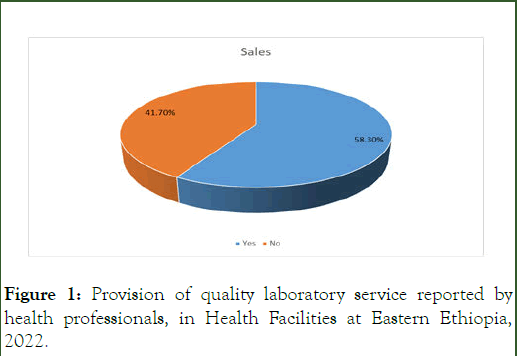
Figure 1: Provision of quality laboratory service reported by health professionals, in Health Facilities at Eastern Ethiopia, 2022.
Factors affecting quality of laboratory service
Most of the participants perceived that lack of reagents and supplies had always been a major problem that affect laboratory service provision and additionally, majority of the participants perceived that poor communication system between laboratories and other health professionals and upper management, high laboratory workload and equipment failure Figure 2.
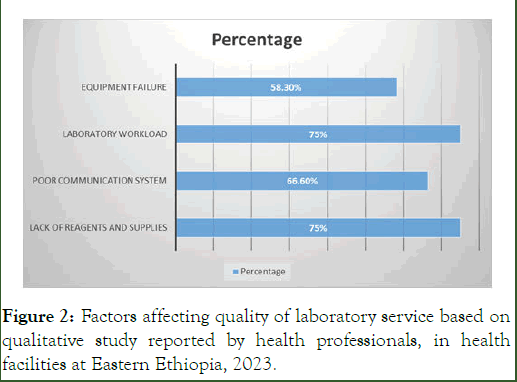
Figure 2: Factors affecting quality of laboratory service based on qualitative study reported by health professionals, in health facilities at Eastern Ethiopia, 2023
Majority of the participants 10 (66.6%) mentioned that there is poor communication among laboratory professionals, physicians and upper management and this affects the quality of laboratory service.
Discussion
According to this study 40 (33.3%) laboratory professionals believed that their laboratories did not provide quality of laboratory services as per the standards. This finding is slightly lower than the studies conducted in Addis Ababa health facilities by Eyob A, et al. who reported that 35.2% of laboratory professionals believed that their laboratories did not provide quality laboratory results. Our study finding is also much lower than a study conducted in Gondar, in which 61.2% of the participants reported that their laboratory did not provide quality laboratory service. The difference might be due to the experience of laboratory personnel, presence of sufficient laboratory materials and reagents, educational status, and attitude of the customers towards medical laboratory services. Additionally, the result of this qualitative study also shows that 4 (27%) of them mentioned that there is poor quality service in their institutions which is concordant with quantitative study.
Conclusion
Therefore, government and stakeholders should understand and address the factors affecting the provision quality laboratory service and they should work together for strengthening laboratory quality assurance by Continuous communication and managerial support, allocating sufficient budget and resources; providing quality and adequate supplies, reagents and equipment; considering appropriate allowance and motivating and recognizing the laboratory staff; and providing continuing professional development and training.
Ethical Considerations
The study was done in accordance with the Helsinki Declaration on Studies on Human Study Participants. Ethical clearance was obtained from the Institutional Review Board (IRB) at Dire Dawa University (protocol number DDU-IRB-2022-009). Before any data were collected, informed, voluntary, written, and signed consent was obtained from every study participant. Participants were told that no personal identifiers were used and that all information collected about them would be kept private and confidential by employing codes. This information was provided solely for research purposes.
Consent for Publications
Not applicable.
Data Sharing Statement
All the required data is available upon the request from the corresponding author.
Disclosure
The authors report no conflicts of interest for this work.Funding
This study was funded by Dire Dawa University. The funders had no role in study design, data collection and analysis, decision to publish, or preparation of the manuscript.
Author Contributions
Fitsum Abebe: Initiated the study and made major contributions to the study design and statistical analysis.
Mahder Girma: Conceived the study, undertook statistical analysis and drafted the manuscript.
Woyesa Beyene: Initiated the study, undertook statistical analysis and has major contribution in drafting the manuscript.
Dilnessa Fentie: Conceived the study, undertook statistical analysis and drafted the manuscript.
Menberu Wubetie: Conceived the study, undertook statistical analysis and drafted the manuscript.
Yared Tekle: Initiated the study, undertook statistical analysis and has major contribution in drafting the manuscript.
Ahmednur Abdi: Initiated the study, undertook statistical analysis and has major contribution in drafting the manuscript.
All authors contributed to the writing of the manuscript and approved the submitted version of the manuscript.
Acknowledgment
We would like to express our sincere gratitude to health facilities at Dire Dawa and Harar for working together to provide the data that was required for this investigation. We also thank each and every one of the study participants for their cooperation. We are grateful to Dire Dawa University's financial support for this research.
References
- Karunaratne WA. Rhinosporidiosis in man. 1964; 14–18.
- Arseculeratne SN. Recent advances in rhinosporidiosis and Rhinosporidium seeberi. Indian J Med Microbiol. 2002;20:119–131.
[Crossref] [Google Scholar] [PubMed]
- Nair AG, Ali MJ, Kaliki S, Naik MN. Rhinosporidiosis of the tarsal conjunctiva. Indian J Ophthalmol. 2015;63(5):462–463.
- Castelino AM, Rao SK, Biswas J, Gopal L, Madhavan HN, Kumar SK. Conjunctival rhinosporidiosis associated with scleral melting and staphyloma formation: diagnosis and management. Cornea. 2000;19(1):30–33.
[Crossref] [Google Scholar] [PubMed]
- Karthikeyan PA, Vijayasundaram S, Pulimoottil DT. A retrospective epidemiological study of rhinosporidiosis in a rural tertiary care centre in Pondicherry. J Clin Diagn Res. 2015;10(5):MC04.
[Crossref] [Google Scholar] [PubMed]
- Mithal C, Agarwal P, Mithal N. Ocular and adnexal rhinosporidiosis: the clinical profile and treatment outcomes in a tertiary eye care centre. Nepal J Ophthalmol. 2012;4(1):45–48.
[Crossref] [Google Scholar] [PubMed]
- Kaimbo Wa Kaimbo. Conjunctival rhinosporidiosis: a case report from a Congolese patient. Bull Soc Belge Ophtalmol. 2008;309:19–22.
[Google Scholar] [PubMed]
- John SS, Mohandas SG. Conjunctival oculosporidiosis with scleral thinning and staphyloma formation. Indian J Ophthalmol. 2005;53(4):272.
[Crossref] [Google Scholar] [PubMed]
- Costa EF, Pinto LM, Campos MA, Gomes TM, Silva GE. Partial regression of large anterior scleral staphyloma secondary to rhinosporidiosis after corneoscleral graft: a case report. BMC Ophthalmol. 2018;18:61.
[Crossref] [Google Scholar] [PubMed]
Citation: Abebe F, Girma M, Beyene W, Wubetie M, Abdi A, Tekle Y, et al. (2026) Factors Affecting Quality of Laboratory Services in Health Facilities at Eastern Ethiopia. J Trop Dis. 15:482.
Copyright: © 2026 Abebe F, et al. This is an open-access article distributed under the terms of the Creative Commons Attribution License, which permits unrestricted use, distribution, and reproduction in any medium, provided the original author and source are credited.