


Indexed In
- Open J Gate
- Genamics JournalSeek
- Academic Keys
- JournalTOCs
- CiteFactor
- Ulrich's Periodicals Directory
- Access to Global Online Research in Agriculture (AGORA)
- Electronic Journals Library
- Centre for Agriculture and Biosciences International (CABI)
- RefSeek
- Directory of Research Journal Indexing (DRJI)
- Hamdard University
- EBSCO A-Z
- OCLC- WorldCat
- Scholarsteer
- SWB online catalog
- Virtual Library of Biology (vifabio)
- Publons
- Geneva Foundation for Medical Education and Research
- Euro Pub
- Google Scholar
Useful Links
Share This Page
Journal Flyer
Open Access Journals
- Agri and Aquaculture
- Biochemistry
- Bioinformatics & Systems Biology
- Business & Management
- Chemistry
- Clinical Sciences
- Engineering
- Food & Nutrition
- General Science
- Genetics & Molecular Biology
- Immunology & Microbiology
- Medical Sciences
- Neuroscience & Psychology
- Nursing & Health Care
- Pharmaceutical Sciences
Research Article - (2025) Volume 15, Issue 3
Evaluation of Selected Management Options against Ear Rot (Fusarium graminearum) Disease of Maize (Zea mays L.) in Ari Zone, South Ethiopia Regional State
1Germplasm Health, Feed and Forage Development Program nternational Livestock Research Institute (ILRI), Ethiopian Country Office, Addis Ababa, Ethiopia
Received: 03-Oct-2024, Manuscript No. JPPM-24-27109; Editor assigned: 07-Oct-2024, Pre QC No. JPPM-24-27109 (PQ); Reviewed: 21-Oct-2024, QC No. JPPM-24-27109; Revised: 04-Sep-2025, Manuscript No. JPPM-24-27109 (R); Published: 11-Sep-2025, DOI: 10.35248/2157-7471.25.16.766
Abstract
Maize (Zea mays L.) is world’s third most important cereal food crop next to wheat and rice. The crop is affected by a number of diseases that reduce both the quality and quantity of production. Mycotoxin contamination of maize grain (Zea mays L.) is a global threat to safety both for human food and animal feed. So the study was conducted to investigate the effect of crop rotation and maize stock removal from fields on the incidence and severity of maize ear rot disease. The experiment was conducted done at Jinka Agriculture Research Center experimental field. During experiment maize variety BH 140 (susceptible variety) and Haricot bean (Hawassa dume) varieties were rotated in three ways as following in three years: Maize+haricot bean+maize, Haricotbean+haricot bean+maize and Maize+maize +maize. Spacing between plant and rows was 30 × 75 cm respectively for maize whereas for common bean 10 × 40 cm was used between plant and rows respectively. The results of independent T-test indicated that there is no significant effect of the management practices such as crop residue management and crop rotation on yield, severity and incidence of ear rot on maize in the second and third year of experimental period. But, there was significant effect of management practices and crop rotation on the disease severity in the first year of the experimental period at (p<.05). So to reduce the effect ear rot disease on maize production we have to remove the previous maize stalk from the field because it reduces the inoculum source for the disease development. But, additional research has to be work to confirm this research output in the studied area and foe developing sound base management strategies for ear rot disease of maize in the studied area.
Keywords
Maize; Mycotoxin; Crop residue management; Crop rotation; Haricot bean
Introduction
Maize (Zea mays L.) is world’s third most important cereal food crop next to wheat and rice. In sub-Saharan Africa, it is considered as the major food and income provider crop for more than 300 million households. The crop is affected by a number of diseases that reduce both the quality and quantity of production. Mycotoxin contamination of maize grain (Zea mays L.) is a global threat to safety both for human food and animal feed [1]. Mycotoxins are secondary metabolites produced by fungi, which may be toxic or have other debilitating effects on living organisms [2]. New regulations for the allowable mycotoxin limits in food and feed have been put in place in many countries. The primary causal organism of Fusarium ear rot in most maize-growing areas of Ethiopia is the pink ear rot caused by toxigenic fungus F. moniliforme=G. fujikuroi and red ear rot caused by F. graminearum=G. zeae [3]. This pathogen causes losses in grain yield and quality due to the contamination of grain by mycotoxins, primarily fumonisin B1 [4]. Maize is the major cereal crop for the people of Ethiopia; it grows in diverse ecology in the country but it is faced with major challenges including diseases. Among diseases, as identified by diagnostic survey of farmers’ fields at Ari zone, it is mainly affected by foliar diseases and corn diseases. The most common potential economic corn disease on maize is ear and kernel rot. Since there is no efficient chemical control in the field for managing of maize ear rot heavily depend on cultural practices like crop rotation and crop residue management. The main inoculums sources for red and pink ear rots infection in the field are crop residues of previous diseased crops; so that removal of maize stalk from field helps to reduce inoculums source for next season infection and subsequently decrease disease severity and also, rotation of maize with non-host crops like common bean can reduce inoculums build up in the field by through decomposition of residue as well as killing of the pathogen. Currently, the recommended measures for the control of kernel and ear rot of maize are the use of relative resistant or tolerant varieties, that is, the use of varieties with tight husk coverage, harvesting on time and proper storage, and good crop management.
Tillage to bury infected residue may also be helpful where erosion is not a problem, while crop rotation is also helpful because the disease tends to increase in continuous cropping and continuous use of fungicides. But significant yield losses still occur when the environmental conditions favors the growth of the disease. Efficient control of ear and kernel rot disease is achieved through the use of good crop management, varieties with tight husk coverage, harvesting on time and proper storage [5]. In Ari zone, the predominant maize cultivation system is mono cropping system. Hence, the lack of appropriate farming system and the absence of crop rotation/management practice in the zone increase the potential of the disease incident for ear rot. As a result, it becomes a major yield limiting factor in the zone. Therefore, introducing the available control measures to the farmer is vital to increase production and productivity of maize in the areas. So the study was conducted to investigate the effect of crop rotation and maize stock removal from fields on the incidence and severity of maize ear rot disease.
Materials and Methods
Description of the study site
The study was conducted at Jinka Agricultural Researcher Center (JARC) located 729 kms South West of Addis Ababa at E 36° 33’ 02.7” longitude and N 05° 46’ 52.0” latitude and at an altitude of 1383 m.a.s.l. Long term weather data revealed that the maximum and minimum monthly average temperature is 27.55 and 16.55°C, respectively while the mean annual rainfall of the area is 1274.67 mm. It is characterized by gentle to flat land features. The slope of the research field ranges from 0 to 5%. Kebede et al. classified the soil types of study site as Cambisols according to soil taxonomy and FAO/UNESCO. The majority of the fields have a very deep (>150 cm) soil depth. The soil reaction varies from strongly acidic to slightly acidic. The soil OM, total nitrogen and available P generally low. Exchangeable bases ranges from low to medium and the micronutrients found to fall in medium. The dominant soils of site are classified low base saturation. Cambisols generally make good agricultural land and are used intensively.
The experiment was conducted done in Jinka Agriculture Research Center experimental field. During experiment maize variety BH 140 (susceptible Variety) and Haricot bean (Hawassa dume) varieties were rotated in three ways as following.
•Maize+haricot bean+maize
•Haricot bean+haricot bean+maize
•Maize+maize+maize
For the experiment, plot having 3 m × 4 msize were used and replicated three times. Spacing between plant and rows was 30 × 75 cm respectively for maize whereas for common bean 10 × 40 cm was used between plant and rows respectively. For the first treatment plots maize stalk residue from the previous season were completely removed before planting for the next season while for the other treatment plots; maize residue was remaining on the plot during planting. While all recommended agronomic practices and plant population were maintained in each experimental plot [6]. From maize planted plots; entire two middle rows were used for ear rot disease assessment. Incidence and severity of ear rot were recorded at ear maturity. Severity and incidence of ear rot were calculated in scale and percentage of plant ear showing disease symptom respectively (Figure 1). Data on disease incidence, severity and yield were subjected to analysis by using SAS software.
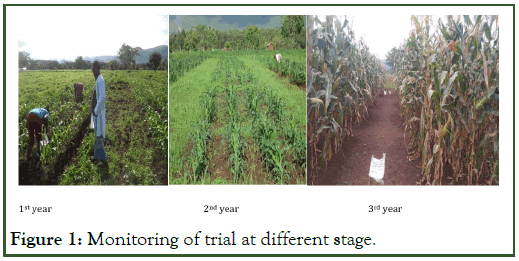
Figure 1: Monitoring of trial at different stage.
Result and Discussion
Analysis of independent T-test was conducted to examine whether the management practices such as crop residue management and crop rotation are significantly different for incidence and severity of maize ear rot. The results of analysis independent T-test for their grain yield, incidence and severity in the second and third year revealed that, there is no significant effect of the management practices such as crop residue management and crop rotation on yield, severity and incidence of ear rot on maize (Tables 1 and 2). But, there was significant effect of management practices and crop rotation on the disease severity in the first year of the experimental period at (p<.05) (Table 1). Therefore, we can conclude from the first year result that, the management practices namely crop residue management and crop rotation solely and in combinations, had effect on severity of maize ear rot disease [7,8].
So to reduce the effect ear rot disease on maize production we have to remove the previous maize stalk from the field because it reduces the inoculum source for the disease development (Table 1). Whereas the result of the second and third year activity revealed that there was no significant effect of the management practices on the yield, severity and incidence of maize ear rot (Tables 2 and 3), this finding is contradictory with the principle that crop residue removal and crop rotation had significant role in the management of many crop diseases [9,10].
| Variable | MA option | N | Mean | Std dev | Std err | Min | Max | Method | Variances | DF | t Value | Pr>|t| |
| DI | RNremoved | 6 | 29.27 | 8.9395 | 3.6495 | 20 | 42.86 | Pooled | Equal | 10 | -0.66 | 0.526 |
| DI | Rremoved | 6 | 33.252 | 11.85 | 4.8378 | 16.66 | 50 | |||||
| DI | Diff (1-2) | -3.982 | 10.496 | 6.06 | ||||||||
| DS | RNremoved | 6 | 3.1667 | 0.4082 | 0.1667 | 3 | 4 | Pooled | Equal not assumed | 10 | 1 | 0.3409 |
| DS | Rremoved | 6 | 3 | 0 | 0 | 3 | 3 | |||||
| DS | Diff (1-2) | 0.1667 | 0.2887 | 0.1667 | ||||||||
| Yldkgpt | RNremoved | 6 | 2.945 | 0.7225 | 0.295 | 2.1 | 4.14 | Pooled | Equal | 10 | -0.26 | 0.7966 |
| Yldkgpt | Rremoved | 6 | 3.0933 | 1.1671 | 0.4765 | 1.77 | 4.68 | |||||
| Yldkgpt | Diff (1-2) | -0.148 | 0.9706 | 0.5604 | ||||||||
| Equality of variances | ||||||||||||
| Variable | Method | Num DF | Den DF | F value | Pr>F | |||||||
| DI | Folded F | 5 | 5 | 1.76 | 0.5511 | |||||||
| DS | Folded F | 5 | 5 | Infty | <.0001 | |||||||
| Yldkgpt | Folded F | 5 | 5 | 2.61 | 0.316 | |||||||
Table 1: Analysis of the independent T-test of means of crop residue management.
| Variable | MA option |
N | Mean | Std dev | Std err | Min | Max | Method | Variances | DF | t Value | Pr>|t| |
| DI | RNremove | 3 | 68.333 | 12.583 | 7.2648 | 55 | 80 | Pooled | Equal | 4 | 0.67 | 0.5371 |
| DI | Rremoved | 3 | 60 | 17.321 | 10 | 40 | 70 | |||||
| DI | Diff (1-2) | 8.3333 | 15.138 | 12.36 | ||||||||
| DS | RNremove | 3 | 4.9967 | 0.8844 | 0.5106 | 4.33 | 6 | Pooled | Equal | 4 | 0.38 | 0.724 |
| DS | Rremoved | 3 | 4.7733 | 0.5095 | 0.2942 | 4.33 | 5.33 | |||||
| DS | Diff (1-2) | 0.2233 | 0.7218 | 0.5893 | ||||||||
| Yldkgpt | RNremove | 3 | 1.2033 | 0.405 | 0.2338 | 0.86 | 1.65 | Pooled | Equal | 4 | 0.04 | 0.9687 |
| Yldkgpt | Rremoved | 3 | 1.1833 | 0.7251 | 0.4187 | 0.45 | 1.9 | |||||
| Yldkgpt | Diff (1-2) | 0.02 | 0.5873 | 0.4795 | ||||||||
| Equality of variances | ||||||||||||
| Variable | Method | Num DF | Den DF | F Value | Pr>F | |||||||
| DI | Folded F | 2 | 2 | 1.89 | 0.6909 | |||||||
| DS | Folded F | 2 | 2 | 3.01 | 0.4984 | |||||||
| Yldkgpt | Folded F | 2 | 2 | 3.21 | 0.4756 | |||||||
Table 2: Analysis of the independent T-test of means of crop residue management.
| Variable | MA option | N | Mean | Std dev | Std err | Min | Max | Method | Variances | DF | t Value | Pr>|t| |
| DI | RNremove | 9 | 31.556 | 9.4184 | 3.1395 | 12.5 | 48.25 | Pooled | Equal | 16 | 0.89 | 0.3856 |
| DI | Rremoved | 9 | 28.087 | 6.8847 | 2.2949 | 18.5 | 36.08 | |||||
| DI | Diff (1-2) | 3.4689 | 8.2494 | 3.8888 | ||||||||
| DS | RNremove | 9 | 3.2222 | 1.2019 | 0.4006 | 2 | 5 | Pooled | Equal | 16 | 0.86 | 0.4011 |
| DS | Rremoved | 9 | 2.7778 | 0.9718 | 0.3239 | 2 | 4 | |||||
| DS | Diff (1-2) | 0.4444 | 1.0929 | 0.5152 | ||||||||
| Yldkgpt | RNremove | 9 | 4.3333 | 0.7071 | 0.2357 | 3 | 5 | Pooled | Equal | 16 | -1.37 | 0.189 |
| Yldkgpt | Rremoved | 9 | 4.7778 | 0.6667 | 0.2222 | 3 | 5 | |||||
| Yldkgpt | Diff (1-2) | -0.444 | 0.6872 | 0.3239 | ||||||||
| Equality of variances | ||||||||||||
| Variable | Method | Num DF | Den DF | F Value | Pr>F | |||||||
| DI | Folded F | 8 | 8 | 1.87 | 0.394 | |||||||
| DS | Folded F | 8 | 8 | 1.53 | 0.5617 | |||||||
| Yldkgpt | Folded F | 8 | 8 | 1.13 | 0.8718 | |||||||
| Note: RNremoved: Stalk not removed, Rremoved: Stalk removed, Moption: Management option, Min: Minimum, Max: Maximum, DI: Disease Incidence, DS: Disease Severity, Yld: grain yield | ||||||||||||
Table 3: Analysis of theindependent T-test of means of crop residue management.
Conclusion
The results of independent T-test indicated that there is no significant effect of the management practices such as crop residue management and crop rotation on yield, severity and incidence of ear rot on maize in the second and third year of experimental period, But, there was significant effect of management practices and crop rotation on the disease severity in the first year of the experimental period at (p<.05). Therefore, we can conclude from the first year result that, the management practices namely crop residue management and crop rotation solely and in combinations, had effect on severity of maize ear rot disease. So to reduce the effect ear rot disease on maize production we have to remove the previous maize stalk from the field because it reduces the inoculum source for the disease development. But, additional research has to be work to confirm this research output in the studied area and foe developing sound base management strategies for ear rot disease of maize in the studied area.
Acknowledgment
The study was financed by the South Ethiopia Agricultural Research Institute. former Southern Agricultural Research Institute. We thank Jinka, Agricultural Research Center for hosting and provision of necessary services and facilities during field experiment.
References
- Assefa T, Tilahun T. Review of maize disease in Ethiopia. In: Proc of the first maize workshop of Ethiopia. 1993:45–51.
- Balazs E, Schepers JS. The mycotoxin threat to world safety. Int J Food Microbiol. 2007;119(1-2):1–2.
- Castegnaro M, McGregor D. Carcinogenic risk assessment of mycotoxins. Rev Med Vet. 1998;149:671–678.
- de Curtis F, de Cicco V, Haidukowsk M, Pascale M, Somma S, Moretti A. Occurrence of Fusarium ear rot and fumonisin contamination of maize in central Italy and effects of agrochemical treatments. Field Crops Res. 2011;123:161–169.
- Munkvold GP, Hellmich RL, Showers WB. Reduced Fusarium ear rot and symptomless infection in kernels of maize genetically engineered for European corn borer resistance. Phytopathology. 1997;87:1071–1077.
- Parsons MW, Munkvold GP. Effects of planting date and environmental factors on Fusarium ear rot symptoms and fumonisin B1 accumulation in maize grown in six North American locations. Plant Pathol. 2012.
- Yesuf E, Mitiku M. Assessment of important plant diseases of major crops (Sorghum, Maize, Common bean, Coffee, Mungbean, Cowpea) in South Omo and Segen Peoples Zone of Ethiopia. PSCI Publ. 2014;8(2):91–94.
- Gashawbeza A, Abiy F. Occurrence of a new leaf mining and fruit boring moth of tomato, Tuta absoluta (Meyrick) (Lepidoptera: Gelechiidae) in Ethiopia. Pest Management J Ethiopia. 2013;16:57â??61.
- Gomez KA, Gomez AA. Statistical Procedures for Agricultural Research. 2nd ed. New York: John Wiley & Sons. 1984.
- Gontijo PC, Picanço MC, Pereira EJ, Martins JC, Chediak M, Guedes RN. Spatial and temporal variation in the control failure likelihood of the tomato leaf miner, Tuta absoluta. Ann Appl Biol. 2013;162(1):50â??59.
Citation: Mitiku M, Eshete Y (2025) Evaluation of Selected Management Options against Ear Rot (Fusarium graminearum) Disease of Maize (Zea mays L.) in Ari Zone, South Ethiopia Regional State. J Plant Pathol Microbiol. 16:766.
Copyright: © 2025 Mitiku M, et al. This is an open-access article distributed under the terms of the Creative Commons Attribution License, which permits unrestricted use, distribution, and reproduction in any medium, provided the original author and source are credited.