


Indexed In
- Open J Gate
- Academic Keys
- ResearchBible
- China National Knowledge Infrastructure (CNKI)
- Centre for Agriculture and Biosciences International (CABI)
- RefSeek
- Hamdard University
- EBSCO A-Z
- OCLC- WorldCat
- CABI full text
- Publons
- Geneva Foundation for Medical Education and Research
- Google Scholar
Useful Links
Share This Page
Journal Flyer
Open Access Journals
- Agri and Aquaculture
- Biochemistry
- Bioinformatics & Systems Biology
- Business & Management
- Chemistry
- Clinical Sciences
- Engineering
- Food & Nutrition
- General Science
- Genetics & Molecular Biology
- Immunology & Microbiology
- Medical Sciences
- Neuroscience & Psychology
- Nursing & Health Care
- Pharmaceutical Sciences
Short Communication - (2026) Volume 15, Issue 1
Epidemiological Patterns and Clinical Understanding of Yellow Fever in Endemic Regions
Nadia El-Sayed*Received: 10-Feb-2026, Manuscript No. JTD-26-31381; Editor assigned: 12-Feb-2026, Pre QC No. JTD-26-31381; Reviewed: 26-Feb-2026, QC No. JTD-26-31381; Revised: 05-Mar-2026, Manuscript No. JTD-26-31381; Published: 10-Mar-2026, DOI: 10.35241/2329-891X.26.15.510
Description
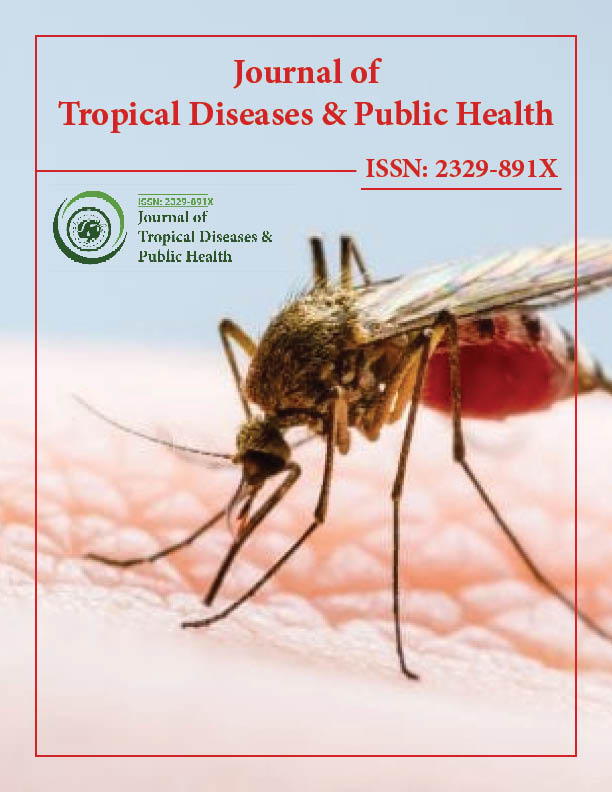
Yellow fever is an acute viral illness transmitted primarily through infected mosquitoes, particularly species belonging to the Aedes and Haemagogus groups. It is caused by a virus from the flaviviridae family and remains an important public health concern in certain tropical and subtropical regions. The disease is known for its potential to cause severe illness ranging from mild febrile symptoms to life-threatening organ involvement. Its presence is most commonly reported in parts of Africa and South America, where environmental conditions support mosquito breeding and viral transmission.
The transmission cycle of yellow fever involves both sylvatic and urban environments. In forested areas, the virus circulates between mosquitoes and non-human primates, which serve as natural hosts. Humans may become infected when they enter these environments and are bitten by infected mosquitoes. In urban settings, transmission occurs when infected mosquitoes bite humans and then spread the virus within densely populated communities. This dual transmission pattern contributes to periodic outbreaks in regions where vaccination coverage is insufficient [1,2].
The clinical presentation of yellow fever varies widely. Many individuals experience mild symptoms such as fever, headache, muscle pain, nausea and fatigue. In more severe cases, the disease progresses to a toxic phase characterized by high fever, jaundice due to liver involvement, abdominal pain and bleeding tendencies. Organ dysfunction, particularly affecting the liver and kidneys, can occur in severe infections. The progression from mild illness to severe disease is not fully predictable, making early recognition and monitoring important in clinical care. After a mosquito bite introduces the virus into the body, it initially replicates in local tissues before spreading to lymph nodes and entering the bloodstream. This leads to systemic infection affecting multiple organs. The liver is particularly vulnerable, resulting in impaired function and accumulation of bilirubin, which causes the characteristic yellowing of the skin and eyes. The immune response plays a significant role in both controlling the infection and contributing to tissue damage in severe cases [2-6].
Diagnosis of yellow fever is based on clinical evaluation combined with laboratory testing. Blood tests can detect viral Ribonucleic acid (RNA) during early infection or identify antibodies produced by the immune system later in the disease course. Because symptoms overlap with other tropical infections such as malaria, dengue and leptospirosis, laboratory confirmation is essential for accurate diagnosis. Travel history and exposure to mosquito-prone areas are also considered during clinical assessment [7,8].
There is no specific antiviral treatment for yellow fever. Medical care focuses on supportive measures aimed at managing symptoms and maintaining organ function. This may include hydration, pain relief and monitoring of liver and kidney function. In severe cases, hospitalization is required to provide intensive supportive care. Early medical attention can improve outcomes, especially in patients showing signs of organ involvement. Prevention remains the most effective approach to controlling yellow fever. Vaccination provides long-lasting protection and is widely used in endemic regions as part of public health programs. A single dose of the vaccine is considered sufficient for long-term immunity in most individuals. Vaccination campaigns have significantly reduced the number of cases in many areas, although gaps in coverage still allow outbreaks to occur [9,10].
Conclusion
Yellow fever is a mosquito-borne viral disease with varying clinical severity and significant public health implications in affected regions. Its transmission depends on complex interactions between mosquitoes, humans and environmental conditions. Research continues into improving diagnostic methods, vaccine distribution strategies and vector control approaches. Understanding the interaction between environmental changes and disease transmission remains an important area of study. Strengthening surveillance systems and improving access to vaccination are key components of global efforts to reduce the burden of yellow fever. Prevention through vaccination and vector control remains the most effective strategy for reducing disease impact. Continued surveillance, education and coordinated public health actions are essential for managing and limiting future outbreaks.
References
- Pierson TC, Diamond MS. The continued threat of emerging flaviviruses. Nat Microbiol. 2020;5(6):796-812.
[Google Scholar] [Cross ref] [Pub Med]
- Fishburn AT, Pham OH, Kenaston MW, Beesabathuni NS, Shah PS. Let’s get physical: flavivirus-host protein–protein interactions in replication and pathogenesis. Front Microbiol. 2022;13:847588.
[Google Scholar] [Cross ref] [Pub Med]
- Anwar MN, Akhtar R, Abid M, Khan SA, Rehman ZU, Tayyub M, et al. The interactions of flaviviruses with cellular receptors: Implications for virus entry. Virology. 2022;568:77-85.
[Google Scholar] [Cross ref] [Pub Med]
- Pan Y, Cai W, Cheng A, Wang M, Yin Z, Jia R. Flaviviruses: innate immunity, inflammasome activation, inflammatory cell death and cytokines. Front Immunol. 2022;13:829433.
[Google Scholar] [Cross ref] [Pub Med]
- Lopes RL, Pinto JR, Silva GB, Santos AK, Souza MT, Daher ED. Kidney involvement in yellow fever: a review. Rev Inst Med Trop Sao Paulo. 2019;61:35.
[Google Scholar] [Cross ref] [Pub Med]
- Monath TP, Vasconcelos PF. Yellow fever. J Clin Virol. 2015;64:160-73.
[Google Scholar] [Cross ref] [Pub Med]
- Collins ND, Barrett AD. Live attenuated yellow fever 17D vaccine: a legacy vaccine still controlling outbreaks in modern day. Curr Infect Dis Rep. 2017;19(3):14.
[Google Scholar] [Cross ref] [Pub Med]
- Gianchecchi E, Cianchi V, Torelli A, Montomoli E. Yellow fever: Origin, epidemiology, preventive strategies and future prospects. Vaccines. 2022;10(3):372.
[Google Scholar] [Cross ref] [Pub Med]
- Zimmerman O, Holmes AC, Kafai NM, Adams LJ, Diamond MS. Entry receptors—the gateway to alphavirus infection. J Clin Invest. 2023;133(2):24-35.
[Google Scholar] [Cross ref] [Pub Med]
- Hastings AK, Yockey LJ, Jagger BW, Hwang J, Uraki R, Gaitsch HF, et al. TAM receptors are not required for Zika virus infection in mice. Cell Rep. 2017;19(3):558-568.
[Google Scholar] [Cross ref] [Pub Med]
Citation: El-Sayed N (2026) Epidemiological Patterns and Clinical Understanding of Yellow Fever in Endemic Regions. J Trop Dis.15:510.
Copyright: © 2026 El-Sayed N. This is an open-access article distributed under the terms of the Creative Commons Attribution License, which permits unrestricted use, distribution and reproduction in any medium, provided the original author and source are credited.