
Indexed In
- Open J Gate
- Genamics JournalSeek
- Academic Keys
- JournalTOCs
- RefSeek
- Hamdard University
- EBSCO A-Z
- SWB online catalog
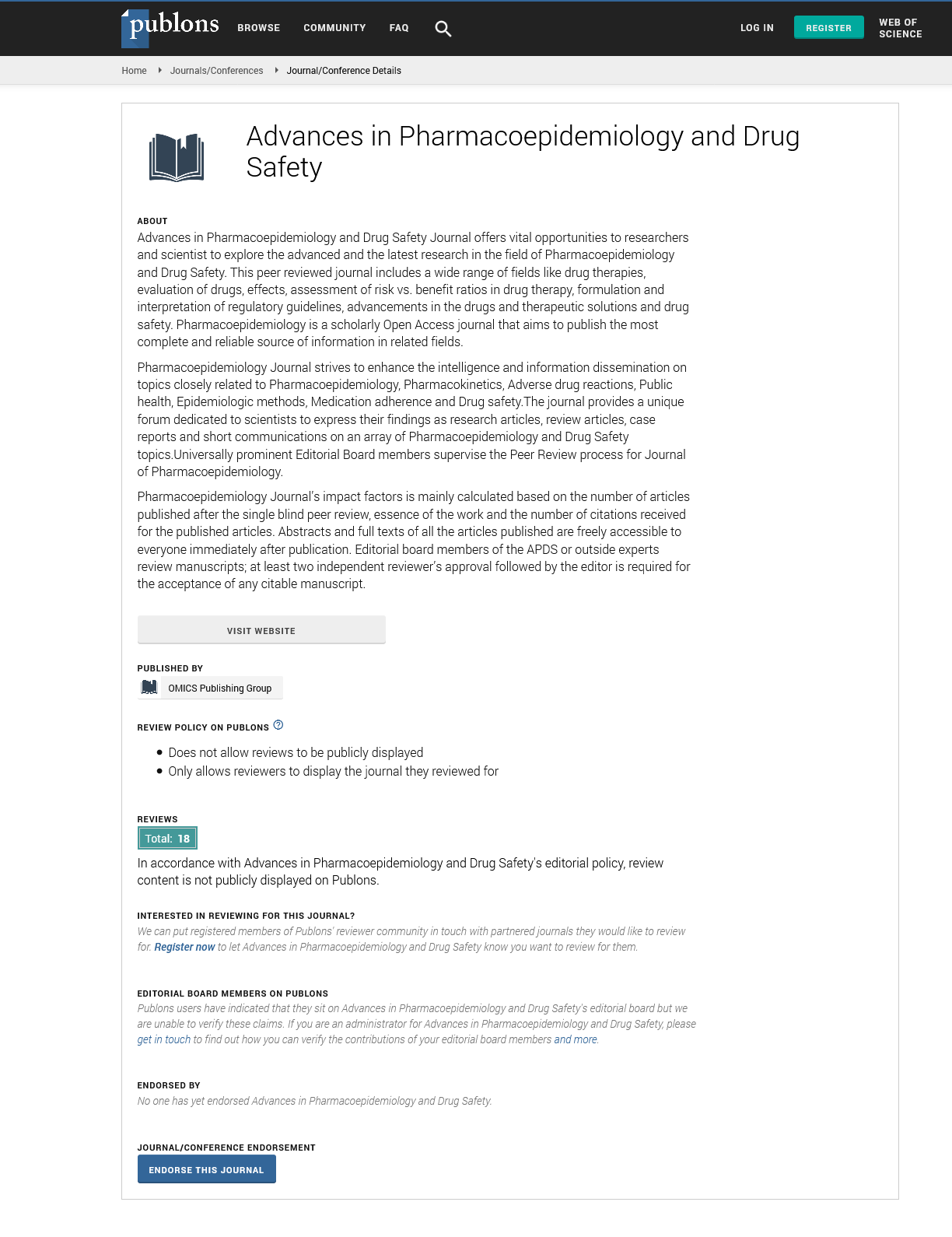
- Publons
- Geneva Foundation for Medical Education and Research
- Euro Pub
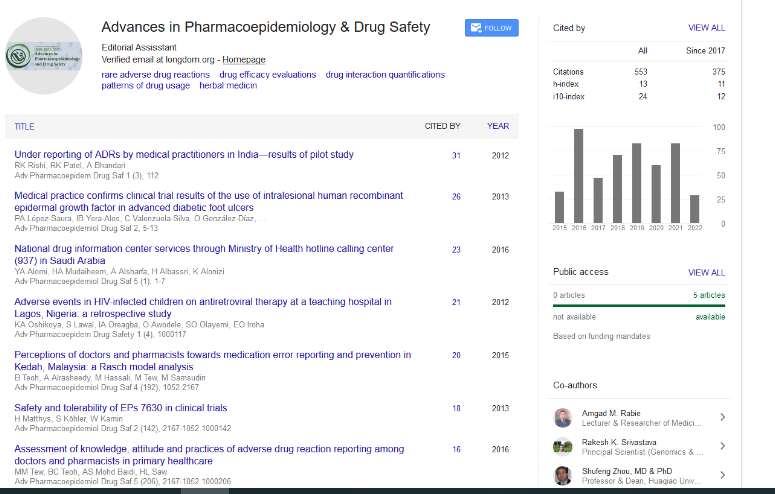
- Google Scholar
Useful Links
Share This Page
Journal Flyer

Open Access Journals
- Agri and Aquaculture
- Biochemistry
- Bioinformatics & Systems Biology
- Business & Management
- Chemistry
- Clinical Sciences
- Engineering
- Food & Nutrition
- General Science
- Genetics & Molecular Biology
- Immunology & Microbiology
- Medical Sciences
- Neuroscience & Psychology
- Nursing & Health Care
- Pharmaceutical Sciences
Commentry - (2025) Volume 14, Issue 4
Electronic Health Records: Improving Clinical Decision-Making and Patient Safety Through Digital Healthcare Systems
Katherine BrooksfieldReceived: 19-Nov-2025 , Manuscript No. PDS-26-32318; Editor assigned: 21-Nov-2025 , Pre QC No. PDS-26-32318; Reviewed: 05-Dec-2025 , QC No. PDS-26-32318; Revised: 12-Dec-2025 , Manuscript No. PDS-26-32318; Published: 18-Dec-2025 , DOI: 10.35841/2167-1052.25.14.415
Abstract
Description
Electronic Health Records (EHRs) have become an essential component of modern healthcare by replacing traditional paperbased medical records with comprehensive digital systems. These records provide healthcare professionals with organized access to patient information, supporting informed clinical decisionmaking, improved communication, and greater continuity of care. As healthcare organizations continue to adopt digital technologies, Electronic Health Records have contributed to more efficient management of medical information while supporting patient safety, healthcare quality, and clinical research.
An Electronic Health Record is a secure digital collection of a patient's medical information that is maintained over time by authorized healthcare providers. The record typically includes demographic details, medical history, diagnoses, allergies, laboratory results, imaging reports, vaccination records, medication history, surgical procedures, clinical notes, discharge summaries, and treatment plans. Unlike paper records that are often limited to a single healthcare facility, Electronic Health Records can support coordinated care across multiple healthcare settings when appropriate information-sharing systems are available.
One of the primary advantages of Electronic Health Records is the immediate availability of patient information during clinical encounters. Physicians, nurses, pharmacists, and other healthcare professionals can access relevant medical history without searching through paper files. Rapid availability of accurate information allows healthcare providers to make timely treatment decisions, particularly during medical emergencies where previous diagnoses, allergies, and current medications may significantly influence patient management.
Medication safety has improved considerably with the implementation of Electronic Health Records. Electronic prescribing systems reduce handwriting-related errors by generating standardized prescriptions that are easier to interpret. Many systems also include clinical decision support tools that alert prescribers to potential drug interactions, duplicate therapies, allergy risks, excessive doses, and contraindications. These automated safety checks assist healthcare professionals in preventing medication-related problems before prescriptions are finalized.
Clinical decision support systems integrated within Electronic Health Records provide valuable assistance during patient care. These systems generate evidence-based recommendations, reminders for preventive services, alerts regarding abnormal laboratory findings, and guidance related to disease-specific management. Rather than replacing clinical judgment, decision support tools provide additional information that assists healthcare professionals in making informed treatment decisions while maintaining individualized patient care.
Communication among healthcare professionals has improved through Electronic Health Records. Physicians, pharmacists, nurses, laboratory specialists, radiologists, and other members of the healthcare team can document patient information within a shared digital environment. Updated clinical notes, laboratory results, imaging findings, medication changes, and treatment recommendations become available to authorized providers, supporting coordinated care and reducing communication gaps that may affect patient safety.
Electronic Health Records also strengthen continuity of care during patient transfers between healthcare facilities. Individuals frequently receive care from multiple hospitals, specialty clinics, primary care physicians, and community healthcare providers. Digital records allow important clinical information to accompany the patient throughout these transitions, reducing duplication of investigations, improving treatment consistency, and minimizing the possibility of medication discrepancies.
Conclusion
Electronic Health Records have transformed modern healthcare by improving access to clinical information, strengthening communication among healthcare professionals, supporting medication safety, enhancing chronic disease management, and facilitating evidence-based clinical practice. Continued investment in secure digital infrastructure, standardized information systems, healthcare professional education, and technological innovation will further improve the effectiveness of Electronic Health Records while contributing to safer, more coordinated, and patient-centered healthcare services worldwide. Integration with wearable health technologies and remote monitoring devices further strengthens patient management beyond traditional healthcare settings.
Citation: Brooksfield K (2025). Electronic Health Records: Improving Clinical Decision-Making and Patient Safety Through Digital Healthcare Systems. J Adv Pharmacoepidemiol Drug Saf. 14:415.
Copyright: © 2025 Brooksfield K. This is an open-access article distributed under the terms of the Creative Commons Attribution License, which permits unrestricted use, distribution and reproduction in any medium, provided the original author and source are credited.