
Indexed In
- Open J Gate
- Academic Keys
- ResearchBible
- China National Knowledge Infrastructure (CNKI)
- Centre for Agriculture and Biosciences International (CABI)
- RefSeek
- Hamdard University
- EBSCO A-Z
- OCLC- WorldCat
- CABI full text
- Publons
- Geneva Foundation for Medical Education and Research
- Google Scholar
Useful Links
Share This Page
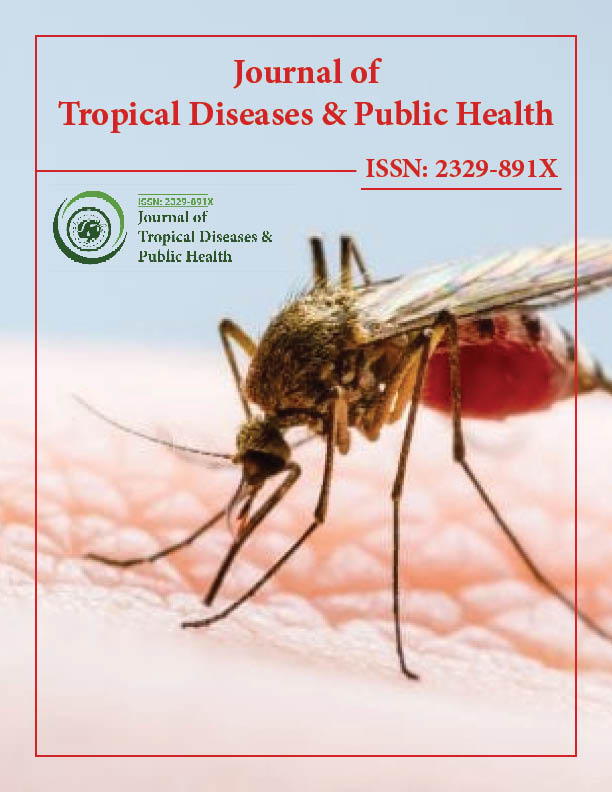
Journal Flyer
Open Access Journals
- Agri and Aquaculture
- Biochemistry
- Bioinformatics & Systems Biology
- Business & Management
- Chemistry
- Clinical Sciences
- Engineering
- Food & Nutrition
- General Science
- Genetics & Molecular Biology
- Immunology & Microbiology
- Medical Sciences
- Neuroscience & Psychology
- Nursing & Health Care
- Pharmaceutical Sciences
Commentary - (2025) Volume 14, Issue 3
Disease Transmission: Patterns, Factors, and Public Health Strategies
Mateo Alvarez*Received: 19-Aug-2025, Manuscript No. JTD-25-30723; Editor assigned: 21-Aug-2025, Pre QC No. JTD-25-30723; Reviewed: 04-Sep-2025, QC No. JTD-25-30723; Revised: 11-Sep-2025, Manuscript No. JTD-25-30723; Published: 18-Sep-2025, DOI: 10.35241/2329-891X.25.13.483
Description
Modern science helps track and control disease transmission using laboratory testing, genetic analysis of pathogens, and digital tracking systems. Early detection allows health authorities to respond quickly and limit spread. Research also helps develop better vaccines, medicines, and diagnostic tools. Studying patterns of transmission helps scientists predict outbreaks and design effective prevention strategies. Preventing disease transmission is a major goal of public health systems. Simple actions can greatly reduce the risk of infection. Regular handwashing, safe food handling, and proper waste disposal are effective against many diseases.
Vaccination is one of the most powerful tools to prevent transmission. Vaccines help the immune system recognize and fight pathogens, reducing the number of people who can spread the disease. When many people are vaccinated, community protection, also known as herd immunity, develops. Isolation and quarantine are used to prevent infected individuals from spreading disease to others. During outbreaks, wearing masks, improving ventilation, and avoiding crowded places can reduce airborne and droplet transmission. Controlling vectors through insecticide use, removing stagnant water, and improving housing conditions helps reduce diseases spread by insects.
Several factors influence how quickly and widely a disease spreads. Population density plays a major role, as crowded areas allow easier contact between people. Poor sanitation and lack of clean water increase the risk of waterborne diseases. Climate also affects transmission. Warm and humid conditions may favor the survival of certain pathogens and insects that act as vectors. Human behavior, such as travel, social gatherings, and hygiene practices, strongly influences disease spread as well. The strength of the immune system of individuals also matters. People who are malnourished, elderly, or suffering from other illnesses are more likely to become infected and develop severe symptoms.
Disease transmission occurs when a disease-causing organism, known as a pathogen, enters a new host and begins to multiply. Pathogens include bacteria, viruses, fungi, and parasites. For transmission to happen, three elements are usually required: a source of infection, a route of transmission, and a susceptible host. The source may be an infected person, animal, contaminated food, or even soil or water. The host becomes infected when the pathogen successfully enters the body and overcomes the immune system.
Contact transmission happens when pathogens spread through direct or indirect physical contact. Direct contact includes touching infected skin, body fluids, or wounds. Indirect contact occurs when people touch contaminated objects such as towels, medical equipment, or shared surfaces. Many skin and eye infections spread in this way, especially in crowded environments like schools and hospitals. While governments and health organizations play a major role, individuals also contribute to preventing disease spread. Simple actions such as washing hands, covering the mouth while coughing, staying home when sick, and completing prescribed treatments can greatly reduce transmission.
Conclusion
Disease transmission is a natural biological process, but its impact on human life can be reduced through knowledge, prevention, and cooperation. By understanding how diseases spread and adopting healthy practices, individuals and communities can protect themselves and others. Strong healthcare systems, scientific research, and public awareness together form the foundation for controlling infectious diseases and creating a healthier world. Controlling disease transmission is not only a medical task but also a shared responsibility of the entire community.
Citation: Alvarez M (2025). Disease Transmission: Patterns, Factors and Public Health Strategies. J Trop Dis. 13:483.
Copyright: © 2025 Alvarez M. This is an open-access article distributed under the terms of the Creative Commons Attribution License, which permits unrestricted use, distribution and reproduction in any medium, provided the original author and source are credited.