
Indexed In
- Open J Gate
- Academic Keys
- ResearchBible
- China National Knowledge Infrastructure (CNKI)
- Centre for Agriculture and Biosciences International (CABI)
- RefSeek
- Hamdard University
- EBSCO A-Z
- OCLC- WorldCat
- CABI full text
- Publons
- Geneva Foundation for Medical Education and Research
- Google Scholar
Useful Links
Share This Page
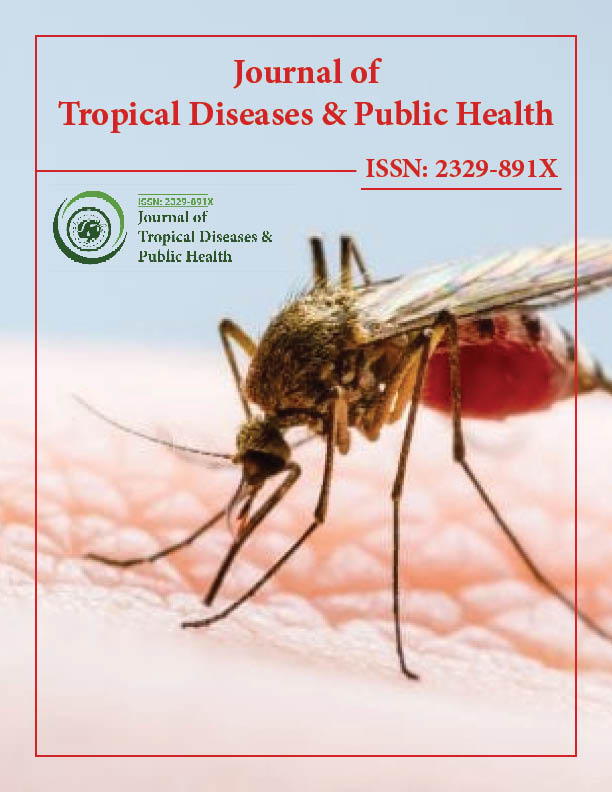
Journal Flyer
Open Access Journals
- Agri and Aquaculture
- Biochemistry
- Bioinformatics & Systems Biology
- Business & Management
- Chemistry
- Clinical Sciences
- Engineering
- Food & Nutrition
- General Science
- Genetics & Molecular Biology
- Immunology & Microbiology
- Medical Sciences
- Neuroscience & Psychology
- Nursing & Health Care
- Pharmaceutical Sciences
Commentary Article - (2025) Volume 14, Issue 3
Disease Transmission: Mechanisms and Implications for Public Health
Olivia Harding*Received: 19-Aug-2025, Manuscript No. JTD-25-30722; Editor assigned: 21-Aug-2025, Pre QC No. JTD-25-30722; Reviewed: 04-Sep-2025, QC No. JTD-25-30722; Revised: 11-Sep-2025, Manuscript No. JTD-25-30722; Published: 18-Sep-2025, DOI: 10.35241/2329-891X.25.13.482
Description
Disease transmission refers to the process by which infectious agents such as bacteria, viruses, parasites or fungi spread from one individual or environment to another. Understanding these mechanisms is critical for controlling outbreaks, designing preventive measures and promoting public health. Transmission occurs through multiple pathways, each influenced by biological, environmental and social factors. The study of how diseases spread is essential in shaping health policies, guiding clinical practices and protecting communities from widespread infection. Infectious diseases can spread directly between individuals. Direct contact transmission occurs when pathogens pass from an infected person to a susceptible individual through physical contact, such as touching, kissing or sexual activity. Droplet transmission, a type of direct spread, involves respiratory droplets expelled during coughing, sneezing or talking. These droplets can carry infectious agents, such as influenza or COVID-19, over short distances, leading to infection in nearby individuals.
Preventive measures like hand hygiene, masks and physical distancing are effective in limiting these pathways. Indirect transmission occurs when pathogens are transferred via intermediate objects or vectors. Fomite transmission involves contact with contaminated surfaces, clothing or utensils. When a person touches these objects and then touches their mouth, nose or eyes, infection may result. Vector-borne transmission involves living organisms such as mosquitoes, ticks or fleas that carry pathogens from one host to another.
Airborne transmission differs from droplet spread, as it involves infectious agents that remain suspended in the air over longer distances and time periods. Pathogens such as tuberculosis and measles can travel through aerosols, infecting individuals who inhale contaminated air even without direct contact with an infected person. Effective ventilation, filtration systems and respiratory protection are essential measures in mitigating airborne transmission. Understanding airflow patterns and environmental conditions is particularly important in healthcare settings and crowded indoor spaces.
Foodborne and waterborne transmission occurs when pathogens enter the body through contaminated food or water. Poor hygiene, inadequate sanitation and improper food handling can facilitate the spread of bacteria like Salmonella, E. coli or Vibrio cholera . Contaminated water sources are a common route for diseases such as cholera and hepatitis A. Interventions include ensuring access to safe water, practicing proper food preparation and implementing hygiene education programs, particularly in regions with limited infrastructure. Zoonotic transmission is another important mechanism, where infectious agents spread from animals to humans. Many emerging diseases, including Ebola, rabies and certain strains of influenza, originate from animal hosts. Human interaction with wildlife, domestic animals and livestock can facilitate these transmissions.
Socioeconomic and environmental factors influence disease transmission. Population density, urbanization, sanitation, healthcare access and social behavior determine the speed and extent of outbreaks. High-density areas with limited hygiene facilities experience faster spread, while regions with robust healthcare infrastructure can detect and contain diseases more effectively. Human mobility, including travel and migration, can transport pathogens across regions and continents, highlighting the global dimension of transmission. Prevention and control strategies are tailored to the specific mode of transmission. Vaccination programs reduce susceptibility to infection, while quarantine and isolation prevent contact between infected and healthy individuals. Public health campaigns promote hygiene practices, safe food handling and awareness of vector control. Rapid identification of outbreaks through surveillance systems allows for timely interventions that limit disease spread.
Conclusion
Disease transmission involves complex pathways influenced by biological, environmental and social factors. Direct, indirect, airborne, foodborne, waterborne and zoonotic routes illustrate the diversity of mechanisms through which pathogens spread. Understanding these pathways is vital for effective public health interventions, outbreak prevention and global health security. By studying transmission dynamics, societies can implement measures that protect populations, reduce infection rates and improve overall health outcomes. Factors such as reproduction number, incubation period and infectious period are critical in these analyses. Modeling enables public health authorities to simulate interventions and optimize strategies for outbreak containment.
Citation: Harding O (2025). Disease Transmission: Mechanisms and Implications for Public Health. J Trop Dis. 13:482.
Copyright: © 2025 Harding O. This is an open-access article distributed under the terms of the Creative Commons Attribution License, which permits unrestricted use, distribution and reproduction in any medium, provided the original author and source are credited.