
Indexed In
- Academic Journals Database
- Open J Gate
- Genamics JournalSeek
- JournalTOCs
- China National Knowledge Infrastructure (CNKI)
- Scimago
- Ulrich's Periodicals Directory
- RefSeek
- Hamdard University
- EBSCO A-Z
- OCLC- WorldCat
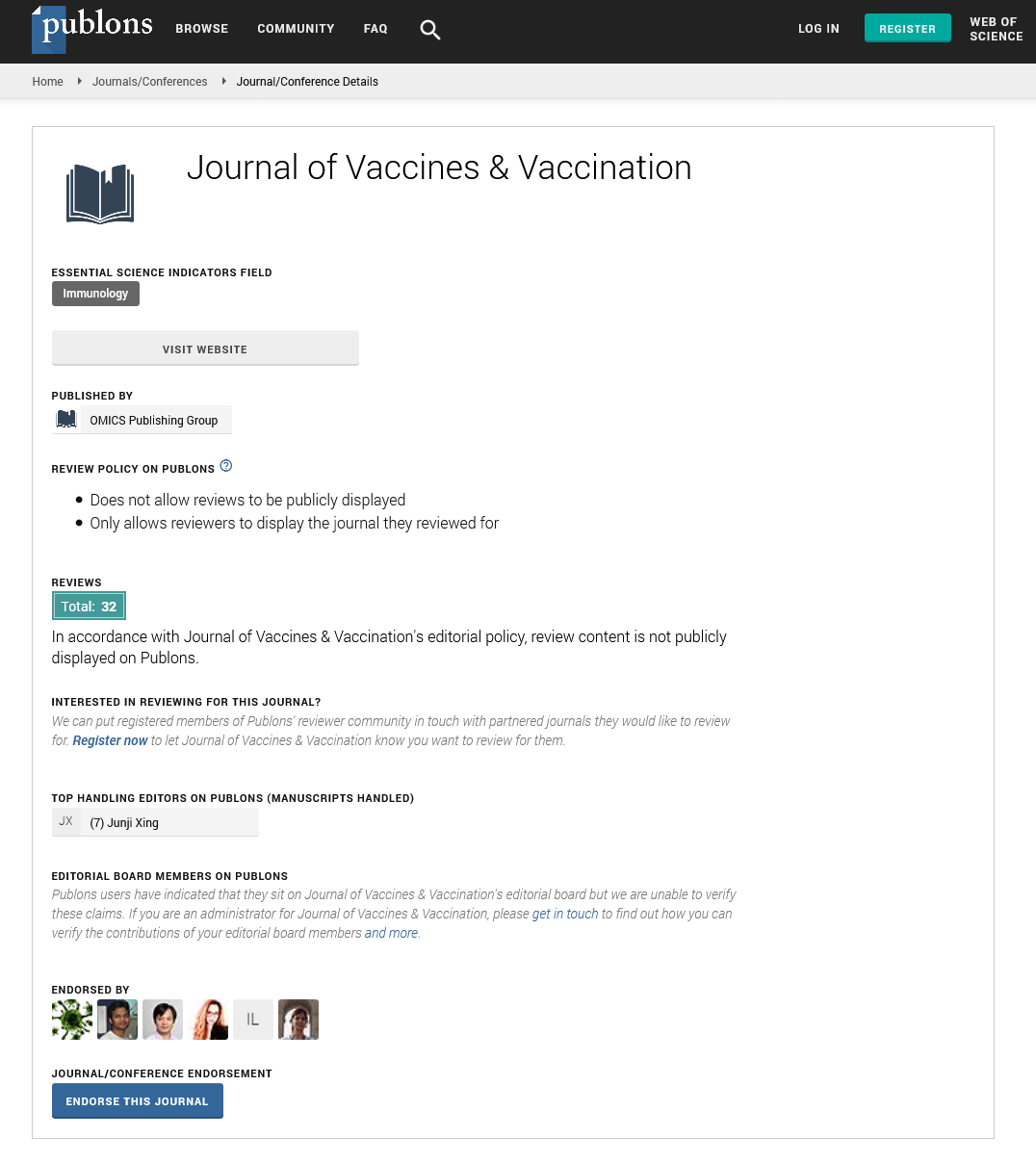
- Publons
- MIAR
- University Grants Commission
- Geneva Foundation for Medical Education and Research
- Euro Pub
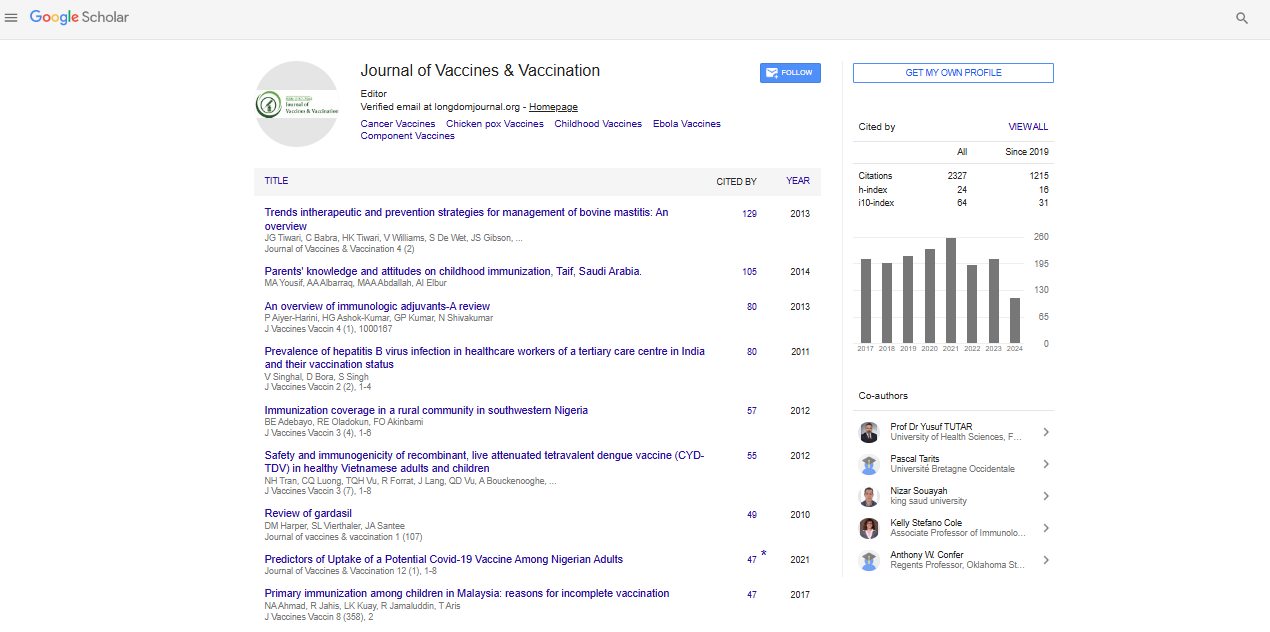
- Google Scholar
Useful Links
Share This Page
Open Access Journals
- Agri and Aquaculture
- Biochemistry
- Bioinformatics & Systems Biology
- Business & Management
- Chemistry
- Clinical Sciences
- Engineering
- Food & Nutrition
- General Science
- Genetics & Molecular Biology
- Immunology & Microbiology
- Medical Sciences
- Neuroscience & Psychology
- Nursing & Health Care
- Pharmaceutical Sciences
Commentary - (2026) Volume 17, Issue 5
Cellular Signals and Antibody Activity in the Humoral Immune Response
Nadine El-Masri *Received: 20-Apr-2026 Editor assigned: 22-Apr-2026 Reviewed: 06-May-2026 Revised: 13-May-0026 Published: 20-Jun-2026 , DOI: 10.35248/2157-7560.26.17.665
Description
The humoral immune response is an essential component of adaptive immunity that protects the body through antibodies and the cells responsible for producing them. When the immune system encounters a foreign substance, such as a component of a bacterium, virus, or other biological agent, specialized immune cells identify molecules that can trigger a defensive reaction. B lymphocytes are central to this process because they can recognize specific antigens and, after receiving appropriate activation signals, develop into plasma cells that produce antibodies. These antibodies circulate through body fluids and can recognize their corresponding targets with considerable specificity. The humoral response therefore provides an important mechanism for controlling many infectious agents and contributes to immune memory following exposure or vaccination.
The process begins when an antigen enters the body and is recognized by immune receptors. B cells possess membranebound receptors capable of binding particular molecular structures. However, recognition alone is often insufficient for full B-cell activation. Additional signals can be provided through interactions with helper T cells, antigen-presenting cells, and signaling molecules. This coordinated communication helps determine whether a B cell becomes an active antibodyproducing cell and influences the type and duration of the resulting response.
After activation, selected B cells undergo rapid multiplication, producing a population of cells that recognizes the same antigen. Some of these cells become plasma cells, which specialize in producing and releasing antibodies. Other activated B cells develop into memory cells. Memory B cells remain in the body after the initial response and can react more rapidly if the same antigen is encountered again. This feature contributes to the lasting protection generated by many vaccines and previous infections.
Antibodies are proteins belonging to the immunoglobulin family. Several major classes exist, including IgM, IgG, IgA, IgE, and IgD. Each class has distinct biological properties and contributes to immune defense in different locations and circumstances. IgM is commonly associated with early immune responses and is often the first antibody class produced after initial exposure to an antigen. IgG is abundant in blood and tissues and contributes substantially to long-term systemic protection. IgA is particularly important at mucosal surfaces, where it can help protect areas such as the respiratory and gastrointestinal tracts.
Antibody activity can affect pathogens through several mechanisms. Antibodies may bind directly to microbial surfaces and prevent microorganisms or their toxins from attaching to host cells. This process is known as neutralization. Antibodies can also coat pathogens, making them easier for immune cells to identify and remove. This activity, known as opsonization, can increase the efficiency of phagocytic cells. Certain antibodyantigen interactions can additionally activate the complement system, a group of proteins that participates in pathogen elimination and inflammatory signaling.
The strength and quality of a humoral response can change over time. During the early stage of an immune response, antibody concentrations may increase gradually. With continued stimulation, B cells can undergo processes that improve the binding properties of antibodies. This can result in the production of antibodies with stronger interactions with the target antigen. Changes in antibody class can also occur, allowing activated B cells to produce different immunoglobulin types while retaining recognition of the same antigen.
Vaccination makes use of these natural immune mechanisms. A vaccine introduces an antigen or information that enables the body to generate an immune response without requiring exposure to the full disease-causing organism. Following vaccination, B cells can become activated and generate antigenspecific antibodies and memory cells. If the vaccinated individual later encounters the corresponding pathogen, the immune system may respond more rapidly because memory populations are already present.
Conclusion
Research on humoral immunity continues to examine how B cells are activated, how antibody-producing cells are maintained, and how immune memory develops. Advances in molecular biology and immunology have made it possible to study antibody responses at increasingly detailed levels. Knowledge of these mechanisms supports vaccine development, infectious disease research, antibody-based medicines, and diagnostic testing. A clearer understanding of how B cells communicate with other immune cells and how antibodies function in different tissues can contribute to improved approaches for preventing and managing diseases involving the immune system.
Citation: El-Masri N (2026). Cellular Signals and Antibody Activity in the Humoral Immune Response. J Vaccines Vaccin. 17:665
Copyright: © 2026 El-Masri N. This is an open access article distributed under the terms of the Creative Commons Attribution License, which permits unrestricted use, distribution and reproduction in any medium, provided the original author and source are credited.