
Indexed In
- Open J Gate
- Academic Keys
- ResearchBible
- China National Knowledge Infrastructure (CNKI)
- Centre for Agriculture and Biosciences International (CABI)
- RefSeek
- Hamdard University
- EBSCO A-Z
- OCLC- WorldCat
- CABI full text
- Publons
- Geneva Foundation for Medical Education and Research
- Google Scholar
Useful Links
Share This Page
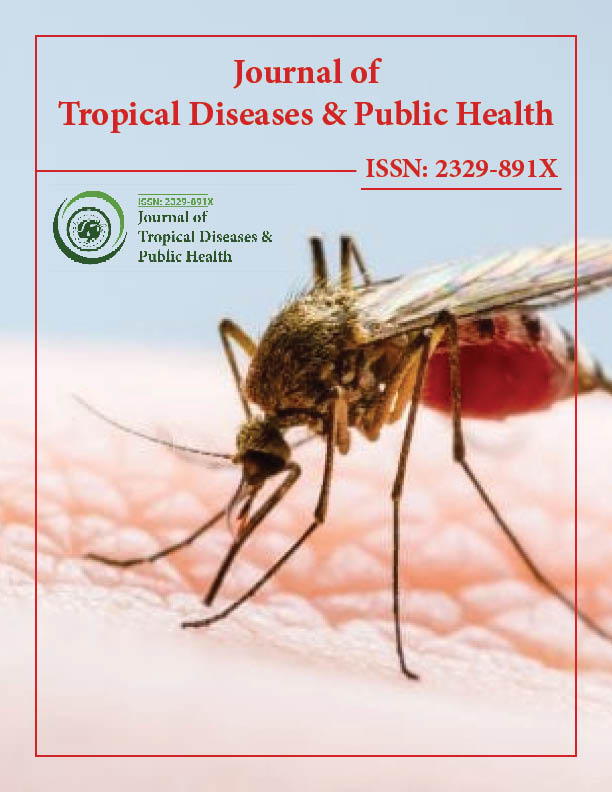
Journal Flyer
Open Access Journals
- Agri and Aquaculture
- Biochemistry
- Bioinformatics & Systems Biology
- Business & Management
- Chemistry
- Clinical Sciences
- Engineering
- Food & Nutrition
- General Science
- Genetics & Molecular Biology
- Immunology & Microbiology
- Medical Sciences
- Neuroscience & Psychology
- Nursing & Health Care
- Pharmaceutical Sciences
Short Communication - (2026) Volume 15, Issue 2
Assessment of Emerging Challenges and Community-Based Approaches in Tropical Disease Management
Alina Veron Marquez*Received: 19-May-2026, Manuscript No. JTD-26-32187; Editor assigned: 21-May-2026, Pre QC No. JTD-26-32187; Reviewed: 04-Jun-2026, QC No. JTD-26-32187; Revised: 11-Jun-2026, Manuscript No. JTD-26-32187; Published: 19-Jun-2026, DOI: 10.35241/2329-891X.26.15.520
Description
Tropical diseases continue to affect millions of people living in warm and humid regions where environmental conditions support the survival and spread of infectious agents. These diseases include malaria, dengue, chikungunya, leishmaniasis, lymphatic filariasis, schistosomiasis, and several other infections caused by viruses, bacteria, and parasites [1]. The distribution of these illnesses is strongly linked with climate conditions, population movement, sanitation practices, healthcare availability, and social factors. Continuous research and public health activities are required to reduce disease transmission and improve the quality of life among affected communities [2].
Vector-borne diseases represent a major group of tropical infections. Mosquitoes, sandflies, and other organisms act as carriers that transfer pathogens between humans and animals [3]. Malaria remains a serious health concern in many tropical and subtropical regions due to infection caused by Plasmodium species. Symptoms may include fever, chills, fatigue, and severe complications when diagnosis and treatment are delayed. Regular monitoring of mosquito populations, early identification of infections, and access to suitable medicines are important measures for reducing illness and preventing deaths [4].
Prevention plays an important role in controlling tropical diseases. Measures such as using insecticide-treated mosquito nets, applying insect repellents, maintaining clean surroundings, improving sanitation, and eliminating stagnant water can help reduce exposure to disease-causing organisms [5]. Community education is also essential because people who understand the causes, symptoms, and prevention methods are more likely to seek medical care promptly and follow recommended protective practices. Continued investment in research, improved access to healthcare, and cooperation between governments, health organizations, and local communities are necessary to develop sustainable strategies for preventing tropical diseases and protecting vulnerable populations [6].
Another important aspect of tropical disease control is the role of early diagnosis and effective treatment. Many tropical diseases share similar symptoms, such as fever, headache, weakness, and body pain, which can make accurate diagnosis difficult without proper medical testing [7]. Delayed diagnosis may allow infections to become more severe and can increase the risk of transmission within communities. Strengthening diagnostic facilities, particularly in rural and underserved areas, is therefore essential for identifying infections at an early stage. Healthcare workers should also receive appropriate training to recognize common tropical diseases and provide timely treatment or referral when necessary [8].
Environmental management is another valuable approach to disease prevention. Proper disposal of waste, access to safe drinking water, drainage systems, and improved housing conditions can reduce opportunities for disease vectors and infectious organisms to survive and spread. Climate change may also influence the distribution of certain tropical diseases by creating more suitable conditions for vectors in new areas. Therefore, disease surveillance systems should continuously monitor changes in disease patterns and vector populations [9].
International cooperation is equally important because infectious diseases can cross geographical borders through travel and population movement. Sharing information, strengthening surveillance networks, supporting research, and ensuring the availability of medicines and preventive tools can improve global preparedness. By combining medical, environmental, educational, and social approaches, communities can achieve more effective and sustainable control of tropical diseases [10].
Conclusion
Tropical diseases remain an important global health issue due to their complex relationship with environmental conditions, infectious agents, and social factors. Research on tropical diseases requires cooperation among scientists, healthcare workers, communities, and international organizations. Sharing scientific knowledge and improving healthcare infrastructure can reduce the burden caused by these infections. Future efforts should continue focusing on prevention, diagnosis, treatment access, and community involvement to improve health outcomes in tropical regions. Effective control requires combined efforts involving disease surveillance, public education, medical research, environmental management, and accessible healthcare services. Strengthening local health systems and supporting scientific studies can help reduce infection rates and improve patient outcomes. Continued cooperation among communities, healthcare professionals, and research institutions will support long-term progress in managing tropical diseases and protecting vulnerable populations.
References
- Kato H. Epidemiology of Leishmaniasis: Risk factors for its pathology and infection. Parasitol.Int. 2025;105:102999.
[Google Scholar] [Pubmed] [Crossref]
- Sasidharan S, Saudagar P. Leishmaniasis: where are we and where are we heading?. Parasitol.Res. 2021;120(5):1541-54.
[Google Scholar] [Pubmed] [Crossref]
- Maruyama SR. Spotlight on Leishmaniasis Research: Insights from the Special Issue “Emerging Topics in Leishmaniasis Research”. Trop.Med.Infect.Dis. 2024;9(9):200.
[Google Scholar] [Pubmed] [Crossref]
- Abadías-Granado I, Diago A, Cerro PA, Palma-Ruiz AM, Gilaberte YJ. Cutaneous and mucocutaneous leishmaniasis. Actas Dermo-Sifiliogr (English Edition). 2021;112(7):601-18.
[Google Scholar] [Pubmed] [Crossref]
- de Vries HJ, Schallig HD. Cutaneous Leishmaniasis: A 2022 Updated Narrative Review into Diagnosis and Management Developments: HJC de Vries, HD Schallig. Am.J.Clin.Dermatol. 2022;23(6):823-40.
[Google Scholar] [Pubmed] [Crossref]
- Yadav P, Azam M, Ramesh V, Singh R. Unusual observations in leishmaniasis—an overview. Pathogens. 2023;12(2):297.
[Google Scholar] [Pubmed] [Crossref]
- Cosma C, Maia C, Khan N, Infantino M, Del Riccio M. Leishmaniasis in humans and animals: a one health approach for surveillance, prevention and control in a changing world. Trop.Med.Infect.Dis. 2024;9(11):258.
[Google Scholar] [Pubmed] [Crossref]
- Younis BM, Mudawi Musa A, Monnerat S, Abdelrahim Saeed M, Awad Gasim Khalil E, Elbashir Ahmed A, et al. Safety and efficacy of paromomycin/miltefosine/liposomal amphotericin B combinations for the treatment of post-kala-azar dermal leishmaniasis in Sudan: A phase II, open label, randomized, parallel arm study. PLoS Negl.Trop.Dis. 2023;17(11):e0011780.
[Google Scholar] [Pubmed] [Crossref]
- Fan Y, Gu Y, Tong X, He Y, Li Q, Chen K, et al. Efficacy and safety of different drugs for the treatment of leishmaniasis: a systematic review and network meta-analysis. Front.Cell.Infect.Microbiol. 2025;15:1717863.
[Google Scholar] [Pubmed] [Crossref]
- Khan AH, Kanwal M, Jamal SB, Maheen K, Mohsin S, Hussain L, et al. In Silico Screening of Cannabis sativa Phytochemicals as Potential Ornithine Decarboxylase Inhibitors for Anti-Leishmanial Drug-Prioritized Compound Development. Biology. 2026;15(15):1272.
[Google Scholar] [Pubmed] [Crossref]
Citation: Marquez AV (2026). Assessment of Emerging Challenges and Community-Based Approaches in Tropical Disease Management. J Trop Dis. 15:520.
Copyright: © 2026 Marquez AV. This is an open-access article distributed under the terms of the Creative Commons Attribution License, which permits unrestricted use, distribution and reproduction in any medium, provided the original author and source are credited.