
Indexed In
- Open J Gate
- Academic Keys
- ResearchBible
- China National Knowledge Infrastructure (CNKI)
- Centre for Agriculture and Biosciences International (CABI)
- RefSeek
- Hamdard University
- EBSCO A-Z
- OCLC- WorldCat
- CABI full text
- Publons
- Geneva Foundation for Medical Education and Research
- Google Scholar
Useful Links
Share This Page
Journal Flyer
Open Access Journals
- Agri and Aquaculture
- Biochemistry
- Bioinformatics & Systems Biology
- Business & Management
- Chemistry
- Clinical Sciences
- Engineering
- Food & Nutrition
- General Science
- Genetics & Molecular Biology
- Immunology & Microbiology
- Medical Sciences
- Neuroscience & Psychology
- Nursing & Health Care
- Pharmaceutical Sciences
Research Article - (2025) Volume 14, Issue 5
Anti-Parasitic Properties of Selected Plants in Rural Central Uganda for Schistosomiasis
Haley Chanel Powell*Received: 13-Sep-2025, Manuscript No. JTD-25-29899; Editor assigned: 16-Sep-2025, Pre QC No. JTD-25-29899 (PQ); Reviewed: 30-Sep-2025, QC No. JTD-25-29899; Revised: 28-Oct-2025, Manuscript No. JTD-25-29899 (R); Published: 04-Nov-2025
Abstract
Schistosomiasis is a neglected tropical disease caused by a parasitic flatworm that is especially prevalent in sub- Saharan Africa. Schistosomiasis has debilitating symptoms that ultimately have negative implications for socioeconomic activities in endemic areas, making access to treatments critically important for long-term health. This thesis focuses on the importance of three rural plants and their medicinal uses for schistosomiasis in a rural Ugandan village. The plants known as Kisanasana, Lubilzi, and Niimu are locally used to treat intestinal symptoms of schistosomiasis and have been reported to have positive results. A study was conducted in the village of Mpunde and surrounding areas to document the knowledge, attitudes, and practices of local villagers surrounding local soiltransmitted helminthic infections. However, the use of non-biomedical treatments to control parasitic infections remains critically understudied. This thesis therefore makes an important contribution to understanding traditional healing practices with plants that are less well known and poorly studied in Western ethnobotany.
Keywords
Schistosomiasis; Ethnobotany; Medicinal plants; Bitter leaf; Neem; Uganda
Introduction
Neglected tropical diseases
Neglected Tropical Diseases (NTDs), a term coined by Dr. Peter Hotez, are a subset of infectious diseases [1]. Many NTDs have animal reservoirs, and complicated life cycles [2], and are vectorborne, transmitted via bites from infected arthropod species [3]. NTDs are most prevalent in rural, hard-to-reach, and/or in conflict areas. These areas are usually hot tropics where poverty is found in the greatest concentration; this includes remote rural communities, displaced peoples, and urban slums typically near the equator. Africa, Asia, and Latin America are NTD hotspots– specifically, Sub-Saharan Africa has a high concentration of NTDs globally, accounting for about one-third of the world's cases of major intestinal helminth infections [4]. These neglected diseases are dependent on environmental or socioeconomic conditions, more so than many other diseases. Social determinants of health are conditions in the environments where people are born, live, work, play, and more that affect a variety of health and quality-of-life outcomes and risks [5]. Social determinants of NTDs include but are not limited to sanitation, water, housing, clustering, environment, migration, disasters and conflicts, sociocultural factors, gender, and poverty [6]. An example of an NTD prevalent in Sub-Saharan Africa is called schistosomiasis.
Schistosomiasis
Schistosomiasis, also known as bilharzia, is caused by parasitic flatworms (blood flukes or blood trematodes) of the genus Schistosoma. Over 250 million people are infected with Schistosoma spp. worldwide, with 201.5 million of them living in Africa [7]. Three main species of schistosomiasis infect humans, one of which, Schistosoma mansoni is most prevalent in Africa. S. mansoni infects humans by hatching into larvae in a body of still water, penetrating the skin of people who come into contact with the water, making their way to a human’s liver to mature, and then laying eggs in a human’s rectum or bowel so that they can be excreted in feces [8].
An official medical diagnosis of schistosomiasis caused by S. mansoni eggs can be done by microscopically analyzing stool samples. Symptoms of schistosomiasis, which can develop from a few days to a couple of months, include itchy skin, rashes, fever, cough, chills, and muscle aches [9]. Because S. mansoni larvae settle down in the liver, abdominal pain, enlarged liver (hepatomegaly), and blood in feces (hematochezia) can occur when schistosomiasis goes untreated [10]. Without treatment, schistosomiasis can continue for years and can even develop into chronic schistosomiasis, causing more serious, long-term problems to begin to arise [11]. Schistosomiasis can also lead to nonspecific morbidity, such as impaired childhood growth, malnutrition, and anemia as a result of continued inflammation during established active infection [12]. Of those infected with STHs, those between the ages of 20 and 24 are more predisposed to infection. Geographically, schistosomiasis is especially common in Uganda which has a 25.6% prevalence rate [8], where the disease is considered to be endemic [13].
Materials and Methods
Study site
The Republic of Uganda is an Eastern-Central African country with a population of 33 million people [14]. Uganda's official languages are English and Swahili; however, many Ugandans also speak Indigenous languages such as Lusoga. A small Lusogaspeaking village called Mpunde lies in Buyende county of the Eastern Region of Uganda. Most of Mpunde’s population are subsistence farmers and about two-thirds of Mpunde households are located more than 3 mi/5 km from a public health facility [14]. The majority of Mpunde villagers do not have a car or access to any transportation; most people move on foot. Lack of transportation options forces villagers to walk a long way to access healthcare and makes it extremely difficult to seek followup care if one health clinic visit is insufficient. Given limited medical care access and widespread regional parasite infection, this study focuses on suspected parasitic disease risks and associated treatments within Mpunde, Uganda.
Survey
From May 2022 to July 2022, I was part of a research fellowship with the public health nongovernment organization Empower through Health (ETH) [15]. ETH provides affordable healthcare to Mpunde villagers who would otherwise not have access. During this fellowship, I spent six weeks in Mpunde, where I interviewed 140 Mpunde villagers (ages 18-80 years old; 92 females and 46 males). They were asked questions from a Knowledge, Attitude, and Practice (KAP) survey regarding helminthic infections. All questions asked in my KAP survey were translated by bilingual locals from English to Lusoga for coherency and comprehension.
The survey was split into five different sections. The first section, “General”, collected contextual background information such as age, sex, occupation, house material, number of kids, etc. The second section, “Knowledge about helminthic infections”, asked about house remedies and self-treatment for illnesses. Photos of home remedies, such as plants, were also taken during this section of the KAP survey. The third section, “Attitudes about helminthic infections”, asked if they felt like they were at risk of helminthic infections or how prevalent did they think helminthic infections were in their communities. The fourth section, “Common practices” asked about preventative behaviors, such as footwear use, cleaning habits, water sources, etc. The fifth and final section, “History and treatment of helminthic infections”, focused on individual case studies for those villagers who either had been suspected of being infected or who were currently suspected of being infected with a helminthic infection.
This study explored the most commonly reported plants used as traditional medicines for helminthic infections in Mpunde, focusing on the “Knowledge about helminthic infections” and “History and treatment of helminthic infections” sections. Additionally, these plants are all found locally, making them extremely accessible in rural areas. Despite the majority of interviewed Mpunde villagers perceiving local biomedical professionals as trustworthy (131 of 140 participants, 93.5%), traditional medicinal practices are still used (52 of 140 participants; 37.1%).
Plant botany
The plants Kisanasana, Lubilzi, and Niimu were selected for this study because they were the most commonly reported in the KAP survey: 16%, 8%, and 8% respectively (Table 1). Although Omusansana was reported just as much as Lubilzi and Niimu, it was not included in the study due to its identification lacking enough confidence to do further analyses.
Table 1: Below shows the number of times specific plants were reported in the KAP survey.
| Lusoga name | English name | Scientific name | # of Reports |
| Bugogwa | Sisal | Agave sisalana | 1 |
| Bulukene/Pruken | N/A | N/A | 2 |
| Eiranda | Castor oil plant | Ricinus communis | 1 |
| Gasiya | Kassod tree | Senna siamea | 1 |
| Kabirondo | N/A | N/A | 2 |
| Kafadanga | Fireplant | Euphorbia heterophylla | 2 |
| Kisanasana | N/A | Kalanchoe sp. | 6 |
| Kitimbo/Mukitimbo | N/A | Indigofera garckeana Vatke | 1 |
| Lubilzi | Bitter leaf | Vernonia amygdalina | 3 |
| Minituli | N/A | N/A | 1 |
| Musanasana | N/A | N/A | 1 |
| Naglongo | Squirrel’s tail | Justicia betonica | 1 |
| Niimu | Neem tree | Azadirachta indica | 3 |
| Omusanasana | N/A | N/A | 3 |
| Tandu | Common purslane | Portulaca oleracea | 2 |
| Timpa | Taro | Colocasia esculenta | 1 |
| Note: The selected plants were highlighted due to them having the highest numbers of reports. Some plants only had Lusoga common names reported, thus, the English common name and scientific name were left N/A. | |||
Kisanasana’s scientific name is most likely related to Kalanchoe densiflora, yet it does not have a common English name (Figure 1). The plant was identified by a Ugandan ethnobotanist Kazungu Rauben who works with ETH. Kisanasana is part is the Crassulaceae family and Kalanchoe genus [16]. It is found in parts of South America (e.g., Bolivia), as well as East Africa [17]. Given that Kisanasana is not well studied in the Western Hemisphere, there is very little scientific research and literature on the plant.
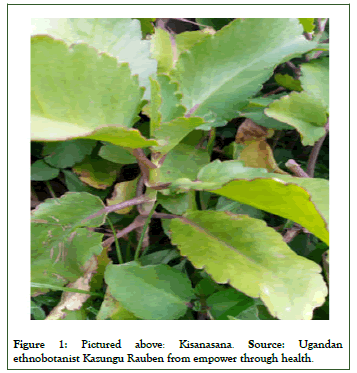
Figure 1: Pictured above: Kisanasana. Source: Ugandan ethnobotanist Kazungu Rauben from empower through health.
Lubilzi is the Lusoga name for Vernonia amygdalina, or its English common name, Bitter leaf. It is part of the Asteraceae family and Vernonia genus (Figure 2) [18]. Lubilzi is found in SubSaharan Africa, on the Brazilian coast, as well as scattered across the United States [19]. It is called “Bitter leaf” because of its leaves, which are vibrant green and have a pronounced odor and bitter taste. It is a “perennial shrub of 2-5 m in height that grows throughout tropical Africa” [20].
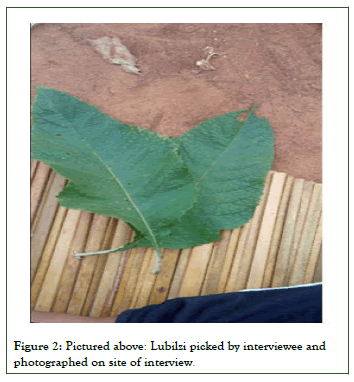
Figure 2: Pictured above: Lubilzi picked by interviewee and photographed on site of interview.
Niimu is Lusoga for Azadirachta indica. It is commonly known in English as the Neem tree or marsoga tree [21]. Niimu is part of the Meliaceae family and Azadirachta genus [22]. It is a widespread plant, being found in Southeast Asia, India, SubSaharan Africa, Mexico, Central America, Brazil, north Australia, and some scattered on Pacific and Atlantic islands [23]. Niimu is a medium-sized tree that grows 50 to 75 feet in height and is best grown in tropical or subtropical areas in dry to medium, deep and sandy, well-drained soils in full sun or partial shade [21]. It is thin, needle-shaped with toothed edges that are arranged oppositely on the stem (Figure 3).
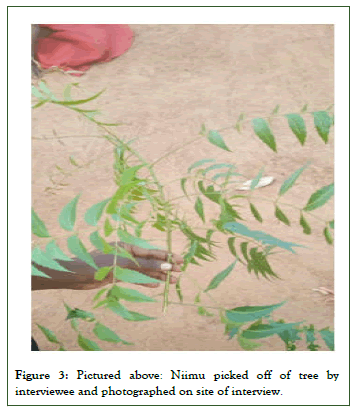
Figure 3: Pictured above: Niimu picked off of tree by interviewee and photographed on site of interview.
All three kinds of these plants were found within 10 m of the site of the interview and their leaves were extremely easy to collect (simply plucked from the ground or branch on which they were growing). It is also unknown what other cultural importance in Uganda these plants have besides the medicinal uses that were reported in the KAP survey.
Plant medicinal properties
A medicinal plant is a plant with effects relating to health, or that has been proven to be useful as drugs in the perspective of biomedical standards [24]. All three of the selected plants in this study, Kisanasana, Lubilzi, and Niimu, have medicinal properties against the symptoms that are shown for schistosomiasis. It is unknown what specific medicinal properties Kisanasana has due to the lack of previous scientific research on the specific plant. However, as mentioned before, the genus of Kalanchoe has been used as traditional medicine to treat ailments such as fevers, contused wounds, infections, and inflammation [25].
Traditional medicine practitioners use Lubilzi as “an antihelminth, laxative, digestive tonic, anti-malarial, [and] for topical treatment of wounds” [20]. The plant’s activities are the result of over 30 different compounds with differing bioactivities that are isolated from the different parts of the plant. Overall, Lubilzi has over 30 different compounds with differing bioactivities [26].
Niimu displays similar properties to Lubilzi, including antiviral, antifungal, antibacterial, and antihelminthic/antiparasitic. The plant is known for its ailment treatment activities, such as the treatment of arthritis, fever, pain, burning sensations, malaria, intestinal helminthiasis, constipation, and more. Niimu has about 135 different structural compounds that have been identified from various parts of the trees [27].
Results
According to the KAP survey, Mpunde villagers typically used the three selected plants to treat parasitic worm infections, such as schistosomiasis, by ingesting them. Niimu leaves were ingested by being boiled in water and consumed as tea. The Mpunde villagers reported that they would use this method whenever they had abdominal pain. The Niimu would give them diarrhea, thus, flushing out the pathogens and relieving them of the pain. Lubilzi and Kisanasana were similarly reported: Both caused diarrhea and were used to treat abdominal pains that are associated with schistosomiasis. Kisanasana was also reportedly used by Mpunde villagers by boiling it in water, and then drinking it. However, due to Lubilzi’s natural bitter taste, the leaves were reported to be plucked straight from the plant, eaten raw, and without manipulation, such as boiling.
This paper focuses on 12 individual interviewees from surveys conducted around Mpunde village, Uganda, who used the three plants of interest. Three people claimed to use Lubilzi, another three for Niimu, and six for Kisanasana. The majority of the Mpunde villagers surveyed were female because interviews were conducted during the day when more men were away from home. Before the interviews, the study was approved by the Institutional Review Board of Washington University in St. Louis and authorized by Dr. Theresa Gildner. Study methods and procedures were presented to empower through health and local Mpunde village health team workers (community-selected volunteers who are responsible for conducting home visits, distributing health commodities, and referring people to health facilities). The research was then conducted with the authorization of empower through health and village health team workers upon community consensus. Respondents participated voluntarily and were asked questions about general helminthic infections. All people that were selected were interviewed between June 9 th and June 15th , 2022 by an empower through health team and included a translator from English to Lusoga and vice versa. The findings can be found in Table 2.
Depending on which of the selected plants the interviewees chose to use for self-treatment, they had varying times of recovery from symptoms. Both interviewees #5 and #23 as well as both #72 and #80 reported their symptoms going away within a day (Table 2). However, the three interviewees who used Kisanasana to treat their infections, #9, #58, and #102, reported their symptoms going away anywhere from within a day to upwards of two weeks. This differentiates Kisanasana from the other two selected plants.
From these survey results, Lubilzi and Niimu were more efficient in treating parasitic infections than Kisanasana. However, these survey results are from a more general helminthic infection so it is unclear if Kisanasana would also be less efficient in treating other infections, such as schistosomiasis.
| Location of interview | Sex of interviewee | Age of interviewee | Onset symptoms of parasitic infection (if ever infected) | Plant used for self-treatment | Time it took for symptoms to go away post treatment | |
| Lubilzi | ||||||
| Interviewee #5 | Buyende, Kagulu, Bunangwe | Female | 68 | Only abdominal pain | Lubilzi | Went away within a day |
| Interviewee #23 | Buyende, Kagulu, Masaba | Female | 48 | Itching, swollen feet/legs | Lubilzi | Went away within a day |
| Interviewee #73 | Buyende, Kagulu, Busige | Female | 70 | Never infected | Lubilzi | N/A |
| Niimu | ||||||
| Interviewee #72 | Buyende, Kagulu, Busige | Female | 28 | Abdominal pain, nausea, diarrhea | Niimu | Went away within a day |
| Interviewee #80 | Buyende, Kagulu, Busige | Female | 41 | Itching | Niimu | Went away within a day |
| Interviewee #109 | Buyende, Kagulu, Kinamagira | Female | 20 | Never infected | Niimu | N/A |
| Kisanasana | ||||||
| Interviewee #9 | Buyende, Kagulu, Bunangwe | Male | 42 | Cysts/Pus on feet/legs, itching feet/legs, inflammation of affected area | Kisanasana | Went away within a day |
| Interviewee #11 | Buyende, Bugaya, Buleero | Female | 45 | Itching of the anus, abdominal pain, nausea, diarrhea, fever | Kisanasana | Went away within a day |
| Interviewee #20 | Buyende, Bugaya, Buleero | Female | 60 | Never infected | Kisanasana | N/A |
| Interviewee #58 | Buyende, Kagulu, Bukongoro | Female | 28 | Swollen feet/legs, itching feet/legs , inflammation of affected area | Kisanasana | Went away in 1-6 days |
| Interviewee #102 | Buyende, Kagulu, kinamagira | Female | 20 | Cysts/Pus on feet/legs, itching feet/legs | Kisanasana | Went away in 1-2 weeks |
| Interviewee #128 | Buyende, Kagulu, Nsomba | Female | 40 | Never infected | Kisanasana | N/A |
| Note: Each individual plant was highlighted for convenience: Lubilzi, Niimu, and Kisanasana. Details include location (district, county, sub-county) of interview, sex and age of interviewee, reported onset symptoms, and time it took from self-treatment to symptoms going away. | ||||||
Table 2: Below shows the details of interviewees that used one of the selected plants to treat helminthic infections that were reported in the KAP survey.
What these survey results also show is the prevalence of using different selected plants based on geographic location. Although Mpunde is a village that is situated in Buyende county, neighboring villages in other counties often associate themselves with Mpunde. While all of the interviews were conducted in the same district, only those who reported using Lubilzi and Niimu resided within Kagulu county. Even though most of those who reported using Kisanasana also resided within Kagulu, there was also a report of it being used in the neighboring Bugaya county. Lubilzi and Niimu are not only more popular within Uganda, but they grow in other parts of the world. These survey results cause a new question to arise: Where is Kisanasana growth more prevalent across different parts of Uganda compared to Lubilzi and Niimu? Further research needs to be conducted to determine more precise geographic locations of Kisanasana's growth.
Discussion
The social determinants of NTDs include water, sanitation, housing, environment, migration, disasters and conflicts, gender, sociocultural factors, and poverty. Because of these social determinants, NTDs are most prevalent in low-resource and hardto-reach rural areas of the world, such as sub-Saharan Africa. Neglected tropical diseases are a broad term that encompasses more specific diseases, such as STHs and schistosomiasis. Schistosomiasis has debilitating symptoms that have negative implications for socio-economic activities in endemic areas. Nonbiomedical treatments, such as medicinal plants, and their use to control parasitic infections are still understudied. Thus, exploring these three selected plants helps the ethnobotanical, anthropological, and biomedical world’s understanding of traditional healing practices and their relationship with parasites.
The ethnographical KAP survey that was conducted in Mpunde, Uganda in the summer of 2022 with the organization empower through health helped to capture information on helminthic infection symptoms and common treatments. Results from 140 interviewed Mpunde villagers (ages 18-80 years old; 92 females and 46 males) show that most of those who had likely been infected with a helminthic infection reported abdominal pain and/or itching feet/legs. These villagers listed 19 different local plants used to treat helminthic symptoms; however, three plants stood out: Lubilzi, Niimu, and Kisanasana. The efficacy of these plants was based on self-reported symptom abatement.
Lubilzi is the Lusoga name for Vernonia amygdalina, or its English common name, Bitter leaf; Niimu is Azadirachta indica also known as Neem tree or marsoga tree. Kisanasana is the most researched of the three plants. All of the plants reportedly helped the symptoms go away within a day, except Kisanana. Interviewees who reported using Kisansana gave mixed responses of how long it took symptoms to go away after being treated with the plant; results ranged from within one day to within two weeks. This suggests that Kisanasana is not as effective as a medicinal plant for treating helminths like schistosomiasis compared to Lubilzi and Niimu.
Conclusion
This study focuses on how Sub-Saharan African plants known as Kisanasana (possibly related to Kalanchoe densiflora), Lubilzi (Vernonia amygdalina), and Niimu (Azadirachta indica) are used to treat the neglected tropical disease schistosomiasis. Schistosomiasis risk is influenced by water source and quality, sanitation, poverty, housing, residential clustering, and sociocultural factors. As a disease, it is prevalent and endemic in Uganda. This thesis used data collected in the Ugandan village of Mpunde and surrounding areas to show the knowledge, attitudes, and practices of local villagers surrounding local soiltransmitted helminthic infections. The results showed that villagers who used Lubilzi and Niimu to treat infections were most effective. Meanwhile, those who used Kisanasana were less effective than the other plants and took longer to treat the reported symptoms. More comprehensive future ethnobotanical studies on these three selected plants and schistosomiasis may give more insight into non-biomedical treatments and traditional healing practices.
Future Research
A future follow-up with this study should look at parasitic loads in feces as a compliment to self-reporting symptoms improving. Moreover, additional research needs to be done on Kisanasana for it to be better understood in biomedicine. One of the first steps to ascertain the properties of Kisanasana is further identification. Botanists need to look more into what exactly Kisanasana is since only its family (Crassulaceae) and genus (Kalanchoe) have been identified. This lesser-known plant may have the potential to treat other helminths or NTDs in general. Future research might explore how people learn to use these plants and from whom. It might explain why certain plants are preferred over others. Additional research steps would be to clarify Kisanasana’s biological properties more and potentially use it to treat other diseases and infections, once Kisanasana’s medical properties and safety have been demonstrated.
Acknowledgements
I would like to acknowledge and give my warmest thanks to my undergraduate thesis advisor, Dr. Theresa Gildner at Washington University in St. Louis, who made this work possible. Her guidance and advice carried me through all the stages of writing my project. A special thanks goes to Empower Through Health for helping me conduct my individual research during my Global Health Experiential Fellowship. Finally, I would like to thank my friends and family for their continuous support and understanding my research and writing my project. It has been your prayers that have supported me this far.
References
- Hotez PJ. 2023.
- World Health Organization. Neglected tropical diseases. 2023.
- Semenza JC, Menne B. Vector-borne diseases. 2009.
- Hotez PJ. Ten global “Hotspots” for the neglected tropical diseases. PLoS Negl Trop Dis. 2014;8(5):e2496.
[Crossref] [Google Scholar] [PubMed]
- U.S. Department of Health and Human Services. Social determinants of health. 2022.
- Aagaard-Hansen J, Chaignat C. Neglected tropical diseases: Equity and social determinants. 2010:135-157.
- World Health Organization. Schistosomiasis. 2023.
- Exum NG, Kibira SP, Ssenyonga R. The prevalence of schistosomiasis in Uganda: A nationally representative population estimate to inform control programs and water and sanitation interventions. PLoS Negl Trop Dis. 2019;13(8):e0007617.
[Crossref] [Google Scholar] [PubMed]
- Centers for Disease Control and Prevention. Schistosomiasis-Biology. 2019.
- Cleveland Clinic. Schistosomiasis: Causes, symptoms, diagnosis and treatment. 2022.
- National Health Service. Schistosomiasis (Bilharzia). 2017.
- McManus DP, Dunne DW, Sacko M. Schistosomiasis. Nat Rev Dis Primers. 2018;4(1):1-19.
- Salawu OT, Odaibo AB. Schistosomiasis transmission: Socio-demographic, knowledge and practices as transmission risk factors in pregnant women. J Parasit Dis. 2016;40(1):93-99.
[Crossref] [Google Scholar] [PubMed]
- Places in the World. Mpunde, Uganda-SFacts and Information on Mpunde. 2022.
- Empower through health. About. 2023.
- Allen RR. Kalanchoe densiflora Rolfe. 2023.
- GBIF Secretariat. Kalanchoe densiflora Rolfe. 2022.
- Delile AR. Vernonia amygdalina. 2022.
- GBIF Secretariat. Vernonia amygdalina Delile. 2022.
- Ijeh II, Ejike CE. Current perspectives on the medicinal potentials of Vernonia amygdalina Del. J Med Plant Res. 2011;5(7):1051-1061.
- Missouri Botanical Garden. Azadirachta indica-Plant Finder. 2022.
- Jussieu AHL. Azadirachta indica A. Juss. 2022.
- GBIF Secretariat. Azadirachta indica A. Juss. 2023.
- Akerele O, Heywood V, Synge H. Conservation of medicinal plants. Cambridge University Press. 1991.
- Hsieh YJ, Yang MY, Leu YL. Kalanchoe tubiflora extract inhibits cell proliferation by affecting the mitotic apparatus. BMC Complement Altern Med. 2012;12:149.
[Crossref] [Google Scholar] [PubMed]
- Oyeyemi IT, Akinlabi AA, Adewumi A, Aleshinloye AO, Oyeyemi OT. Vernonia amygdalina: A folkloric herb with anthelminthic properties. Beni-Suef Univ J Basic Appl Sci. 2018;7(1):43-49.
- Biswas K, Chattopadhyay I, Banerjee RK, Bandyopadhyay U. Biological activities and medicinal properties of neem (Azadirachta indica). Curr Sci. 2002;82(11):1336-1345.
Citation: Powell HC (2025) Anti-Parasitic Properties of Selected Plants in Rural Central Uganda for Schistosomiasis. J Trop Dis. 13:481.
Copyright: © 2025 Powell HC. This is an open access article distributed under the terms of the Creative Commons Attribution License, which permits unrestricted use, distribution, and reproduction in any medium, provided the original author and source are credited.