
Indexed In
- Academic Journals Database
- Open J Gate
- Genamics JournalSeek
- JournalTOCs
- China National Knowledge Infrastructure (CNKI)
- Scimago
- Ulrich's Periodicals Directory
- RefSeek
- Hamdard University
- EBSCO A-Z
- OCLC- WorldCat
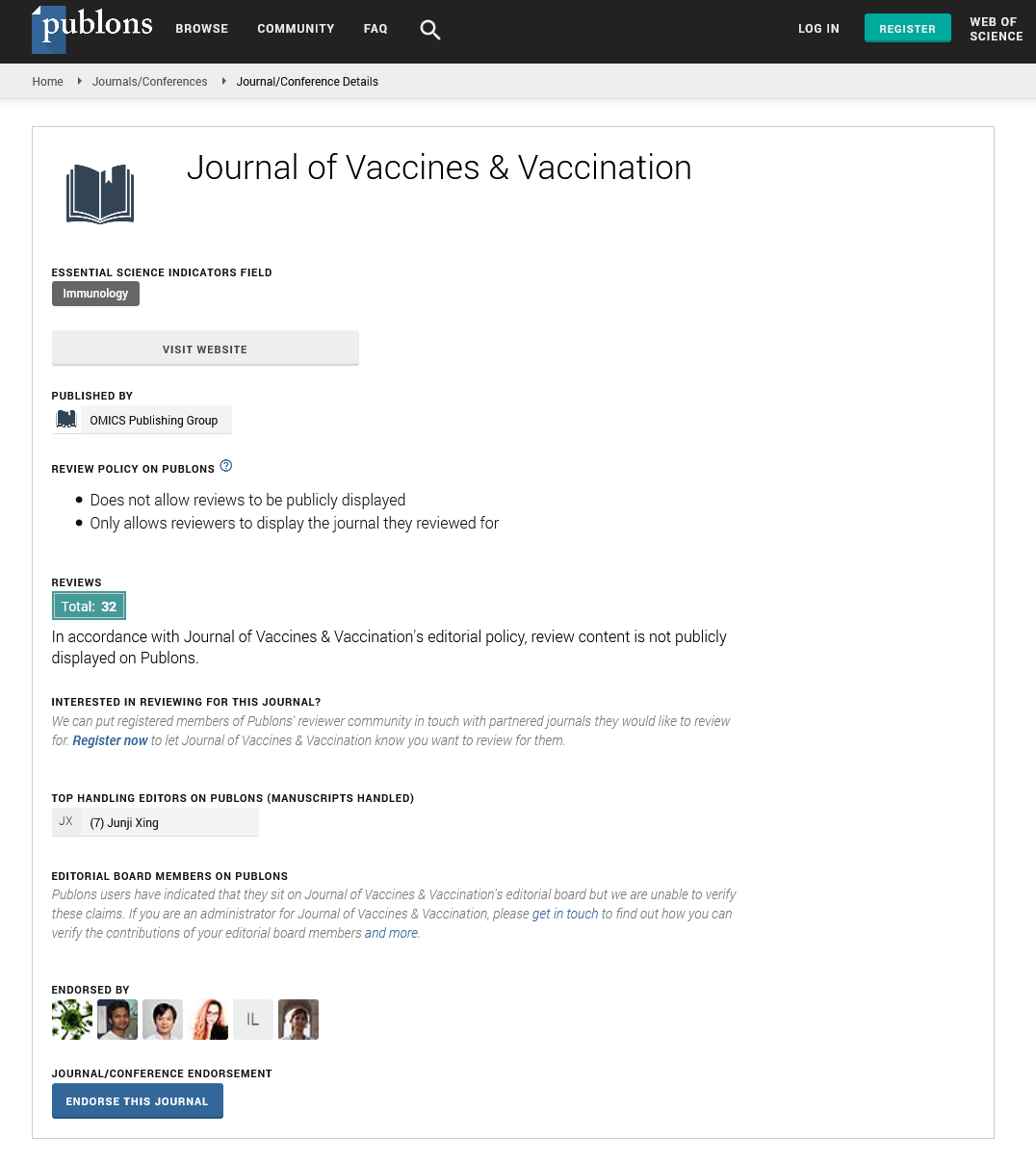
- Publons
- MIAR
- University Grants Commission
- Geneva Foundation for Medical Education and Research
- Euro Pub
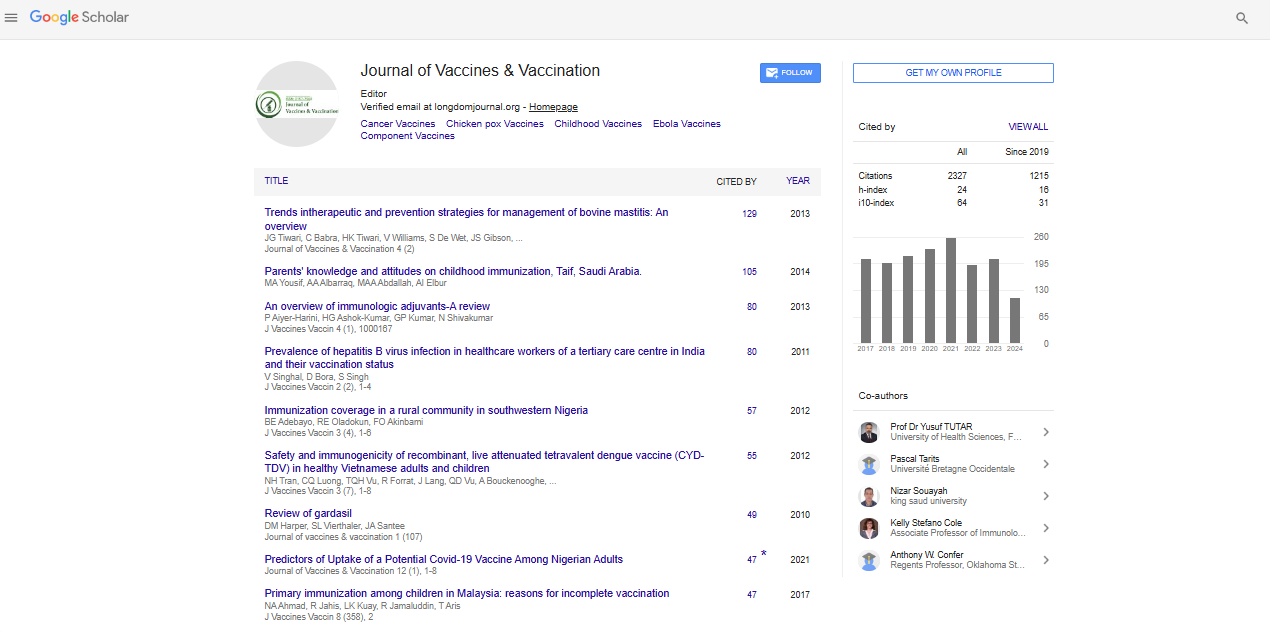
- Google Scholar
Useful Links
Share This Page
Open Access Journals
- Agri and Aquaculture
- Biochemistry
- Bioinformatics & Systems Biology
- Business & Management
- Chemistry
- Clinical Sciences
- Engineering
- Food & Nutrition
- General Science
- Genetics & Molecular Biology
- Immunology & Microbiology
- Medical Sciences
- Neuroscience & Psychology
- Nursing & Health Care
- Pharmaceutical Sciences
Opinion - (2025) Volume 16, Issue 8
Advancing Immune-Based Disease Management through Therapeutic Vaccines
Franz Kuster*Received: 30-Jul-2025, Manuscript No. JVV-25-31762; Editor assigned: 01-Aug-2025, Pre QC No. JVV-25-31762 (PQ); Reviewed: 19-Aug-2025, QC No. JVV-25-31762; Revised: 22-Aug-2025, Manuscript No. JVV-25-31762 (R); Published: 29-Aug-2026, DOI: 10.35248/2157-7560.25.16.621
Description
Therapeutic vaccines represent an important area of medical research focused on treating existing diseases rather than preventing future infections. Unlike preventive vaccines, which are administered to healthy individuals before exposure to a pathogen, therapeutic vaccines are designed for patients who already have a disease. Their objective is to stimulate or modify immune responses in a manner that assists the body in controlling, reducing, or eliminating disease-related cells or infectious agents. This concept has attracted considerable attention in recent years because of its potential applications in oncology, chronic viral infections, and selected autoimmune disorders.
The human immune system continuously identifies and removes abnormal cells and invading microorganisms. However, some diseases develop mechanisms that allow them to persist despite immune surveillance. Cancer cells, for example, may alter their surface markers or create local conditions that suppress immune activity. Similarly, chronic viral infections can establish long-term residence within host tissues, making complete elimination difficult. Therapeutic vaccines seek to enhance immune recognition of disease-associated targets and encourage a more effective response against them.
In cancer treatment, therapeutic vaccines are designed to expose the immune system to antigens associated with tumor cells. These antigens may be proteins expressed exclusively by malignant cells or molecules that appear at unusually high levels compared with normal tissues. When these antigens are presented to immune cells, cytotoxic T lymphocytes can be activated and directed toward tumor destruction. Researchers have developed several methods for delivering these antigens, including peptide-based formulations, nucleic acid platforms, viral vectors, and dendritic cell preparations. Each approach aims to improve antigen presentation and stimulate a sustained immune response.
One of the major considerations in therapeutic vaccine development is antigen selection. The ideal target should be present on diseased cells while remaining absent or minimally expressed on healthy tissues. This helps reduce unintended effects and increases treatment specificity. Advances in genomic sequencing and molecular profiling have improved the identification of disease-associated antigens, allowing investigators to design vaccine candidates with greater precision. The growing availability of tumor sequencing data has also enabled the identification of patient-specific antigens arising from unique genetic alterations.
Therapeutic vaccines are not limited to cancer. Chronic viral infections such as hepatitis B and human immunodeficiency virus have also been investigated as potential targets. These infections often persist because viral particles evade complete immune clearance. Vaccine strategies seek to strengthen cellular immunity and increase the ability of immune cells to recognize infected tissues. Although complete eradication remains difficult in many cases, research continues to explore methods for reducing viral reservoirs and improving long-term disease control.
The success of therapeutic vaccines depends on several biological factors. Antigen presentation by specialized immune cells is one of the most important steps. Effective communication between antigen-presenting cells and lymphocytes contributes to the expansion of disease-targeting immune populations. Scientists frequently include adjuvants within vaccine formulations to increase immune activation and improve overall effectiveness.
Combination therapy has become an important consideration in therapeutic vaccine research. Vaccines may produce stronger effects when administered alongside other treatments. In oncology, immune checkpoint inhibitors have demonstrated the ability to enhance T-cell activity by reducing inhibitory signaling pathways. When combined with therapeutic vaccines, these agents may improve immune recognition and increase anti-tumor responses. Similar approaches are being examined in infectious disease management, where vaccines may be used together with antiviral medications.
Clinical evaluation remains an essential stage in therapeutic vaccine development. Early-phase studies focus on safety, dosage selection, and immune activation. Later trials examine treatment effectiveness, disease progression, survival outcomes, and quality-of-life measures. Researchers must also assess biomarkers that indicate whether immune responses correlate with clinical benefits. Because therapeutic vaccines often act indirectly through immune mechanisms, measurable treatment effects may require extended observation periods. As scientific knowledge continues to expand, therapeutic vaccines are becoming an increasingly significant component of modern medicine. Their ability to direct immune responses against established diseases offers opportunities for addressing conditions that have historically been difficult to manage. Continued research, clinical evaluation, and technological refinement are expected to strengthen the role of therapeutic vaccines in disease treatment and long-term patient care.
Citation: Kuster F (2025) Advancing Immune-Based Disease Management through Therapeutic Vaccines. J Vaccines Vaccin. 16:621.
Copyright: © 2025 Kuster F. This is an open access article distributed under the terms of the Creative Commons Attribution License, which permits unrestricted use, distribution and reproduction in any medium, provided the original author and source are credited.